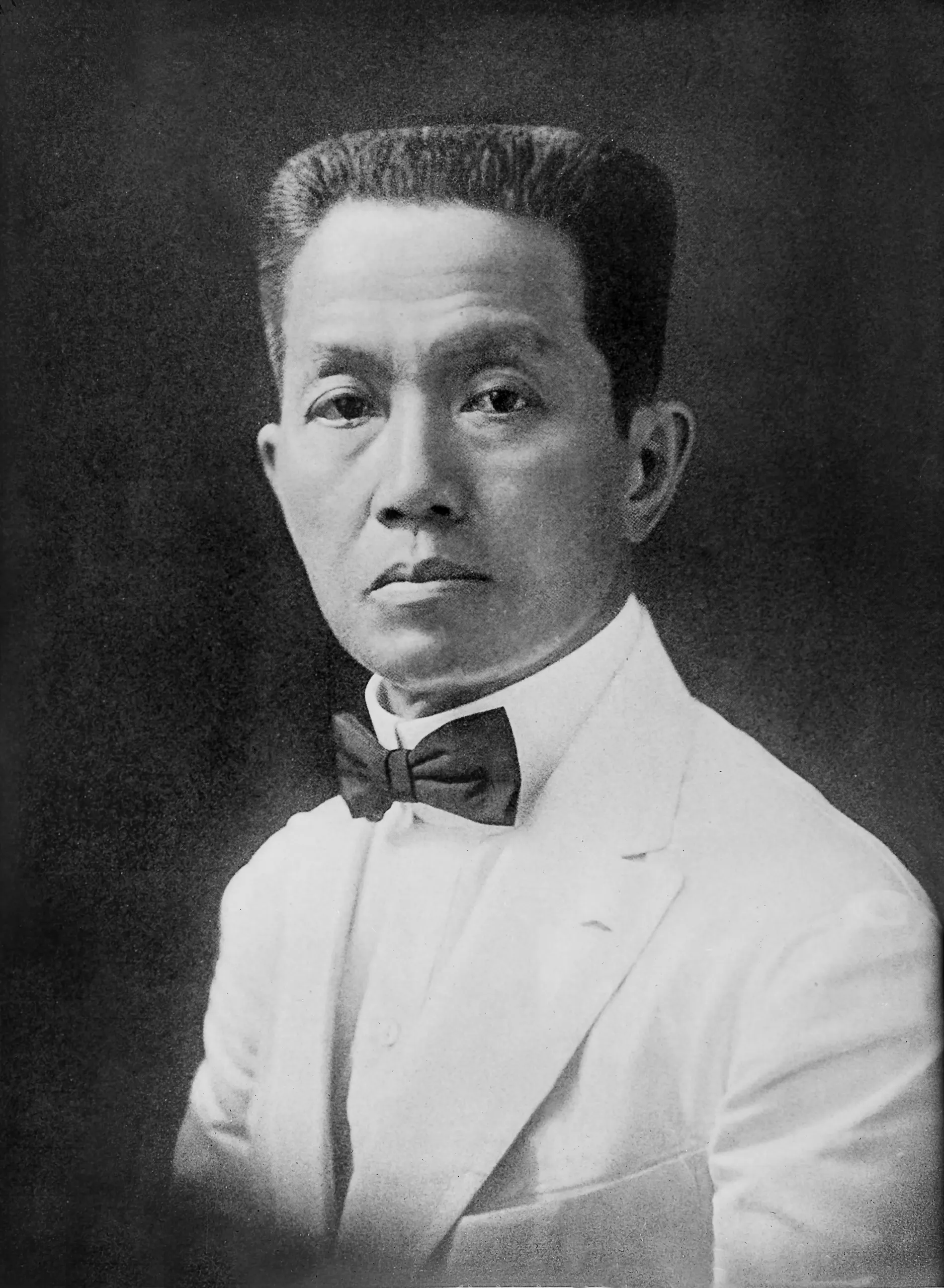
Emilio Aguinaldo
 Philippines
politician•military leader•revolutionary
Also known as: Emilio Aguinaldo y Famy, General Emilio Aguinaldo, President Emilio Aguinaldo, Gen. Emilio Aguinaldo
Birthday
March 22, 1869
Birth Sign
Sagittarius
Birthplace
Kawit, Cavite, Philippines
Age
Died at 94
About
Emilio Aguinaldo y Famy was a Filipino revolutionary, statesman, and military leader who served as the first president of the Philippines from 1899 to 1901. He holds the distinction of being the first president of an Asian constitutional republic. Born into a wealthy family in Kawit, Cavite, Aguinaldo rose from a local municipal mayor to become the supreme commander of Philippine forces during the revolution against Spain and later against the United States. His career was defined by pivotal moments including the declaration of Philippine independence on June 12, 1898, and his controversial leadership during the Philippine-American War. His legacy remains complex, marked by both heroic resistance and contentious decisions such as the execution of fellow revolutionaries.
He passed away on February 6, 1964, leaving behind a family and a nation deeply shaped by his actions. His life story continues to be studied as a critical chapter in Southeast Asian history. The sites associated with him, particularly the Aguinaldo Shrine, remain active centers of historical education and national pride. His influence extends beyond politics into the cultural identity of the Philippines, where he is remembered as the father of the nation.
Early Life & Background
Emilio Aguinaldo entered the world on March 22, 1869, in Kawit, Cavite, born into the ilustrado class, the educated elite of Spanish colonial society. His father, Santiago Aguinaldo, had previously served as the gobernadorcillo or municipal mayor, while his mother, Trinidad Famy, came from a prominent local family. Emilio was one of twelve children in a household that valued education and civic duty. Unlike many of his peers who traveled abroad for university studies, Aguinaldo remained in the Philippines to pursue his learning locally. He attended the Colegio de San Juan de Letran in Manila but did not complete a full university degree, instead focusing on practical governance and military training.
His early career began in local administration rather than armed conflict. By the age of twenty-five, in 1895, he achieved the position of capitan municipal, becoming the youngest person to hold the office of mayor in Kawit. This role provided him with essential administrative experience and a platform to organize local resources. When the Philippine Revolution broke out in 1896, Aguinaldo initially hesitated before joining the Katipunan secret society after learning of the execution of José Rizal. He quickly distinguished himself as a capable tactical leader, organizing guerrilla units and securing early victories against Spanish garrisons in the Cavite region. These successes laid the groundwork for his rise to national prominence.
Career Growth
The trajectory of Emilio Aguinaldo's career shifted dramatically with the outbreak of the Philippine Revolution in 1896. He led successful raids against Spanish forces and soon became a central figure in the revolutionary movement. In 1897, he was appointed President of the Revolutionary Government under the Biak-na-Bato Constitution, though this period ended with his exile in Hong Kong following the Pact of Biak-na-Bato. His return in 1898 coincided with the Spanish-American War, allowing him to resume command of revolutionary forces and capture key cities including Manila. On June 12, 1898, he proclaimed Philippine Independence in Kawit, establishing the First Philippine Republic.
On January 23, 1899, Aguinaldo was sworn in as the first President of the Philippines, marking the birth of the nation's constitutional government. However, the Philippine-American War began just days later on February 4, 1899. Despite years of resistance, he was captured by U.S. forces on March 23, 1901, in Palanan, Isabela. He took an oath of allegiance to the United States on April 1, effectively ending organized resistance. After returning to politics in the 1920s and 1930s, advocating for independence, he faced a new challenge during World War II. Initially supporting the Japanese invasion, he became the head of the Second Philippine Republic, a puppet government established in 1943. Arrested by U.S. forces in 1945, he was held until 1950. He spent his final years in retirement, writing his autobiography and engaging in historical advocacy until his death in 1964.
Career Timeline
Public Image & Style
Emilio Aguinaldo is portrayed as a complex national hero whose image balances reverence with criticism. To the state, he represents sovereignty and the birth of the Philippine nation, often depicted in statues and textbooks as the "First President." Critics point to his controversial decisions, such as the executions of Bonifacio and Luna, painting him as a flawed leader whose ambition cost lives. Media portrayals emphasize his resilience and ambition, framing him as a figure of immense historical weight whose actions shaped the trajectory of Southeast Asia. His legacy is one of contradiction, celebrated for independence yet scrutinized for his wartime choices.
Fame & Fandom
Emilio Aguinaldo holds a significant place in global historical memory, ranking as the 9th most famous person in Philippines according to the September 2026 iFANN Global Fame Rankings. His prominence extends across the region, placing him the 44th most famous person in Southeast Asia. These rankings reflect sustained attention to his role as the first president of an Asian constitutional republic and his impact on regional history. The data tracks his visibility through media coverage and public interest signals worldwide.
Unlike modern celebrities, Aguinaldo does not have a fanbase with organized rituals or merchandise. His "fans" are citizens of the Philippines who honor him through state-sponsored events and school field trips. The closest equivalent to fandom is the reverence shown at the Aguinaldo Shrine, where visitors leave flowers and pay respects. There are no viral campaigns or interactive fan projects; his popularity stems from institutional recognition and civic education. The annual celebration of Independence Day on June 12 serves as the primary occasion for collective remembrance, reinforcing his status as a foundational figure in the national narrative.
Interesting Facts and Legends
At just twenty-nine years old, Emilio Aguinaldo became the youngest president of the First Philippine Republic, a record that highlights his youthful leadership during a turbulent era. Historical records show he maintained detailed "shopping lists" of war supplies between 1897 and 1898, documenting needs for weapons, medicine, and food that are now preserved as artifacts. A notable moment of public confusion occurred in 2020 when a broadcast mistakenly identified Andres Bonifacio while discussing Aguinaldo, illustrating how often these two revolutionary icons are conflated in modern memory. The legend of General Gregorio del Pilar's last stand at Tirad Pass remains central to Filipino folklore, with historians still debating whether Aguinaldo's retreat was purely tactical or driven by fear. His autobiography serves as a primary source for understanding the internal dynamics of the revolution.
Notable Quotes
“The Philippines is free.”
“I have no other desire than to see my country free and independent.”
“I am a Filipino, and I love my country.”
Family & Personal Life
Emilio Aguinaldo came from a large family as one of twelve children born to Santiago Aguinaldo and Trinidad Famy. His father had served as a municipal mayor, instilling a sense of civic responsibility in his son. Aguinaldo married Hilaria del Rosario in 1896, and they remained together until his death in 1964. Hilaria was known for her intelligence and support of his political endeavors, accompanying him into exile in Hong Kong. Together they raised six children: Felipe, Maria, Ciriaco, Emeterio, Carmen, and Vicente. Hilaria outlived him by several years, passing away in 1968. The family home in Kawit, now the Aguinaldo Shrine, stands as a testament to their life together.
Notable Connections
Hilaria Aguinaldo, Andrés Bonifacio, Antonio Luna, Frederick Funston, Manuel L. Quezon, Gregorio del Pilar.
Relationships & Dating History
Emilio Aguinaldo was married only once in his life. He wed Hilaria del Rosario in 1896, a union that lasted until his death in 1964. They met in their youth in Kawit, and Hilaria was known for her intelligence and unwavering support of his political endeavors. She accompanied him into exile in Hong Kong and remained by his side throughout his long life. The couple had six children together: Felipe, Maria, Ciriaco, Emeterio, Carmen, and Vicente. Hilaria outlived Aguinaldo by several years, passing away in 1968. There are no publicly documented romantic relationships prior to or outside of this marriage, making it the sole significant partnership in his life.
- MarriedHilaria del Rosario1896 - 1964Married until his death; she died in 1968.
Death & Aftermath
Died
February 6, 1964 (aged 94)
Death Place
Manila, Philippines
Cause of Death
Natural causes associated with old age
Emilio Aguinaldo died peacefully at his residence in Manila on February 6, 1964, at the age of ninety-four. The cause was attributed to natural causes linked to advanced age. His passing marked the end of a life that had spanned the transition from Spanish colonial rule to American occupation and Japanese invasion. The nation mourned the loss of its first president, treating the event as a significant historical milestone. Government officials and military leaders issued formal tributes honoring his role in declaring independence and leading the revolutionary forces.
A state funeral was held to honor his service, attended by high-ranking government figures who recognized his status as a national hero. He was buried at the Aguinaldo Shrine in Kawit, Cavite, the very site where he declared Philippine independence decades earlier. This location has since been preserved as a historic landmark and museum, serving as a place of pilgrimage for Filipinos seeking to connect with their country's history. While no major legal disputes arose immediately following his death, historical debates regarding his collaboration with Japan during World War II continued to shape academic discussions about his legacy. The National Historical Commission of the Philippines maintains his memory through ongoing commemorations and educational programs.
Net Worth (Estate Value)
$0
iFANN Editorial Team estimate
As a historical figure who passed away in 1964, Emilio Aguinaldo does not have a current net worth or estate valuation in the context of active business ventures. His wealth during his lifetime was derived primarily from family land holdings in Cavite, which included the property that is now the Aguinaldo Shrine. He received modest stipends as a general and president during the revolutionary period, but these were not substantial accumulations of personal fortune. The Aguinaldo Shrine today operates as a major tourist attraction managed by the Philippine government, generating revenue that supports historical preservation rather than personal estate value. No active financial management or posthumous earnings streams exist for the individual himself.
Awards & Accolades
View 7 records, honours and achievementsKnown For
Declaration of Philippine Independence
1898 · Proclaimer
First President of the Philippines
1899 · President
Philippine-American War
1899 · Commander-in-Chief
Keywords
Sources
Quick Facts
- Profession
- politician, military leader, revolutionary
- Born
- March 22, 1869
- Birthplace
- Kawit, Cavite
- Died
- February 6, 1964
- Death Place
- Manila
- Gender
- Male
- Spouse
- Hilaria Aguinaldo
- Birth Sign
- Sagittarius
Personal Details
- Full Name
- Emilio Aguinaldo y Famy
- Spouse
- Hilaria del Rosario
- Children
- Felipe, Maria, Ciriaco, Emeterio, Carmen, Vicente
- Education
- Colegio de San Juan de Letran (incomplete)
Frequently Asked Questions
Who was Emilio Aguinaldo?
When was Emilio Aguinaldo born and died?
Why is Emilio Aguinaldo controversial?
Did Emilio Aguinaldo get married?
What is the Aguinaldo Shrine?
Join the community
fans discussing