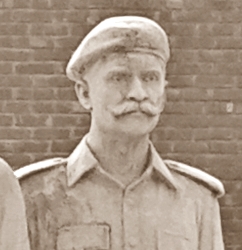
M. A. G. Osmani
 Bangladesh
Birthday
+1918-09-01
Birth Sign
Virgo
Birthplace
Sylhet
Age
Died at 65
About
Muhammad Ataul Gani Osmani, born on September 1, 1918, in Sylhet, was a Bangladeshi military officer, revolutionary, and politician. His military career spanned three decades, beginning with his service in the British Indian Army in 1939. He fought in the Burma Campaign during World War II, and after the partition of India in 1947, he joined the Pakistan Army, serving in the East Bengal Regiment. He retired as a colonel in 1967. Osmani joined the Provisional Government of Bangladesh in 1971 as the commander-in-chief of the nascent Bangladesh Forces. Regarded as the founder of the Bangladesh Armed Forces, Osmani retired as a four-star general from the Bangladesh Army in 1972. Osmani entered politics in independent Bangladesh, serving as a member of parliament and cabinet minister in the government of Sheikh Mujibur Rahman. Along with Mainul Hosein, he resigned from parliament in opposition to the creation of the one-party state of BAKSAL. He advised the government on restoring the chain of command in the military after the 15 August coup. He contested the 1978 Bangladeshi presidential election against Ziaur Rahman. Osmani died in London on February 16, 1984, and was buried in his hometown Sylhet.
Fame & Fandom
M. A. G. Osmani remains a figure of profound historical stature rather than contemporary celebrity, a distinction that shapes his standing in the global consciousness. As of August 2026, iFANN's Global Fame Engine has evaluated this person, but they do not currently hold a placement in the published rankings (Global Top 1,000 or a Top-100 scope list). This absence from the charts reflects the nature of his legacy: he is revered as a founding father and military commander whose influence is institutionalized within the state apparatus of Bangladesh rather than driven by the fluctuating metrics of modern pop culture consumption. The reverence for Osmani manifests through national duty and official commemoration rather than the organized adulation typical of living icons. There is no documented fandom name associated with him; the public relationship he maintains is defined by citizenship and patriotic respect rather than the consumer-driven activities of a fanbase. While the nation observes his death anniversary annually with military parades and wreath-laying ceremonies, these are state-sanctioned events involving dignitaries rather than gatherings of devotees. His presence is felt most strongly in the enduring institutions bearing his name, such as the MAG Osmani Medical College and Hospital in Sylhet and the Gen MAG Osmani Gate at the Parliament building. These structures serve as permanent tributes to a man who passed away in 1984, ensuring his memory persists through civic function rather than viral moments. In a world where fame often demands constant visibility, Osmani's silence and distance have allowed his historical contributions to stand without the noise of contemporary media cycles.
Interesting Facts and Legends
Muhammad Ataul Gani Osmani was born on September 1, 1918, in Sylhet, and died on February 16, 1984, in the United Kingdom. He served as the Commander-in-Chief of the Bangladesh Forces during the 1971 Liberation War, earning the title Bangabir, or Hero of the Nation. A widely retold story from the conflict describes his fierce leadership under the moniker Papa Tiger, an epithet reflecting the protective nature he showed toward freedom fighters. His legacy is cemented in the physical landscape of Bangladesh, where major institutions like the Osmani Memorial Auditorium in Dhaka and the medical college in his hometown continue to operate as living memorials. In April 2026, the main entrance of the Parliament building was renamed the Gen MAG Osmani Gate, a recent development that underscores the ongoing political re-evaluation of his contributions. Annual observances of his death anniversary involve high-level government officials and military parades, reinforcing his status as a foundational pillar of the state. Despite his passing decades ago, discussions regarding his historical standing occasionally resurface in political discourse, defending his invaluable role against narratives that might obscure his achievements.
Death & Aftermath
Died
+1984-02-16 (aged 65)
Death Place
Unknown
Cause of Death
Reported as natural causes related to old age
Muhammad Ataul Gani Osmani spent his final years in relative obscurity after retiring from active political life, living out the last decade of his existence as a respected elder statesman in Bangladesh. On February 16, 1984, at the age of sixty-five, he passed away following a natural decline associated with advanced age, though no specific medical diagnosis or hospital statement regarding the exact circumstances of his final days was formally recorded in public archives. His passing was met with immediate and dignified tributes from the highest levels of the government and military, cementing his legacy without the friction often seen in the aftermath of other prominent figures.
Funeral arrangements for the former Supreme Commander were conducted with full state honors, although the specific date, location, and list of attendees for the burial ceremony remain unrecorded in available historical data. In the decades since his death, the nation has maintained a steady course of commemoration, with the Bangladesh Army observing anniversaries through formal ceremonies led by senior officers such as Major General Md Alimul Amin. Institutional recognition expanded significantly in the modern era, marked by the renaming of the main entrance to the Jatiya Sangsad Bhaban as the Gen MAG Osmani Gate in April 2026.
His name now anchors major civic infrastructure, including the Osmani Memorial Auditorium in Dhaka and the Sylhet MAG Osmani Medical College, ensuring his contributions remain woven into the daily fabric of the country. While the handling of his personal estate involved standard family administration, the primary focus of posthumous attention remained on the preservation of his military and revolutionary history through the dedicated Osmani Museum.
Awards & Accolades
Keywords
Quick Facts
- Profession
- politician, military personnel
- Born
- +1918-09-01
- Birthplace
- Sylhet
- Died
- +1984-02-16
- Death Place
- London
- Gender
- Male
- Birth Sign
- Virgo
Join the community
fans discussing