 Spain
SpainAbout
Francisco Gómez de Quevedo y Villegas was a towering figure of the Spanish Golden Age, celebrated as a poet, novelist, satirist, and statesman. Born in Madrid in 1580, he mastered the style of conceptismo, characterized by intellectual density and wordplay, standing alongside Luis de Góngora as a pillar of 17th-century Spanish literature. His life mirrored the turbulence of his writing, marked by political intrigue, repeated imprisonments, and exile. He died in 1645, leaving behind a corpus of work that critiqued corruption and human nature with unmatched ferocity.
Quevedo's influence extends far beyond his lifetime, cementing his status as one of the greatest writers in the Spanish language. His satirical attacks on the court and powerful ministers made him both famous and dangerous, leading to periods of confinement where he continued to produce some of his most profound poetry. Today, he is remembered not just for his literary mastery but for his fearless engagement with the politics of his era.
Early Life & Background
Francisco Gómez de Quevedo y Villegas entered the world on September 14, 1580, in the parish of San Ginés in Madrid. He was born into a noble family that faced significant financial strain despite its high social standing. His father served as a secretary to the Duke of Lerma, which placed the young Quevedo within the orbit of high court politics from infancy. This early exposure to the mechanics of power and the fragility of wealth deeply influenced his later satirical works regarding money and social mobility.
His education was rigorous and expansive. Attending the Colegio Imperial de Madrid run by Jesuits, he displayed an encyclopedic intellect from a young age. By his late teens, he had mastered Latin, Greek, Hebrew, Arabic, Italian, and French. This linguistic virtuosity allowed him to translate and parody texts from various traditions, setting the stage for a career defined by erudition. Before achieving literary fame, he traveled extensively across Europe, including Italy and France, serving as a page and diplomat for various Spanish nobles. These journeys exposed him to diverse cultures and political systems, fueling his critical perspective on corruption and human nature. His first major literary breakthrough came in the early 1600s with the publication of satirical verses that attacked the vices of the court, earning him both fame and enemies.
Career Growth
Quevedo's career spanned poetry, drama, picaresque novels, and political pamphlets, evolving through distinct phases of satire, service, and reflection. During the early 1600s, he gained notoriety for biting attacks on the court and the Count-Duke of Olivares, establishing his reputation as a fearless critic. His work *La vida del Buscón*, written earlier but published posthumously in 1626, emerged as a darkly comic picaresque novel about a swindler named Pablos, remaining a classic of Spanish literature.
Political service brought both opportunity and peril. Appointed as a secretary to the King, Quevedo's outspoken nature led to repeated conflicts with the monarchy. Most notably, he was imprisoned in the Monastery of San Marcos in León from 1639 to 1643 on charges widely believed to be politically motivated. Even during this confinement, he produced significant collections of poetry and moral essays. After his release in 1643, he retired to his estate in Villanueva de los Infantes. It was here that he wrote some of his most profound works, including *Sueños* (Dreams), a series of satirical prose poems depicting hellish visions of society. His later years were marked by a turn toward religious introspection and the production of masterpieces that would define his legacy.
Career Timeline
Public Image & Style
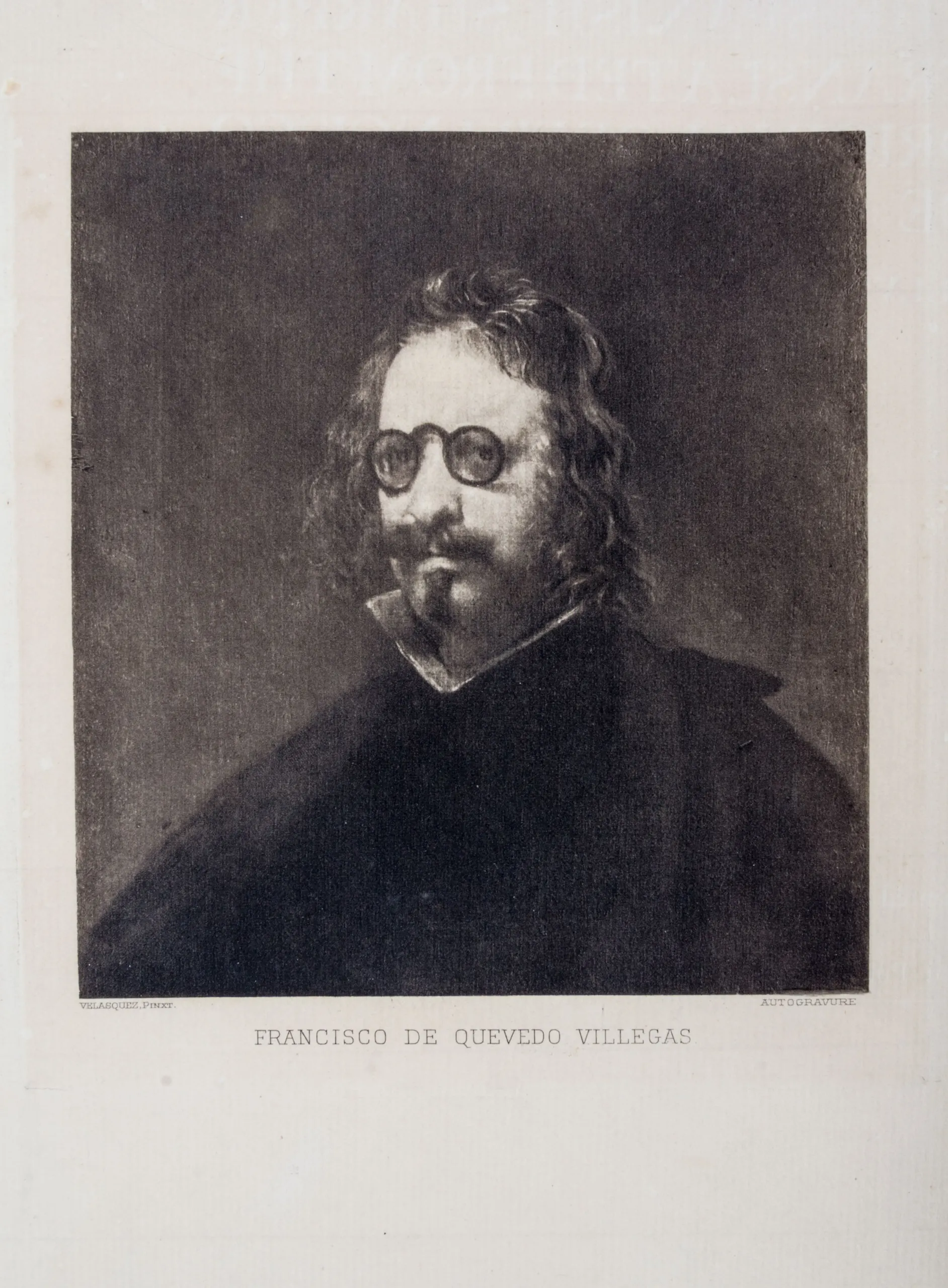
Quevedo is portrayed as a brilliant, cynical, and fiercely independent thinker. His image is that of a man who spoke truth to power at great personal cost. Media portrayals emphasize his sharp tongue, his intelligence, and his tragic fate as a victim of political machinations. He is often depicted in portraits with a stern expression, reflecting his austere clothing choices in later years which mirrored his turn toward religious introspection. His public persona was that of a satirist who refused to bend to authority, making him a polarizing yet revered figure in Spanish history.
Fame & Fandom (iFAMOUS Rankings)
Francisco de Quevedo commands a global attention defined by centuries of academic reverence rather than the fleeting metrics of modern celebrity culture. As a towering figure of Spanish Baroque literature, his influence permeates literary history, yet he does not currently hold a placement in the published rankings for the Global Top 1,000 or any Top-100 scope list according to iFANN's August 2026 evaluation. The Global Fame Engine has assessed his standing and determined that he remains an unranked entity within these specific contemporary commercial frameworks, meaning no ordinal position can be assigned to his current fame score. This absence of a numeric rank reflects his status as a historical icon whose legacy operates outside the parameters of real-time viral consumption. His audience consists entirely of scholars, students, and enthusiasts of Golden Age Spanish literature organized through academic institutions and literary societies like the Cervantes Society. There is no formal fanbase name documented for this group; they do not identify with a moniker such as 'Swifties' or 'Beyhive,' nor do they engage in fan-funded projects, charity drives, or chart pushes typical of living pop stars. Instead, their devotion manifests through the rigorous study of works like *El Buscón* and his satirical poetry. While modern discussions occasionally reference his prescient critiques of power or share his quotes regarding political corruption, these acts represent cultural dissemination rather than the organized activism of a dedicated fandom. The lack of a named fanbase or ritualistic gatherings underscores that Quevedo's enduring presence is rooted in the permanence of his written word rather than the ephemeral nature of modern stardom.
Interesting Facts and Legends
Quevedo was a linguistic virtuoso fluent in multiple languages including Latin, Greek, Hebrew, Arabic, Italian, and French. His feud with Luis de Góngora was legendary, defining the aesthetic debates of their era with Quevedo mocking Góngora's obscure style while Góngora attacked Quevedo's directness. He was imprisoned for nearly four years in the Monastery of San Marcos, where he reportedly maintained his wit even in cell walls. One of his most famous lines, "Poderoso caballero es Don Dinero" (A powerful gentleman is Mr. Money), has become a proverb in Spanish-speaking countries used to critique the corrupting influence of wealth. Some of his works contain controversial views on race and slavery, particularly in *Premática del Tiempo*, which remain subjects of academic debate today.
Notable Quotes
“Poderoso caballero es Don Dinero”
“He who spends time regretting the past loses the present”
“The war is lifelong for men, because life is war, and to live and to fight is the same thing”
“He who cannot laugh at himself has no remedy”
Family & Personal Life
Quevedo was the son of Francisco Gómez de Quevedo and Ana de Villegas. His father worked as a secretary to the Duke of Lerma, embedding the family in the political elite despite their financial struggles. He married Esperanza de Mendoza, a woman from a noble family, in the early 1600s. Their union was a strategic alliance between two noble families. The couple had children, though details about them are sparse due to the era's privacy norms. His marriage was reportedly stable, but his life was dominated by intellectual pursuits and political struggles rather than domestic bliss. In his later years, he adopted an ascetic lifestyle, focusing on religious reflection and writing.
Notable Connections
Luis de Góngora, Count-Duke of Olivares, Miguel de Cervantes, Esperanza de Mendoza.
Relationships & Dating History
Francisco de Quevedo lived in the 17th century, so there are no modern dating records or tabloid scandals. Historical records indicate only one confirmed marriage: to Esperanza de Mendoza. They married in the early 1600s, likely as a strategic alliance between two noble families. The couple had children together, though specific names and numbers are not well-documented in public historical records. Their union was stable, but Quevedo's life was dominated by court politics and literary feuds. There are no records of other romantic partners or flings. As a historical figure, he has been dead since September 8, 1645, leaving his marital status as Widowed at the time of his death.
- MarriedEsperanza de Mendoza1600 - 1645Strategic alliance between noble families; had children together.
Death & Aftermath
Died
September 8, 1645 (aged 64)
Death Place
Villanueva de los Infantes, Ciudad Real, Spain
Cause of Death
Prolonged illness and fever
On September 8, 1645, Francisco de Quevedo died in the town of Villanueva de los Infantes while traveling from Madrid to his estate. He was approximately sixty-five years old at the time of his passing. The cause of death was a prolonged illness, likely a fever that had worsened due to his advanced age and the physical toll of years spent in political turmoil and imprisonment. His final journey was an attempt to find refuge after a period of disgrace following his release from the Monastery of San Marcos in León earlier that year.
The immediate reaction within literary circles and the Spanish court was one of profound mourning. Peers and contemporaries wrote eulogies and elegies to honor a giant of the age whose sharp wit had often challenged power. Tributes focused on his intellectual legacy rather than public vigils or commercial surges. His funeral took place shortly after his death in the church of San Juan Bautista, attended by local clergy, family members, and a small circle of friends who could reach the remote location. He was buried there, and over the centuries his grave became a site of pilgrimage for those dedicated to Spanish literature, though the original marker has been lost or altered over time.
Posthumously, his works continued to be published and studied extensively. His estate was managed by heirs, but his writings eventually entered the public domain, generating revenue through book sales, translations, and academic publishing rather than direct payments to a family fortune. No specific estate disputes have dominated the historical record compared to the enduring impact of his texts. In modern times, institutions like the University of La Mancha have established scholarships and cultural centers in his name to keep his memory alive. His legacy remains defined by the preservation of his satirical genius and his contribution to the Spanish Golden Age.
Net Worth (Estate Value)
$0
iFANN Editorial Team estimate
As a deceased historical figure, Francisco de Quevedo has no personal net worth in the modern sense. His "estate" consists of his intellectual property, which is now in the public domain. Historically, his wealth came from court salaries, inheritances, and land ownership. Today, his "value" is measured in cultural capital and academic influence. His works generate revenue through book sales, licensing of adaptations, and academic publishing, but these funds go to publishers, translators, and institutions, not heirs. No specific figures are tracked for his estate, as there are no active heirs managing a private fortune. The economic impact of his works is diffuse across the global publishing industry. Research by the iFANN Editorial Team confirms that no monetary valuation applies to his legacy in the traditional sense, as his contributions belong to the public sphere.
Awards & Accolades
View 5 records, honours and achievementsKnown For
La vida del Buscón
1626 · Author
Sueños
1627 · Author
El Parnaso español
1648 · Poet
Keywords
Sources
Quick Facts
- Profession
- writer, poet, novelist, statesman
- Born
- September 14, 1580
- Birthplace
- Madrid, Spain
- Died
- September 8, 1645
- Death Place
- Villanueva de los Infantes, Ciudad Real, Spain
- Gender
- Male
- Spouse
- Esperanza de Mendoza
- Birth Sign
- Virgo
Personal Details
- Full Name
- Francisco Gómez de Quevedo y Villegas
- Spouse
- Esperanza de Mendoza
- Children
- Unknown
- Education
- Colegio Imperial de Madrid (Jesuit)
Frequently Asked Questions
When was Francisco de Quevedo born?
Who was Francisco de Quevedo's biggest rival?
What is Quevedo's most famous quote?
How did Francisco de Quevedo die?
What is Quevedo's most famous work?
Similar People
Join the community
fans discussing