
Li Qiang
 China
ChinaAlso known as: Premier Li, Premier Li Qiang, Lǐ Qiáng, 李强
Birthday
July 23, 1959
Birth Sign
Leo
Birthplace
Ruian, Zhejiang, China
Age
67 years old
About
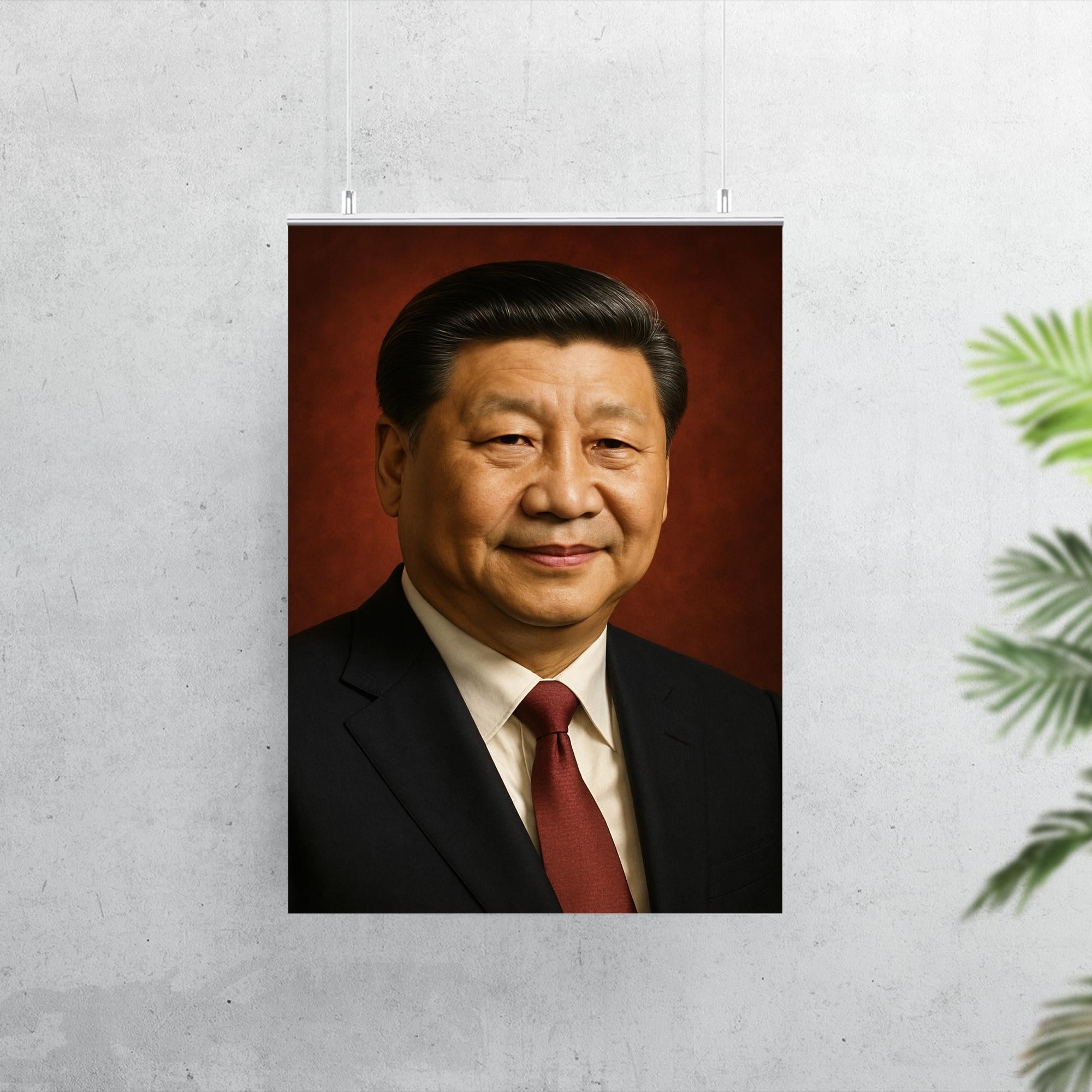
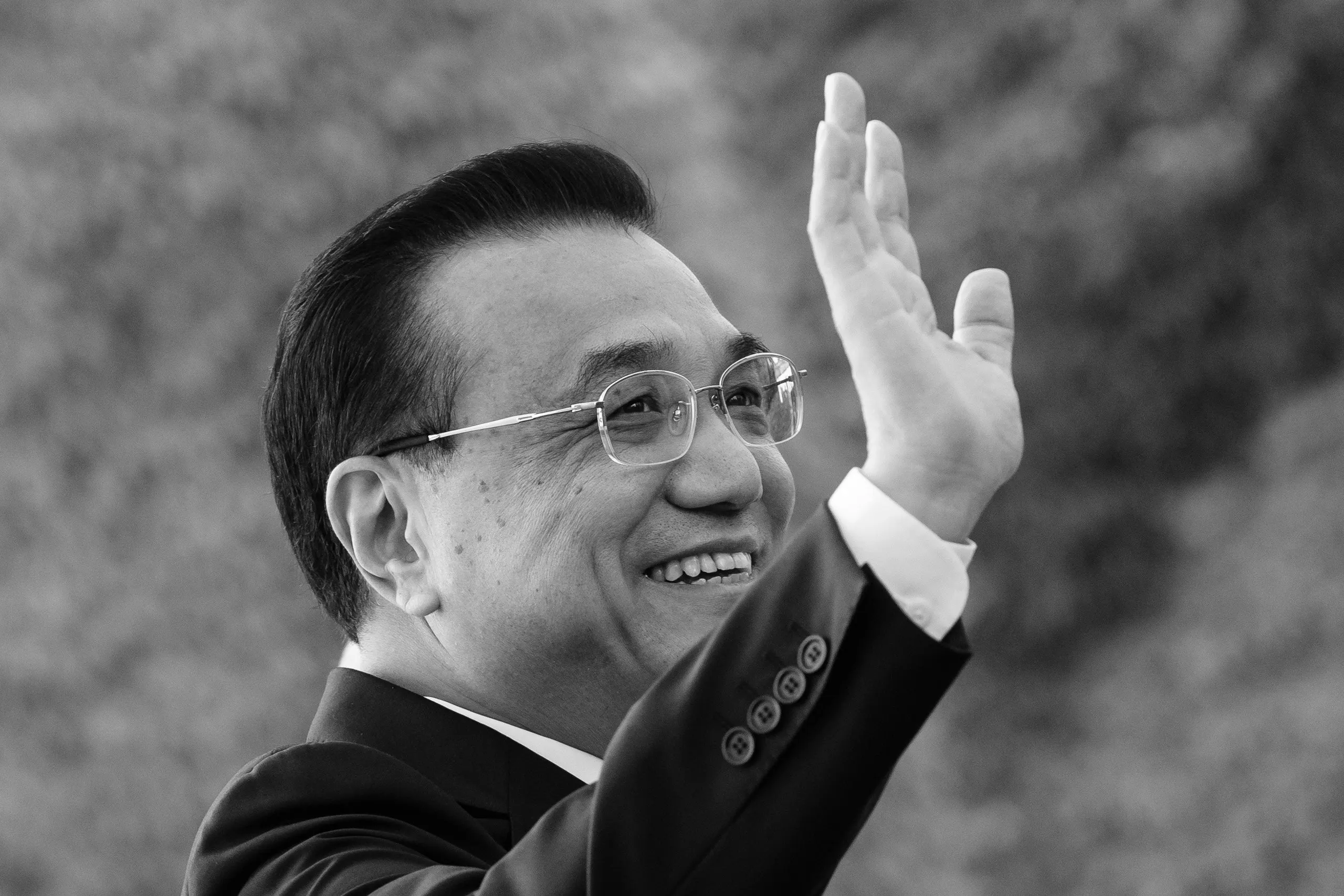
Li Qiang is a Chinese politician who serves as Premier of the State Council of the People's Republic of China, a post he has held since March 2023. He is also the second-ranking member of the Chinese Communist Party's Politburo Standing Committee, which makes him the highest-ranked official in the country after General Secretary Xi Jinping.
Known for a reserved, technocratic style, Li has taken a hands-on role in steering China's economy through a stretch of uneven growth, trade friction and natural disaster response. His calendar in 2026 alone included a special address at the World Economic Forum's Summer Davos, a visit to flood-hit Gyirong township in Tibet, meetings with Qatari and Slovak leaders, and a sit-down with U.S. business executives in Beijing. Before the premiership he spent five years as Party Secretary of Shanghai, one of the most visible provincial-level roles in the country.
Li is the eighth premier in the history of the People's Republic, and the only one in recent memory whose public profile rests almost entirely on policy and administration rather than personality.
Early Life & Background
Li Qiang was born in July 1959 in Ruian, a county-level city under Wenzhou in Zhejiang Province, and began his first job in July 1976 at the age of 17, near the end of the Cultural Revolution. He joined the Chinese Communist Party in 1983, and his earliest political work ran through the Communist Youth League apparatus in Zhejiang, the classic launching path for provincial cadres of his generation.
His formal education was in agricultural economics and management. He studied at Zhejiang Agricultural University, which later merged into Zhejiang University, and went on to earn a master's degree. His first provincial government posting was in Zhejiang's civil affairs department, a low-profile portfolio that gave him early exposure to how the province's administration actually worked.
From there he climbed steadily through local government. In 1996 he became Party Secretary of Yongkang, a county-level city known for hardware manufacturing. Then came the posting that shaped his reputation: in 2002 he was named Party Secretary of Wenzhou, the city where he was born and one of the most entrepreneurial places in China, famous for its private businesses and informal lending networks. Running Wenzhou put him at the center of the country's private-enterprise experiment and gave him a pro-business profile that followed him for the rest of his career.
He moved up to provincial roles next, serving as Political and Legal Affairs Secretary of Zhejiang in 2011 and then as the province's deputy party secretary. By 2012 he was Governor of Zhejiang, and in 2016 he was transferred to lead neighboring Jiangsu as Party Secretary. A detail that would later matter enormously: during the mid-2000s, when Xi Jinping was Zhejiang's provincial party secretary, Li worked under him. That shared Zhejiang period is the root of the faction label observers later attached to him, the so-called New Zhijiang Army.
Career Growth
The breakthrough came in October 2017, when Li was elevated to the CCP Politburo and appointed Party Secretary of Shanghai. Running China's financial capital for five years put him in charge of the country's most internationally exposed city, including its two-month COVID lockdown in 2022, a period of enormous scrutiny. In 2022 he was promoted to the Politburo Standing Committee, the seven-member body at the very top of the party.
In March 2023 the National People's Congress confirmed him as Premier, succeeding Li Keqiang. Since then his work has centered on economic management: presiding over State Council plenary and executive meetings, pushing domestic demand and industrial upgrading, and handling foreign economic diplomacy. In 2026 he delivered a special address at the World Economic Forum's Summer Davos in June, met Russian President Vladimir Putin in May, and hosted Slovakia's President Peter Pellegrini in July.
August and September 2026 were especially busy. He urged more economic support after a growth slump, called for an objective reading of the economy, and traveled to flood-hit Gyirong township in Tibet, where rescue teams searched for roughly 360 missing people near the Nepal border and he pressed for all necessary measures to secure the autumn harvest amid Super El Niño worries. In September he met WorldSkills International leaders in Shanghai, sat down with the U.S.-China Business Council board in Beijing, and hosted Qatar's prime minister to chart what both sides called the next golden decade of ties, with pledges on energy, AI and Middle East de-escalation.
Career Timeline
Public Image & Style
Li Qiang's public image is formal, reserved and technocratic. He dresses in the standard dark suit and tie of senior Chinese officialdom, reads from prepared remarks, and rarely deviates into personal anecdote. Media portrayals, both inside China and abroad, tend to frame him as a competent administrator and a pro-business, reform-oriented figure, the economic executor of Xi Jinping's agenda rather than an independent political brand.
International coverage often notes the contrast between his low-key manner and the scale of the job. He is the official most associated with the day-to-day running of the world's second-largest economy, yet he generates almost no personality-driven coverage. There is no personal social media presence, no glossy magazine profile, no viral moment. His public voice is the State Council meeting, the official readout, the carefully worded speech at a forum. That restraint is itself the image: a premier who wants to be judged on policy output rather than presence.
Fame & Fandom (iFAMOUS Rankings)
Fame for Li Qiang is a function of office rather than personality. In the iFANN Global Fame Rankings for September 2026, he is the 71st most famous person in China, down from 69th in the previous cycle, and the 21st most famous person from China, a position that held steady. Those placements reflect recognition that comes with running the State Council: steady, high-level, and concentrated in the places where Chinese political news is followed most closely.
The fandom side looks nothing like entertainment. There is no fanbase name, no organized supporter groups, no birthday billboards or streaming campaigns. His audience is not a fandom in the pop-culture sense at all; it is an institutional and political one made up of officials, analysts, journalists, businesspeople and citizens who follow economic policy because it affects their lives. Engagement runs through state channels: gov.cn readouts, Xinhua dispatches, CCTV coverage and the Ministry of Foreign Affairs transcript. Fans of celebrities send gifts and letters. The equivalent here is a policy speech being parsed line by line by economists within hours. That is the relationship, and it is the honest way to describe it.
Interesting Facts and Legends
He started his first job in July 1976, at 17, and joined the Communist Party seven years later, in 1983.
He is the eighth Premier of the People's Republic of China, a line that runs from Zhou Enlai through Hua Guofeng, Zhao Ziyang, Li Peng, Zhu Rongji, Wen Jiabao and Li Keqiang.
His Wenzhou posting in 2002 put him in charge of the city where he was born, and of the private-enterprise laboratory that gave the city its national reputation.
A false story claiming he died of a heart attack in late 2023 still circulates online. It is misinformation: he was documented in public meetings throughout 2026, including with Putin in May and the U.S.-China Business Council in September.
Observers often describe his ascent as a quiet rise, built on administrative competence rather than the political theater that surrounds some of his peers.
Notable Quotes
“We must take all necessary measures to secure the autumn harvest.”
“We need an objective understanding of the economy.”
“American companies are welcome to expand in China, and we will address your reasonable concerns.”
Family & Personal Life
Li Qiang is married and has one daughter. Beyond those two facts, almost nothing is public. Chinese official biographies for senior leaders release minimal personal detail, and Li's own profile is among the most tightly guarded in the current leadership. His spouse has never been named in credible reporting, and there is no verified information about his parents, siblings, or where the family lives. That silence is not an oversight; it reflects the strict privacy conventions applied to the top tier of Chinese politics, where family information is treated as a private matter and, in some cases, a security consideration. What is known is that he maintains a deliberately low personal profile in a system where visibility can carry risk. He does not give personal interviews, does not appear in lifestyle or human-interest coverage, and keeps his public communication to policy speeches and official meetings.
Notable Connections
Li Qiang's career is inseparable from Xi Jinping, whom he served under in Zhejiang in the mid-2000s and who is widely described as his patron. He succeeded Li Keqiang as premier in 2023. Abroad, his 2026 calendar brought him into contact with Vladimir Putin, Slovak President Peter Pellegrini, Qatar's prime minister and foreign minister, and U.S. business leaders including Apple's Tim Cook.
Relationships & Dating History
Li Qiang is married and has one daughter, and that is essentially the full extent of what is publicly known about his personal life. Chinese official biographies for senior leaders do not name spouses, and Li's has never been identified in credible reporting. There is no documented dating history, no reported divorce, no engagement announcement and no confirmed past relationship of any kind in the public record.
This is not a gap in the research so much as a feature of the system. Senior Chinese officials operate under strict privacy conventions, and their family lives are treated as off-limits for domestic media and largely inaccessible to foreign journalists. Tabloid-style claims about his personal relationships should be treated as unverified. As of 2026, his marital status is reported as married, with no public information suggesting any change and no named partner disclosed.
Salary, Net Worth In 2026
There is no credible net worth estimate for Li Qiang, and the iFANN Editorial Team is not publishing a figure. Senior Chinese officials do not file the kind of personal financial disclosures that Western politicians do, and no major celebrity-net-worth database carries an entry for him. Numbers that circulate online should be treated as fabricated.
What can be said is structural rather than numerical. His income is a state salary as a senior civil servant, set by the same administrative grade scale that applies across China's leadership. There are no documented business ventures, no endorsement deals, no commercial holdings and no public investment portfolio. He does not own a personal brand in the way an entertainer or an entrepreneur would, and he does not monetize his public profile.
This is not unusual for the role. Chinese premiers have historically kept their finances opaque, and the system does not reward the kind of personal wealth display that fuels celebrity net worth coverage elsewhere. For a figure like Li, the absence of data is the accurate answer. Any profile that puts a dollar figure on him is guessing.
Awards & Accolades
View 11 records, honours and achievementsKnown For
Premier of the State Council of the People's Republic of China
2023 · Premier
Party Secretary of Shanghai
2017 · Party Secretary
Governor of Zhejiang
2012 · Governor
Party Secretary of Jiangsu
2016 · Party Secretary
Member, Politburo Standing Committee
2022 · Member
Keywords
Sources
Quick Facts
- Profession
- Politician
- Born
- July 23, 1959
- Birthplace
- Ruian, Zhejiang, China
- Gender
- Male
- Birth Sign
- Leo
- Office
- Premier of the State Council of the People's Republic of China
- In Office Since
- March 2023
- Political Party
- Chinese Communist Party (joined 1983)
- Education
- Zhejiang Agricultural University (now Zhejiang University), master's degree
- Predecessor as Premier
- Li Keqiang
Personal Details
- Full Name
- Li Qiang
- Children
- 1
- Education
- Zhejiang Agricultural University (now part of Zhejiang University); master's degree
Frequently Asked Questions
Who is Li Qiang?
Is Li Qiang dead?
How old is Li Qiang?
Is Li Qiang married?
What is Li Qiang's net worth?
Join the community
fans discussing