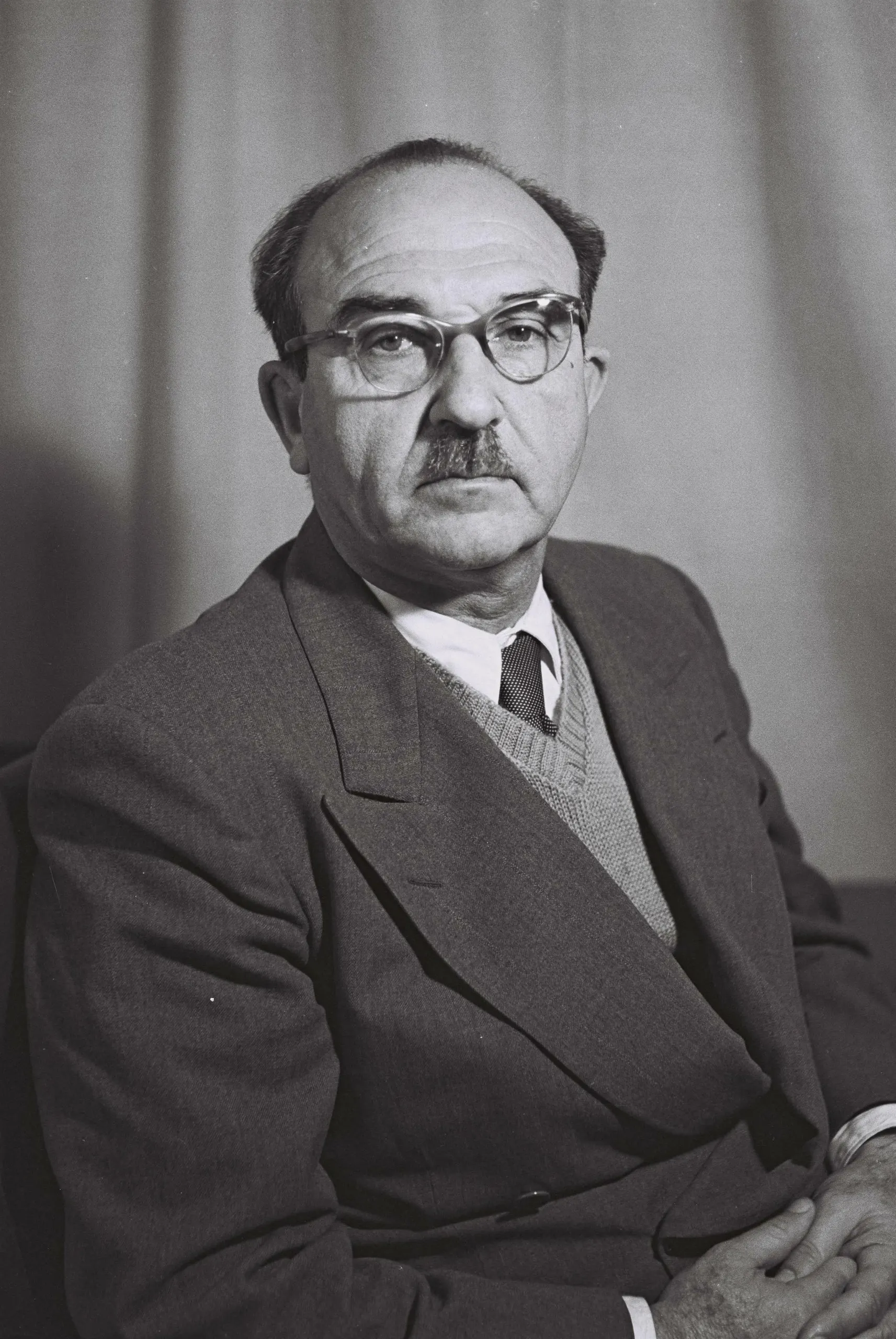
Levi Eshkol
 Israel
Also known as: Levi Shkolnik, Levi Eschol
Birthday
October 25, 1895
Birth Sign
Scorpio
Birthplace
Oratov, Russian Empire (now Ukraine)
Age
Died at 73
About
Levi Eshkol was the third prime minister of Israel, serving from 1963 until his death in office in 1969. A founding father of the Jewish state, he played a central role in building its institutions, from the Histadrut labor federation to the Mekorot water company, and later steered the country through the Six-Day War. As a leader, he was known for his steady, pragmatic hand and his ability to forge consensus during times of immense pressure.
Eshkol's premiership saw the end of military rule over Israeli Arabs, a close alliance with U.S. President Lyndon B. Johnson, and the formation of Israel's first national unity government on the eve of the 1967 war. He was the first Israeli prime minister to make an official state visit to the United States. His legacy has undergone a reassessment in recent years, with historians increasingly recognizing his contributions as the true hero of the Six-Day War, a role often overshadowed by military figures like Moshe Dayan.
Today, Eshkol is remembered as a dedicated nation-builder whose leadership during one of Israel's most critical periods helped shape the modern Middle East.
Early Life & Background
Levi Yitzhak Shkolnik was born on October 25, 1895, in the Ukrainian shtetl of Oratov, near Kyiv, into a Yiddish-speaking, religious Jewish family. He received a traditional education at a cheder and later a yeshiva in Vilna, where he also became involved in the Zionist movement as a student. At age 18, in 1914, he immigrated to Ottoman-controlled Palestine, settling in Petah Tikva and working as an agricultural laborer.
His early years in Palestine were marked by his growing involvement in the labor movement. He helped establish the Histadrut labor federation and the Haganah underground defense force, becoming a pivotal organizer. In 1937, he founded the Mekorot water company, serving as its director until 1951. His administrative acumen led to roles such as chairman of the Settlement Department of the Jewish Agency and, later, Director General of the Ministry of Defense during Israel's early years, from 1948 to 1951.
Eshkol's pre-fame life was defined by his dedication to building the infrastructure of a future Jewish state, from water supply to defense. These formative experiences shaped his pragmatic approach to governance.
Career Growth
Eshkol entered the Knesset in 1951 and served as Minister of Finance for over a decade, beginning in 1952. In 1963, he succeeded David Ben-Gurion as prime minister. His tenure included ending military rule over Israeli Arabs and forging a close relationship with U.S. President Lyndon B. Johnson; he was the first Israeli prime minister to make an official state visit to the United States in 1965.
He led Israel through the tense period before and during the Six-Day War in June 1967, a conflict that reshaped the Middle East. Under pressure in 1967, he formed Israel's first-ever unity government, bringing opposition figures including Moshe Dayan into his cabinet. He also supported diplomatic efforts to pressure the USSR to allow Jewish emigration and encouraged American Jewish organizations to keep the issue prominent.
Eshkol died of a heart attack on February 26, 1969, becoming the first Israeli prime minister to die in office. His leadership during the Six-Day War has been increasingly recognized as a pivotal moment in Israeli history.
Career Timeline
Public Image & Style
Eshkol is often remembered as a "forgotten hero" of the Six-Day War, with historians arguing his role has been underappreciated relative to military figures like Moshe Dayan. He is remembered unfairly, according to some accounts, for a stammering speech he gave on May 28, 1967, during the pre-war crisis, which damaged his public image despite his subsequent steady leadership. He is described as "courageous yet wary, flexible but resilient." Media portrayals have increasingly reassessed his legacy positively, with the Jerusalem Post calling his premiership "Israel's finest hour." A 2026 article in the Jewish Press called him "The True – And Unrecognized – Hero of The Six-Day War," continuing a trend of historical revisionism that began around the 50th anniversary of the war in 2017.
Fame & Fandom (iFAMOUS Rankings)
Levi Eshkol never had a fandom in the modern sense. No crowds lined Jerusalem streets for his arrival, no fan clubs printed birthday billboards, and no rituals emerged to honor his private life. As the third Prime Minister of Israel, his relationship with the public remained strictly civic during a period of intense national crisis. He was respected as a steady leader guiding the nation through war and institution-building, not adored as a celebrity figure. The closest thing to legendary status involves a specific moment of human frailty rather than adoration: his stammering address on June 5, 1967, which terrified listeners fearing incapacitation yet ultimately cemented his image as a resilient commander who refused to yield despite physical struggle. This narrative of quiet, behind-the-scenes brilliance often casts him as the true architect of the Six-Day War victory, contrasting sharply with the flamboyant reputation of military figures like Moshe Dayan. His legacy endures as that of a weary but pragmatic statesman who died in office while steering the country through its most dangerous hour. Despite this lack of organized fanfare or formal fanbase names, his standing among global historical figures remains significant. According to the iFANN Global Fame Rankings, he is currently the 40th most famous person from Israel, a placement holding steady from the previous cycle.
Interesting Facts and Legends
Levi Eshkol was an avid reader who frequently quoted Hebrew poetry in his speeches and possessed a distinct sense of humor and modesty, sometimes driving himself to official meetings. A heavy smoker throughout his life, the habit likely contributed to the heart condition that eventually claimed him. After the Six-Day War, declassified security cabinet minutes reportedly captured him stating, "We'll deprive Gaza of water, and the Arabs will leave," though historians advise treating this quote with caution given its classified origins. He actively supported diplomatic efforts to pressure the Soviet Union into allowing Jewish emigration and urged American Jewish organizations to keep the issue prominent. Cultural memory also preserves the story of his nervous speech on June 5, 1967, where his stammering delivery caused immediate panic about his health before he rallied the nation. This incident remains a central part of his legend, illustrating the tension between his physical frailty and his political resilience. Another defining element of his biography is his death from a heart attack in his official residence in 1969 while still serving as Prime Minister. He also holds the distinction of being the first Israeli Prime Minister to make an official state visit to the United States, deepening ties with President Lyndon B. Johnson.
Notable Quotes
“We'll deprive Gaza of water, and the Arabs will leave.”
Family & Personal Life
Eshkol was born Levi Yitzhak Shkolnik, later Hebraizing his surname to Eshkol, meaning "cluster of grapes." He was married twice. His first wife was Elisheva Kaplan, with whom he had three daughters. After her death, he married Miriam Eshkol (née Zelikovitz) in 1964; they had one son together. Miriam survived him and died in 2016. His grandson, Isaac Herzog, is the current president of Israel, and has been compared to Eshkol in political commentary.
Notable Connections
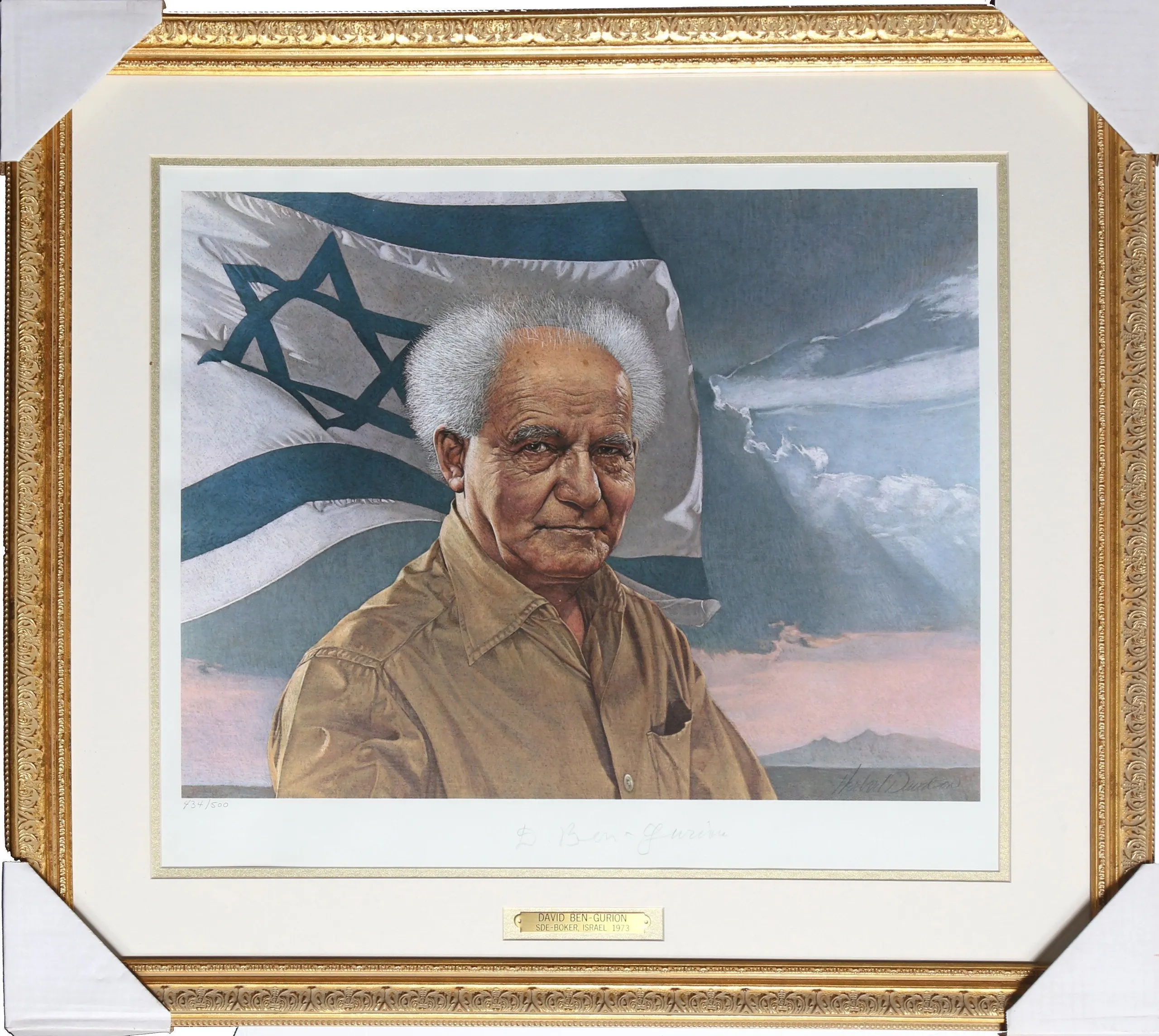
Eshkol was closely associated with David Ben-Gurion, whom he succeeded as prime minister, and U.S. Presidents John F. Kennedy and Lyndon B. Johnson, with whom he corresponded and met. He brought Moshe Dayan into his unity government as defense minister. Isaac Herzog, later president of Israel, has been compared to Eshkol in political commentary.
Relationships & Dating History
Levi Eshkol was married twice. His first wife was Elisheva Kaplan, whom he married in the 1920s; they had three daughters together. After her death, he married Miriam Eshkol (née Zelikovitz) in 1964; they had one son together. Miriam survived him and died in 2016. At the time of his death, he was married to Miriam.
- MarriedElisheva Kaplan1920 - 1959First wife, mother of his three daughters.
- MarriedMiriam Eshkol1964 - 1969Second wife, mother of his son; survived him.
Death & Aftermath
Died
February 26, 1969 (aged 73)
Death Place
Jerusalem, Israel
Cause of Death
Myocardial infarction (heart attack)
Levi Eshkol collapsed in Jerusalem while still serving as the nation's leader, his final days marked by a sudden and fatal cardiac event rather than a prolonged decline. The third Prime Minister of Israel passed away on February 26, 1969, at the age of seventy-three, becoming the first Israeli head of government to die in office. Physicians determined the cause was a myocardial infarction based on immediate medical observation. The news triggered profound national mourning across the young state, which had only recently emerged from the Six-Day War under his steady hand. Tributes poured in from global leaders and domestic peers alike, honoring a statesman who had forged consensus during the country's most precarious hours.
A somber public funeral followed shortly after his death, attended by high-ranking officials and dignitaries who gathered to bid farewell to the founding father of the Jewish state. He was laid to rest in Jerusalem, likely within the Mount Herzl military cemetery, the traditional resting place for Israeli heads of state. Decades later, his legacy endured through institutions like the Levi Eshkol Institute for Research in Israel Studies at Tel Aviv University, which continues to promote scholarship on his era and policies.
Net Worth (Estate Value)
Awards Won (32)
No specific awards or honours are documented for Levi Eshkol in the available sources. His legacy is primarily political, recognized through historical reassessment rather than formal awards.
1968 · 1968 - Honorary citizen of Texas
1966 · 1966 - National Order of the Ivory Coast (Grand Cross)
1966 · 1966 - Kentucky Colonel
1966 · 1966 - National Order of Madagascar (Grand Cross)
1966 · 1966 - Order of Ruben Dario, Nicaragua
1965 · 1965 - Nebraska Admiral
1965 · 1965 - National Order of Chad
Order of Mono
National Order of Dahomey
1968 · 1968 - Ashdod.
1968 · 1968 - Jerusalem.
1968 · 1968 - Petach Tikva.
1967 · 1967 - Dimona.
1965 · 1965 - Tirat Carmel.
1965 · 1965 - Kiryat Gat.
1965 · 1965 - Nazareth Ilit.
1965 · 1965 - Beer Sheva.
1965 · 1965 - Beit Shean.
1965 · 1965 - Afula.
Known For
Prime Minister of Israel
1963-1969 · Prime Minister
Six-Day War
1967 · Leader during the war
Keywords
Sources
Quick Facts
- Profession
- Politician
- Born
- October 25, 1895
- Birthplace
- Oratov, Russian Empire (now Ukraine)
- Died
- February 26, 1969
- Death Place
- Jerusalem, Israel
- Gender
- Male
- Spouse
- Miriam Eshkol, Elisheva Kaplan
- Birth Sign
- Scorpio
Personal Details
- Full Name
- Levi Yitzhak Shkolnik
- Spouse
- Miriam Eshkol, Elisheva Kaplan
- Children
- 4 (three daughters with Elisheva Kaplan, one son with Miriam Eshkol)
- Education
- Traditional Jewish education, including cheder and yeshiva in Vilna
Frequently Asked Questions
Who was Levi Eshkol?
How did Levi Eshkol die?
What did Levi Eshkol do in the Six-Day War?
Who was Levi Eshkol's wife?
Was Levi Eshkol religious?
Join the community
fans discussing