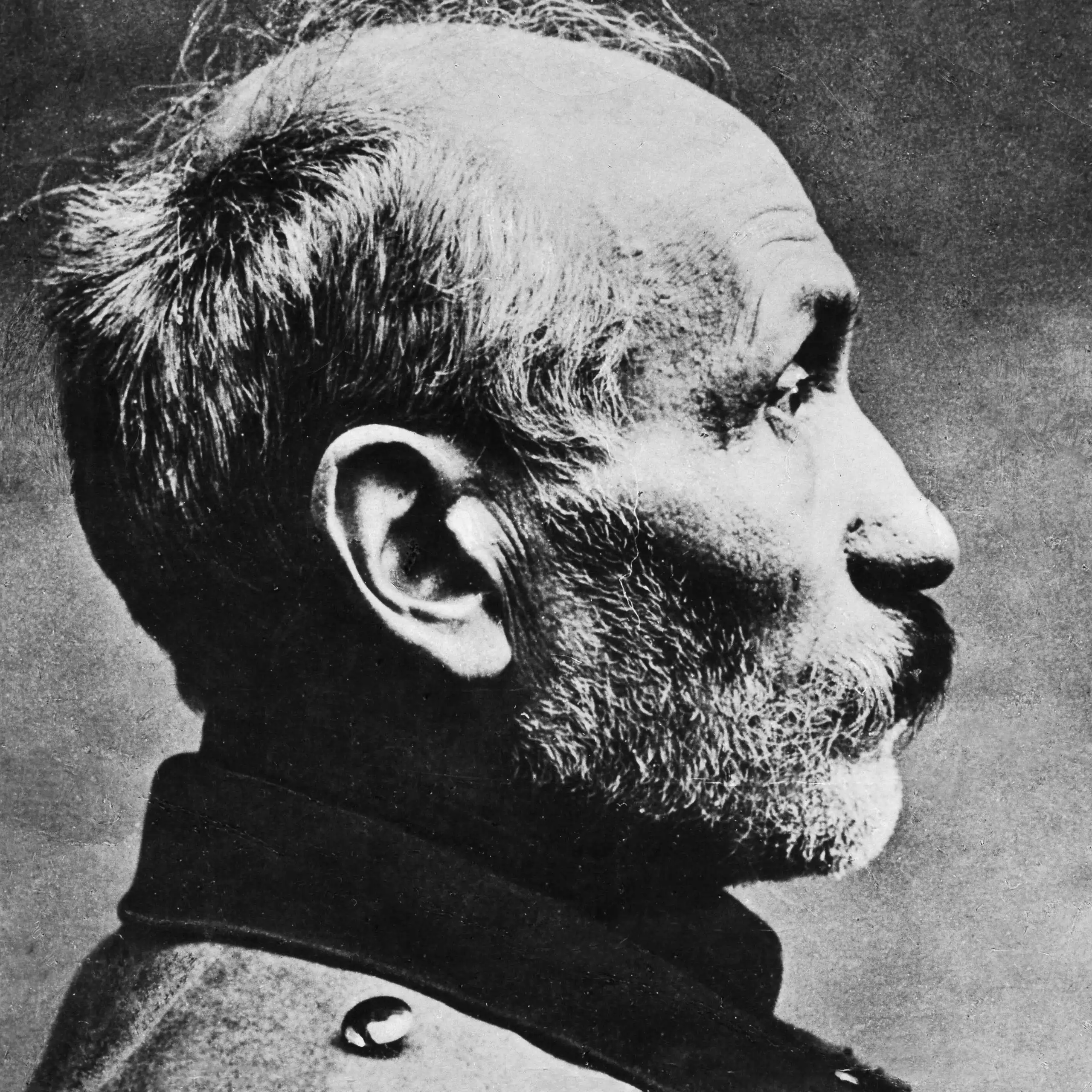
Le Duc Tho
 Vietnam
politician•diplomat•military personnel
Also known as: Phan Đình Khải, Le Duc Tho
Birthday
October 14, 1911
Birth Sign
Libra
Birthplace
Nam Định Province
Age
Died at 78
About
Early Life & Background
Born Phan Đình Khải in Nam Định Province, now part of Hà Nam, Lê Đức Thọ entered a world defined by French colonial rule. His early life was marked by a deep commitment to anti-colonial activism, leading him to join the Indochinese Communist Party at its founding in 1930 alongside Ho Chi Minh. This decision set the trajectory for his entire life, plunging him into a decades-long struggle against foreign occupation. Before rising to international prominence, Thọ worked as an educator and underground party organizer, often operating in secrecy to avoid detection by French authorities. He adopted the revolutionary pseudonym "Lê Đức Thọ" specifically to conceal his identity from colonial surveillance.
His dedication came at a steep personal cost. Thọ spent numerous years imprisoned in French penal colonies, most notably the notorious Côn Đảo prison. These harsh conditions did not break his resolve; instead, they honed his ideological convictions and strategic thinking. He viewed these periods of incarceration as necessary sacrifices for the greater cause of national liberation. During this formative era, he developed the political acumen that would later define his career, learning to navigate complex power dynamics while maintaining strict operational security. His education was largely self-directed, rooted in Marxist-Leninist theory and the practical realities of guerrilla warfare and political organizing. He also cultivated a literary side during these years, writing poetry under his revolutionary name that blended revolutionary fervor with classical Vietnamese forms.
Career Growth
Lê Đức Thọ's career reached its zenith during the Vietnam War, where he served as a central figure in the National Liberation Front and the North Vietnamese government. His most defining professional achievement began in 1968 when he led the North Vietnamese delegation in the Paris Peace Talks. These marathon negotiations with the United States lasted until 1973 and resulted in the Paris Peace Accords, an agreement aimed at ending American involvement in the conflict. Earlier in his career, he played a pivotal role in negotiating the Geneva Accords of 1954 which temporarily divided Vietnam. From 1976 until his retirement in 1986, he held high-ranking positions within the Politburo of the Communist Party of Vietnam, focusing on foreign affairs and internal consolidation. He remained a respected elder statesman until his death in 1990. In 1973, Thọ was jointly awarded the Nobel Peace Prize alongside U.S. Secretary of State Henry Kissinger for their work on the accords. However, Thọ famously refused the award, stating that peace had not yet been fully achieved in Vietnam and that the agreement was merely a preliminary step. This refusal cemented his legacy as a man of absolute principle. Following the Nobel controversy, he continued to play a critical role in the final stages of the war, contributing to the reunification of Vietnam in 1975. He is widely regarded in the West as "Vietnam's Machiavelli," known for ruthless pragmatism and strategic brilliance.
Career Timeline
Public Image & Style
Lê Đức Thọ is portrayed in media and history as a stoic, unyielding, and highly intelligent figure. He is often depicted as the antithesis of the flamboyant Western diplomat, quiet, calculating, and deeply committed to his ideology. In Vietnam, he is revered as a national hero and a symbol of resistance. In the West, he is often viewed with a mix of admiration for his principles and criticism for his role in prolonging the conflict. His reputation as 'Vietnam's Machiavelli' reflects a perception of ruthless pragmatism and strategic brilliance. Despite his intense political role, he never appeared on lifestyle magazine covers like *Vogue* or *GQ*, though he has been featured on the covers of political journals and historical retrospectives, particularly around anniversaries of the Paris Peace Accords. His image remains one of disciplined austerity and unwavering ideological purity.
Fame & Fandom (iFAMOUS Rankings)
In the iFANN Global Fame Rankings, he is currently the 29th most famous person in Vietnam, a position reflecting his enduring status as a foundational figure. Regionally, he stands as the 51st most famous person in Southeast Asia, a rank that underscores his regional impact. His prominence relative to his countrymen is further underscored by the 8th most famous person from Vietnam, a rank that places him among the nation's most influential historical figures. As a revolutionary, diplomat, and politician rather than a performer, Lê Đức Thọ's public following was never that of a celebrity fandom. No formal fan base name is documented in iFANN data, nor do records indicate fan campaigns, birthday tributes, or fan-driven rituals. His relationship with the public was defined by his political authority and his role in the Paris Peace Accords, not by the dynamics of popular culture. Consequently, his legacy is measured in historical significance rather than fan engagement, and his fame rankings reflect the enduring attention paid to his life and actions. His name generates significant search traffic and discussion on platforms like Wikipedia, Reddit, and Quora, particularly regarding the Nobel Peace Prize controversy.
Interesting Facts and Legends
Lê Đức Thọ is best remembered for his refusal of the 1973 Nobel Peace Prize, which he shared with U.S. Secretary of State Henry Kissinger for negotiating the Paris Peace Accords. He declined the honor, stating that peace had not yet been achieved in Vietnam and that the agreement was only a preliminary step. This act remains a defining moment in his legacy. Recent documents released in 2023 revealed that the Norwegian Nobel Committee was aware the 1973 peace deal was unlikely to bring lasting peace, yet proceeded with the award. This has fueled ongoing debate about the prize's validity and has cast a complex light on Thọ's decision.
Thọ was often described as a master negotiator and a 'Machiavelli' of the communist party, known for his strategic acumen during the peace talks. A 1985 meeting with Kissinger was noted for its visible bitterness, underscoring their adversarial dynamic. He was the first Asian to be awarded the Nobel Peace Prize, though he famously declined it. He was also recognized as a recipient of the Ho Chi Minh Prize for his literary contributions, reflecting his status as a "poet-revolutionary." Additionally, he was awarded the title of Hero of Labour by the Socialist Republic of Vietnam for his service to the nation.
Notable Quotes
“Peace has not yet been achieved in Vietnam.”
“We have been an oppressed people. Only others come to threaten and pressure us.”
“The Americans must leave Vietnam.”
Family & Personal Life
Details regarding Lê Đức Thọ's personal romantic life are scarce and intentionally kept private, consistent with the culture of the era and his position as a high-ranking communist official. There is no public record of marriages, engagements, or publicly confirmed romantic relationships. Unlike many Western politicians or celebrities, Thọ did not maintain a public profile regarding family or dating. Historical accounts focus almost exclusively on his political alliances and ideological partnerships. No children have been officially documented or acknowledged by historians or the Vietnamese state. The scarcity of information suggests either a private life shielded from the public eye or a cultural norm where such details were considered irrelevant to his public legacy. While specific details about his household are unknown, photos from the 1960s and 1970s show him as a man of average stature, often dressed in the standard green military uniform or dark suit typical of communist leaders of the era.
Notable Connections
Ho Chi Minh, Henry Kissinger, Le Duan, Vo Nguyen Giap
Relationships & Dating History
There is no public record of marriages, engagements, or publicly confirmed romantic relationships for Lê Đức Thọ. Unlike many Western politicians or celebrities, Thọ did not maintain a public profile regarding family or dating. Historical accounts focus almost exclusively on his political alliances and ideological partnerships. The scarcity of information suggests either a private life shielded from the public eye or a cultural norm where such details were considered irrelevant to his public legacy. At the time of his death in 1990, he was unmarried and had no known heirs to manage a public estate. His closest relationships were with fellow revolutionaries like Ho Chi Minh and Le Duan, rather than domestic partners.
Death & Aftermath
Died
October 13, 1990 (aged 78)
Death Place
Hanoi, Vietnam
Cause of Death
Unknown
Le Duc Tho passed away on October 13, 1990, in Hanoi, Vietnam, just one day before his seventy-ninth birthday. The specific medical cause of his death remains undisclosed in public records, with reports suggesting a long-term illness, possibly cancer or heart failure, but no official autopsy or coroner's statement released to the press. His final years were spent in relative seclusion after retiring from active politics in 1986, during which time his health had been gradually declining since the mid-1980s. Official tributes within Vietnam highlighted his role as a founding member of the Vietminh and a poet-revolutionary, while international commentary focused on his unique historical position as the only individual to receive and decline the Nobel Peace Prize.
Commemorations were confined to state-sanctioned events rather than public vigils or cultural surges, reflecting his status as a political figure rather than a celebrity. A state funeral occurred given his rank as a senior Politburo member, though specific details regarding the date, location, or attendees of the service were kept low-profile by the media at the time, consistent with the controlled nature of Vietnamese press coverage. Domestically, he was mourned as a hero and a founding father of modern Vietnam. Internationally, the reaction was mixed; while some viewed him as a tragic figure who sacrificed his chance at immortality for principle, others saw his refusal of the Nobel as a political maneuver. Posthumously, he remains the subject of biographical works such as Vietnam's Machiavelli: Lê Đức Thọ and His Quest to Shape the Communist Party Vietnam, and modern publications continue to analyze his contributions to Vietnamese diplomacy during the Ho Chi Minh era. Recent documents released in 2023 revealed that the Norwegian Nobel Committee was aware the 1973 peace deal was unlikely to bring lasting peace, adding a layer of complexity to his decision and validating his stance that true peace had not yet been achieved. His life and the Paris Peace Talks remain a staple in Vietnamese and international history curricula.
Net Worth (Estate Value)
$0
iFANN Editorial Team estimate
As a state functionary and revolutionary leader in a command economy, Lê Đức Thọ did not accumulate personal wealth in the traditional capitalist sense. He did not hold stock portfolios, real estate holdings in his own name, or commercial endorsement deals. His net worth is estimated at $0 in terms of liquid personal assets. His 'wealth' consisted of his status, housing provided by the state, and access to resources as a high-ranking official. Upon his death in 1990, there was no significant private estate to manage. Any personal effects were likely absorbed by the state or family without public valuation. His income was a salary provided by the Vietnamese government throughout his career. He received no royalties or commercial fees, as his primary contributions were political and diplomatic rather than commercial.
Awards Won (1)
Lê Đức Thọ received the Nobel Peace Prize in 1973, though he famously declined it. He was also recognized as a recipient of Vietnam's highest honors, including the title of Hero of Labour. His contributions to the revolution and diplomacy were celebrated domestically, though he refused the international accolade that brought him global attention.
1973 · Peace
Paris Peace Accords
Known For
Paris Peace Accords
1973 · Negotiator
Nobel Peace Prize
1973 · Recipient (Refused)
Indochinese Communist Party
1930 · Co-founder
Keywords
Sources
Quick Facts
- Profession
- politician, diplomat, military personnel
- Born
- October 14, 1911
- Birthplace
- Nam Định Province
- Died
- October 13, 1990
- Death Place
- Hanoi
- Gender
- Male
- Birth Sign
- Libra
Personal Details
- Full Name
- Phan Đình Khải
- Children
- Education
- Self-taught through Marxist-Leninist study and revolutionary experience
Frequently Asked Questions
Why did Le Duc Tho refuse the Nobel Peace Prize?
What was Le Duc Tho's real name?
Did Le Duc Tho have any children?
How did Le Duc Tho die?
Was Le Duc Tho the first Asian to win the Nobel Peace Prize?
Join the community
fans discussing