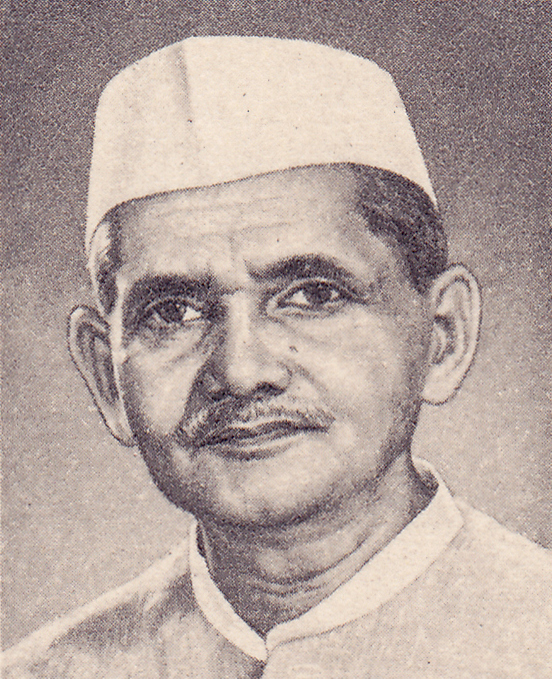
Lal Bahadur Shastri
 India
IndiaBirthday
+1904-10-02
Birth Sign
Libra
Birthplace
Pandit Deen Dayal Upadhyaya Nagar
Age
Died at 61
About
Lal Bahadur Shastri, born on 2 October 1904 in Mughalsarai, was an Indian politician who became the second prime minister of India, serving from 1964 until his death in 1966. Before that, he held the crucial post of home minister from 1961 to 1963. Shastri's journey into politics began early; he left school to join the non-cooperation movement, inspired by Mahatma Gandhi. He worked for the upliftment of Harijans in Muzaffarpur and dropped his caste-derived surname, Srivastava, as a mark of his commitment to social equality. He rose through the ranks of the Indian National Congress and eventually led several union ministries under Jawaharlal Nehru. As prime minister, Shastri championed two major initiatives. He backed the White Revolution, supporting the Amul milk cooperative and establishing the National Dairy Development Board to boost milk production. In 1965, he pushed for the Green Revolution, which dramatically increased food grain yields, especially in Punjab, Haryana, and Uttar Pradesh. His leadership during the 1965 India-Pakistan war was marked by the famous slogan "Jai Jawan, Jai Kisan" (Hail to the soldier; Hail to the farmer), which resonated deeply with the nation. The war concluded with the Tashkent Declaration on 10 January 1966, but just a day later, Shastri died of a heart attack, leaving behind a legacy of integrity and dedication to the common people.
Fame & Fandom
Lal Bahadur Shastri commands a global attention defined by historical reverence rather than the fluctuating metrics of modern celebrity culture. While his influence permeates national institutions and educational legacies across India, iFANN's Global Fame Engine has evaluated this person, but they do not currently hold a placement in the published rankings (Global Top 1,000 or a Top-100 scope list). The absence of a formal ranking reflects his status as a statesman whose legacy is institutionalized in airports, hospitals, and stadiums rather than measured by contemporary consumption signals or chart positions. Consequently, there is no documented fandom name for Lal Bahadur Shastri; his public following exists not as an organized fanbase engaging in rituals or campaigns, but as a citizenry that honors a former Prime Minister through state-sponsored commemoration and civic memory. Unlike pop icons who cultivate specific subcultures, Shastri's connection to the public was forged through austerity and leadership during times of war, leaving behind a silence that speaks louder than the noise of modern fame. The lack of a named fandom underscores the distinction between a political figure revered for service and a personality celebrated for entertainment value.
Interesting Facts and Legends
Lal Bahadur Shastri dropped his caste-derived surname Srivastava early in his career to signal a commitment to social equality, a decision that aligned with his lifelong work uplifting Harijans in Muzaffarpur. His tenure as Prime Minister was marked by the coinage of the slogan "Jai Jawan Jai Kisan" during the 1965 Indo-Pak war, a phrase that became the defining mantra for supporting both the military and the agricultural sector. A persistent legend surrounding his life concerns the mysterious circumstances of his death in Tashkent on January 11, 1966, just hours after signing the peace treaty. While official records cite a heart attack as the cause, folklore continues to circulate theories of foul play or poisoning, blending verified medical conclusions with enduring speculation about the events following the agreement. Shastri was also known for his scarcity in media appearances, making his rare 1964 BBC interview a significant archival moment often revisited on his death anniversary. This recorded voice remains one of the few direct glimpses into the demeanor of a man mythologized for his simplicity and quiet greatness.
Death & Aftermath
Died
+1966-01-11 (aged 61)
Death Place
Tashkent, Uzbekistan
Cause of Death
Heart attack
The nation observed a profound silence as Lal Bahadur Shastri's funeral procession moved through Delhi, culminating in his cremation at Raj Ghat. Tributes poured in from global leaders including Soviet Premier Alexei Kosygin and US President Lyndon B. Johnson, while the slogan Jai Jawan Jai Kisan became an enduring symbol of his legacy. In later years, the Government of India instituted the Lal Bahadur Shastri National Award for Excellence in Public Administration, Academics, and Management in 1999, and numerous institutions such as the Lal Bahadur Shastri Institute of Management and the Lal Bahadur Shastri Stadium bear his name. Shastri passed away on January 11, 1966, at the age of 61 within the Hotel Tashkent in Tashkent, Uzbekistan, just hours after signing the Tashkent Declaration with Pakistani President Ayub Khan.
Dr. B.N. Banerjee, the Prime Minister's personal physician, declared him dead upon arrival at the hospital following a collapse, ruling the cause as a heart attack based on immediate medical assessment without an independent post-mortem. While persistent speculation regarding foul play or poisoning has circulated due to the sudden nature of his death following high-stakes negotiations, no credible evidence has ever substantiated these claims, leaving the official ruling of myocardial infarction as the accepted historical fact. Following the official announcement, India entered a state of national mourning with spontaneous vigils and moments of silence observed across the country. The body was flown back to India on January 11, 1966, where a state funeral took place the next day attended by Prime Minister Indira Gandhi and thousands of citizens.
Awards & Accolades
Keywords
Quick Facts
- Profession
- politician
- Born
- +1904-10-02
- Birthplace
- Pandit Deen Dayal Upadhyaya Nagar
- Died
- +1966-01-11
- Death Place
- Tashkent
- Gender
- Male
- Spouse
- Lalita Shastri
- Birth Sign
- Libra
Personal Details
- Spouse
- Lalita Shastri
Join the community
fans discussing