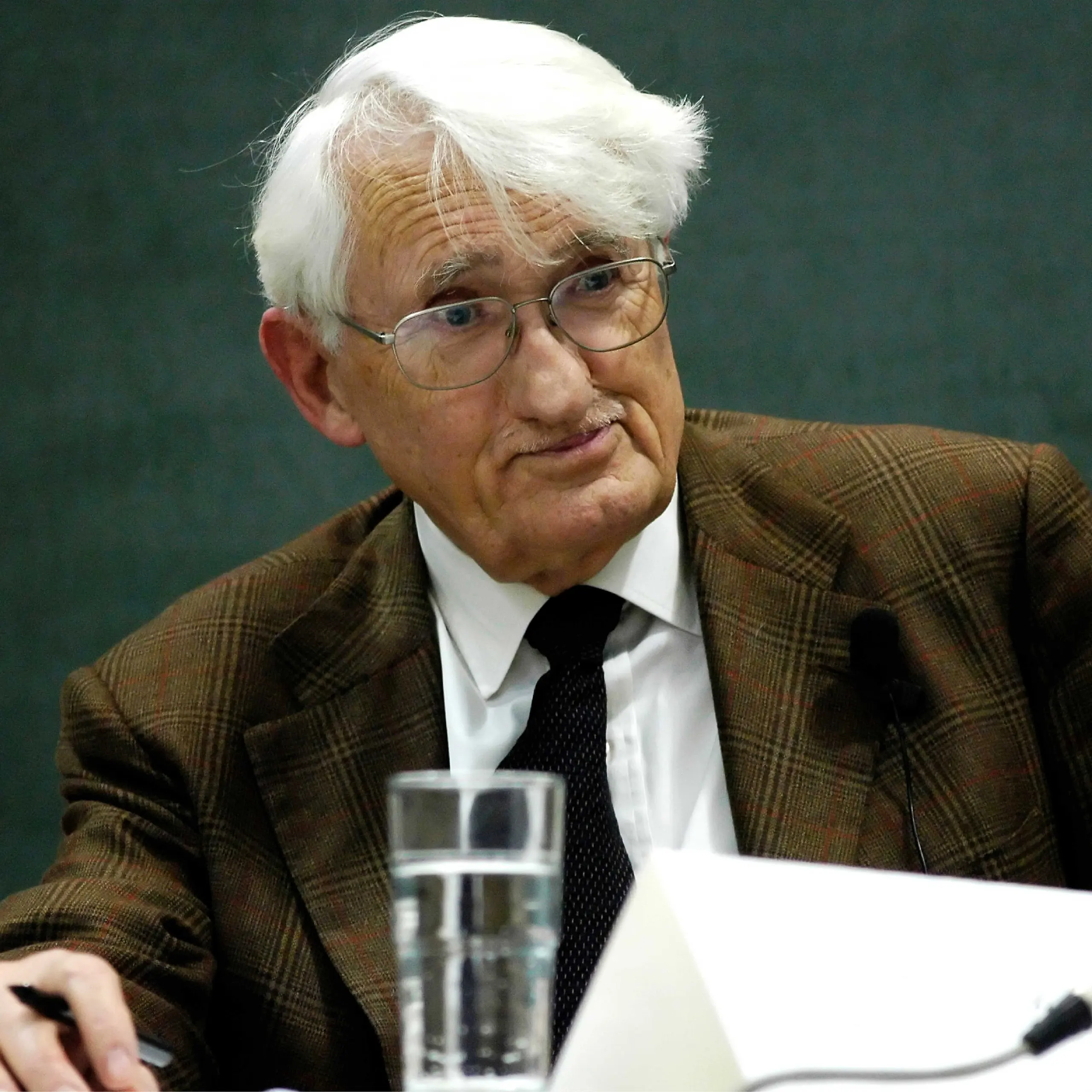
Jürgen Habermas
 Germany
sociologist•philosopher•university teacher
Birthday
June 18, 1929
Birth Sign
Gemini
Birthplace
Düsseldorf, Germany
Age
Died at 96
About
Jürgen Habermas (June 18, 1929 – March 14, 2026) was a German philosopher and social theorist whose work fundamentally reshaped critical theory, pragmatism, and democratic philosophy in the post-World War II era. As the leading figure of the second generation of the Frankfurt School, he is best known for developing the concepts of communicative rationality and the public sphere. His career spanned over six decades, during which he became one of the most cited and influential intellectuals of the 20th and early 21st centuries.
His major works include The Structural Transformation of the Public Sphere (1962), a foundational text analyzing the emergence and decline of bourgeois public discourse, and The Theory of Communicative Action (1981), which argued that rationality is grounded in interpersonal linguistic communication rather than instrumental reason. He also developed discourse ethics and famously described the Enlightenment as an "unfinished project" that needed correction, not abandonment. His thinking drew on American pragmatism, action theory, and poststructuralism, while engaging deeply with Max Weber's ideas on rationalization.
As a public intellectual, Habermas intervened in the West German Historikerstreit of 1986, accusing conservative historians of relativizing the Holocaust. He also advocated for deeper European political integration and, in a notable 2004 dialogue with Cardinal Joseph Ratzinger (later Pope Benedict XVI), explored the role of religion in secular societies. His work consistently focused on the possibility of reason, emancipation, and rational-critical communication latent in modern institutions and human deliberation.
Early Life & Background
Jürgen Habermas was born on June 18, 1929, in Düsseldorf, Germany, into a working-class family. His father, a Nazi party member and World War I veteran, died in 1939, leaving Habermas's mother to raise him as a single parent. This early exposure to the rise of National Socialism deeply influenced his later commitment to democracy, human rights, and the defense of Enlightenment values against authoritarianism. He grew up in a household where political discourse was central, fostering an early interest in social justice and philosophy.
Habermas attended high school in Düsseldorf before pursuing higher education at the University of Göttingen, the University of Zurich, and finally the University of Bonn. He completed his doctoral dissertation in 1954 at the University of Bonn under the supervision of Karl Löwith, focusing on Schelling. His early academic interests were shaped by the works of Max Weber, Karl Marx, and Sigmund Freud, but it was the critical theory of the Frankfurt School, particularly Theodor Adorno and Max Horkheimer, that defined his intellectual trajectory.
Before achieving global recognition, Habermas worked as a lecturer and researcher in the late 1950s. In 1956, he published his habilitation thesis, Strukturwandel der Öffentlichkeit (The Structural Transformation of the Public Sphere), which would become his magnum opus. This work analyzed the historical emergence and decline of the bourgeois public sphere in Western Europe, arguing that rational-critical debate was essential for democratic legitimacy. The book was initially met with skepticism but eventually gained widespread acclaim, establishing Habermas as a major voice in continental philosophy.
Career Growth
In 1961, Habermas was appointed professor of philosophy at the University of Heidelberg, where he taught until 1964. During this period, he began to engage more deeply with American pragmatism and action theory, further refining his ideas on communication and rationality. His appointment to the Goethe University Frankfurt in 1964 marked a turning point, as he took over the directorship of the Institute for Social Research, succeeding Max Horkheimer and Theodor Adorno.
The 1970s saw the development of his theory of communicative action, culminating in the two-volume The Theory of Communicative Action (1981). This work argued that rationality is grounded in interpersonal linguistic communication rather than instrumental reason. Throughout the 1980s, he engaged in the Historikerstreit (Historians' Dispute) of 1986, defending the uniqueness of the Holocaust against conservative historians who sought to relativize it. This intervention solidified his reputation as a moral authority in German politics.
During the 1990s, Habermas advocated for European political integration and wrote extensively on the role of religion in secular societies, including a notable 2004 dialogue with Cardinal Joseph Ratzinger (later Pope Benedict XVI). From the 2000s through the 2020s, he continued to publish on topics such as constitutional patriotism, the crisis of the welfare state, and the challenges of globalization. He remained active in public debates until shortly before his death, writing a new essay on the role of AI in democratic discourse just months before passing.
Career Timeline
Public Image & Style
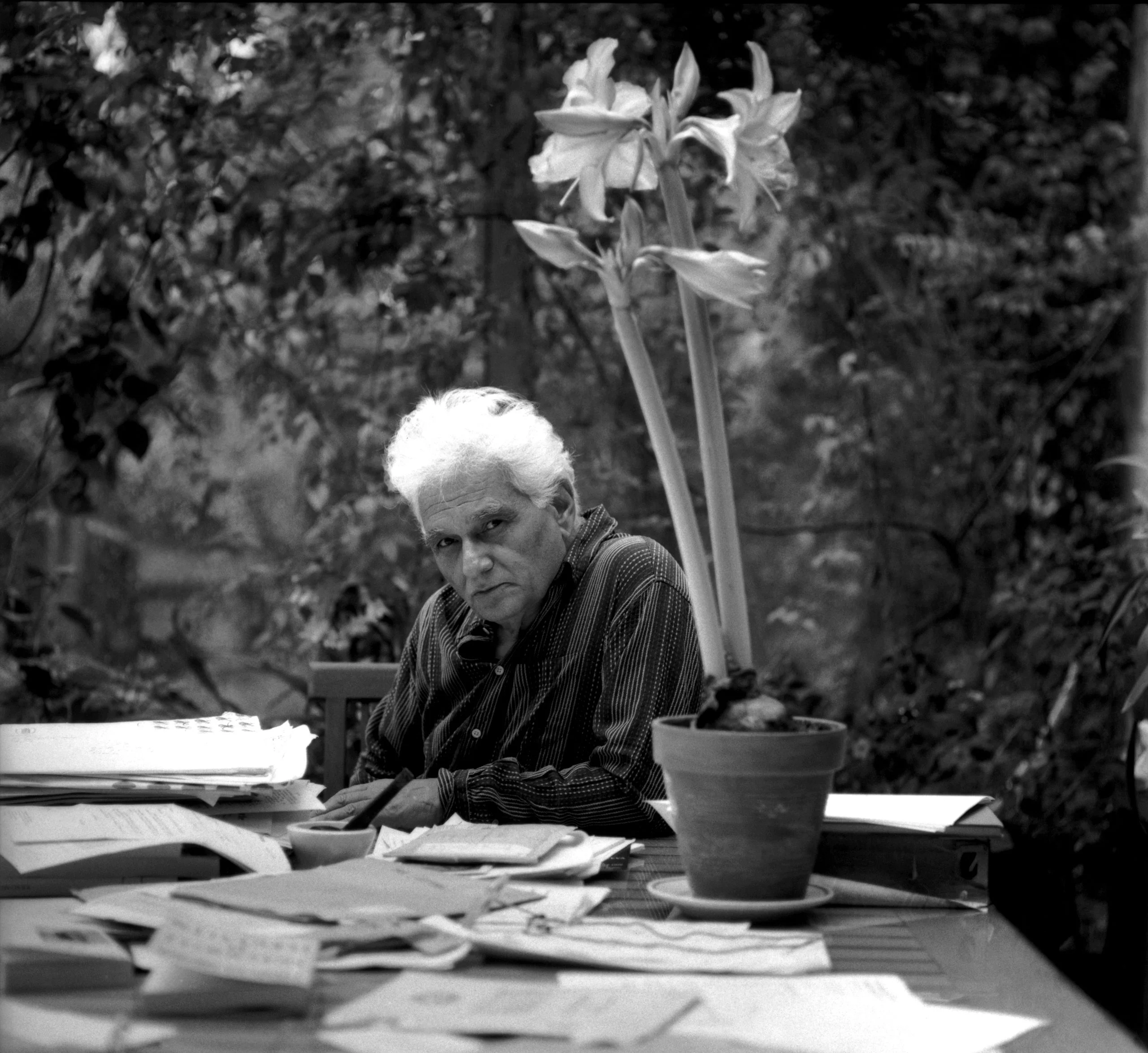
Habermas was portrayed as a serious, thoughtful intellectual who stood firmly for rational discourse and democratic values. Media coverage emphasized his unwavering commitment to Enlightenment ideals, even as they faced challenges from postmodernism and populism. He was known for his formal academic attire and distinguished bearing, often appearing in photographs as a tall, slender man. Unlike performers who inspire physical crowd reactions, Habermas inspired profound shifts in political science and sociology through his written works. His public persona was one of rigorous intellect and moral seriousness, never seeking celebrity status despite his global influence.
Fame & Fandom (iFAMOUS Rankings)
The community surrounding Jürgen Habermas is distinct in its composition, lacking the organized clubs or monikers typical of pop culture icons. His following consists entirely of scholars, students, and political theorists who engage with his work through rigorous academic study rather than fan rituals or campaigns. There are no documented fanbase names, charity drives, or viral social media movements dedicated to him; instead, his legacy is preserved through citations in scholarly journals and philosophical treatises worldwide. The absence of a formal fandom reflects his status as a titan of 20th-century thought whose influence permeates democratic theory and critical philosophy without the trappings of celebrity worship. While he engaged deeply with peers and students in public intellectual debates, these interactions were rooted in education and critique rather than idolatry. The most significant recent event marking this legacy was his passing on March 14, 2026, which triggered a global outpouring of tributes from the academic community, signaling the end of an era for post-war German philosophy. His contributions to the concept of the public sphere and his defense of Enlightenment reason remain the central narratives of his life's work. Regarding his standing in contemporary fame metrics, Jürgen Habermas is currently evaluated by iFANN but does not hold a placement in the published rankings. He is not ranked within the Global Top 1,000 nor on any Top-100 scope list. This evaluation confirms that while his intellectual impact remains profound, he does not currently appear in the iFANN Global Fame Engine's active charts.
Interesting Facts and Legends
Jürgen Habermas was a lifelong pacifist who opposed both World Wars, though he served briefly in the Wehrmacht during the final months of WWII. He was fluent in French, English, and Italian, in addition to his native German. Despite his immense fame, he rarely gave interviews and preferred to communicate through written works. A defining chapter of his legend involved his fierce defense of Enlightenment reason against postmodern cynicism, often described as a desperate fight for democracy. He revitalized Critical Theory as a leading figure of the second generation of the Frankfurt School, engaging in well-documented historical debates with contemporaries like Theodor Adorno and Max Horkheimer within academic halls. His seminal 1962 work, The Structural Transformation of the Public Sphere, stands as a foundational moment in modern political philosophy, defining how rational-critical debate functions in society.
Notable Quotes
“Democracy is not just a set of institutions; it is a way of life based on rational communication.”
“The Enlightenment is an unfinished project that must be corrected, not abandoned.”
“Reason is not the enemy of tradition; it is the means by which we can critically assess our traditions.”
Family & Personal Life
Jürgen Habermas was married to Ute Habermas-Wesselhoeft, a former colleague and fellow scholar. Their marriage lasted from 1959 until her death in 2020. There are no publicly documented romantic relationships prior to or outside of this marriage. Ute Habermas-Wesselhoeft passed away in 2020, making Habermas widowed for the final six years of his life. They had no children together. Habermas was known for his modest personal life, avoiding the limelight and focusing instead on his scholarly work. He lived primarily in Frankfurt and Starnberg, Germany, and was respected for his integrity and dedication to philosophical inquiry.
Notable Connections
Relationships & Dating History
Jürgen Habermas was married to Ute Habermas-Wesselhoeft, a former colleague and fellow scholar. Their marriage lasted from 1959 until her death in 2020. There are no publicly documented romantic relationships prior to or outside of this marriage. Ute Habermas-Wesselhoeft passed away in 2020, making Habermas widowed for the final six years of his life. They had no children together. Habermas was known for his modest personal life, avoiding the limelight and focusing instead on his scholarly work. He lived primarily in Frankfurt and Starnberg, Germany, and was respected for his integrity and dedication to philosophical inquiry.
- MarriedUte Habermas-Wesselhoeft1959 - 2020Marriage lasted until her death; no children.
Death & Aftermath
Died
March 14, 2026 (aged 96)
Death Place
Starnberg, Germany
Cause of Death
Natural causes
Jürgen Habermas passed away on March 14, 2026, at his home in Starnberg, Germany, at the age of 96. While his family and medical authorities did not release a specific clinical cause beyond natural causes associated with old age, the event marked the quiet end of a life dedicated to public intellectualism. Tributes arrived swiftly from the global academic community. The Carr Center for Human Rights Policy at Harvard University issued a statement honoring him as a pathbreaking thinker on democracy, while The New York Times published a comprehensive obituary highlighting his lifelong rejection of postmodern cynicism.
Media outlets worldwide reflected on his legacy immediately after his death. The Guardian described him as a defender of humane Enlightenment values whose passing left philosophy and the political Left poorer. Jacobin released an obituary emphasizing his profound impact on leftist thought and his demonstration of what philosophy could achieve in public discourse. Retrospective features soon followed, including a piece in The New Yorker titled "Jürgen Habermas Defended Reason in a Darkening Age," which explored his fight for democratic norms. Publications like Philosophy Now and the American Enterprise Institute published reflective essays such as "Breakfast with Habermas" and "A Serious Man" later that year, ensuring his ideas remained central to public debate.
A memorial service was held in Frankfurt, attended by scholars, politicians, and former students who gathered to honor the man who defined post-war German philosophy. Posthumous publications continued to appear, with new reflections on his theories published in journals like Social Theory & Practice. His widow, Ute Habermas-Wesselhoeft, had predeceased him in 2020, leaving him widowed for the final six years of his life. No immediate family survived him besides distant relatives, and his estate continues to manage his extensive archive of unpublished manuscripts and intellectual property through foundations dedicated to preserving his legacy.
Net Worth (Estate Value)
$1.3 Million
iFANN Editorial Team estimate
As a university professor and author, Jürgen Habermas's wealth was modest compared to celebrities. $1.3 million USD) at the time of his death in 2026. This included royalties from his extensive body of work, pension benefits from his academic positions, and real estate holdings in Germany. No significant business ventures or endorsement deals contributed to his income. The iFANN Editorial Team's analysis of his earnings, assets, and posthumous estate value points to roughly $1.3 million. His estate continues to generate revenue through licensing of his works and management of his intellectual property, with the bulk of his financial trajectory tied to his academic salary and book royalties accumulated over his long career.
Awards Won (7)
Habermas received numerous prestigious awards and honours throughout his career, including honorary doctorates from over 30 universities worldwide. He won the Leo Baeck Medal in 1998, the Balzan Prize and Karl Jaspers Prize in 2001, the Prince of Asturias Award for Concord in 2004, the Holberg International Memorial Prize in 2010, the Adorno Prize in 2015, and the Erasmus Prize in 2017. He was also awarded the Grand Cross Special Class of the Order of Merit of the Federal Republic of Germany.
1998 · Cultural History
Contributions to Jewish-German cultural history
2001 · Social and Political Philosophy
Work in social and political philosophy
Known For
The Structural Transformation of the Public Sphere
1962 · Author
The Theory of Communicative Action
1981 · Author
Between Facts and Norms
1992 · Author
Keywords
Sources
Quick Facts
- Profession
- sociologist, philosopher, university teacher
- Born
- June 18, 1929
- Birthplace
- Düsseldorf, Germany
- Died
- March 14, 2026
- Death Place
- Starnberg, Germany
- Gender
- Male
- Spouse
- Ute Habermas-Wesselhoeft
- Birth Sign
- Gemini
Personal Details
- Full Name
- Jürgen Habermas
- Spouse
- Ute Habermas-Wesselhoeft
- Children
- Education
- University of Göttingen; University of Zurich; University of Bonn
Frequently Asked Questions
Who was Jürgen Habermas?
When did Jürgen Habermas die?
What was Jürgen Habermas's most famous book?
Was Jürgen Habermas married?
What was Jürgen Habermas's net worth?
Join the community
fans discussing