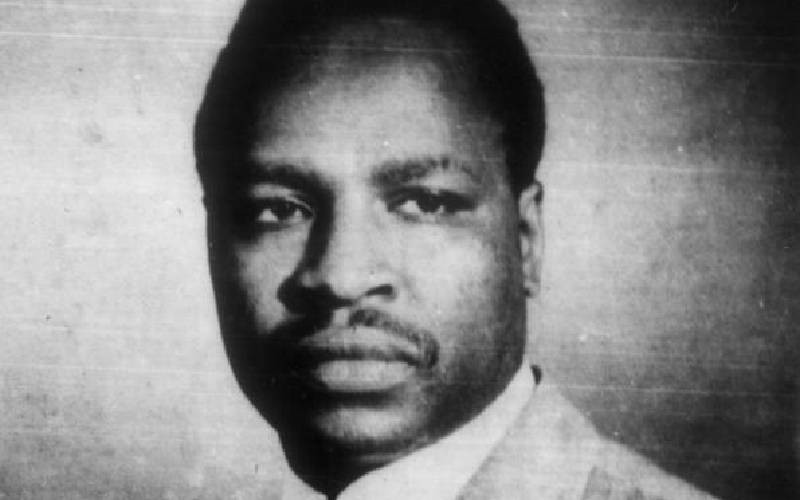
Josiah Mwangi Kariuki
 Kenya
KenyaAlso known as: J.M. Kariuki, JM
Birthday
March 21, 1929
Birth Sign
Aries
Birthplace
Kabati-ini, Laikipia County, Kenya
Age
Died at 45
About
Josiah Mwangi Kariuki, known across Kenya as JM, was a socialist politician and writer who challenged the economic direction of Jomo Kenyatta's government. Born on 21 March 1929, he used his platform to speak for the poor, coining the famous line that Kenya had become "a country of 10 millionaires and 10 million beggars." From independence in 1963 until his death in 1975, he held various government positions while pushing for land reform and wealth redistribution. His outspoken views made him a hero to many and a threat to those in power. He was assassinated on 2 March 1975, and suspicions have long pointed to high-ranking officials in the security establishment. His writing, including his autobiography Mau Mau Detainee, remains a powerful account of Kenya's struggle for freedom and its unfulfilled promises.
Early Life & Background
JM was born in Kabati-ini, a small town in what is now Laikipia County, in 1929. His parents, Kariuki Kigani and Mary Wanjiku, had been forcibly relocated by British colonial authorities from the Chinga tribal region to the Rift Valley in 1928, an experience that shaped his later political consciousness. Raised Protestant, he grew up in poverty, the only boy among five siblings.
His early schooling was patchy. He briefly attended Evanson's Day School in 1938 but dropped out because his family couldn't afford the fees. He then worked on a European settler's farm. A turning point came in 1946 when he won a substantial bet on a horse at the Nakuru Races, using the winnings to re-enroll in school. He completed primary education in 1950, then attended King's College Budo in Uganda for secondary school. He also spent time at a Catholic mission school at Karima and at Kerugoya Intermediate School run by Italian priests.
In 1952, he returned to Kenya at the dawn of the Mau Mau Emergency. Though he never fought in the bush, he strongly supported the independence movement and was detained in colonial camps including Lodwar and Mwea. Before entering politics, he worked as a farmer, schoolteacher, bookstore manager, and hotel manager. In 1961, he briefly studied at Oxford University.
Career Growth
After Kenya gained independence in 1963, JM's political career took off. He helped found the National Youth Service and served as its director, then held posts as assistant minister of agriculture and later assistant minister of tourism and wildlife. He also chaired the Betting and Lotteries Licensing Board and served as personal secretary to the president.
His memoir Mau Mau Detainee, published in 1963, detailed his experiences in colonial prisons and cemented his reputation as a writer and thinker. In 1968, he became an assistant minister in the Kenyatta government, a position he held until his death.
JM grew increasingly critical of the widening gap between rich and poor. In 1970, he told an audience at the University of Nairobi, "It takes more than a national anthem to create a nation." He also addressed students at Makerere University, calling Kenya's version of African Socialism "a total hoax." His famous warning about "10 millionaires and 10 million beggars" became a rallying cry.
In 1974, he was elected MP for Nyandarua North Constituency, despite government efforts to thwart his re-election because his popularity threatened Kenyatta's own. His assassination on 2 March 1975 cut short a career that had become a powerful voice for the poor.
Career Timeline
Public Image & Style
JM was seen as a champion of the common person, a rare voice of conscience in a government increasingly seen as corrupt and self-serving. His speeches were fiery and direct, and he wasn't afraid to criticize the president's inner circle. To many Kenyans, he represented the hopes of the Mau Mau struggle that had been betrayed by the new elite.
His assassination turned him into a martyr. Activists like Boniface Mwangi still invoke his warnings about inequality, noting that Oxfam reports the 125 richest Kenyans hold more wealth than roughly 77% of the population. His legacy is one of a man who paid the ultimate price for speaking truth to power.
Fame & Fandom (iFAMOUS Rankings)
Josiah Mwangi Kariuki commands a reverence distinct from modern celebrity fandoms, sustained not by organized fan clubs or digital campaigns but by an intergenerational political movement and cultural memory. His audience does not gather for birthday billboards or streaming chart pushes; instead, they engage through the retelling of his assassination as a defining moment of injustice and the recitation of his warnings about corruption as prophetic truths. The legacy surrounding him is anchored in historical documentation, academic study, and continuous political mobilization within Kenya, particularly in his home constituency of Ol Kalou where his spirit of defiance influences voter behavior. While no formal fandom name exists for his supporters, the collective reverence functions similarly to legendary lore, treating his life and death as foundational myths of resistance against elite power structures. In August 2026, the iFANN Global Fame Engine evaluated Josiah Mwangi Kariuki and determined that he currently holds no placement in the published rankings, including the Global Top 1,000 or any Top-100 scope list. This evaluation reflects his status as a historical figure whose fame is measured in national impact rather than global pop culture metrics.
Interesting Facts and Legends
JM was known for his sharp wit and memorable one-liners, once declaring that no one could sit comfortably at their table after meeting the eyes of a hungry child. He was an avid horse racing fan who fondly recounted how a 1946 bet funded his education, and despite his political stature, he never fought guerrilla warfare, a fact he openly acknowledged. His daughter later described her family as being robbed of a father, husband, brother, and friend. A story fans still retell involves his disappearance on March 2, 1975, while traveling from Nairobi to Ol Kalou, with his body found three days later near Thika having been shot multiple times with his head severed. Another iconic narrative centers on his book *Who Killed Captain Jack?*, which detailed allegations of corruption within the highest levels of government and caused such a stir that it led to his detention. In April 2026, his family won a 53-year-old property dispute against his former alleged dancers over land, a case that had dragged on for decades. Recent accounts also note the return of the spirit of defiance to Ol Kalou in July 2026, where voters continued to defy political tides in honor of his principles.
Notable Quotes
“It takes more than a national anthem to create a nation.”
“We are becoming a country of 10 millionaires and 10 million beggars.”
“There is no one among us here today who can sit comfortably at his table after meeting the eyes of a hungry child.”
Family & Personal Life
JM was the only boy among five siblings, born to Kariuki Kigani and Mary Wanjiku. His family was forcibly moved by British colonial authorities from the Chinga tribal region to the Rift Valley in 1928.
He had three wives and at least two children. His daughter has been a vocal advocate for justice, writing tributes and speaking publicly about the family's loss. The family continues to live in Kenya, and in 2026 they won a long-running property dispute, finally securing land that had been contested for over five decades.
Notable Connections
JM's life intersected with key figures in Kenya's independence era. He served under President Jomo Kenyatta, whose government he later criticized and who is widely believed to have ordered his assassination. His parents, Kariuki Kigani and Mary Wanjiku, shaped his early years. Contemporary activists like Boniface Mwangi continue to cite his legacy in their work on inequality.
Relationships & Dating History
Documentation of JM's romantic relationships is limited. He had three wives, though their names and marriage dates are not well-documented in available sources. He also had at least two children. After his death, there were women who claimed relationships with him, leading to a property dispute that was resolved in 2026 in favor of his family. At the time of his death, he was married.
- MarriedWife 1 (name unknown)First wife; details not documented.
- MarriedWife 2 (name unknown)Second wife; details not documented.
- MarriedWife 3 (name unknown)CurrentThird wife; married at time of death.
Death & Aftermath
Died
March 2, 1975 (aged 45)
Death Place
Ol Kalou, Nyandarua District, Kenya
Cause of Death
Stabbing with a panga
On the evening of February 28, 1975, Josiah Mwangi Kariuki departed a political meeting in Nairobi intending to travel to his home constituency, but he vanished before reaching Ol Kalou. His body was discovered on March 2, 1975, in a thicket near Ol Kalou in Nyandarua District, approximately one hundred kilometers from the capital. The official cause of death was established as stabbing with a panga, and the remains showed signs of severe mutilation. While the physical cause of death was established, the identity of the perpetrators remained unproven in court, though historical consensus and family belief attribute the killing to agents of the state acting under President Jomo Kenyatta due to Kariuki's criticism of government corruption.
The discovery of the body triggered immediate and massive public outrage across Kenya, transforming what should have been a private tragedy into a de facto protest against the ruling administration. Thousands gathered spontaneously in Nairobi and Ol Kalou for vigils, and the funeral procession stretched for miles as ordinary citizens walked alongside the hearse to pay their respects. High-ranking government officials largely avoided direct participation in the ceremonies, while opposition figures within the then-dominant party attended to honor the fallen leader. A coroner's inquest concluded that Kariuki was murdered by unknown persons, a finding widely rejected by supporters who viewed the investigation as an attempt to obscure state involvement.
In the decades following his assassination, Kariuki has been commemorated as a national hero whose writings and speeches remain influential texts in Kenyan political science. Streets and institutions bear his name, and his birthday is observed in political circles as a symbol of defiance against economic hardship and land injustice. Although no criminal charges were ever filed or convictions secured regarding his killing, the estate has seen significant legal activity, culminating in an April 2026 court ruling that resolved a fifty-three-year dispute over his land in favor of his surviving family members.
Net Worth (Estate Value)
$1 Million
iFANN Editorial Team estimate
As a deceased person, JM's net worth is measured through his estate. While specific estate valuations are not publicly available, the April 2026 court ruling that ended a 53-year dispute over his land indicates significant land holdings. The family of the late politician won this property dispute against his former alleged dancers, securing assets that had been contested for decades. The estate likely includes land and other property, but without detailed financial disclosures, an exact figure remains elusive. Per iFANN's editorial analysis, the estate's value is estimated at around $1 Million as of 2026, based on the known land holdings and the limited available information.
Awards & Accolades
View 1 records, honours and achievementsKnown For
Mau Mau Detainee
1963 · Author
Member of Parliament for Nyandarua North
1974 · MP
Assistant Minister in Kenyatta government
1968 · Assistant Minister
Keywords
Sources
Quick Facts
- Profession
- politician, writer
- Born
- March 21, 1929
- Birthplace
- Kabati-ini, Laikipia County, Kenya
- Died
- March 2, 1975
- Gender
- Male
- Birth Sign
- Aries
- Spouse
- Three wives
- Children
- At least 2
- Education
- King's College Budo, Uganda; briefly at Oxford University
Personal Details
- Full Name
- Josiah Mwangi Kariuki
- Children
- At least 2
- Education
- King's College Budo, Uganda; briefly at Oxford University (1961)
Frequently Asked Questions
Who killed JM Kariuki?
What did JM Kariuki say about Kenya's inequality?
What was JM Kariuki's role in Kenya's independence?
How did JM Kariuki die?
Was JM Kariuki married?
Join the community
fans discussing