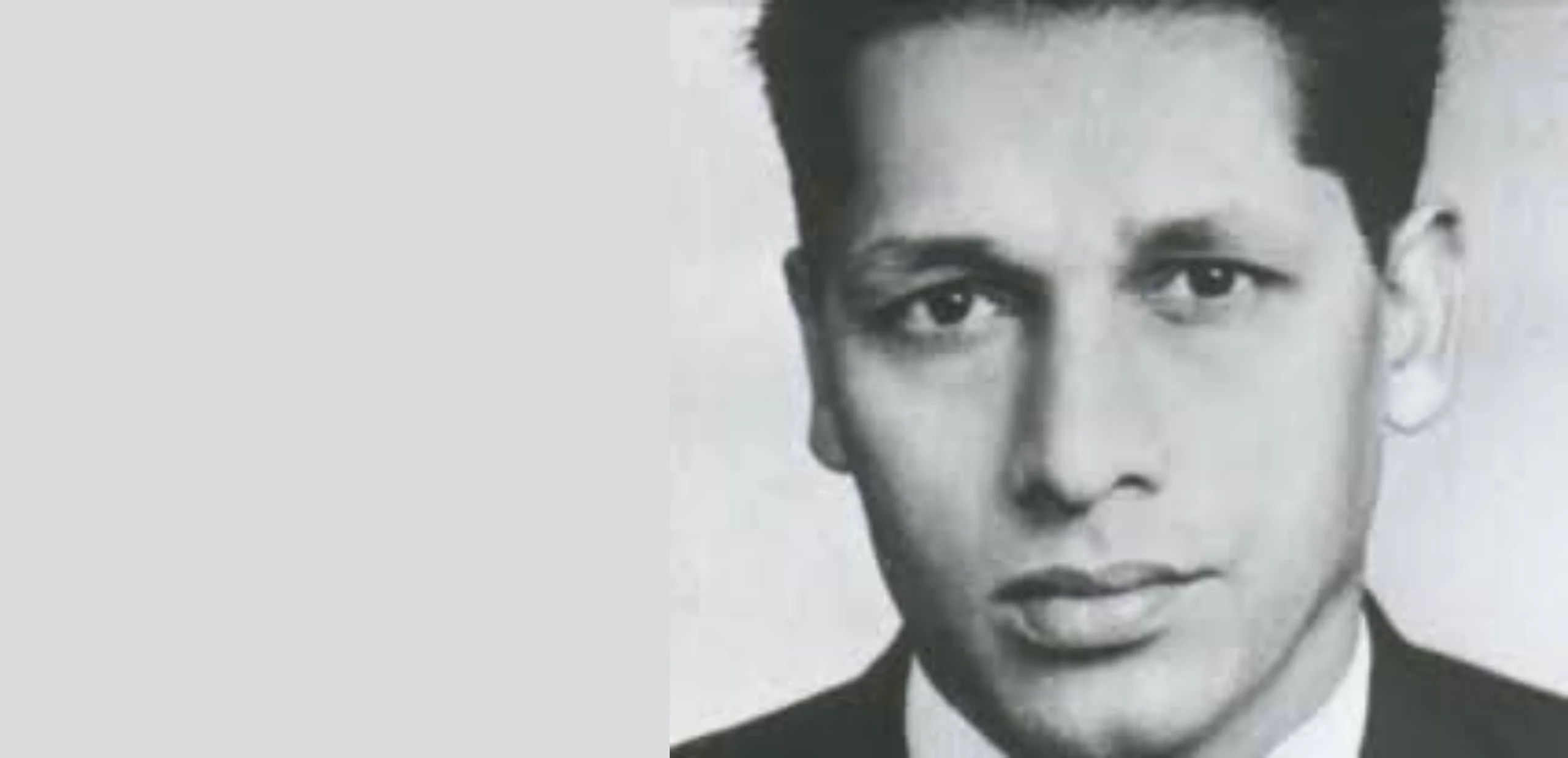
Pio Gama Pinto
 Kenya
Kenyapolitician•journalist•freedom fighter
Birthday
March 31, 1927
Birth Sign
Aries
Birthplace
Nairobi, Kenya Colony
Age
Died at 37
About
Pio Gama Pinto was a Kenyan journalist, politician, and freedom fighter whose socialist convictions placed him at the heart of Kenya's independence movement. Born on 31 March 1927 in Nairobi, Pinto was assassinated on 24 February 1965 at the age of 37, becoming what many consider independent Kenya's first political martyr.
Pinto is remembered for his radical commitment to the common person and his fierce opposition to both British colonialism and the post-independence capitalist direction of Kenya. He helped found the Kenya African National Union (KANU) and its newspaper, and he served as a Member of Parliament after independence. His legacy endures as a symbol of the struggle for social justice, and he is honoured as an unsung hero of Kenya's liberation.
Early Life & Background
Pio Gama Pinto was born on 31 March 1927 in Nairobi, Kenya Colony, to parents of Goan Catholic descent who had emigrated from Portuguese Goa. His father served as an official in the colonial government, and his mother was a housewife. The family belonged to the South Asian community that occupied a middle tier in Kenya's colonial racial hierarchy.
Pinto spent his early school years in India, studying there between 1938 and 1947. He studied science at Karnatak College in Dharwar for two years before joining the Indian Air Force in 1944 as an apprentice ground engineer. After his military service, he took a job at the Posts and Telegraph office in Bombay, where he participated in a general strike and became politically radicalized. His activism included joining liberation protests against British and Portuguese rule, working with trade unions, and becoming a founding member of the Goa National Congress. Colonial authorities issued an arrest warrant against him, forcing his return to Kenya in 1949.
Career Growth
Upon returning to Kenya, Pinto initially worked a succession of clerical jobs before becoming involved in local politics aimed at overthrowing British colonial rule. He turned to journalism, working with the Colonial Times and the Daily Chronicle, and also served as a correspondent for the Press Trust and All India Radio.
His career reached a critical turning point in 1954 when he was rounded up during Operation Anvil, a British military operation against suspected Mau Mau supporters in Nairobi. He spent the next four years in detention on Manda Island, followed by confinement at Kabarnet from early 1958 until October 1959. During his detention, he acted as a crucial bridge between the Mau Mau fighters and international support, coordinating the supply of firearms and serving as editor-in-chief of the pro-Mau Mau paper The High Command.
After his release, Pinto helped found the Kenya African National Union (KANU) and its newspaper, Sauti ya KANU, in 1960. He also founded the multi-racial Kenya Freedom Party before it merged with KANU in 1963. He later established the Pan African Press and became its Director and Secretary, and he published Sauti ya Mwafrika, Pan Africa, and Nyanza Times. Pinto played an active role in campaigning for KANU during the 1961 elections, which the party won. In 1963, he was elected as a Member of the Central Legislative Assembly, and in 1964 he became a Specially Elected Member of the House of Representatives. He worked to establish the Lumumba Institute in 1964 to train KANU party officials.
Following Kenya's independence on 12 December 1963, Pinto fiercely opposed Sessional Paper No. 10, which he viewed as legalising capitalism and betraying the poor masses who had fought for land. His socialist convictions placed him in direct opposition to the growing neo-colonialisation of Kenya under Jomo Kenyatta's regime.
Career Timeline
Public Image & Style
Pinto is remembered as a radical socialist, journalist, and freedom fighter who dedicated his life to the liberation of the Kenyan people. He is described as an unsung martyr whose role in Kenya's independence struggle has been largely forgotten, partly because he died aged just 37. His public image is that of a principled fighter for social justice who opposed both British colonialism and post-independence capitalism. He is celebrated for his commitment to the common person and his opposition to Sessional Paper No. 10, which he viewed as betraying the poor masses. His legacy is honoured in academic discourse and commemorative efforts, though he lacks the formal fandom culture associated with contemporary public figures.
Fame & Fandom (iFAMOUS Rankings)
Pio Gama Pinto commands a legacy defined not by the chaotic energy of pop culture fandoms, but by the solemn reverence of political historians and socialist activists. Unlike modern celebrities who cultivate organized fan clubs with specific names or birthday billboards, Pinto's supporters are found in lecture halls, commemorative services, and the corridors of anti-imperialist movements across Kenya. His audience does not stream his content or create viral hashtags; they study his life as a blueprint for social justice, gathering annually on February 24 to honor the man who gave his life for an equal society. This distinction marks him as a figure of historical gravity rather than entertainment, where the only ritual is the retelling of his assassination story, a narrative that serves as a stark warning about the fragility of independence. iFANN has evaluated Pinto's global standing with rigorous neutrality. Pio Gama Pinto does not currently hold a placement in the published rankings (Global Top 1,000 or a Top-100 scope list). The evaluation confirms that while his name resonates deeply within specific ideological circles, he does not currently hold a ranked position in the published iFANN rankings. There is no documented formal name for his fanbase.
Interesting Facts and Legends
Pio Gama Pinto studied science at Karnatak College before joining the Indian Air Force as an apprentice ground engineer in 1944. He coordinated the supply of firearms to Mau Mau fighters and edited the pro-Mau Mau paper The High Command. Detained for four years on Manda Island following Operation Anvil in 1954, he later founded the Kenya Freedom Party, which merged with KANU in 1963. His daughter Tereshka was in the car when he was assassinated. Pinto's widow and daughters migrated to Canada with the help of Joseph Murumbi after his death. His assassination was clearly politically motivated due to his opposition to neo-colonialisation under Kenyatta's regime. The legend surrounding Pinto centers on the verified tragedy of his death on February 24, 1965. While driving through Nairobi, he was shot dead at close range, accompanied by his eighteen-month-old daughter. This event stands as independent Kenya's first political assassination, transforming him into a symbol of the dangers faced by radical voices just two years after freedom. Stories from the Kenyan Left still recount how this educated journalist, born to Goan parents in Nairobi, used his platform as editor of the Daily Chronicle to challenge colonial powers until the very end. His murder silenced a fierce advocate for the common person, cementing his place in history as the nation's first political martyr.
Notable Quotes
“My father remains part of the country's story, even in death.”
“We must fight for the poor masses who fought for land.”
Family & Personal Life
Pinto's parents were of Goan Catholic descent, with his father serving as an official in the colonial government of Kenya and his mother as a housewife. He married Emma Christine Dias on 9 January 1954, just five months before his detention during Operation Anvil. The couple had three daughters: Linda (born circa 1958), Malusha, and Tereshka. Following Pinto's death, his widow Emma and their three daughters migrated to Canada with the help of his close friend Joseph Murumbi, who later served as Kenya's second Vice President.
Notable Connections
Relationships & Dating History
Pinto had only one documented relationship: his marriage to Emma Christine Dias. They married on 9 January 1954. The couple had three daughters together: Linda, Malusha, and Tereshka. Pinto was married at the time of his assassination on 24 February 1965, and his wife Emma survived him.
- MarriedEmma Christine Dias1954 - 1965Married on 9 January 1954; had three daughters; Pinto died in 1965.
Death & Aftermath
Died
February 24, 1965 (aged 37)
Death Place
Westlands, Nairobi, Kenya
Cause of Death
Assassination by gunshot
The Truth, Justice and Reconciliation Commission later concluded that the assassination of Pio Gama Pinto was motivated by ideological differences within the ruling party. On February 24, 1965, gunmen opened fire on him as he walked from his Westlands residence in Nairobi toward his car to attend a political meeting. The killing occurred during heated debates over Sessional Paper No. 10, which Pinto had fiercely opposed for legalizing capitalism and betraying the poor masses who fought for independence. Although no suspects were charged or brought to trial in the immediate aftermath, the event was definitively categorized as a targeted political act rather than an accident or natural death. Tributes from peers immediately highlighted his dedication to socialist ideals, cementing his status as Kenya's first post-independence political martyr.
Over decades, annual commemorations have been held on February 24th to honor his life, with the 60th anniversary marked in 2025 through academic reflections and media features. A documentary titled The Life and Times of Pio Gama Pinto now preserves his story alongside numerous books analyzing the Kenyan left. His widow, Emma Christine Dias, survived him and eventually migrated to Canada with their three daughters, where she lived until her passing in 2020. Foundations and scholarships established in his name continue to support students and activists committed to his vision for a socialist Kenya.
Net Worth (Estate Value)
Pio Gama Pinto did not accumulate significant personal wealth during his lifetime. As a socialist activist, journalist, and Member of Parliament in 1960s Kenya, he lived modestly. His estate value is not publicly documented. Following his death, his widow Emma and their three daughters migrated to Canada with assistance from Joseph Murumbi. No information is available regarding estate earnings or management.
Awards Won (1)
Pinto did not receive formal entertainment or cultural awards during his lifetime. However, he was posthumously honoured in 2008 when Kenya included him in the 'Heroes of Kenya' stamp series, formally recognising his contribution to the nation's independence struggle.
2008 · National Honour
Independence struggle
Known For
Kenya African National Union (KANU)
1960 · Co-founder
Sauti ya KANU
1960 · Founder and editor
Member of Parliament
1963 · Member of Central Legislative Assembly
Keywords
Sources
Quick Facts
- Profession
- politician, journalist, freedom fighter
- Born
- March 31, 1927
- Birthplace
- Nairobi, Kenya Colony
- Died
- February 24, 1965
- Death Place
- Nairobi
- Gender
- Male
- Birth Sign
- Aries
- Spouse
- Emma Christine Dias
- Children
- Linda, Malusha, Tereshka
Personal Details
- Full Name
- Pio Gama Pinto
- Spouse
- Emma Christine Dias
- Children
- Linda, Malusha, Tereshka
- Education
- Karnatak College, Dharwar, India
Frequently Asked Questions
Who assassinated Pio Gama Pinto?
Why was Pio Gama Pinto assassinated?
Was Pio Gama Pinto married and did he have children?
What was Pio Gama Pinto's role in Kenya's independence?
How old was Pio Gama Pinto when he died?
Join the community
fans discussing