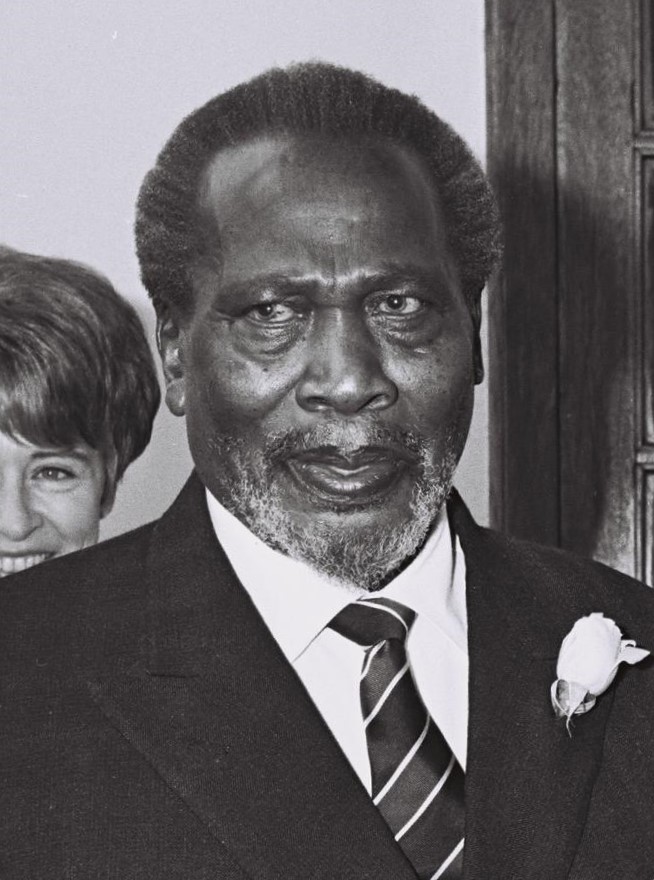
Jomo Kenyatta
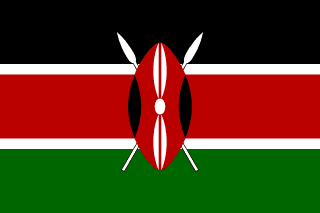 Kenya
KenyaBirthday
+1893-10-20
Birth Sign
Libra
Birthplace
Gatundu
Age
Died at 84
About
Jomo Kenyatta was a Kenyan anti-colonial activist and politician who led his country to independence and served as its first president. Born around 1897 to Kikuyu farmers in Gatundu, then part of British East Africa, he grew up under colonial rule. His early life included a mission school education and a string of jobs before politics took hold. By 1929, he was in London lobbying for Kikuyu land rights, and the 1930s saw him study at Moscow's Communist University of the Toilers of the East, University College London, and the London School of Economics. In 1938, he published an anthropological study of Kikuyu life, and during World War II, he worked as a farm laborer in Sussex. Kenyatta's political path sharpened through friendships with figures like George Padmore, embracing anti-colonial and Pan-African ideas. He co-organized the 1945 Pan-African Congress in Manchester, then returned to Kenya in 1946 to run a school. The following year, he became president of the Kenya African Union, lobbying for independence and drawing support from indigenous Kenyans while angering white settlers. In 1952, he was arrested with the Kapenguria Six, charged with masterminding the Mau Mau Uprising. He maintained his innocence, a view later historians largely share, but was convicted and imprisoned until 1959, then exiled until 1961. Released, Kenyatta took over the Kenya African National Union (KANU) and led it to victory in the 1963 elections. As Prime Minister, he oversaw the transition from colony to republic, becoming president in 1964. He consolidated power, moving toward a one-party state, suppressing dissent, and sidelining rivals like Oginga Odinga's Kenya People's Union. His government pursued capitalist policies, pushed "Africanisation" of the economy, and expanded education and healthcare. Land redistribution, funded by the UK, favored KANU loyalists and deepened ethnic tensions. Abroad, he joined the Organisation of African Unity and the Commonwealth, aligning Kenya with the West during the Cold War. He died in office in 1978, succeeded by Daniel arap Moi; his son Uhuru later became president. Kenyatta remains a divisive figure. To many, he is the Father of the Nation, honored as Mzee, who preached reconciliation between ethnic groups and Europeans. To critics, he was authoritarian and neocolonial, favoring Kikuyu interests and allowing corruption to fester. His legacy, however, is undeniable: he transformed Kenya from a British colony into an independent republic, a feat that defined his life and his nation's future.
Fame & Fandom
Jomo Kenyatta never had a fandom in the modern sense of cheering crowds or viral hashtags. There was no collective to rally behind with a specific name like a pop star's hive. Instead, his public relationship was defined by citizenship and reverence. The people called him Mzee, an elder title that carried the weight of a nation's history rather than the excitement of a concert. His legacy lives on through state institutions rather than fan clubs. The airport named for him remains a bustling hub of global travel, and schools bear his name as enduring monuments to his role as the founding father. He did not perform; he governed. Yet, the stories surrounding him have hardened into historical mythology. A persistent legend claims he managed the Mau Mau rebellion from the shadows before the British imprisoned him, turning his detention into the catalyst for his eventual presidency. Another narrative casts him as the Light of Kenya, a symbolic figure whose release marked the dawn of independence. These are not viral moments but foundational truths woven into the national fabric. The absence of a formal fanbase does not diminish his reach. His influence spans generations, cemented by the very infrastructure that still carries his name today. While he never sought the adoration of a celebrity, the nation itself became his devoted audience. Today, the iFANN Global Fame Rankings track this enduring impact. Jomo Kenyatta is currently ranked the 5th most famous person from Kenya. This placement holds steady from the previous cycle.
Interesting Facts and Legends
Born around 1897 to Kikuyu farmers in Gatundu, Kenyatta received a mission school education before working various jobs until politics took hold. By 1929, he was in London lobbying for land rights, and the 1930s saw him study at Moscow's Communist University of the Toilers of the East, University College London, and the London School of Economics. In 1938, he published an anthropological study of Kikuyu life, and during World War II, he worked as a farm laborer in Sussex. A widely retold story describes him as a "Mau Mau manager" who was arrested in 1952 and detained until 1961, a period that transformed him from a prisoner into a symbol of resistance. On December 12, 1963, Kenya gained independence, and Kenyatta assumed the role of Prime Minister before becoming the first President in 1964. He served until his death on August 22, 1978. The narrative of him as the "Light of Kenya" persists as a cultural construct reinforcing his status as the Father of the Nation. His name remains permanently attached to the country's primary international gateway, Jomo Kenyatta International Airport, which continues to serve as a central hub for the nation's economy.
Death & Aftermath
Died
+1978-08-22 (aged 84)
Death Place
Nairobi, Kenya
Cause of Death
Heart attack (myocardial infarction)
State House in Nairobi held its final quiet before dawn on August 22, 1978, as Jomo Kenyatta slipped into a sleep from which he would not wake. The first President of Kenya had been battling respiratory and cardiac issues for years, spending his final weeks hospitalized at the Kenyatta National Hospital before returning to the residence where he served since independence. The news triggered an immediate national mourning across the continent, with flags lowered to half-mast and tributes flowing in from leaders like Julius Nyerere and Kwame Nkrumah. Thousands gathered outside State House and along the procession route to Nyayo Fields for a state funeral on September 1, 1978, attended by Prince Philip and dignitaries from the Commonwealth and the Organization of African Unity.
His body rested in Gatundu, buried in a mausoleum built specifically for him amidst Kikuyu traditions and state protocol. In the decades that followed, his legacy was cemented through the renaming of the main international airport and the establishment of the Jomo Kenyatta University of Agriculture and Technology, while his estate passed to his family and foundations dedicated to education.
Awards & Accolades
Keywords
Quick Facts
- Profession
- journalist, politician
- Born
- +1893-10-20
- Birthplace
- Gatundu
- Died
- +1978-08-22
- Death Place
- Mombasa
- Gender
- Male
- Spouse
- Grace Wahu, Ngina Kenyatta
- Birth Sign
- Libra
Personal Details
- Spouse
- Grace Wahu, Ngina Kenyatta
Join the community
fans discussing