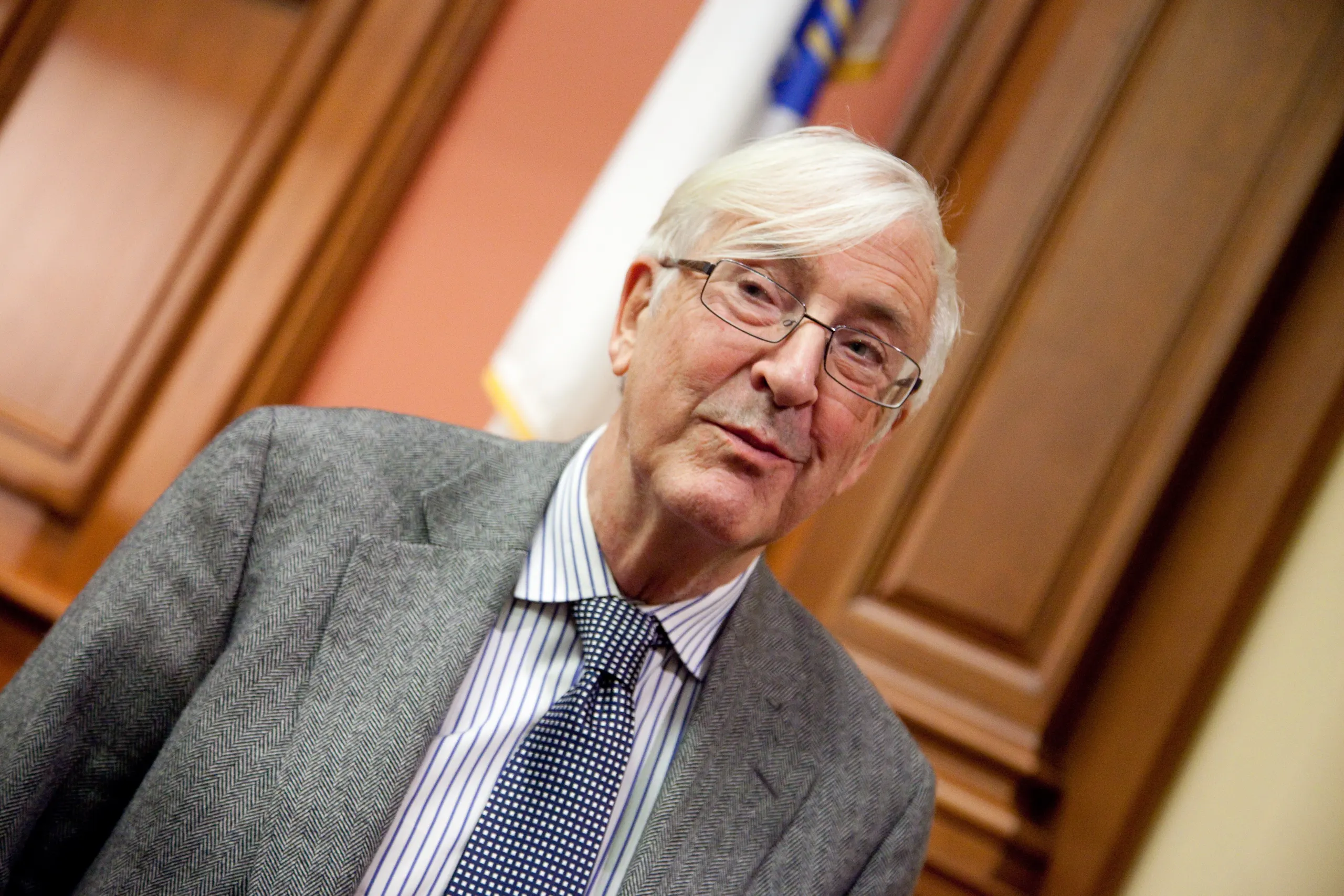
Jon Elster
 Norway
philosopher•political theorist•sociologist
Birthday
February 22, 1940
Birth Sign
Sagittarius
Birthplace
Oslo, Norway
Age
86 years old
About
Jon Elster is a Norwegian philosopher, political theorist, and sociologist born in Oslo on February 22, 1940. He stands as one of the most influential figures in modern social science, best known for founding the field of analytical Marxism and pioneering the application of rational choice theory to political behavior. His work rigorously examines the limits of human rationality, exploring how emotions, self-deception, and adaptive preferences shape social outcomes.
Currently, he holds the Robert K. Merton Professorship of Social Science at Columbia University in New York City, a position he has occupied since 1995. In addition to his American tenure, Elster serves as a professor of social science at the Collège de France in Paris, where he bridges European and American academic traditions. His career spans over five decades of teaching and research across some of the world's leading institutions.
Early Life & Background
Jon Elster was born in Oslo, Norway, during the final years of World War II, entering a Europe deeply scarred by conflict yet brimming with intellectual reconstruction. His early life unfolded within the rigorous academic environment of post-war Scandinavia, where he pursued undergraduate studies at the University of Oslo. Driven by a desire to engage with continental philosophy and sociology, he moved to France to attend the prestigious École Normale Supérieure in Paris. There, he immersed himself in the works of major thinkers who were reshaping French intellectual thought in the mid-20th century.
Elster completed his doctoral studies at the École Normale Supérieure in 1972, earning a PhD in social science. His dissertation work focused on the intersection of logic and social behavior, laying the groundwork for his future critiques of neoclassical economics. Before establishing his international reputation, he taught briefly at the University of Paris and the University of Oslo. These early years were defined by intense study and the development of his unique approach to analyzing irrationality within seemingly rational systems. He spent this period refining theories that would eventually challenge the standard economic assumption that humans always act to maximize their utility.
Career Growth
Elster's academic ascent began in earnest after his doctoral completion in 1972. He held teaching positions at the University of Paris and the University of Oslo before making a pivotal move to the United States in 1984. That year, he joined Columbia University as a Professor of Political Science, marking his entry into the American academic elite. By 1995, his contributions were recognized with the appointment to the Robert K. Merton Professorship of Social Science, a chair he continues to hold today.
In 2005, he expanded his transatlantic influence by becoming a professor of social science at the Collège de France in Paris. His scholarly output has been prolific and transformative. The 1981 publication of Snobs offered a groundbreaking analysis of class psychology and social stratification that remains a staple in sociology courses. His 1989 book Ulysses and the Sirens: Studies in Rationality and Irrationality introduced the metaphor of Ulysses binding himself to the mast to resist temptation into mainstream social science, influencing fields from behavioral economics to public policy. In 2007, he released Nuts and Bolts for the Social Sciences, a comprehensive methodological guide for researchers seeking to apply rigorous logic to social phenomena.
Recent years have seen him continue to produce significant work. In 2016, he received the Johan Skytte Prize in Political Science for his incisive examination of human behavior mechanisms. His recent publications include Exploitation as Domination (2025) and ongoing commentary on constitutional theory and the motivations of soldiers. As of 2026, he remains an active researcher and teacher, supervising graduate students and contributing to debates on the foundations of capitalism and democracy.
Career Timeline
Public Image & Style
Elster projects the image of the quintessential rigorous intellectual: serious, unpretentious, and deeply committed to logical consistency. Media portrayals focus almost exclusively on his writings, lectures, and theoretical contributions rather than any celebrity persona. He does not engage in fashion trends, viral social media campaigns, or the spectacle of modern celebrity culture. His public presence is defined by academic attire and scholarly discourse, reflecting a man who values substance over style. Critics and peers alike view him as a formidable thinker who challenges established norms without seeking attention for himself.
Fame & Fandom (iFAMOUS Rankings)
Jon Elster commands a following defined by rigorous intellectual engagement rather than the spectacle of celebrity culture. His audience consists primarily of students, scholars, and readers of his extensive corpus on rational choice theory and social science, with no organized fan clubs or formal moniker to unite them. While he has appeared in podcasts and interviews discussing complex theories such as adaptive preferences and sour grapes, these interactions represent academic discourse rather than the rituals of fandom. There are no documented campaigns, birthday tributes, or fan-funded projects associated with his name, nor is there any evidence of a specific group identifying itself as his supporters.
The concept of a dedicated fanbase engaging in viral marketing or public displays of adoration does not apply to a figure whose legacy rests on foundational texts like Nuts and Bolts for the Social Sciences and Snobs. Instead of crowds fainting at his lectures, his influence is measured by citations in academic literature and the enduring relevance of his work on self-control and political behavior. Although he remains a central figure in analytic narratives and continues to contribute to debates on human motivation, his fame operates within the quiet corridors of academia rather than the global spotlight. iFANN has evaluated his standing within the broader cultural landscape, yet current data indicates that he does not hold a placement in the published Global Top 1,000 rankings or any scope-specific top-100 lists. Consequently, no numerical rank or score can be assigned to his current level of global recognition, reflecting his status as a distinguished scholar rather than a ranked pop culture icon.
Interesting Facts and Legends
Elster developed the concept of "adaptive preferences," often referred to as "sour grapes," which argues that individuals unconsciously adjust their desires to fit their circumstances rather than changing their circumstances to fit their desires. This idea has become a cornerstone of behavioral economics and is frequently taught alongside the work of Daniel Kahneman and Amos Tversky. Despite being Norwegian, he has spent the majority of his professional life in the United States and France, contributing significantly to three distinct national academic traditions.
He was a key member of the "September Group," an initiative formed in the 1970s to reinterpret Marxist ideas through the lens of analytic philosophy and rational choice theory. His writing often features aphorisms on human nature, such as his observation that rationality is the ability to choose the best means to achieve one's ends but does not guarantee those ends are good. The metaphor of Ulysses binding himself to the mast to resist the Sirens' song, used in his 1989 book, has entered popular culture as a shorthand for pre-commitment strategies in addiction and self-control.
Notable Quotes
“Rationality is the ability to choose the best means to achieve one's ends, but it does not guarantee that one's ends are good.”
“Self-deception is a strategy for coping with cognitive dissonance, often involving the suppression of uncomfortable truths.”
“People adapt their desires to their circumstances, making them less likely to feel deprived even when they are objectively so.”
Family & Personal Life
Jon Elster maintains a strictly private personal life that is rarely discussed in public records or interviews. Unlike many public intellectuals who share details about their domestic arrangements, Elster keeps his family matters separate from his academic output. There are no credible reports of a spouse, children, or romantic partners in the available biographical data. He appears to be a solitary figure who dedicates his time almost exclusively to his scholarship and teaching. While he has close professional collaborations and friendships within the academic community, his immediate family circle remains out of the public eye.
Notable Connections
Relationships & Dating History
Jon Elster maintains a strictly private personal life. Unlike pop culture icons, there are no public records of romantic relationships, marriages, engagements, or dating history. He has never publicly discussed a partner, nor have any credible sources documented a spouse or children. The available biographical data indicates he is a solitary figure focused entirely on his academic pursuits. As of 2026, there is no information suggesting he is currently married, divorced, or in a relationship; his biography remains devoid of domestic details, consistent with his reputation as a scholar who keeps his private life separate from his public intellectual output. Consequently, there are no children attributed to him in public records.
Salary, Net Worth In 2026
$5 Million
iFANN Editorial Team estimate
As a tenured professor at Columbia University and the Collège de France, Jon Elster's wealth is derived from academic salaries, royalties from his extensive library of books, and lecture fees. Specific net worth figures are rarely published for non-celebrity academics. Estimates based on his long-standing position as a high-ranking professor suggest a comfortable middle-to-upper-class income typical of senior university faculty in the US and Europe. However, unlike entertainers, he does not have publicized real estate holdings, endorsement deals, or business ventures. The iFANN Editorial Team estimates his net worth at approximately $5 million based on his career earnings and asset profile.
Awards Won (1)
Jon Elster has received significant academic honors throughout his career. In 2016, he was awarded the Johan Skytte Prize in Political Science by the University of Uppsala and the Swedish Riksdag. This award recognized his incisive, penetrating, and unceasing drive to examine and reexamine the mechanisms of human behavior. He also holds the Robert K. Merton Professorship at Columbia University, a distinction signifying his standing as a leading social scientist. Additionally, he is a member of the Royal Norwegian Academy of Science and Letters.
2016 · Political Science
Lifetime Achievement
Known For
Ulysses and the Sirens: Studies in Rationality and Irrationality
1989 · Author
Snobs
1981 · Author
Nuts and Bolts for the Social Sciences
2007 · Author
Exploitation as Domination
2025 · Author
Keywords
Sources
Quick Facts
- Profession
- philosopher, professor, sociologist
- Born
- February 22, 1940
- Birthplace
- Oslo, Norway
- Gender
- Male
- Birth Sign
- Sagittarius
Personal Details
- Full Name
- Jon Elster
- Children
- Education
- University of Oslo; École Normale Supérieure (PhD, 1972)
Frequently Asked Questions
Who is Jon Elster?
Where does Jon Elster teach?
Is Jon Elster married?
What is Jon Elster's most famous book?
Did Jon Elster win the Nobel Prize?
Join the community
fans discussing