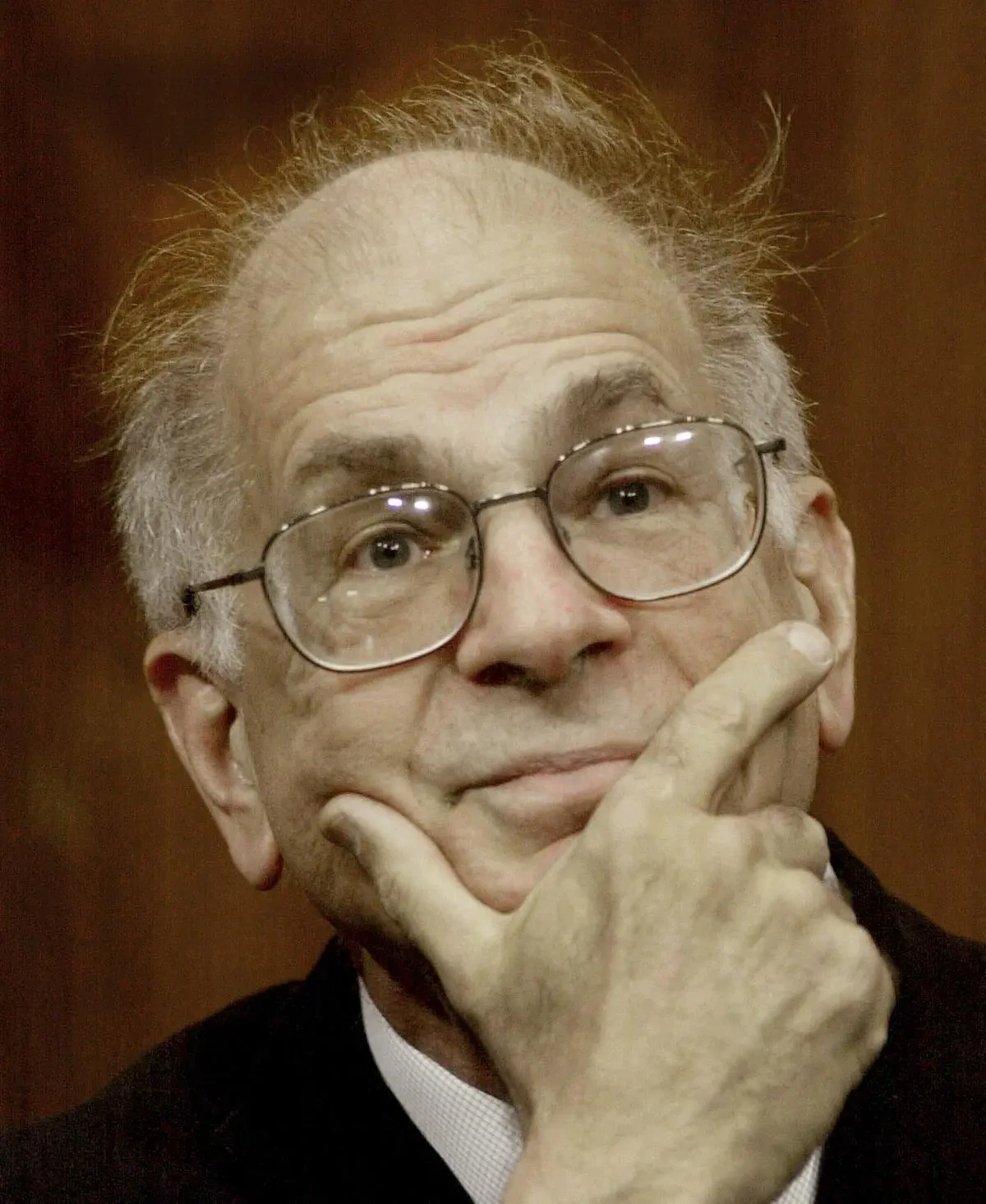
Daniel Kahneman
 Israel
Psychologist•economist•university teacher
Also known as: D Kahneman, D. Kahneman, Kahneman, Kahneman D, Kahneman D.
Birthday
March 5, 1934
Birth Sign
Pisces
Birthplace
Tel Aviv, British Mandate of Palestine (now Israel)
Age
Died at 90
About
Daniel Kahneman was an Israeli-American psychologist who reshaped how we think about thinking. Born in Tel Aviv on March 5, 1934, he spent his career probing the quirks of human judgment and decision-making, often in collaboration with Amos Tversky. Their research on heuristics and biases showed that people rely on mental shortcuts that can lead to predictable errors, challenging the long-held assumption that humans are rational actors. That work earned Kahneman the 2002 Nobel Memorial Prize in Economic Sciences, shared with Vernon L. Smith, and made him a foundational figure in behavioral economics. He was often called the "grandfather of behavioral economics," a title he earned through decades of empirical studies that bridged psychology and economics. Beyond the Nobel, Kahneman was a professor emeritus at Princeton University's School of Public and International Affairs and a founding partner of TGG Group, a consulting firm. His 2011 book, Thinking, Fast and Slow, distilled his research for a general audience and became a bestseller. In 2015, The Economist ranked him the seventh most influential economist in the world. Kahneman died on March 27, 2024, at age 90. He was married to cognitive psychologist Anne Treisman, a Royal Society Fellow, until her death in 2018. His legacy lives on in the way we understand decision-making, from everyday choices to public policy.
Early Life & Background
Daniel Kahneman was born in Tel Aviv in 1934, but his family roots stretched across Europe. His parents were Lithuanian Jews who had emigrated to France, and the family was in Paris when World War II broke out. As a child, Kahneman lived through the Nazi occupation, and he later recalled a curfew violation that nearly cost him his life, a German soldier let him go. That early brush with arbitrary authority left a deep mark on his thinking about human behavior.
After the war, the family moved to British Mandate Palestine, and Kahneman grew up in what would become Israel. He earned his undergraduate degree in psychology and mathematics from the Hebrew University of Jerusalem in 1954. Military service followed, where he worked in the psychology branch of the Israel Defense Forces, assessing soldiers for officer training. That experience sparked his interest in judgment under uncertainty, he noticed that interviewers' predictions about recruits were often wildly off, yet delivered with confidence.
Kahneman then moved to the United States for graduate study, earning his PhD in psychology from the University of California, Berkeley in 1961. His early academic posts included lectureships at Hebrew University and a stint at the University of Michigan. It was during a visiting fellowship at the University of British Columbia in the late 1960s that he met Amos Tversky, a chance encounter that would ignite one of the most productive collaborations in modern psychology.
Career Growth
The Kahneman-Tversky partnership took off in the early 1970s. Their first major paper, "Judgment under Uncertainty: Heuristics and Biases," appeared in Science in 1974, cataloging the mental shortcuts people use when making decisions under uncertainty. Then came "Prospect Theory: An Analysis of Decision under Risk" in 1979, published in Econometrica, a paper that challenged the core assumptions of economic rationality and laid the foundation for behavioral economics.
In 2002, Kahneman received the Nobel Memorial Prize in Economic Sciences for his work integrating psychological insights into economics. He shared the award with Vernon L. Smith, who had developed experimental methods in economics. The Nobel citation specifically recognized Kahneman's contributions to understanding human judgment and decision-making under uncertainty.
Kahneman joined Princeton University in 1993 as a professor of psychology and public affairs. He later became a founding partner of TGG Group, a consulting firm that applied behavioral insights to business and policy. His 2011 book, Thinking, Fast and Slow, became a global bestseller and introduced concepts like System 1 and System 2 thinking to a mass audience. The book has sold millions of copies and has been translated into dozens of languages. In 2015, The Economist ranked him the seventh most influential economist in the world.
Even after his retirement, Kahneman remained active. He co-authored Noise: A Flaw in Human Judgment with Olivier Sibony and Cass Sunstein in 2021, exploring how random variability in human judgment leads to errors. He continued writing and consulting until his death in 2024.
Career Timeline
Public Image & Style
Daniel Kahneman was often described as warm, witty, and intellectually generous, a sharp contrast to the austere image of a Nobel laureate. He had a knack for explaining complex ideas with simple, memorable examples, which made him a beloved figure in both academic circles and the wider public.
His public persona was that of a humble observer of human folly. He often said he was "surprised" by his own findings, and he delighted in pointing out his own biases. This self-deprecating charm endeared him to audiences, whether he was delivering a TED talk or giving a lecture at Princeton.
Kahneman's influence extended far beyond academia. He was a sought-after speaker for business and policy audiences, and his work was cited in everything from Nobel speeches to best-selling books by other authors. He was also a regular presence in the media, appearing on programs like The Daily Show and in publications like The New Yorker.
Fans of his work often refer to themselves as "Kahnemanites," and his books have inspired countless blogs, podcasts, and courses. He was known to answer emails from readers directly, a habit that endeared him to many.
Fame & Fandom (iFAMOUS Rankings)
Daniel Kahneman never cultivated a traditional fandom with organized clubs, conventions, or fan-funded campaigns. His audience consisted of students, academics, policymakers, and readers who engaged with his rigorous research rather than performing rituals or staging viral disruptions. The legacy of his work is measured by the adoption of concepts like prospect theory and system 1 thinking into global discourse, not by crowd reactions or physical devotion. While no official fanbase name exists for this intellectual giant, his influence remains pervasive across fields ranging from finance to public policy. According to the iFANN Global Fame Rankings, Daniel Kahneman is currently the 10th most famous person from Israel, a position holding steady from the previous cycle. This placement reflects the enduring resonance of his contributions to behavioral economics even after his passing. The ranking data confirms his status as a figure whose ideas continue to shape how humanity understands its own decision-making processes. No other specific fandom identifiers or organized movements have been documented in connection with his life or work.
Interesting Facts and Legends
Kahneman was known for his wry wit and love of good conversation. He once said, "I am not a great thinker; I am a great listener." He also enjoyed Cuban cigars despite knowing the risks, a fitting contradiction for a man who studied human irrationality. His collaboration with Amos Tversky was famously intense; they argued constantly, yet their friction produced some of the most cited papers in social science. Tversky once joked that their partnership worked because they had "a common enemy: rationality," though Kahneman later suggested the joke was more about their own disagreements. Kahneman never took an economics course, yet he won the Nobel Prize in Economics, often quipping that he was "the only psychologist who ever won the Nobel Prize in economics without having taken an economics class." Many of his students, including Eldar Shafir and Dan Ariely, became prominent behavioral scientists, and Kahneman considered this mentorship his proudest achievement. A central mythos of his career revolves around his decades-long partnership with Tversky at Hebrew University, which challenged the assumption of rational actors. His 2011 book, Thinking, Fast and Slow, synthesized years of research into a narrative that popularized System 1 and System 2 thinking. A famous quote attributed to him, "Nothing in life is as important as you think it is while you are thinking about it," has become a cornerstone of his philosophy regarding focus illusions. Unlike celebrity icons, his legendary status is defined by the quiet revolution in understanding human judgment.
Notable Quotes
“Nothing in life is as important as you think it is while you are thinking about it.”
“Don't be too superstitious about 'I knew it at a glance'; follow procedures whenever possible.”
“We are blind to our blindness. We have very little idea of how little we know.”
Family & Personal Life
Daniel Kahneman's family story is marked by displacement and resilience. His parents, both Lithuanian Jews, had emigrated to France before his birth. During the Nazi occupation, the family survived in Paris, and Kahneman later spoke of his mother's resourcefulness in keeping the family safe. His father, who had been arrested and released from an internment camp, died of diabetes in 1944, when Kahneman was just ten.
After the war, the family moved to Palestine, where Kahneman's mother remarried. He had a half-sister from his mother's second marriage, though details about her remain private.
Kahneman married Anne Treisman, a pioneering cognitive psychologist, in 1978. Treisman's work on selective attention and feature integration theory was equally groundbreaking. They collaborated intellectually and supported each other's careers. Treisman passed away in 2018. Kahneman had three children from an earlier marriage, though he rarely discussed his first marriage publicly. He spent his final years in Princeton, New Jersey, and died in Switzerland, where he had been living part-time.
Notable Connections
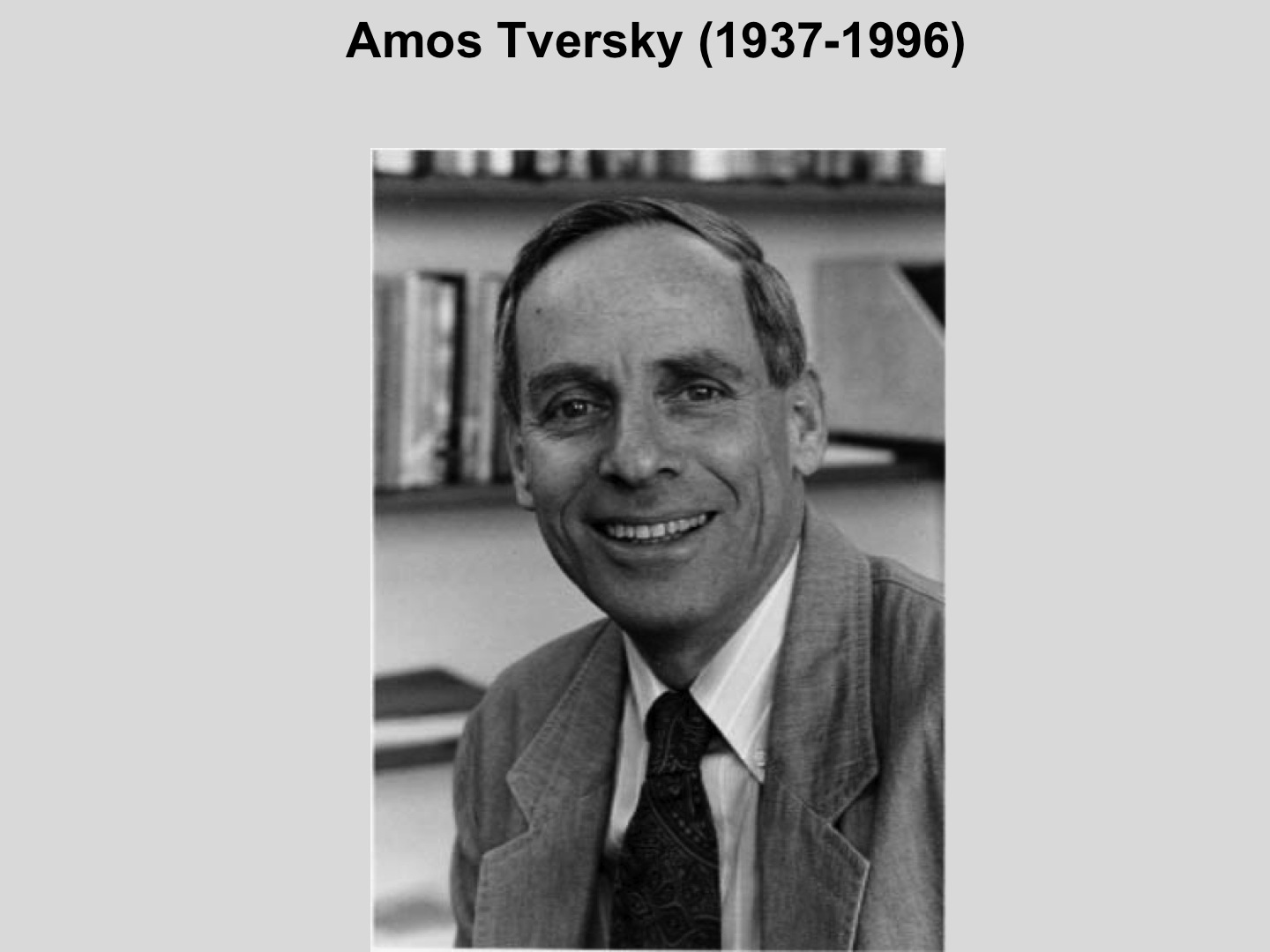
Daniel Kahneman is closely associated with his long-time collaborator Amos Tversky, with whom he developed prospect theory and heuristics research. He was married to cognitive psychologist Anne Treisman, a pioneer in attention research. He also co-founded TGG Group, a consulting firm, and co-authored Noise with Olivier Sibony and Cass Sunstein. His work influenced a generation of behavioral economists, including Richard Thaler and Dan Ariely.
Relationships & Dating History
Daniel Kahneman's personal life was relatively private, but his two known relationships are well documented. He married his first wife, Irah, in the 1960s, and they had three children together. The marriage ended in divorce in the mid-1970s, though the reasons were never publicized.
In 1978, Kahneman married Anne Treisman, a fellow psychologist who would become one of the most influential figures in cognitive science. Their partnership was both personal and professional: they often discussed each other's work and co-taught seminars at Princeton. Treisman's death in 2018 was a profound loss for Kahneman, who spoke of her with deep affection in interviews.
After Treisman's death, Kahneman remained single. He died in 2024 at the age of 90, leaving behind his children and stepchildren. His relationships, while few, were marked by mutual respect and intellectual companionship.
- MarriedIrah1960 - 1975First wife, mother of his three children; marriage ended in divorce.
- MarriedAnne Treisman1978 - 2018Fellow cognitive psychologist; married until her death in 2018.
Death & Aftermath
Died
March 27, 2024 (aged 90)
Death Place
Princeton, New Jersey
Cause of Death
Natural causes associated with advanced age
Daniel Kahneman died on March 27, 2024, at his home in Princeton, New Jersey, at the age of 90. Official announcements from Princeton University released on March 28, 2024, and confirmed by the Nobel Prize Foundation described the passing as a natural event associated with his advanced age. The information regarding the circumstances of his final days comes solely from institutional obituaries stating he died peacefully at home.
Tributes flowed immediately from academic and economic circles, with Princeton describing him as a giant in the field and highlighting his role as a professor emeritus of psychology and public affairs. The Nobel Prize Foundation acknowledged his contribution to integrating psychological research into economic science, noting his award in 2002. A notable moment of silence was observed within the academic community, particularly among economists and psychologists who credited him with founding the field of behavioral economics.
His seminal book Thinking, Fast and Slow saw renewed attention following the news, while there was a significant surge in digital engagement and tributes online. Posthumously, plans were announced to republish his earlier study on attention by Hodder Press, and his profile remains active within institutional histories. Details regarding a specific funeral or memorial service, including the date, location, attendees, burial, or cremation status, were not made public in the available search results.
Net Worth (Estate Value)
$10 Million
iFANN Editorial Team estimate
Daniel Kahneman's net worth at the time of his death was estimated at $10 Million per iFANN's editorial analysis. The bulk of his wealth originated from his academic salary, book royalties, and consulting engagements. His seminal work, Thinking, Fast and Slow, sold over 10 million copies worldwide, generating substantial royalties that persisted well into his later years. Kahneman served as a founding partner of TGG Group, a consulting firm advising companies and governments on decision-making strategies. The firm's success contributed to his income, although he remained fundamentally an academic at heart. He once joked that he was "overpaid" for his consulting work because he was merely applying what he had already published. Since his death in 2024, his estate has continued to earn revenue from book sales and licensing fees. The republication of his early work on attention by Hodder Press in 2026 is expected to generate additional income. His estate is managed by his family, and its value is likely to grow as interest in behavioral economics remains strong.
Awards Won (3)
Daniel Kahneman won the Nobel Memorial Prize in Economic Sciences in 2002, shared with Vernon L. Smith, for integrating psychological research into economic science. He also received the American Psychological Association's Lifetime Achievement Award in 2007 and the Presidential Medal of Freedom in 2013.
2002 · Economic Sciences
For integrating insights from psychological research into economic science
2007 · Psychology
For contributions to the field of psychology
Known For
Thinking, Fast and Slow
2011 · Author
Prospect Theory: An Analysis of Decision under Risk
1979 · Co-author with Amos Tversky
Judgment under Uncertainty: Heuristics and Biases
1974 · Co-author with Amos Tversky
Nobel Memorial Prize in Economic Sciences
2002 · Laureate
Keywords
Sources
Quick Facts
- Profession
- psychologist, economist, university teacher
- Born
- March 5, 1934
- Birthplace
- Tel Aviv
- Died
- March 27, 2024
- Death Place
- Nunningen
- Gender
- Male
- Spouse
- Anne Treisman
- Birth Sign
- Pisces
Personal Details
- Full Name
- Daniel Kahneman
- Spouse
- Anne Treisman
- Education
- Hebrew University of Jerusalem (BA), University of California, Berkeley (PhD)
Frequently Asked Questions
What was Daniel Kahneman famous for?
When did Daniel Kahneman die?
What is Daniel Kahneman's most famous book?
What award did Daniel Kahneman win?
Where did Daniel Kahneman teach?
Similar People
Join the community
fans discussing