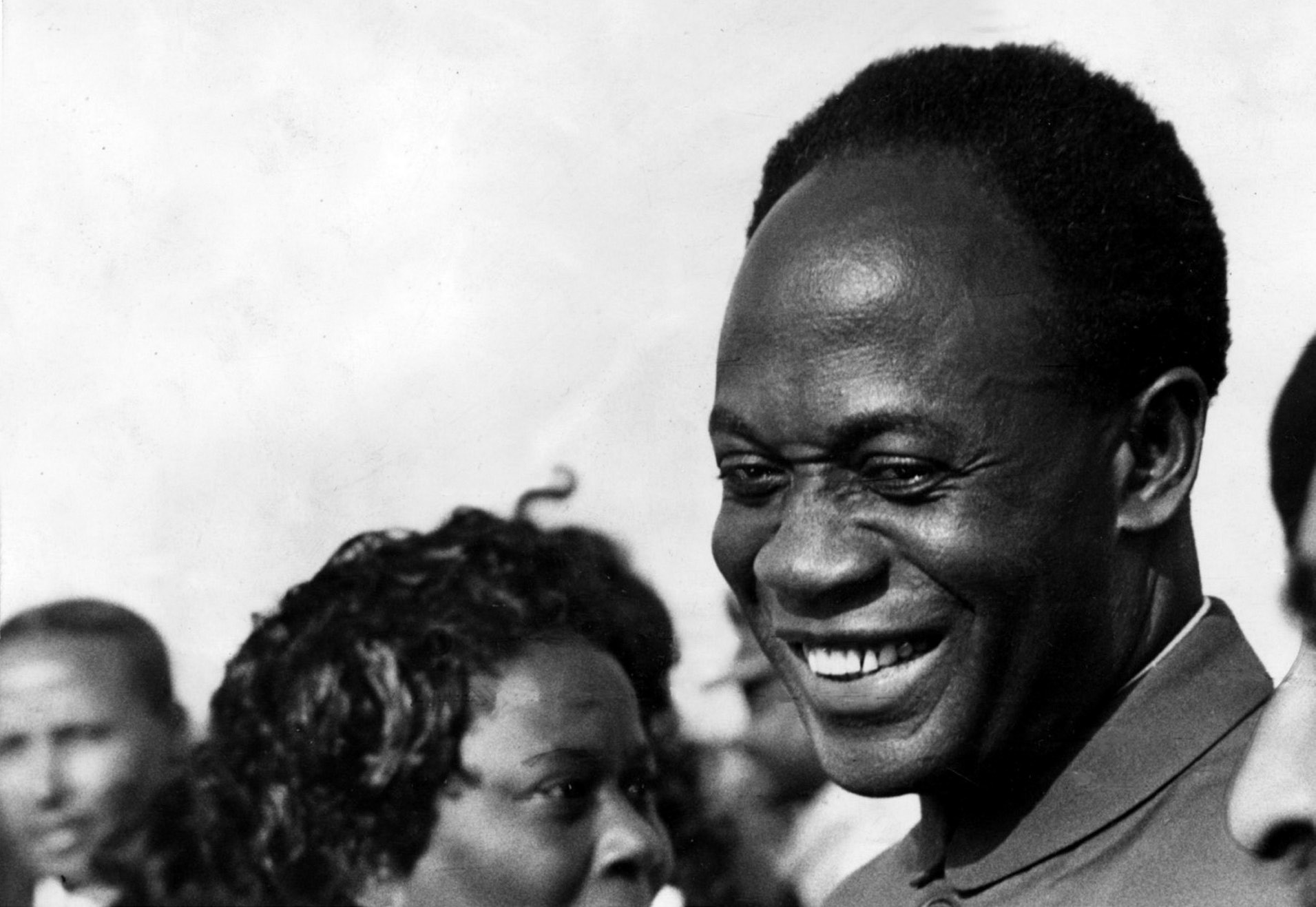
Kwame Nkrumah
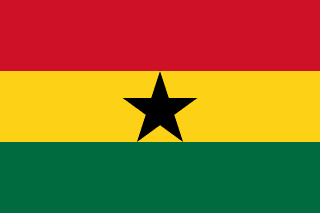 Ghana
GhanaAlso known as: Osagyefo, Francis Nwia Kofi Ngonloma
Birthday
September 21, 1909
Birth Sign
Virgo
Birthplace
Nkroful, Gold Coast (now Ghana)
Age
Died at 62
Height
5 ft 10 in (178 cm)
About
Kwame Nkrumah was a Ghanaian politician, political theorist, and revolutionary who served as the first Prime Minister and President of Ghana. Born Francis Nwia Kofi Ngonloma in 1909, he became the first sub-Saharan African nation to gain independence from colonial rule in 1957. His leadership defined the early post-colonial era across the continent.
Nkrumah championed Pan-Africanism and founded the Organisation of African Unity. He established the Kwame Nkrumah Ideological Institute to train liberation fighters and authored influential works on neo-colonialism. His government focused on rapid industrialization and education, though his one-party state rule eventually led to his overthrow in a 1966 coup.
Early Life & Background
Francis Nwia Kofi Ngonloma entered the world in the small fishing village of Nkroful on the coast of the Gold Coast. His father worked as a goldsmith and local chief while his mother sold fish. The family belonged to the Nzima ethnic group. Nkrumah attended the Catholic mission school in Half Assini for his early education before moving to Accra to study at Achimota School. There he trained as a teacher and began organizing student groups that questioned British colonial authority.
In 1935, the young activist left his home country to pursue higher studies in the United States. He enrolled at Lincoln University in Pennsylvania where he earned a Bachelor of Arts degree in 1939. He continued his studies to earn a Master of Science in Education from the University of Pennsylvania in 1943 and a Master of Arts in Philosophy in 1944. During these years in America, he immersed himself in Marxist thought and the Harlem Renaissance. He also briefly attended the London School of Economics but did not complete his legal studies there. These formative years abroad shaped his radical vision for African independence.
Career Growth
Nkrumah returned to the Gold Coast in 1947 to serve as General Secretary for the United Gold Coast Convention. His charismatic style quickly distinguished him from the organization's moderate leadership. In 1949, he broke away to form the Convention People's Party which demanded immediate self-government through strikes and boycotts. Authorities arrested him in 1950, yet the CPP won a landslide victory in the 1951 elections. He was released from prison to become Leader of Government Business.
He assumed the role of Prime Minister in 1952 and led the colony to independence on March 6, 1957. Ghana became the first sub-Saharan nation to break free from European control. As president starting in 1960, he launched ambitious infrastructure projects like the Akosombo Dam and expanded the university system. He promoted a socialist economic model known as Nkrumaism. His influence extended globally as he hosted the First All-African People's Conference in 1958 and helped establish the Organisation of African Unity in 1963. Western powers viewed his anti-imperialist stance with suspicion.
Career Timeline
Public Image & Style
Nkrumah is portrayed as a visionary leader and a martyr for decolonization. His image conveys dignity, intellect, and unwavering commitment to African unity. He is revered as a national hero in Ghana and respected across the continent. Media accounts often highlight his oratory skills and his role in shaping modern African politics. Critics sometimes point to his authoritarian turn in the 1960s while supporters emphasize his achievements in education and infrastructure.
Fame & Fandom (iFAMOUS Rankings)
iFANN has not yet collected fame data for this person. While he does not hold a current ranking in the iFANN Global Fame Rankings, his historical impact remains profound. Supporters and admirers are often referred to as Nkrumaists or Pan-Africanists. Fan campaigns include annual commemorations of his birthday and death anniversary. Educational programs and cultural events celebrate his life and work. Museums and memorials preserve his legacy across the continent.
Interesting Facts and Legends
Nkrumah adopted the name Kwame upon entering school because it is the traditional Akan name for a boy born on Saturday. His nickname Osagyefo means The Redeemer in the Twi language. He was the author of several books including Consciencism and Africa Must Unite. The Kwame Nkrumah Ideological Institute trained thousands of freedom fighters from across the continent. He was a devout Christian who integrated traditional African spirituality into his political philosophy. A story often retold involves his famous declaration at independence that their freedom was meaningless unless linked to the total liberation of Africa.
Notable Quotes
“We prefer self-government with danger to servitude in tranquility.”
“Our independence is meaningless unless it is linked up with the total liberation of the African continent.”
“Africa must unite or perish.”
Family & Personal Life
His parents were a goldsmith/chief and a fishmonger. He had siblings whose names are less documented in public records. Nkrumah married Fathia Hefny, an Egyptian woman he met in Cairo in 1957. They had two sons Gamal and Sekou. After the 1966 coup, Fathia remained in Ghana raising the children in relative seclusion until her death in 2007. Nkrumah lived in various residences in Accra during his presidency and spent his final years in Guinea.
Notable Connections
Fathia Nkrumah, Gamal Nkrumah, Sekou Nkrumah, Ahmed Sékou Touré, Marcus Garvey, W.E.B. Du Bois
Relationships & Dating History
Kwame Nkrumah was married once to Fathia Nkrumah, an Egyptian woman he met in Cairo in 1957 during a visit to Egypt. They married in 1957 and she accompanied him to Ghana when he became Prime Minister. The couple had two sons Gamal and Sekou. Fathia remained in Ghana after the 1966 coup raising the children in relative seclusion. She passed away in 2007. There are no documented romantic relationships prior to or following his marriage to Fathia. No public reports of other partnerships exist.
- MarriedFathia Nkrumah1957 - 1972Met in Cairo; had two sons together; she remained in Ghana after his overthrow
Death & Aftermath
Died
April 27, 1972 (aged 62)
Death Place
Bucharest, Romania
Cause of Death
Prostate cancer
Kwame Nkrumah passed away on April 27, 1972, in Bucharest, Romania, while receiving medical treatment for prostate cancer. His final days were spent in exile following the 1966 coup that removed him from power, and he had been living under the protection of President Ahmed Sékou Touré in Guinea before traveling to Romania for care. The official cause was confirmed by his widow Fathia Nkrumah and Guinean authorities, though persistent historical disputes regarding foul play or poisoning remain unverified by any public autopsy or formal inquest. Tributes poured in immediately from heads of state across Africa who recognized him as a foundational figure of Pan-Africanism, and while open gatherings in Ghana were initially constrained by the military regimes that followed, his death anniversary eventually became a significant date for reflection.
A private funeral took place in Conakry shortly after his passing, but political instability prevented a state ceremony in Accra, leading to his burial in his home village of Nkroful. In the decades since, his legacy has been cultivated through the Kwame Nkrumah Memorial Trust scholarship fund and the completion of the Kwame Nkrumah Mausoleum in Accra in 2013. Films like The Eyes of Ghana and documentaries such as Nkrumah: A Revolutionary Feared by the West have explored his life, while academic engagement continues with discussions on his economic policies and works like The Second Emancipation.
Net Worth (Estate Value)
$0
iFANN Editorial Team estimate
As a deceased historical figure, Kwame Nkrumah does not possess a personal net worth in the modern sense. His estate, managed by his family and the Ghanaian government, continues to generate revenue through royalties from his writings and licensing of his image. Tourism related to the Kwame Nkrumah Memorial Park in Accra also contributes to the economic value associated with his legacy. The exact value of his estate is not publicly disclosed but remains modest compared to contemporary figures given the nature of his assets and the era in which he lived.
Awards Won (3)
Nkrumah received the Lenin Peace Prize in 1962 for his contributions to peace. He was awarded the Order of the Star of Ghana in 1960 as the highest national honor. He received honorary doctorates from Lincoln University, the University of Edinburgh, and the University of Dakar. Posthumously, the BBC named him African of the Millennium in 1999.
1962 · Peace
Contributions to international cooperation
1960 · National Honor
Service to the nation
Known For
First President of Ghana
1960 · Political Leader
Pan-African Movement
1958 · Founder
Ghana Independence
1957 · Prime Minister
Keywords
Sources
Quick Facts
- Profession
- politician, writer, diplomat
- Born
- September 21, 1909
- Birthplace
- Nkroful
- Died
- April 27, 1972
- Death Place
- Bucharest
- Gender
- Male
- Spouse
- Fathia Nkrumah
- Birth Sign
- Virgo
Personal Details
- Full Name
- Francis Nwia Kofi Ngonloma
- Height
- 5 ft 10 in (178 cm)
- Spouse
- Fathia Nkrumah
- Children
- Gamal Nkrumah · Sekou Nkrumah
- Education
- Lincoln University, University of Pennsylvania, Achimota School
Frequently Asked Questions
Who was Kwame Nkrumah?
When did Ghana gain independence?
How did Kwame Nkrumah die?
What was Kwame Nkrumah's main political ideology?
Is Kwame Nkrumah still relevant today?

Join the community
fans discussing