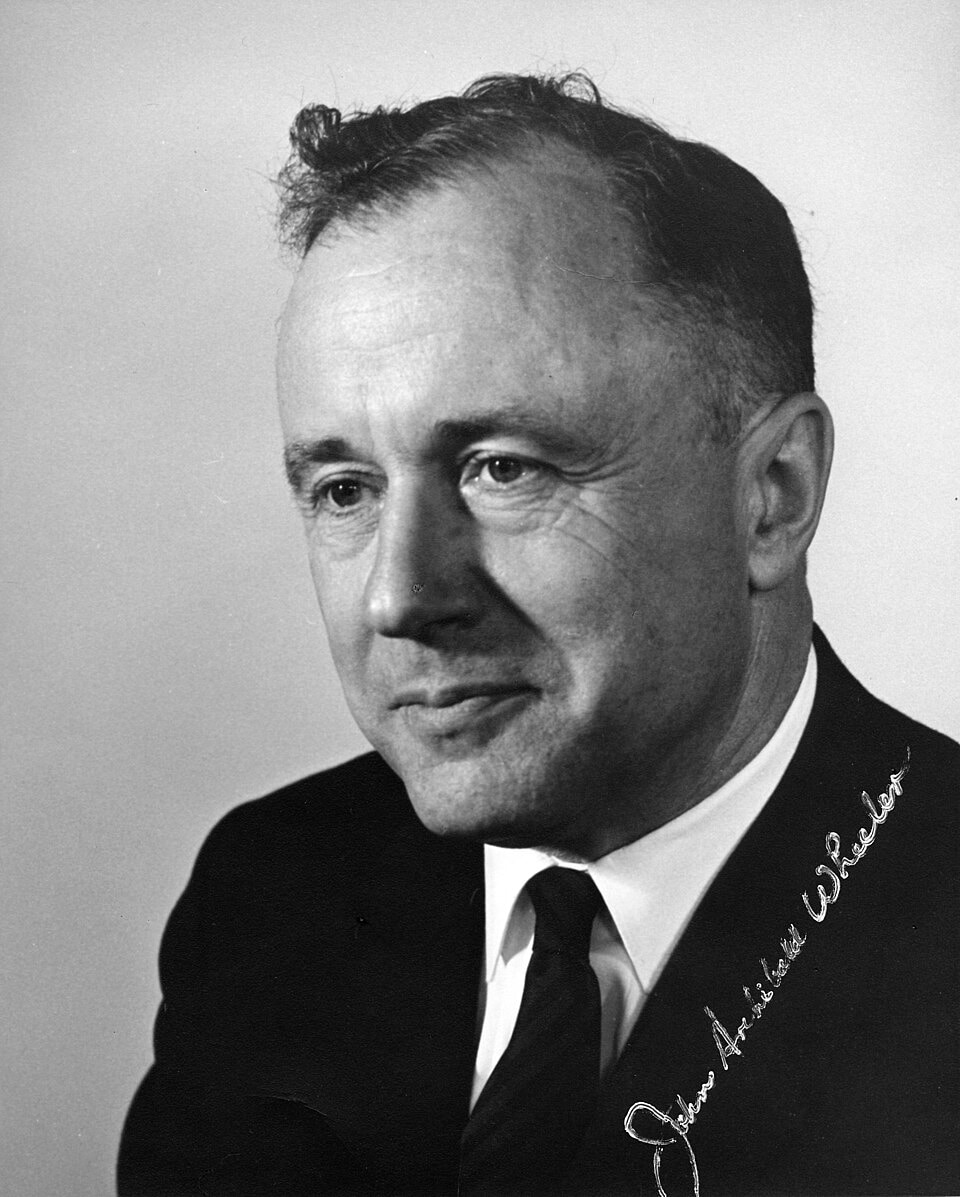
John Archibald Wheeler
physicist•nuclear physicist•theoretical physicist
Birthday
July 9, 1911
Birth Sign
Cancer
Birthplace
Jacksonville, Florida
Age
Died at 96
About
John Archibald Wheeler was an American theoretical physicist regarded as one of the most imaginative and influential scientists of the twentieth century, as well as a legendary teacher and a gifted coiner of memorable phrases. He played a central role in reviving the study of general relativity in the United States after the Second World War, helping transform Einstein's theory from a mathematical curiosity back into a vibrant field of research. His work bridged the eras of early quantum theory and modern cosmology.
Wheeler made fundamental contributions across physics, collaborating with Niels Bohr on the theory of nuclear fission, contributing to the Manhattan Project, and exploring the deepest questions about gravity, information, and the nature of reality. He had a remarkable talent for naming concepts that captured the public imagination, popularizing the term black hole and coining phrases like wormhole, quantum foam, and the provocative it from bit, which framed his late speculation that information underlies physical existence.
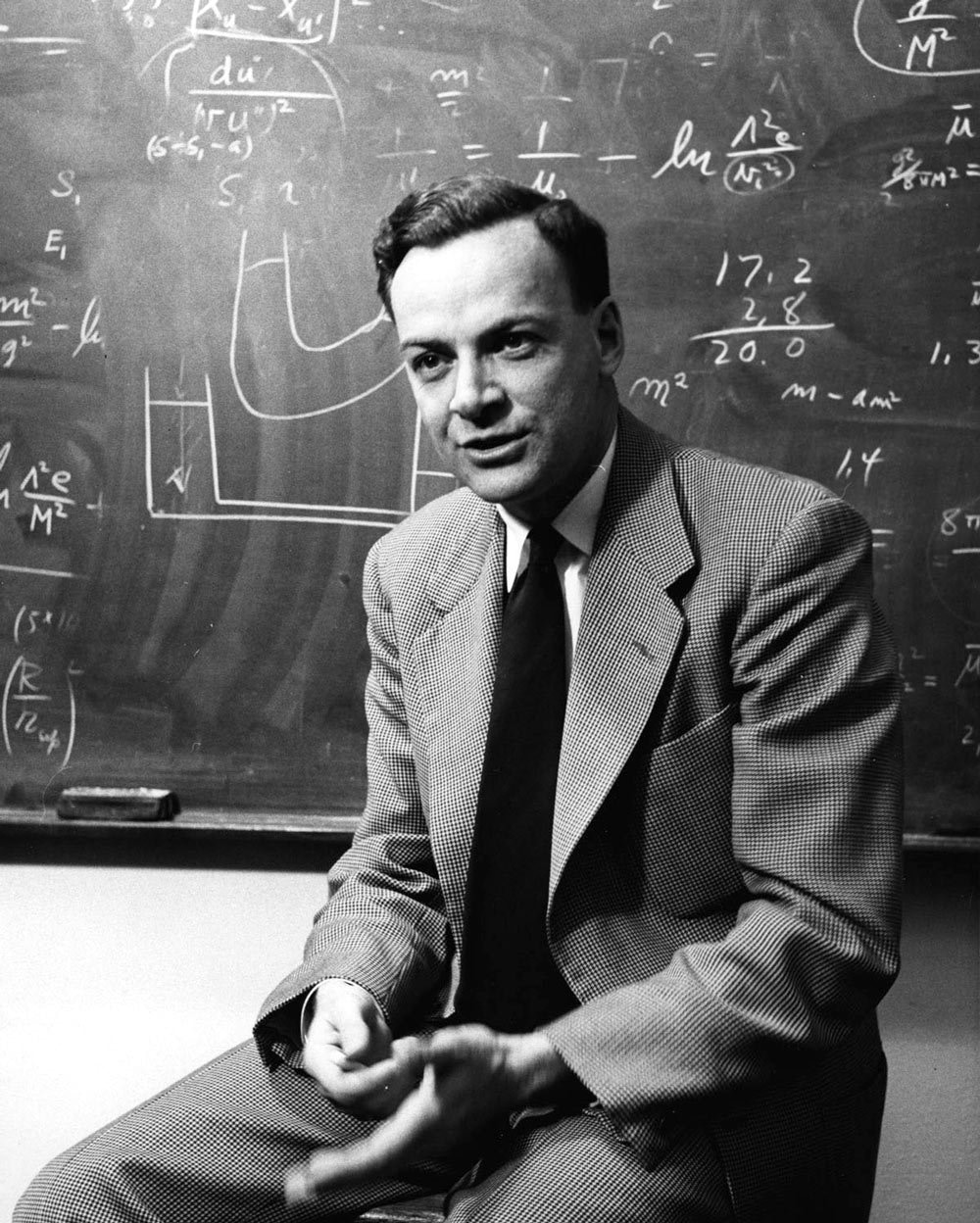
As a mentor he was equally consequential, supervising students who became giants of physics in their own right, including Richard Feynman. Curious and philosophical to the end, he pushed colleagues to confront the strangest implications of their theories. John Archibald Wheeler is remembered as a visionary physicist and one of the great scientific minds and teachers of his age.
Early Life & Background
Born in Jacksonville, Florida, to Joseph Lewis Wheeler and Mabel Archibald Wheeler, both librarians, John Archibald Wheeler grew up in various towns including Glendale, California; Youngstown, Ohio; Benson, Vermont; and Baltimore, Maryland. His family had deep American roots, with many generations of Archibalds on his mother's side and Wheelers on his father's side. A teacher in Vermont moved him through three grades in one year in a one-room schoolhouse. He attended Baltimore City College for high school, graduating in 1926.
At age 16, he enrolled at Johns Hopkins University on a scholarship, initially as an engineering student, but switched to physics after being captivated by physics journals in the combined engineering-physics library. He earned his PhD in physics in 1933 at age 21, with a dissertation on the dispersion and absorption of helium under supervisor Karl Herzfeld. His first scientific paper was published in 1930. After his PhD, he secured fellowships allowing him to study with Niels Bohr in Copenhagen.
Career Growth
Wheeler began his academic career as an associate professor at the University of North Carolina at Chapel Hill in 1935. In 1938 he moved to Princeton University as assistant professor, remaining there for nearly four decades. The following year he collaborated with Niels Bohr on the theory of nuclear fission, producing the first description of how fission works. He was present on the dock in New York City when Bohr arrived from Copenhagen to announce that Germany had split the atom.
From 1941 to 1945 he worked on the Manhattan Project, designing and operating plutonium-producing reactors at Hanford, Washington. After the war he returned to Princeton and in 1947 founded the university's Cosmic Rays Laboratory, serving as its first director. In 1950 he helped design the first hydrogen bomb. During the 1950s he and his students published work that revived interest in general relativity. At a NASA conference in 1967 he popularized the term black hole. He retired from Princeton in 1976 after 38 years and served as director of the Center for Theoretical Physics at the University of Texas until 1986. In 1989 he published Information, Physics, Quantum: The Search for Links, articulating the it from bit concept.
Career Timeline
Public Image & Style
Wheeler was known in the physics community as a warm, encouraging mentor with an almost boundless curiosity. Colleagues described him as someone who asked the deepest questions without pretension. His public image was that of a visionary who could communicate complex ideas with memorable phrases. He was not a media celebrity like some later physicists, but within scientific circles he was revered as a teacher who inspired generations. His legacy includes the many students he supervised, including Richard Feynman and Kip Thorne, who became leaders in their own right. He was known for his optimistic, can-do attitude, even when confronting the most puzzling aspects of quantum gravity.
Fame & Fandom
John Archibald Wheeler commanded a global sphere of influence that transcended the typical boundaries of academic renown, shaping the very language of modern cosmology while inspiring generations of scientists. His intellectual footprint remains vast, though his status in contemporary pop culture metrics reflects the specific nature of his career as a theoretical physicist rather than an entertainer. As of August 2026, iFANN's Global Fame Engine has evaluated this person, but they do not currently hold a placement in the published rankings (Global Top 1,000 or a Top-100 scope list). Consequently, there is no formal fandom name documented for his legacy; the devoted following he cultivated consists entirely of physicists, astrophysicists, and students who revere his contributions without organizing under a specific fan brand. While celebrity circles might rally around subway ads or birthday campaigns, Wheeler's admirers maintain their tribute through the enduring study of his theories and the continued citation of his work in academic literature. His influence is characterized by deep intellectual reverence rather than organized fan projects or grassroots marketing efforts. The community that cherishes his memory engages with his ideas about black holes and the participatory universe, treating his aphorisms as foundational wisdom rather than viral content. This unique form of fandom operates through the rigorous pursuit of knowledge he championed, ensuring his name remains synonymous with the deepest questions of existence.
Interesting Facts and Legends
Wheeler was known for his playful yet profound way of thinking. He once said, Time is what keeps everything from happening at once. He also remarked, We all know that the real reason universities have students is in order to educate the professors. He had a habit of asking his students radical questions, such as Why does the universe exist? and How come existence? He was an avid hiker and enjoyed long walks in the Vermont countryside where his family had a summer home. Late in life, he became fascinated with the idea that the universe might be a self-excited circuit, a concept he called the participatory universe. A story fans still retell involves how he coined the term "black hole" during a lecture in December 1967, transforming a technical curiosity into a household phrase that now defines one of the universe's most mysterious objects. Another legend centers on his "It from Bit" concept, which proposed that every particle and field derives its function from binary choices, suggesting the universe is fundamentally informational. These ideas became staple folklore in physics departments, passed down to new graduate students as essential wisdom from the master. His role in solving critical reactor problems at Hanford during the Manhattan Project also cemented his reputation as a visionary capable of bridging abstract theory with practical engineering.
Notable Quotes
“Time is what keeps everything from happening at once.”
“We all know that the real reason universities have students is in order to educate the professors.”
“It from bit symbolizes the idea that every item of the physical world has at bottom a bit of information.”
“Behind it all is surely an idea so simple, so beautiful, that when we grasp it we will all say to each other, how could it have been otherwise?”
“We live on an island surrounded by a sea of ignorance. As our island of knowledge grows, so does the shore of our ignorance.”
Family & Personal Life
Wheeler married Janette Hegner, a teacher and social worker, on June 10, 1935, five days after his return from Europe. They became engaged on their third date but agreed to defer marriage until he returned from Europe. The couple had three children. Their marriage lasted 72 years until his death in 2008. Hegner predeceased him, having died earlier. The family lived in Princeton, New Jersey, during most of Wheeler's career, and later in Hightstown, New Jersey.
Notable Connections
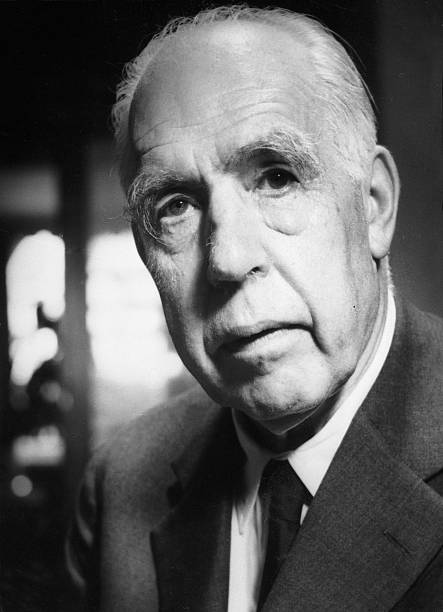
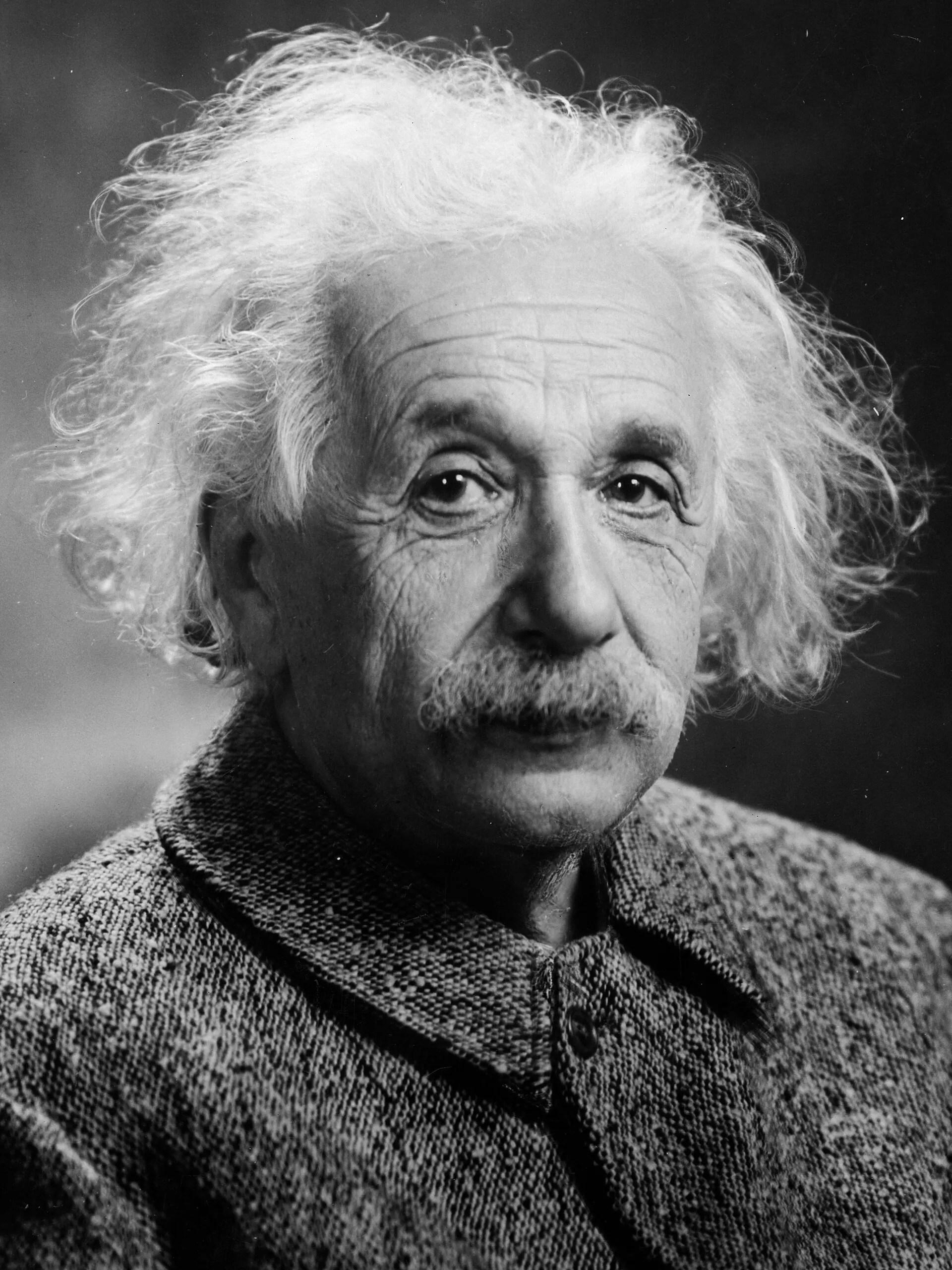
Wheeler collaborated closely with Niels Bohr on the theory of nuclear fission and with Albert Einstein on unified field theory. He was the PhD supervisor of Richard Feynman and later mentored Kip Thorne. His own PhD supervisor was Karl Herzfeld. He worked with Gregory Breit on the Breit-Wheeler process, and with Jayme Tiomno on muon research.
Relationships & Dating History
Wheeler married Janette Hegner on June 10, 1935, five days after his return from Europe. They became engaged on their third date but agreed to defer marriage until he returned from his studies abroad. Janette was a teacher and social worker. The couple had three children together. Their marriage lasted 72 years until Wheeler's death in 2008. Janette predeceased him, having died earlier. No other romantic relationships are documented in credible sources.
- MarriedJanette Hegner1935 - 2008Married June 10, 1935; three children; marriage lasted until his death.
Death & Aftermath
Died
April 13, 2008 (aged 96)
Death Place
Hightstown, New Jersey
Cause of Death
Unknown
John Archibald Wheeler died on April 13, 2008, in Hightstown, New Jersey, at the age of 96. The official records from Princeton University and the New York Times confirmed his passing, treating the event as a natural conclusion to a long life that remained intellectually active until the end. Tributes poured in immediately from the scientific community, with peers and institutions characterizing him as a legend, a father figure of modern general relativity, and a magician of physics who had revitalized Einstein's theory. The New York Times published a prominent obituary celebrating his contributions to coining the term black hole and his pivotal role in the Manhattan Project, while formal statements honoring his legacy were issued by Princeton University and the Institute for Advanced Study.
Details regarding the specific logistics of his funeral or memorial service remain unreported in available sources, though it is understood that memorials occurred within the academic sphere given his stature. Posthumously, his intellectual estate has been actively preserved through continued analysis of his concept It from Bit in quantum gravity and information theory, with recent articles revisiting his hypotheses decades later. The American Physical Society continues to award the John A. Wheeler Prize, and the Department of Physics at Princeton maintains a historical record of his tenure.
Net Worth (Estate Value)
$2 Million
iFANN Editorial Team estimate
John Archibald Wheeler's net worth at the time of his death in 2008 was modest by modern standards, estimated at around $2 Million per iFANN's editorial analysis. As a theoretical physicist and professor, his income came primarily from his academic salary at Princeton University and later the University of Texas, along with royalties from his books and occasional consulting fees. He did not hold patents or commercial ventures. His estate has earned small amounts from posthumous book sales and biographical works, but no major revenue streams exist. The estate is managed by his surviving family.
Awards Won (6)
Wheeler received numerous honors for his contributions to physics. He was awarded the Enrico Fermi Award in 1968 by President Lyndon B. Johnson, the Albert Einstein Award in 1965, the National Medal of Science in 1970, the Oersted Medal in 1983, the J. Robert Oppenheimer Memorial Prize in 1984, and the Wolf Prize in Physics in 1997.
1997 · Physics
General relativity and black hole physics
1984 · Physics
Theoretical physics
Known For
Black hole
1967 · Popularized the term
Nuclear fission theory
1939 · Co-developer with Niels Bohr
It from bit
1989 · Coined the phrase
Wormhole
1957 · Coined the term
Quantum foam
1955 · Coined the term
Keywords
Sources
Quick Facts
- Profession
- physicist, nuclear physicist, theoretical physicist
- Born
- July 9, 1911
- Birthplace
- Jacksonville, Florida
- Died
- April 13, 2008
- Death Place
- Hightstown, New Jersey
- Gender
- Male
- Birth Sign
- Cancer
Personal Details
- Full Name
- John Archibald Wheeler
- Spouse
- Janette Hegner
- Children
- Three
- Education
- Johns Hopkins University (PhD, 1933)
Frequently Asked Questions
What is John Archibald Wheeler famous for?
Did John Archibald Wheeler work on the atomic bomb?
What did John Archibald Wheeler discover?
How old was John Archibald Wheeler when he died?
Who did John Archibald Wheeler mentor?
Join the community
fans discussing