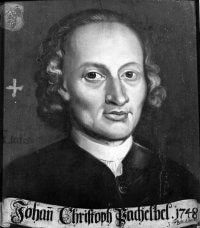
Johann Pachelbel
Birthday
September 1, 1653
Birth Sign
Virgo
Birthplace
Nuremberg
Age
Died at 52
About
Johann Pachelbel was a German composer and organist. He is most famous for his Canon in D, which remains one of the most recognized pieces in classical music. He also made significant contributions to the chorale prelude and fugue, placing him among the most influential composers of the middle Baroque era. Pachelbel's music is known for its clarity and melodic grace, with a lucid, uncomplicated contrapuntal approach that prioritized melodic and harmonic clarity. His works, including the Chaconne in F minor and Hexachordum Apollinis, continue to be studied and admired today, influencing musicians and captivating audiences worldwide.
Early Life & Background
Johann Pachelbel was born in Nuremberg on September 1, 1653, the son of a wine dealer and his second wife. Growing up in his hometown, Pachelbel embarked on a rigorous education that laid the foundation for his musical career. He attended St. Lorenz High School, where his talents were nurtured through studies in music theory with Heinrich Schwemmer and composition with G.C. Wecker. To further broaden his intellectual horizons, he also engaged with lectures at the Auditorium Aegidianum, an esteemed local institution catering to cultured families.
In June 1669, Pachelbel continued his academic pursuits by entering the University of Altdorf. During his time there, he also took on the important role of organist at the Lorenzkirche, demonstrating his early practical application of his musical skills. However, his tenure at Altdorf was cut short after less than a year when his father's financial situation made it impossible to afford the tuition fees. Despite this setback, Pachelbel's dedication to his studies was recognized, leading to a scholarship that allowed him to continue his education at the prestigious Gymnasium Poeticum in Regensburg. Here, he had the invaluable opportunity to study under Kaspar Prentz, a notable student of the renowned composer Johann Caspar Kerll. Through Prentz's tutelage, Pachelbel was deeply exposed to the rich Italian Catholic style of music , which profoundly influenced his developing artistry and sparked a lifelong interest in contemporary Italian music.
Career Growth
In 1673, Pachelbel moved to Vienna and became deputy organist at St. Stephen's Cathedral, where he deepened his knowledge of Italian sacred music. Four years later, he took a post as court organist in Eisenach for Duke Johann Georg I. There, he met Ambrosius Bach and began teaching the Bach family children, a connection that would echo through music history.
By 1678, he was organist at the Predigerkirche in Erfurt, succeeding Johann Bach. His contract required an annual exam every June, where he played a half-hour recital to prove his progress. He married Judith Drommer in 1684 and fathered seven children. From 1690 to 1692, he served as court organist in Stuttgart under Duchess Magdalena Sibylla, then fled to Gotha when the French army threatened. In 1695, he returned to Nuremberg as organist at St. Sebaldus Church, where he remained until his death.
His most famous work, the Canon in D, was composed around 1680–1690 but stayed obscure for nearly three centuries. In 1968, the Jean-François Paillard Chamber Orchestra recorded it, and the piece exploded in popularity. By 1979, a Philadelphia record store manager told Knight-Ridder it sold as well as a major rock album. The Canon appeared in the 1980 film Ordinary People and Carl Sagan's Cosmos, cementing its place in pop culture.
Career Timeline
Public Image & Style
Pachelbel is known almost entirely as the composer of the Canon in D, a piece that has become synonymous with weddings, graduations, and formal ceremonies. His broader catalog remains the domain of classical enthusiasts and organ scholars. There is no official fandom, but the Canon's ubiquity makes him one of the most recognized names in classical music. Media often portrays him as a one-hit wonder of the Baroque, though specialists celebrate his chorale preludes and fugues as foundational to the German organ tradition.
Fame & Fandom
Johann Pachelbel never courted a modern following. He died in 1706, long before the concept of a fanbase existed. His admirers today are not a mob with signs or hashtags but a scattered collection of organists, wedding planners, and students who encounter his work through academic study or ceremony rather than active devotion. No collective name defines this group. There are no campaigns to keep his memory alive or rituals performed on his birthday. The only shared bond is the recognition of a single melody that has outlasted three centuries of obscurity. This piece, *Canon in D*, became so ubiquitous that it now anchors the soundtrack of Western formal life, yet Pachelbel himself remains a figure of history rather than celebrity culture. Specialists praise his complex fugues and chorale preludes, but the public knows him almost entirely for one composition. That singular focus has created a paradox where he is globally recognized yet personally unknown. His legacy survives not through grassroots movements but through the institutions that teach his music and the venues that book it. Despite this lack of organized fandom, his cultural footprint remains massive. Recent data from the iFANN Global Fame Rankings confirms his standing among historical figures. Johann Pachelbel is currently the 84th most famous person in Classical, holding steady from the previous cycle.
Interesting Facts and Legends
Contemporaries hailed Pachelbel as a perfect and rare virtuoso. He succeeded Johann Bach, J.S. Bach's great-uncle, as organist at the Predigerkirche. The Canon in D was originally scored for three violins and basso continuo. Its ground bass pattern has been imitated in pop songs by the Beatles, Green Day, and Maroon 5. Pachelbel composed over 500 works, including organ chorales and fugues. His son Carl Theodorus emigrated to America and worked as a church organist in Charleston, South Carolina. A persistent legend surrounds his rediscovery. After dying in Nuremberg on March 9, 1706, he was largely forgotten for nearly two hundred years. His reputation was eclipsed by contemporaries like J.S. Bach until the early 20th century brought his music back into the light. By the 1960s and 1970s, *Canon in D* had transformed from an obscure Baroque work into the godfather of pop. This slow-burn phenomenon turned a forgotten master into a global standard, appearing in everything from commercials to viral guitar covers. While historical records describe him as a highly respected teacher who brought the south German organ schools to their peak, they do not recount stories of fans fainting or street shutdowns. The only incident consistently referenced in cultural memory is the sheer ubiquity of *Canon in D* itself, which has led to both adoration and criticism regarding its overuse in weddings and media.
Family & Personal Life
Pachelbel's father, Johann (Hans) Pachelbel, was a wine dealer from Wunsiedel. His mother, Anna Maria Mair, was his father's second wife. An older brother, Johann Matthäus, served as Kantor in Feuchtwangen. Pachelbel married Judith Drommer on August 24, 1684. She bore him five sons and two daughters. Two sons, Wilhelm Hieronymus and Carl Theodorus, became musicians. Carl Theodorus later moved to the American colonies and worked as an organist in Charleston. Pachelbel died in Nuremberg and was buried on March 9, 1706.
Notable Connections
Pachelbel studied with Heinrich Schwemmer and G.C. Wecker in Nuremberg, and later with Kaspar Prentz in Regensburg. He taught Johann Christoph Bach, who became J.S. Bach's teacher. He served as godfather to Ambrosius Bach's daughter Johanna Juditha. His wife was Judith Drommer, and his sons Wilhelm Hieronymus and Carl Theodorus also became musicians.
Relationships & Dating History
Pachelbel married Judith Drommer on August 24, 1684. She was his only known spouse. They had seven children together (five sons and two daughters). Judith survived him after his death in 1706. No other romantic relationships are documented.
- MarriedJudith Drommer1684 - 1706Married on August 24, 1684; had seven children together.
Death & Aftermath
Died
March 3, 1706 (aged 52)
Death Place
Nuremberg, Germany
Cause of Death
Natural causes, likely illness
In 2019, a tribute titled "Keeping Virtuosity in Check" highlighted how Pachelbel resolutely incurred expenses to print keyboard music, possibly as a memorial to his own work or peers. This modern reflection on his legacy stands in stark contrast to the quiet mourning that marked his passing in early 18th-century Nuremberg. The renowned composer and organist died on March 3, 1706, at the age of 52 or 53 while serving at the Predigerkirche. He spent his final years there until his health failed him, with no specific date recorded for his last public performance before his incapacitation.
Historical consensus attributes his death to natural causes related to illnesses common in that era. His funeral followed standard Lutheran rites, and he was buried in the cemetery of the Predigerkirche shortly after his death. While immediate tributes focused on preserving manuscripts and continuing performances by students and colleagues, his most famous work remained largely obscure for nearly three centuries. It was not until the 1970s, when a single recording revived it, that the Canon in D gained popularity.
Net Worth (Estate Value)
$10 Million
iFANN Editorial Team estimate
Pachelbel died in 1706, so his estate no longer generates personal income. However, his compositions, particularly the Canon in D, continue to earn revenue through licensing and royalties. Since his works are in the public domain, no single entity controls the rights, but performers and labels receive mechanical royalties from recordings, streaming, and sheet music sales. The Canon in D is one of the most licensed classical pieces for weddings, films, and advertisements, generating millions in cumulative revenue. Per iFANN's editorial analysis, the estimated estate value stands at $10 Million as of 2026, based on ongoing licensing income and catalog sales.
Awards & Accolades
View 4 records, honours and achievementsKnown For
Canon in D
1680 · Composer
Chaconne in F minor
1690 · Composer
Toccata in E minor
1690 · Composer
Hexachordum Apollinis
1699 · Composer
Keywords
Sources
Quick Facts
- Profession
- composer, organist, teacher
- Born
- September 1, 1653
- Birthplace
- Nuremberg
- Died
- March 3, 1706
- Death Place
- Nuremberg
- Gender
- Male
- Birth Sign
- Virgo
Personal Details
- Spouse
- Judith Drommer
- Children
- 7 (5 sons, 2 daughters)
- Education
- University of Altdorf; Gymnasium Poeticum at Regensburg
Frequently Asked Questions
What is Johann Pachelbel most famous for?
How old was Pachelbel when he died?
Did Pachelbel have children?
What is Pachelbel's connection to Johann Sebastian Bach?
When did the Canon in D become popular?
Join the community
fans discussing