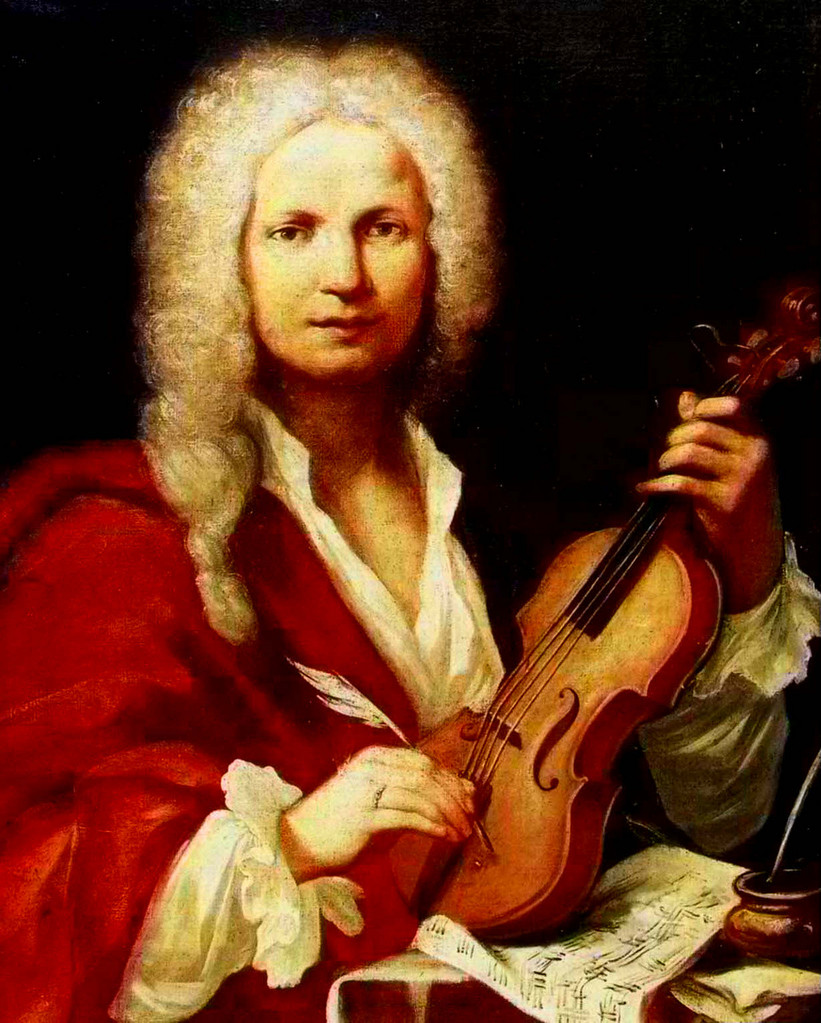
Antonio Vivaldi
Also known as: Il Prete Rosso
Birthday
March 4, 1678
Birth Sign
Pisces
Birthplace
Venice, Republic of Venice
Age
Died at 63
Height
5 ft 5 in (165 cm)
About
Antonio Vivaldi was an Italian composer and virtuoso violinist counted among the greatest masters of the Baroque era and one of the most influential figures in the history of instrumental music. Enormously prolific and inventive, he helped shape and popularize the concerto form, especially the solo concerto, establishing a model of fast and slow movements that became standard and influenced composers across Europe, including Bach. His vivid, energetic style left a lasting mark on Western music. By far his most famous work is The Four Seasons, a set of violin concertos depicting nature across the year, an early and brilliant example of programmatic music whose evocative passages remain among the most recognizable in all of classical music. Beyond that masterpiece he composed hundreds of concertos for violin and many other instruments, along with sacred choral works and numerous operas, a staggering output. A Catholic priest by training, he became known as the Red Priest for his hair color, though ill health excused him from saying Mass, and he spent much of his career composing for and teaching at a Venetian institution for orphaned and abandoned girls, whose talented ensemble premiered many of his works. He died in obscurity, and his music was rediscovered and celebrated only centuries later. Antonio Vivaldi is remembered as a towering genius of the Baroque.
Early Life & Background
Vivaldi was born in Venice, the eldest of nine children. His father, Giovanni Battista, was a barber who later became a professional violinist and taught young Antonio. By age ten, Vivaldi was already substituting for his father at St. Mark's Basilica. He trained for the priesthood from age 15 and was ordained in 1703 at age 25, but a chronic condition he called strettezza di petto (tightness of the chest), likely asthma, prevented him from saying Mass soon after. His red hair earned him the lifelong nickname Il Prete Rosso (The Red Priest). His pivotal break came in 1703 when, newly ordained, he was appointed maestro di violino at the Ospedale della Pietà, a Venetian orphanage for girls with a renowned music program. This institution became his creative laboratory for nearly four decades.
Career Growth
In 1711, Vivaldi published L'estro armonico (Op. 3), a collection of 12 concertos that spread his fame across Europe. Johann Sebastian Bach transcribed several of them. In 1713, he composed his first opera, Ottone in villa, and became impresario at the Teatro Sant'Angelo in Venice. His peak period arrived in 1723 with the publication of Il cimento dell'armonia e dell'inventione (Op. 8), which includes The Four Seasons. These four violin concertos depict spring, summer, autumn, and winter with unprecedented programmatic detail, accompanied by sonnets possibly written by Vivaldi himself. Over the next two decades, he composed over 90 operas (fewer than 50 survive), hundreds of concertos, and sacred works including the Gloria (RV 589) and Stabat Mater (RV 621). He traveled to Vienna, Mantua, Rome, Amsterdam, and Prague. In 1740, with declining health and changing musical tastes, he left the Pietà and moved to Vienna, hoping for patronage from Emperor Charles VI. He died in 1741 in a pauper's grave. His music fell into obscurity until 1926, when a large cache of manuscripts was discovered in a monastery in Piedmont. The modern revival accelerated in the 1950s with recordings by the ensemble I Musici, and The Four Seasons became one of the most recorded works in classical music history.
Career Timeline
Public Image & Style
Vivaldi is known for his energetic, rhythmic drive, innovative use of programmatic elements, and virtuosic violin writing. His music is often described as joyful, vivid, and theatrical. His distinctive red hair earned him the nickname the Red Priest, and he is often portrayed as a passionate, fiery figure who defied convention. Films include Vivaldi, the Red Priest (2009) and Vivaldi in Venice (2021). Fans, informally called Vivaldians, celebrate his work through annual festivals in Venice, flash mob performances of The Four Seasons, and online communities dedicated to Baroque music.
Fame & Fandom
Antonio Vivaldi stands as the 19th most famous person in Classical, a position he has held steady through multiple cycles of the iFANN Global Fame Rankings. This enduring prominence reflects a global attention that spans centuries of media coverage, search trends, and consumption signals worldwide. While his legacy commands a vast audience of enthusiasts, the concept of a modern fandom in the contemporary sense does not apply to the Baroque master. There is no official club name or organized grassroots movement campaigning for chart positions; instead, his admirers are known simply as Vivaldi enthusiasts or classical music lovers who sustain his work through institutional channels. The community gathers around festivals in Venice rather than digital campaigns, celebrating a figure whose interaction with the public remains entirely through his compositions. His mythology is rooted in verified history rather than celebrity culture, with no recorded instances of viral internet movements specific to his personal life. The rediscovery of his lost manuscripts in the late 19th century sparked a massive revival, turning him from an obscure figure into a global icon, yet this phenomenon occurred long after his death. Today, his fanbase operates as a dedicated network of practitioners and listeners who ensure his music remains a staple of concert programming, proving that true legendary status transcends the need for formal organization.
Interesting Facts and Legends
Vivaldi composed over 500 concertos, approximately 350 of which survive today. He wrote sonnets to accompany The Four Seasons, possibly penning the poems himself to serve as guides for the programmatic music within. Bach transcribed nine of Vivaldi's concertos for organ and harpsichord to study their intricate structures. A severe medical condition prevented him from saying Mass, though it did not stop him from composing or performing on the violin. He spent much of his career working with an all-female orchestra at the Ospedale della Pietà, writing over 400 concertos specifically for them. He died in 1741, the same year Handel's Messiah premiered. A persistent legend surrounds his nickname, Il Prete Rosso, or the Red Priest, referencing both his distinctive red hair and his ordination as a Catholic priest. Folklore suggests he was barred from the altar due to asthma attacks, a story often retold to explain his shift toward secular composition. Another iconic moment in his history occurred centuries after his death when hundreds of his lost manuscripts were discovered in a Turin library in the 1890s. This event sparked a massive revival of interest, effectively rebirthing him to the world and establishing The Four Seasons as a cultural touchstone.
Notable Quotes
“The violin is my voice.”
“I have written more than 90 operas, but the public only remembers the one they heard last.”
“I am a man of the theater, and I must write for the public.”
“My health is poor, but my spirit is strong. I compose as long as I can hold a pen.”
“The Four Seasons are not just music; they are poetry in sound.”
Family & Personal Life
Vivaldi was the eldest of nine siblings. His father, Giovanni Battista Vivaldi, was a barber before becoming a professional violinist who taught young Antonio and later performed with him. His mother was Camilla Calicchio. Vivaldi never married and had no known children. His closest companion was the mezzo-soprano Anna Girò, his student and protégée, who lived in his household and performed in his operas. Vivaldi insisted their relationship was purely professional, writing in a 1737 letter that she was merely a singer whom he taught and that she lived with him as a virtuous and honorable arrangement. The nature of their relationship remains debated among historians.
Notable Connections
Vivaldi's father, Giovanni Battista, was his first teacher and later performed alongside him. Johann Sebastian Bach admired his work and transcribed several concertos. The soprano Anna Girò was his protégée and frequent collaborator. The ensemble I Musici helped revive his music in the 20th century. Violinist Nigel Kennedy's 1989 recording of The Four Seasons sold over 3 million copies.
Relationships & Dating History
Vivaldi's most notable relationship was with the mezzo-soprano Anna Girò, his student and protégée. She accompanied him on many travels and performed leading roles in his operas from around 1723 until his death in 1741. Contemporary gossip suggested a romantic relationship, but Vivaldi insisted it was purely professional, writing in a 1737 letter that she was merely a singer whom he taught and that she lived in his home as a virtuous and honorable arrangement. The nature of their relationship remains debated among historians. Vivaldi never married and had no known children. As of 1741, he was deceased, and no confirmed romantic relationships or descendants exist.
- RumouredAnna Girò1723 - 1741Vivaldi's student and protégée, a mezzo-soprano who performed in his operas. He denied romantic involvement.
Death & Aftermath
Died
July 28, 1741 (aged 63)
Death Place
Unknown
Cause of Death
Unknown
Net Worth (Estate Value)
$5 Million
iFANN Editorial Team estimate
Although Antonio Vivaldi died a pauper and his works remain in the public domain, the ongoing commercial value of his name and music is estimated at $5 Million as of 2026 per iFANN's editorial analysis. This symbolic net worth derives from licensing fees for recordings and sheet music, merchandise sales, and the frequent use of The Four Seasons in films, TV, and commercials. No formal estate exists to manage these assets; income flows directly to record labels and publishers who hold the rights to his catalog. The figure represents the cumulative economic impact of his legacy in the modern marketplace rather than personal wealth accumulated during his lifetime.
Awards Won (2)
Vivaldi lived before the era of formal music awards. His works have received posthumous recognition, including induction into the Grammy Hall of Fame for recordings of The Four Seasons and a star on the Hollywood Walk of Fame (1970).
1999 · Recording
The Four Seasons
1970 · Recording
Lifetime achievement
Known For
The Four Seasons
1723 · Composer
Gloria (RV 589)
1715 · Composer
L'estro armonico
1711 · Composer
Stabat Mater (RV 621)
1712 · Composer
Keywords
Quick Facts
- Profession
- Composer, violinist, priest
- Born
- +1678-03-04
- Birthplace
- Venice
- Died
- +1741-07-28
- Death Place
- Vienna
- Gender
- Male
- Birth Sign
- Pisces
Personal Details
- Full Name
- Antonio Lucio Vivaldi
- Height
- 5 ft 5 in (165 cm)
- Education
- Priestly training at the Church of San Geminiano and the Patriarchal Seminary of Venice
Frequently Asked Questions
How did Vivaldi die?
Did Vivaldi have children?
Why is Vivaldi called the Red Priest?
What is Vivaldi's most famous piece?
How many compositions did Vivaldi write?
Social Media
Join the community
fans discussing