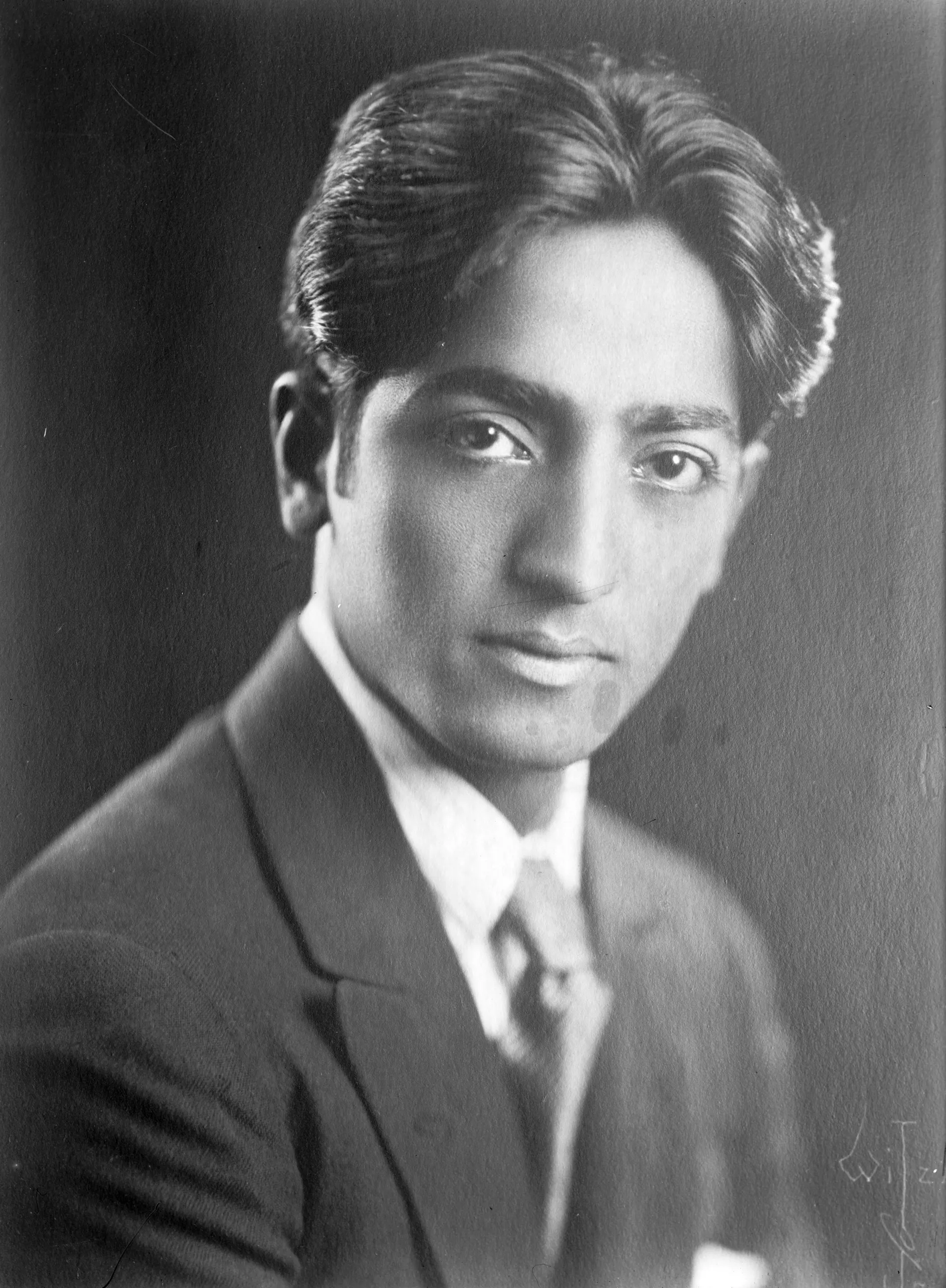
Jiddu Krishnamurti
 India
IndiaAlso known as: J. Krishnamurti, Krishnamurti, J Krishnamurti, Jiddu Krishnamurthy, Alsion, K.
Birthday
May 11, 1895
Birth Sign
Taurus
Birthplace
Madanapalle, Andhra Pradesh, India
Age
Died at 90
Height
5 ft 8 in (173 cm)
About
Jiddu Krishnamurti was an Indian philosopher, spiritual teacher, and writer whose work fundamentally challenged the nature of religious authority and psychological conditioning. Born in Madanapalle in 1895, he gained early fame when the Theosophical Society groomed him to be the World Teacher, but he famously rejected this destiny in 1929. For the next five decades, he traveled globally giving talks without titles, organizations, or disciples, urging people to find truth through their own inquiry. He died in 1986, leaving behind a massive library of recorded dialogues and books that continue to influence thinkers today.
His approach to spirituality was radical because it dismantled the very concept of a guru. He insisted that truth is a pathless land and cannot be approached through any religion, sect, or authority figure. This stance made him a controversial figure during his lifetime but also secured his place as one of the most independent voices of the 20th century. Unlike many spiritual leaders who built empires around their names, Krishnamurti dissolved the organization formed in his honor and returned its assets, choosing instead to live simply and speak directly to individuals.
Early Life & Background
Jiddu Krishnamurti entered the world on May 11, 1895, in the small town of Madanapalle in southern India. He was born into a Telugu-speaking Brahmin family; his father, Jiddu Sankara Sastry, worked as a clerk in the legal department of the British colonial administration. His mother, Lalitha Ammal, died when he was quite young, and his father later remarried. As a child, Krishnamurti suffered from severe asthma and was described by those who knew him as shy and introverted. These early years were marked by quiet observation rather than the boisterous play typical of other children.
The trajectory of his life shifted dramatically in 1908 when he was thirteen years old. While swimming in the Adyar River near Madras, he was discovered by Charles Webster Leadbeater, a prominent leader of the Theosophical Society. Leadbeater claimed to have seen a rare aura around the boy, identifying him as the vehicle for the coming World Teacher, or Maitreya. This discovery pulled him out of his ordinary life and placed him under the intense scrutiny and grooming of the Society's president, Annie Besant. He was taken to England and educated at the Central Hindu College in Varanasi alongside other children selected for the same prophesied role. During these formative years, he was immersed in Theosophical literature and trained extensively in public speaking, preparing him for a destiny that would soon become too heavy for him to bear.
Career Growth
The defining moment of Krishnamurti's career arrived not through commercial success but through a radical intellectual and spiritual break. On August 3, 1929, at the annual Star Camp in Ommen, Netherlands, he stood before thousands of devoted followers and announced that he was dissolving the Order of the Star in the East. He disavowed the title of World Teacher, returned all funds and properties held by the order, and declared that truth could not be found through any organization or authority. This speech, where he stated 'Truth is a pathless land,' marked the beginning of his independent teaching career.
For the next fifty years, Krishnamurti spent his time traveling to over forty countries, delivering talks and engaging in dialogues. He refused to establish a formal church or accept disciples, focusing instead on direct communication with individuals. Key milestones include the publication of The First and Last Freedom in 1954, which introduced his ideas to a wider Western audience thanks to an introduction by Aldous Huxley. Throughout the 1960s and 1970s, he engaged in profound dialogues with leading figures such as physicist David Bohm and psychologist J.P. Das, exploring the intersections of science, psychology, and consciousness. He also established schools based on his educational philosophy, starting with Rajghat in Benares in 1933, which emphasized holistic learning over rote memorization. His career ended with his death in 1986, leaving behind a vast archive of talks and writings that continue to be studied globally.
Career Timeline
Public Image & Style
Krishnamurti cultivated an image of radical independence and intellectual honesty. He is often portrayed as a 'reluctant messiah' who dismantled the pedestal upon which he was placed. His style was austere and direct; he wore simple clothes and avoided the trappings of celebrity. Media outlets describe him as a thinker who challenged dogma and encouraged individual inquiry over blind faith. His presence was characterized by a calm demeanor and a piercing gaze that seemed to look beyond words. Unlike modern gurus who might build a brand, Krishnamurti actively discouraged adoration, preferring to be seen as a mirror for others to see themselves clearly. This unique stance earned him respect even from those who disagreed with his views, cementing his reputation as a man of unwavering principle.
Fame & Fandom (iFAMOUS Rankings)
Jiddu Krishnamurti presents a paradox: he commands a large, enduring international audience yet explicitly rejected the idea of followers. In the current iFANN Global Fame Rankings, he holds steady as the 70th most famous person from India and the 71st most famous person in Art & Design. His audience does not call themselves fans or devotees; instead, they refer to themselves as students or readers of his work. There is no formal fandom name, and adopting one would sit uneasily beside his insistence that people observe their own minds without dependence on a teacher.
The community surrounding his work is decentralized, consisting of individuals who study his talks, attend local discussion groups, or visit the schools founded on his principles. Fans engage in reading transcripts, listening to audio recordings, and practicing concepts like choiceless awareness. The Krishnamurti Foundation’s digital reach shows how far that material continues to travel after his death. His lasting influence is thus not a personality cult but a recurring invitation to question every authority, including Krishnamurti himself. The rankings reflect a sustained interest in his ideas on freedom and consciousness, proving that his message resonates deeply across generations despite his lack of traditional marketing or organized promotion.
Interesting Facts and Legends
Krishnamurti never accepted any formal awards or honors, viewing them as distractions from the search for truth. Despite this, his impact on education is tangible; he founded over thirty schools worldwide, including Brockwood Park in England and Rajghat in India, which still operate today. A famous story from his youth involves his refusal to wear the traditional robes of a guru, insisting on dressing simply like anyone else. He often spoke without notes, relying on a deep memory and clarity of thought to address complex philosophical topics ranging from the nature of fear to the structure of society. His dialogues with David Bohm are particularly notable, as they bridged the gap between quantum physics and the study of human consciousness. Another lesser-known fact is that he owned no personal property in the traditional sense; his belongings were minimal, consisting mostly of books and writing materials. He once said that if you follow him, you will only find him, not the truth, a sentiment that defined his entire approach to leadership and influence.
Notable Quotes
“It is no measure of health to be well adjusted to a profoundly sick society.”
“Truth is a pathless land.”
“The observer is the observed.”
“Why do you want a purpose for living?, live. Living is the only thing that matters.”
“You cannot change another person; you can only change yourself.”
Family & Personal Life
Jiddu Krishnamurti remained unmarried throughout his life and never entered into a romantic relationship or marriage. He had no children and no known siblings who played a significant role in his adult life. His closest relationships were platonic and intellectual, involving friends, collaborators, and students who shared his vision. Notable among these was Neville Gaston, who managed his affairs for many years, and J. P. Vaswani, a close friend and biographer. He lived in various locations including Ojai, California, Brockwood Park in England, and Enfield, Connecticut, often residing in modest accommodations. His parents, Jiddu Sankara Sastry and Lalitha Ammal, were part of his early background, but his adult life was dedicated entirely to his work as a speaker and writer, free from domestic entanglements.
Notable Connections
Relationships & Dating History
Jiddu Krishnamurti remained single throughout his entire life. He never entered into a romantic relationship, marriage, or engagement. There are no records of children, dating history, or significant romantic partners. His life was dedicated entirely to his work as a speaker and writer. He lived in various locations, including Ojai, California, Brockwood Park in England, and Enfield, Connecticut, often residing in modest accommodations. His closest relationships were platonic and intellectual, involving friends, collaborators, and students who shared his vision. Notable associates included Neville Gaston, who managed his affairs, and his close friend and biographer, J. P. Vaswani. Despite rumors occasionally surfacing in biographical accounts, no credible evidence suggests he ever had a romantic partner. As of 2026, he is remembered as a man who chose solitude and service over companionship.
Death & Aftermath
Died
February 17, 1986 (aged 90)
Death Place
Ojai, California, USA
Cause of Death
Natural causes
Jiddu Krishnamurti passed away on February 17, 1986, in Ojai, California, at the age of 90. His death followed a long life dedicated to speaking and writing, with his final public appearances occurring just weeks before he died. The cause was attributed to natural causes related to old age and general health decline. He died peacefully in his sleep at his home, surrounded by close associates who had supported his work for decades.
Consistent with his lifelong rejection of religious ritual and organized ceremony, his funeral was private and simple. He was cremated in Ojai without a public mass gathering or formal rites. While no grand state funeral took place, tributes poured in from scientists, philosophers, and spiritual leaders worldwide who recognized his unique contribution to human thought. The Krishnamurti Foundation Trust assumed immediate management of his estate, ensuring that his vast archive of recorded talks, films, and writings remained intact and accessible.
In the decades following his death, his legacy has only deepened rather than faded. Posthumous releases continue to emerge, including the Lucasfilm documentary The Reluctant Messiah, which explored the complex history of his break from the Theosophical Society. In 2026, marking the fortieth anniversary of his passing, renewed interest in his teachings on fear, freedom, and the nature of consciousness has surfaced in contemporary discourse on psychology and management. The foundations he left behind operate as non-profits, reinvesting revenue from book sales and licensing into preserving his message for future generations.
Net Worth (Estate Value)
$12 Million
iFANN Editorial Team estimate
Since Jiddu Krishnamurti passed away in 1986, there is no personal net worth to report in the modern sense of liquid assets or salary. His estate was managed by the Krishnamurti Foundation Trust (KFT) and related foundations, which operate as non-profits dedicated to preserving his teachings rather than generating profit for heirs. Research by the iFANN Editorial Team puts the value of his estate and ongoing revenue streams at approximately $12 million as of 2026.
Revenue is generated primarily through book sales, licensing of documentaries such as The Reluctant Messiah, and donations to the foundations. The Lucasfilm documentary mentioned in recent news indicates ongoing commercial interest in his life story, but profits are reinvested into the preservation of his work. The estate is managed by the Krishnamurti Foundation Trust, which oversees the publication of his works and the operation of schools. There is no probate litigation or family dispute, as he left no direct heirs. The financial trajectory of the estate has been stable, with consistent income from intellectual property rights and educational institutions supporting his legacy.
Awards & Accolades
View 9 records, honours and achievementsKnown For
The First and Last Freedom
1954 · Author
Commentaries on Living
1956 · Author
The Reluctant Messiah
2024 · Subject
Keywords
Sources
Quick Facts
- Profession
- philosopher, writer
- Born
- May 11, 1895
- Birthplace
- Madanapalle
- Died
- February 17, 1986
- Death Place
- Ojai
- Gender
- Male
- Birth Sign
- Taurus
Personal Details
- Full Name
- Jiddu Krishnamurti
- Height
- 5 ft 8 in (173 cm)
- Children
- Education
- Central Hindu College, Varanasi; informal education under the Theosophical Society
Filmography
1
Total
1
Film
0
TV
Frequently Asked Questions
Who was Jiddu Krishnamurti?
Did Jiddu Krishnamurti have children?
What happened to the Order of the Star in the East?
Where did Jiddu Krishnamurti die?
Is Jiddu Krishnamurti still alive?
Join the community
fans discussing