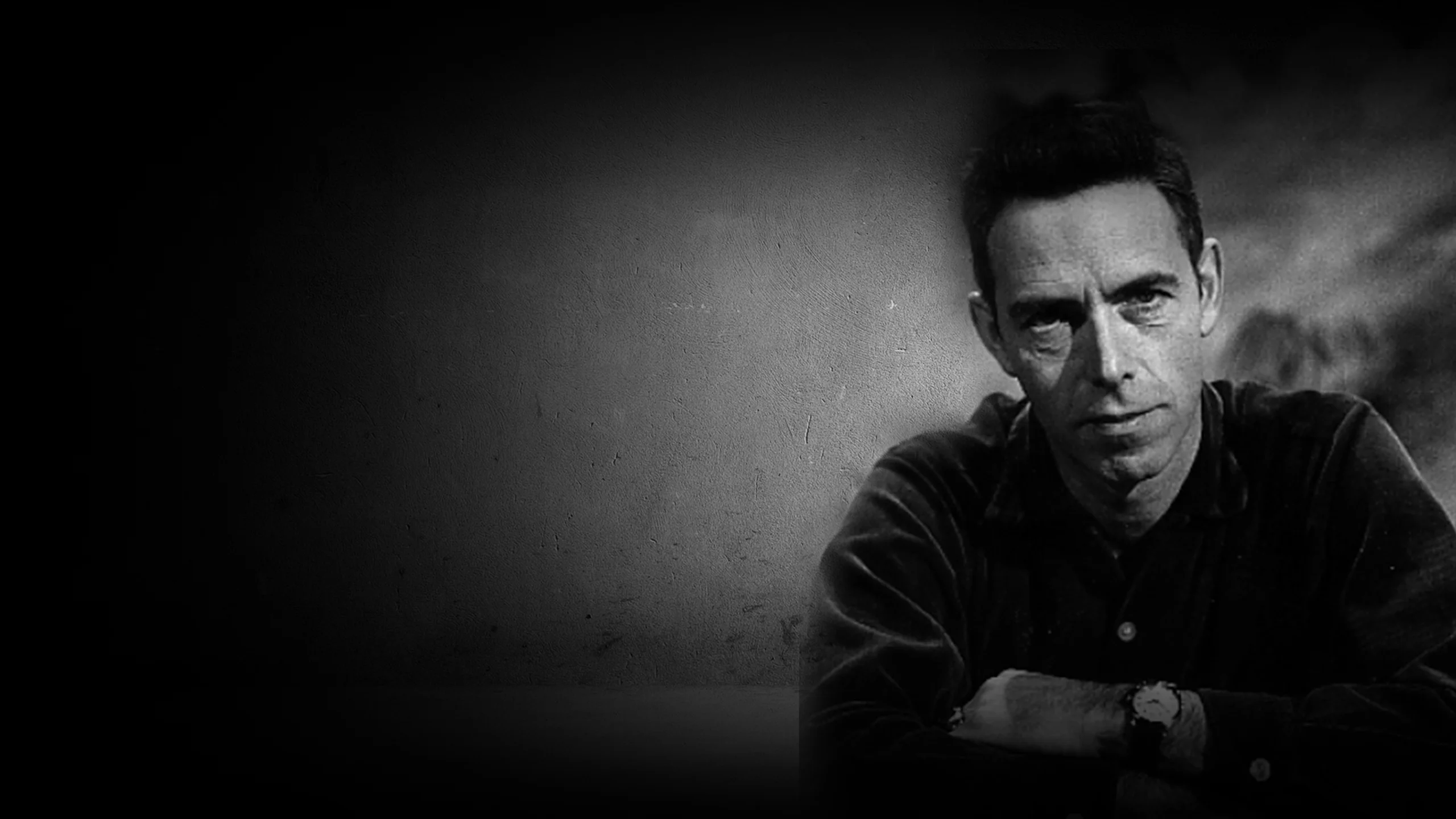
Alan Watts
 United Kingdom
Also known as: Alan Wilson Watts
Birthday
January 6, 1915
Birth Sign
Capricorn
Birthplace
Chislehurst, Kent, England
Age
Died at 58
Height
5 ft 10 in (178 cm)
About
Alan Wilson Watts was a British-born philosopher, writer, and speaker who became the preeminent interpreter of Eastern philosophy for Western audiences in the mid-20th century. Describing himself as a "philosophical entertainer," he bridged the gap between academic theology and popular culture, introducing millions to Buddhism, Taoism, and Hinduism through humor, storytelling, and radio lectures. Despite his profound impact on the Beat Generation and the 1960s counterculture, his life was marked by financial instability, health struggles, and a complex personal history that ended with his death at age 58.
Watts spent the latter half of his life in California, where he developed a unique voice that resonated deeply with seekers disillusioned by traditional religious structures. His ability to articulate complex metaphysical concepts in accessible language made him a cultural icon of the 1960s. Even decades after his passing, his influence persists through a massive back-catalogue of books and audio recordings that continue to find new readers and listeners every year.
Early Life & Background
Alan Wilson Watts arrived in Chislehurst, Kent, on January 6, 1915, as the son of Arthur Watts, an Anglican clergyman, and Mabel Watts. His upbringing was steeped in the traditions of the Church, a background that would eventually lead to his own disillusionment. He attended St. John's School in Leatherhead before moving on to the University of Cambridge, where he initially pursued a degree in Theology. It was here that the seeds of his future career were sown, not in agreement with the dogma, but in rebellion against its rigidity. He found the institutional constraints of the Church stifling and began searching for a more direct, experiential understanding of spirituality.
In 1938, seeking greater freedom, Watts moved to the United States and settled in New York City. He enrolled at the Union Theological Seminary but soon found himself equally constrained by American theological institutions. Leaving without completing his degree, he turned to freelance writing and translation to support himself. During this period, he worked various jobs, including factory labor and missionary work, while quietly developing his own philosophical framework. He translated key Buddhist texts, such as works by D.T. Suzuki, making them accessible to English speakers for the first time. This era of struggle and exploration laid the groundwork for his eventual breakthrough.
The turning point came in 1951 when Watts relocated to San Francisco and began volunteering at KPFA, a Pacifica Radio station in Berkeley. Unlike the dry, academic lectures common in universities, Watts spoke with wit, musicality, and a conversational tone that made complex philosophical concepts instantly accessible. This period marked the transition from obscurity to a growing cult following among intellectuals, artists, and seekers. His voice found its audience, and the stage was set for a career that would redefine how the West understood Eastern wisdom.
Career Growth
Watts' career trajectory was rapid once he found his medium on the airwaves. Between 1951 and 1954, he established a regular Sunday morning lecture series at KPFA, building a loyal local following in the Bay Area. In 1954, he published his first major book, The Spirit of Zen, which became a bestseller and introduced him to a national audience. That same year, he moved to Los Angeles, expanding his reach into the entertainment industry and Hollywood circles.
During the 1960s, Watts became the central figure of the "San Francisco Renaissance" in spirituality. He wrote over 25 books during this decade, including The Way of Zen (1957), The Book: On the Taboo Against Knowing Who You Are (1966), and The Wisdom of Insecurity (1951). His commercial success was driven by the massive demand for Eastern wisdom during the Vietnam War era. While he never achieved the wealth of a corporate executive, his books remained bestsellers for decades, and his lectures were recorded and distributed globally, creating a lucrative back-catalogue that continues to generate revenue today.
In 1962, he founded the American Academy of Asian Studies in San Francisco, serving as its president until his death. He also hosted a television series titled The Joyous Cosmology from 1962 to 1967, appearing frequently on talk shows to further cement his status as a cultural icon. In 1970, he released the album Back to the Front, blending spoken word with jazz to showcase his versatility as a performer. His work influenced countless figures in psychology, music, and philosophy, leaving an indelible mark on the cultural landscape of the 20th century.
Career Timeline
Public Image & Style
Watts is portrayed as a witty, erudite, and slightly irreverent sage. His style is characterized by a conversational tone, avoiding jargon in favor of vivid imagery. Media portrayals often highlight his role as a bridge between East and West, emphasizing his ability to make the esoteric seem ordinary. He cultivated an image of the "philosophical entertainer," rejecting the staid demeanor of the academic in favor of a more engaging, almost theatrical presentation style. This approach made him a favorite of the media and allowed him to reach audiences far beyond the university classroom.
Fame & Fandom (iFAMOUS Rankings)
iFANN has not yet collected fame data for this person. He does not appear on the August 2026 iFAMOUS Rankings flagship list. Fans generally refer to themselves as "students of Alan Watts" or simply part of the "counterculture movement," as there is no single, unified fandom name like "Swifties" or "Beyhive." The fanbase is highly decentralized, organized around online communities, book clubs, and the Alan Watts Org. Listening to his lectures is a common ritual, often done in groups or alone for meditation. Fans often create quote cards for social media and organize watch parties for his archived lectures, keeping his spirit alive for new generations.
Interesting Facts and Legends
Despite his reputation as a serene sage, Alan Watts struggled with alcoholism throughout much of his adult life, a fact often omitted in sanitized biographies but acknowledged by his son Mark. He was also a skilled pianist and often incorporated musical metaphors into his lectures, using rhythm and melody to illustrate philosophical points. Another lesser-known detail is that he occasionally used the name "Alan Wilson" in his early writings before fully adopting "Alan Watts." A popular legend suggests he was ordained as a Zen master in Japan, but this is folklore; he was never officially ordained, though he was deeply respected by Japanese teachers. His final public appearance was a lecture delivered in late 1973, just months before his death.
Notable Quotes
“The meaning of life is just to be alive. So simple. And yet, everybody rushes around in a great panic as if it were necessary to achieve something beyond themselves.”
“You are the universe experiencing itself.”
“There is no way to happiness. Happiness is the way.”
Family & Personal Life
Alan Watts was born into a religious family in England, the son of an Anglican clergyman. He married Dorothy Darrow in 1939, and they had two children together: Mark Watts, born in 1940, and Patricia Watts, born in 1942. The marriage ended in divorce in 1953 due to the strain of Watts' nomadic lifestyle and his increasing focus on his writing and speaking career. In 1954, shortly after his divorce, he married Patricia Ascough, a former student and fellow seeker. Their relationship was deeply rooted in shared spiritual interests, and she managed his affairs and supported his final projects until his death. They did not have children together, though they remained close to his children from his first marriage.
Notable Connections
Mark Watts, Patricia Ascough Watts, Joseph Campbell, Aldous Huxley.
Relationships & Dating History
Alan Watts was married twice during his lifetime. His first marriage was to Dorothy Darrow in 1939. She was a significant influence on his early work and supported his move to the US. They had two children together: Mark Watts, born in 1940, and Patricia Watts, born in 1942. The marriage ended in divorce in 1953 due to the strain of Watts' nomadic lifestyle and his increasing focus on his writing and speaking career. Following his divorce, Watts married Patricia Ascough in 1954. A former student and fellow seeker, their relationship was deeply rooted in shared spiritual interests. They lived together in Berkeley and later in Mill Valley, California. Patricia was a constant presence in his later years, managing his affairs and supporting his final projects. They remained married until his death in 1973. They did not have children together, though they were close to his children from his first marriage.
- DivorcedDorothy Darrow1939 - 1953Had two children together: Mark and Patricia Watts.
- WidowedPatricia Ascough1954 - 1973Remained married until his death; managed his estate afterward.
Death & Aftermath
Died
November 16, 1973 (aged 58)
Death Place
Mount Tamalpais, California, USA
Cause of Death
Heart failure and liver cirrhosis
Alan Watts passed away on November 16, 1973, at his home in Mount Tamalpais, California, just weeks before his 59th birthday. The official cause of death was heart failure, a condition exacerbated by severe cirrhosis of the liver resulting from years of heavy alcohol use. His health had been declining for some time, yet he remained intellectually active until the very end, delivering lectures and writing essays right up to his final days. The news of his sudden passing sent shockwaves through the counterculture community that had embraced him as a spiritual guide.
Following his death, a private funeral service was held attended by close friends, family, and students who had gathered around his teachings. He was cremated according to his wishes, and his ashes were scattered in the Pacific Ocean near his home in Mill Valley. The immediate aftermath saw a surge in interest in his work; sales of his books spiked, and recordings of his radio broadcasts saw renewed attention from listeners eager to revisit his words. His widow, Patricia Ascough Watts, along with their son Mark Watts, stepped in to manage his extensive literary and audio legacy.
The Watts estate has been carefully stewarded by his family and the Alan Watts Organization, ensuring that his message remains intact without commercial distortion. Unlike many figures whose estates become mired in legal battles, Watts' family maintained a unified front, establishing the Alan Watts Foundation to preserve his archives and support new research into his philosophy. Today, his estate continues to generate significant revenue through book royalties, licensing deals for documentaries, and the sale of thousands of hours of recorded lectures distributed via digital platforms. His son, Mark, has further solidified this legacy by hosting the Being in the Way podcast, which explores the vast archive of his father's life and work for a modern audience.
Net Worth (Estate Value)
$65 Million
iFANN Editorial Team estimate
As of 2026, the iFANN Editorial Team estimates Alan Watts' estate value at approximately $65 million. Since Watts died in 1973, this figure represents the accumulated wealth of his estate rather than personal income. The primary drivers of this value include continuous book royalties from over 25 titles, with The Wisdom of Insecurity and The Book remaining perennial bestsellers. Audio and video licensing also contribute significantly, with thousands of hours of recorded lectures distributed via the Alan Watts Org platform and streaming services.
Licensing deals for use of his quotes and image in documentaries, films, and media provide additional revenue streams. The estate is managed by his son, Mark Watts, and the Alan Watts Organization, which ensures the integrity of his message. No legal disputes arose regarding his estate, and his family has maintained a steady stewardship of his legacy. The estate generates an estimated annual revenue of between $2 million and $5 million USD, reflecting the enduring relevance of his work in discussions about mental health and mindfulness.
Awards & Accolades
View 5 records, honours and achievementsKnown For
The Wisdom of Insecurity
1951 · Author
The Way of Zen
1957 · Author
The Book: On the Taboo Against Knowing Who You Are
1966 · Author
The Joyous Cosmology
1962 · Host
Keywords
Sources
Quick Facts
- Profession
- philosopher, theologian, writer
- Born
- January 6, 1915
- Birthplace
- Chislehurst, Kent, England
- Died
- November 16, 1973
- Death Place
- Mount Tamalpais, California
- Gender
- Male
- Birth Sign
- Capricorn
Personal Details
- Full Name
- Alan Wilson Watts
- Height
- 5 ft 10 in (178 cm)
- Spouse
- Patricia Ascough Watts
- Children
- Mark Watts, Patricia Watts
- Education
- St. John's School, University of Cambridge (Theology), Union Theological Seminary
Filmography
12
Total
2
Film
10
TV
Frequently Asked Questions
What was Alan Watts' net worth?
Did Alan Watts have any children?
How did Alan Watts die?
Was Alan Watts a monk?
What is Alan Watts' most famous book?
Similar People
Join the community
fans discussing