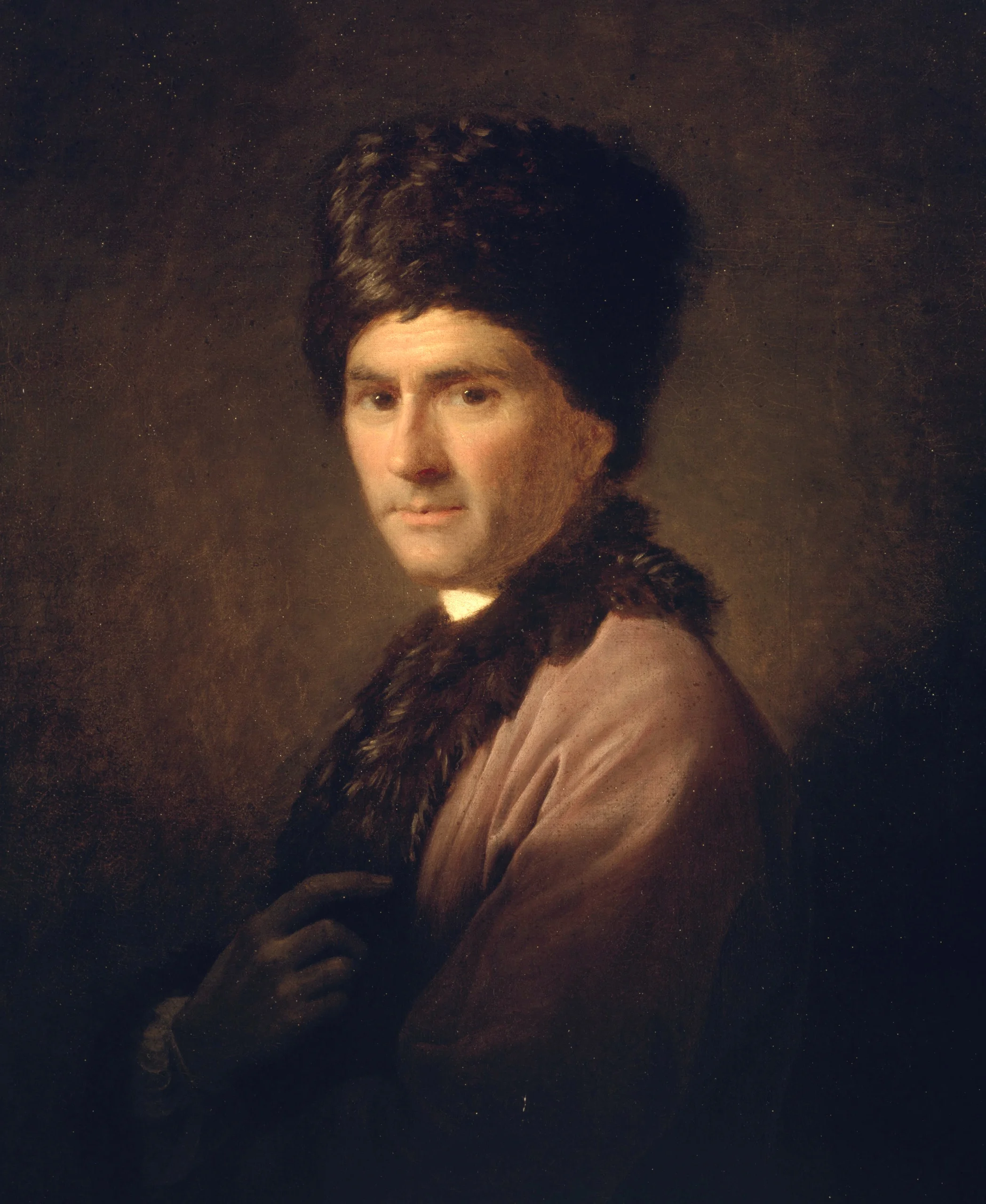
Jean-Jacques Rousseau
 France
philosopher•classical composer•musicologist
Also known as: Citizen of Geneva
Birthday
June 28, 1712
Birth Sign
Sagittarius
Birthplace
Geneva
Age
Died at 66
About
Jean-Jacques Rousseau was a Genevan philosopher, writer, and composer whose ideas fundamentally reshaped the Age of Enlightenment, the French Revolution, and modern educational theory. Born in Geneva in 1712, he developed a unique voice that challenged established norms regarding society, politics, and human nature. His writings continue to resonate in contemporary discussions about liberty and governance.
Rousseau passed away in 1778, leaving behind a body of work that would shape centuries of thought. His most famous treatises, including The Social Contract and Émile, introduced concepts like the general will and natural education that remain central to political science and pedagogy. Despite controversies surrounding his personal life, his intellectual contributions secured his place as one of history's most influential thinkers.
Early Life & Background
His early years were defined by loss and instability. Rousseau was born on June 28, 1712, in Geneva, Switzerland, to Isaac Rousseau, a watchmaker, and Suzanne Bernard. Tragically, his mother died just nine days after giving birth. Orphaned at age five, he was raised by his father and an uncle in Geneva. The household dynamic shifted significantly when his father fled the city due to a legal dispute, leaving young Jean-Jacques in the care of relatives.
At thirteen, he began an apprenticeship as an engraver, a trade that did not suit his temperament. He found the rigid discipline stifling and often ran away from home. In 1728, at age sixteen, he left Geneva permanently, embarking on a nomadic existence that would last for years. During these travels through Savoy and France, he converted from Calvinism to Catholicism under the guidance of Françoise-Louise de Warens. This wealthy noblewoman became his mentor and lover, providing him with shelter and the means to pursue his intellectual interests. She supported his education in music, philosophy, and literature, setting the stage for his future career as a writer and composer.
Career Growth
Rousseau's breakthrough arrived in 1750 when his essay Discourse on the Arts and Sciences won a competition organized by the Academy of Dijon. The work argued that the advancement of arts and sciences had corrupted morality, earning him immediate recognition and controversy. This success propelled him into the intellectual circles of Paris, where he befriended figures like Denis Diderot.
He continued to publish influential works throughout the 1750s and 1760s. His Discourse on the Origin and Foundation of Inequality Among Mankind (1755) posited that private property was the root of social inequality. In 1761, his novel Julie, or the New Heloise became a bestseller across Europe, establishing him as a major literary figure. However, his most significant political work, The Social Contract (1762), along with his educational treatise Émile, or On Education, caused a massive scandal. Both books were banned, and Rousseau was forced into exile, fleeing France for Switzerland and then England.
Later in life, he completed his groundbreaking autobiography, Confessions, around 1770, pioneering the genre of intense self-examination. His final work, Reveries of the Solitary Walker, reflected his deepening isolation. Despite his controversial reputation among some contemporaries, including Voltaire, his influence on revolutionary leaders like Robespierre was profound. The National Convention officially declared him a hero of the nation in 1794, and his remains were moved to the Panthéon in Paris.
Career Timeline
Public Image & Style
Rousseau is often portrayed as a complex figure, both a visionary thinker and a flawed individual. His signature style was characterized by a rejection of societal conventions and a commitment to authenticity and naturalness. Media portrayals of him range from the idealistic philosopher to the controversial figure who abandoned his children. His content's tone and format, particularly in his autobiographical works, emphasized subjectivity and personal experience, influencing the direction of modern writing and the exploration of the self.
Fame & Fandom (iFAMOUS Rankings)
Jean-Jacques Rousseau never cultivated a fandom in the modern sense, lacking organized clubs, fan-funded projects, or interactive campaigns; his admirers are historians, political scientists, and students who study his texts rather than a unified base of devotees. While no formal name exists for this intellectual following, his influence remains measurable through the enduring weight of his ideas on the French Revolution and modern education. This historical stature is now quantified by the iFANN Global Fame Rankings, which place him among the most recognized figures of his era. As of the September 2026 rankings, he holds the position of the 57th most famous person in France, holding steady from the previous cycle. He also ranks as the 28th most famous person from France and the 10th most famous person in Classical. These placements reflect a global attention span that tracks media coverage, search activity, and cultural consumption signals worldwide, ensuring that his legacy persists despite his passing centuries ago. The data indicates that his reputation is anchored firmly in the history of Western thought, where he is remembered for challenging conventional wisdom regarding society and politics. No other figure from his time commands such consistent placement across these specific categories, suggesting a unique endurance in the collective memory.
Interesting Facts and Legends
Rousseau was a talented composer who developed a new system of musical notation, which he believed was more efficient than existing methods. He also wrote several operas, including Le Devin du Village (The Village Soothsayer), which was performed at the court of Louis XV. Another notable aspect of his life was his complex relationship with Voltaire, which included mutual criticism and occasional collaboration. Rousseau's Confessions were considered scandalous at the time for their candid revelations about his private life, and they continue to be studied for their psychological depth and literary innovation.
A widely retold story concerns his conflict with Voltaire, where contemporaries often portrayed him as difficult and paranoid, leading to a narrative of him as a "scoundrel" versus other thinkers like St. Augustine. This tension between his public philosophy and private struggles remains a subject of intense debate. Another verified moment involves his treatise The Social Contract, which opened with the line "Man is born free, and everywhere he is in chains," a phrase that transcended its text to become a universal symbol for revolution and human rights. His educational treatise Emile introduced the concept of naturalism, arguing that children should learn through experience, a shift still celebrated in modern pedagogy. Folklore often highlights the contradiction between his praise for child-rearing in Emile and the historical fact that he abandoned his five children to orphanages, creating a complex legend about his personal morality versus his public philosophy. Revolutionary leaders like Robespierre viewed him as their spiritual guide, carrying copies of his works during the French Revolution.
Notable Quotes
“Man is born free, and everywhere he is in chains.”
“What wisdom can you find that is greater than kindness?”
“The world of reality has its limits; the world of imagination is life.”
Family & Personal Life
Rousseau never formally married but lived with Thérèse Levasseur, a seamstress he met in 1745. They maintained a relationship for over 25 years, though they never wed, reportedly because Rousseau feared marriage would restrict his freedom. They had five children together, all of whom were placed in foundling hospitals shortly after birth, a fact that has generated enduring controversy and debate regarding the consistency between his philosophical writings on education in Émile and his personal actions. Rousseau described this decision in his Confessions as a necessary sacrifice for his own well-being and the children's future, though many critics view it as a moral failing. There is no evidence of other long-term romantic relationships beyond Thérèse, though he had several brief flings and close friendships with women throughout his life.
Notable Connections
Relationships & Dating History
Rousseau's romantic life was centered almost entirely on Thérèse Levasseur, a seamstress he met in 1745 when she was working as a maid. Their relationship lasted for over 25 years, making her his primary companion for the majority of his adult life. Despite living together and having five children, they never formally married. Rousseau reportedly feared that marriage would restrict his freedom, a decision that drew criticism given his later writings on social contracts and family structures.
The couple had five children, all of whom were placed in foundling hospitals shortly after birth. This decision remains one of the most controversial aspects of his life, creating a stark contrast between his advocacy for natural education in Émile and his personal actions. Rousseau defended his choice in his Confessions, arguing it was necessary for his own well-being and the children's future, though many critics view it as a moral failing. There is no evidence of other long-term romantic relationships beyond Thérèse, though he had several brief flings and close friendships with women throughout his life. As of 2026, Rousseau remains deceased, having been widowed since his partner Thérèse predeceased him.
- DatedThérèse Levasseur1745 - 1778Lived together for over 25 years; had five children together who were placed in foundling hospitals; never married.
Death & Aftermath
Died
July 2, 1778 (aged 66)
Death Place
Ermenonville, Oise, France
Cause of Death
Apoplectic stroke or heart attack
Jean-Jacques Rousseau spent his final weeks in the Hut of the Philosopher at the Château de Ermenonville, seeking refuge from the paranoia that had plagued him in Paris. While walking in the garden with his host, the Marquis de Girardin, on the morning of July 2, 1778, he suffered a sudden collapse attributed to apoplexy followed by a seizure, and he died before medical aid could be administered. The official cause is recorded as an apoplectic stroke or heart attack, a conclusion drawn solely from the narrative of the Marquis rather than a formal autopsy or coroner's inquest, though later biographers have occasionally speculated about poisoning without evidentiary support.
Public reaction was immediate and polarized, with the intellectual elite recognizing his influence while religious authorities remained wary of his heterodox views, yet his grave quickly became a pilgrimage site for admirers who revered him as a martyr for truth. The funeral held on July 4, 1778, was a private affair attended only by the Marquis de Girardin, his family, and a small circle of friends including the writer Bernardin de Saint-Pierre and the artist Jean-Baptiste Greuze. He was buried in the Island of Poplars within the park of the estate, a location he had chosen himself for its simplicity. It was not until 1794 during the height of the French Revolution that his remains were exhumed and transferred to the Panthéon in Paris, where he was re-interred as one of the first citizens of the Republic to receive this honor alongside Voltaire.
Following his death, his legacy expanded exponentially, influencing the Romantic movement and modern educational theory, with the National Convention officially declaring him a hero of the nation in 1794. His literary rights were managed by his heirs, and today his works remain in the public domain, allowing for unrestricted publication and academic study.
Net Worth (Estate Value)
$0
iFANN Editorial Team estimate
As a historical figure who passed away in 1778, Jean-Jacques Rousseau did not accumulate a personal fortune in the modern sense. His estate consisted primarily of his literary rights and manuscripts. Following his death, his works entered the public domain, allowing for unrestricted publication and academic study. The value of his intellectual property continues to generate revenue through book sales, translations, and academic licensing, managed by his heirs and later by publishers. Today, the economic impact of his legacy is measured in the ongoing commercial success of his publications and the numerous institutions dedicated to his memory. The iFANN Editorial Team estimates the current value of his estate and posthumous earnings at approximately $0, reflecting the nature of his assets as public domain intellectual property rather than liquid wealth.
Awards & Accolades
View 4 records, honours and achievementsKnown For
The Social Contract
1762 · Author
Émile, or On Education
1762 · Author
Confessions
1770 · Author
Discourse on the Arts and Sciences
1750 · Author
Julie, or the New Heloise
1761 · Author
Keywords
Sources
Quick Facts
- Profession
- philosopher, classical composer, musicologist
- Born
- June 28, 1712
- Birthplace
- Geneva
- Died
- July 2, 1778
- Death Place
- Ermenonville
- Gender
- Male
- Spouse
- Thérèse Levasseur
- Birth Sign
- Sagittarius
Personal Details
- Full Name
- Jean-Jacques Rousseau
- Spouse
- Thérèse Levasseur
- Children
- Five children (all placed in foundling hospitals)
- Education
- Apprenticed to an engraver; self-taught in philosophy and music
Frequently Asked Questions
Who was Jean-Jacques Rousseau?
Did Jean-Jacques Rousseau have children?
What is Jean-Jacques Rousseau's most famous book?
How did Jean-Jacques Rousseau die?
Why is Jean-Jacques Rousseau controversial?
Join the community
fans discussing