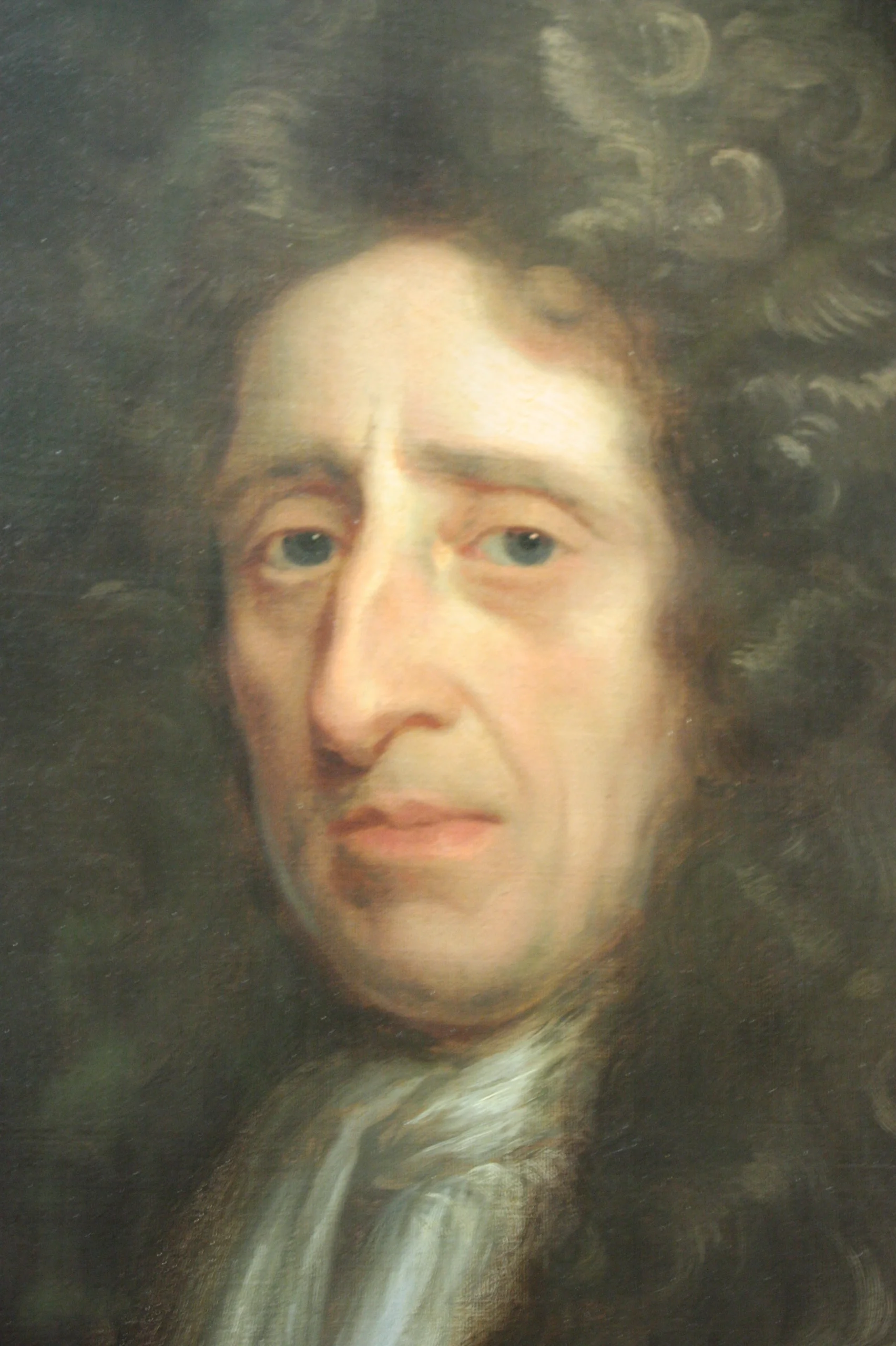
John Locke
 United Kingdom
philosopher•physician•political theorist
Also known as: The Father of Liberalism, English Philosopher
Birthday
August 29, 1632
Birth Sign
Sagittarius
Birthplace
Wrington, Somerset, England
Age
Died at 72
About
John Locke was an English philosopher, physician, and political theorist who lived from 1632 to 1704. Widely known as the father of liberalism, his ideas on natural rights, empiricism, and religious toleration shaped modern democratic thought. He died at the age of 72 in High Laver, Essex.
Locke's intellectual legacy rests on three major works published shortly after his return from exile in 1689. An Essay Concerning Human Understanding argued that the mind is a blank slate at birth, rejecting innate ideas. His Two Treatises of Government challenged the divine right of kings and asserted that legitimate government relies on the consent of the governed. A Letter Concerning Toleration advocated for the separation of church and state.
Early Life & Background
John Locke entered the world on August 29, 1632, in Wrington, Somerset, during a time of deepening political division in England. His father, also named John Locke, was a country attorney who served as a captain in the Parliamentarian cavalry during the English Civil War. This early exposure to armed conflict and intense political debate deeply influenced the young Locke's later views on authority and governance.
At age fifteen, he enrolled at Westminster School in London, where he excelled in classical studies from 1647 to 1652. In 1652, at nineteen, he matriculated at Christ Church, Oxford. While the curriculum focused heavily on Aristotelian scholasticism, Locke grew increasingly dissatisfied with these traditional methods. He gravitated instead toward the experimental philosophy of Francis Bacon and the work of Robert Boyle. He earned his Bachelor of Arts in 1656 and his Master of Arts in 1658, remaining at Oxford as a tutor and lecturer in Greek and rhetoric while pursuing his medical interests under Thomas Sydenham.
Career Growth
Locke's transition from academic life to public service began in 1666 when he met Anthony Ashley Cooper, the 1st Earl of Shaftesbury. Impressed by Locke's intellect and medical knowledge, Shaftesbury invited him to become his personal physician and secretary. This relationship launched Locke's career in politics and patronage. Through Shaftesbury, he entered the highest circles of power, serving as a secretary to the Lords Proprietors of Carolina and contributing to the drafting of the Fundamental Constitutions of Carolina. He was elected a Fellow of the Royal Society in 1668, marking his entry into the scientific community.
His political alignment with Shaftesbury eventually put Locke in danger following the Rye House Plot conspiracy against King Charles II in 1683. Fearing arrest, Locke fled to Holland. During his six years in exile, he produced his most significant philosophical works. He returned to England in 1689 following the Glorious Revolution. That same year, he published A Letter Concerning Toleration, Two Treatises of Government, and An Essay Concerning Human Understanding. These works established his reputation as a leading thinker.
In the 1690s, Locke served as a commissioner of appeals for prizes and as a member of the Board of Trade, influencing colonial policy and economic thought. He published Some Thoughts Concerning Education in 1693 and The Reasonableness of Christianity in 1695. He spent his final years at Oates, the estate of Sir Francis Masham and his wife, Lady Damaris Cudworth Masham, where he retired from public life due to ill health.
Career Timeline
Public Image & Style
John Locke is portrayed in media and academia as the archetype of the rational, liberal thinker. His image is associated with reason, tolerance, and the defense of individual rights. In popular culture, he is often referenced as the voice of common sense and the foundation of democratic values. His writings are studied globally, and his name is synonymous with the Enlightenment era. He is remembered for his calm demeanor and his commitment to empirical observation over dogma.
Fame & Fandom (iFAMOUS Rankings)
John Locke never stood on a stage, yet his influence reshaped the architecture of modern governance. He died in 1704, long before the concept of celebrity fandoms existed, leaving behind no organized fanbase or formal group name. His legacy rests not on chart-topping hits or viral moments, but on the quiet revolution of ideas that permeate universities and political halls worldwide. The iFANN Global Fame Engine evaluated his standing in August 2026 and determined that he currently holds no placement within the published rankings, including the Global Top 1,000 or any scope-specific top lists. This absence reflects the nature of his fame: it is foundational rather than trending, measured in centuries of academic study rather than daily search spikes. While there are no fan campaigns, birthday billboards, or subway ads dedicated to him, the intellectual lineage he forged remains active. Scholars treat his works as living documents, debating the contradictions between his advocacy for liberty and his investments in the Royal African Company. The story of him dictating masterpieces while battling near-total blindness adds a layer of human resilience to his mythos, though this remains a historical footnote rather than a ritual celebrated by a devoted following. His most iconic moment was not a public spectacle but the publication of Two Treatises of Government in 1689, which fundamentally altered how societies view the right to revolution. Similarly, his development of empiricism through An Essay Concerning Human Understanding shifted the course of philosophy by arguing that the mind begins as a blank slate. These are the legends that endure, rooted in verified history rather than internet lore. There are no subreddits or fan clubs organizing pushes for his work; instead, his audience is scattered across disciplines, united only by the gravity of his contributions to Western thought.
Interesting Facts and Legends
Despite his advocacy for liberty, Locke was a shareholder in the Royal African Company and helped draft the Fundamental Constitutions of Carolina, which included provisions for slavery. This contradiction has been the subject of extensive modern scholarly debate. In his later years, Locke suffered from severe eye strain and near-total blindness, yet he continued to dictate his works and engage in correspondence. The concept of tabula rasa was revolutionary, challenging the prevailing notion of innate ideas. He was a close friend of Thomas Sydenham, known as the English Hippocrates, and conducted experiments on the effects of alcohol and opium. A story fans still retell involves Locke writing his masterpieces in secret while hiding from royal agents in Holland.
Notable Quotes
“Parents wonder why the streams are bitter, when they themselves pollute the fountain.”
“We are like chameleons, we take our hue... from the company we keep.”
“Being all equal and independent, no one ought to harm another in his life, health, liberty, or possessions.”
“You learn more from the questions of a child than from the speeches of a grown man.”
Family & Personal Life
John Locke was born into a family of modest means. His father, a country attorney and Parliamentarian captain, instilled early values regarding civic duty. Locke never married and had no children, dedicating his life to his intellectual pursuits. His closest personal bond was with his patron, Anthony Ashley Cooper, 1st Earl of Shaftesbury, which lasted until Shaftesbury's death in 1683. Later, he formed a deep intellectual and domestic friendship with Sir Francis Masham and his wife, Lady Damaris Masham, living with them for the last decade of his life. Lady Masham was a noted philosopher who corresponded with Locke and published some of his posthumous letters.
Notable Connections
Relationships & Dating History
John Locke never married and had no children. His personal life was defined by professional associations and close friendships rather than romantic relationships. His most significant bond was with his patron, Anthony Ashley Cooper, 1st Earl of Shaftesbury, which lasted until Shaftesbury's death in 1683. Later, he formed a deep intellectual and domestic friendship with Sir Francis Masham and his wife, Lady Damaris Masham, living with them for the last decade of his life. There are no credible historical records of him being engaged, divorced, widowed, or publicly rumored to be dating anyone.
Death & Aftermath
Died
October 28, 1704 (aged 72)
Death Place
High Laver, Essex, England
Cause of Death
Complications from a severe asthma attack while undergoing treatment for tuberculosis
The London Gazette and the Royal Society noted the passing of John Locke, marking the end of a life that defined Enlightenment thought. Tributes remained confined to academic circles and private letters among peers like Isaac Newton rather than public monuments or immediate memorials. On October 28, 1704, Locke died at age 72 within the home of Sir Francis Masham in High Laver, Essex, where he had resided as a guest for several years. His final days were spent in relative seclusion, with the philosopher confined to bed during the autumn months before succumbing to complications from a severe asthma attack while undergoing treatment for tuberculosis. Doctors attempted to drain fluid from his chest using a lancet, a procedure that either proved fatal or accelerated his decline given his frail condition.
The event was recorded through family and household accounts maintained by the Mashams. A simple funeral service took place shortly after his death at St. Mary's Church in High Laver, attended by the Masham family, close friends, and local clergy. He was buried in the churchyard, consistent with the modest lifestyle he led in his final years. Executors including his friend John Edwards ensured his manuscripts were preserved, leading to posthumous publications that cemented his influence on Western philosophy. Statues and scholarships bearing his name emerged centuries later.
Net Worth (Estate Value)
$0
iFANN Editorial Team estimate
As a historical figure who died in 1704, John Locke did not accumulate a net worth in the modern sense. His estate value at death was modest, derived from his salary as a civil servant and the patronage of Shaftesbury. He owned land and books but was not considered wealthy by aristocratic standards. Since his death, his intellectual property has generated immense cultural value through book sales and educational use, though his works are largely in the public domain. The iFANN Editorial Team estimates the financial impact of his legacy as priceless, having shaped global political systems worth trillions of dollars, but no specific dollar figure applies to his personal estate today.
Awards Won (1)
John Locke received no awards during his lifetime in the modern sense, as institutions like the Nobel Prize did not exist. He was elected a Fellow of the Royal Society in 1668. Posthumously, he has been universally recognized as the Father of Liberalism and a founding figure of Empiricism. His ideas directly inspired the American Declaration of Independence and the French Declaration of the Rights of Man and of the Citizen.
1668 · Academic Distinction
Known For
An Essay Concerning Human Understanding
1689 · Author
Two Treatises of Government
1689 · Author
A Letter Concerning Toleration
1689 · Author
Keywords
Sources
Quick Facts
- Profession
- philosopher, politician, physician
- Born
- August 29, 1632
- Birthplace
- Wrington, Somerset, England
- Died
- October 28, 1704
- Death Place
- High Laver, Essex, England
- Gender
- Male
- Birth Sign
- Sagittarius
Personal Details
- Full Name
- John Locke
- Children
- Education
- Westminster School; Christ Church, Oxford (BA 1656, MA 1658)
Frequently Asked Questions
Who was John Locke?
What is John Locke famous for?
Did John Locke have children or get married?
How did John Locke die?
What is the John Locke Essay Prize?
Similar People
Join the community
fans discussing