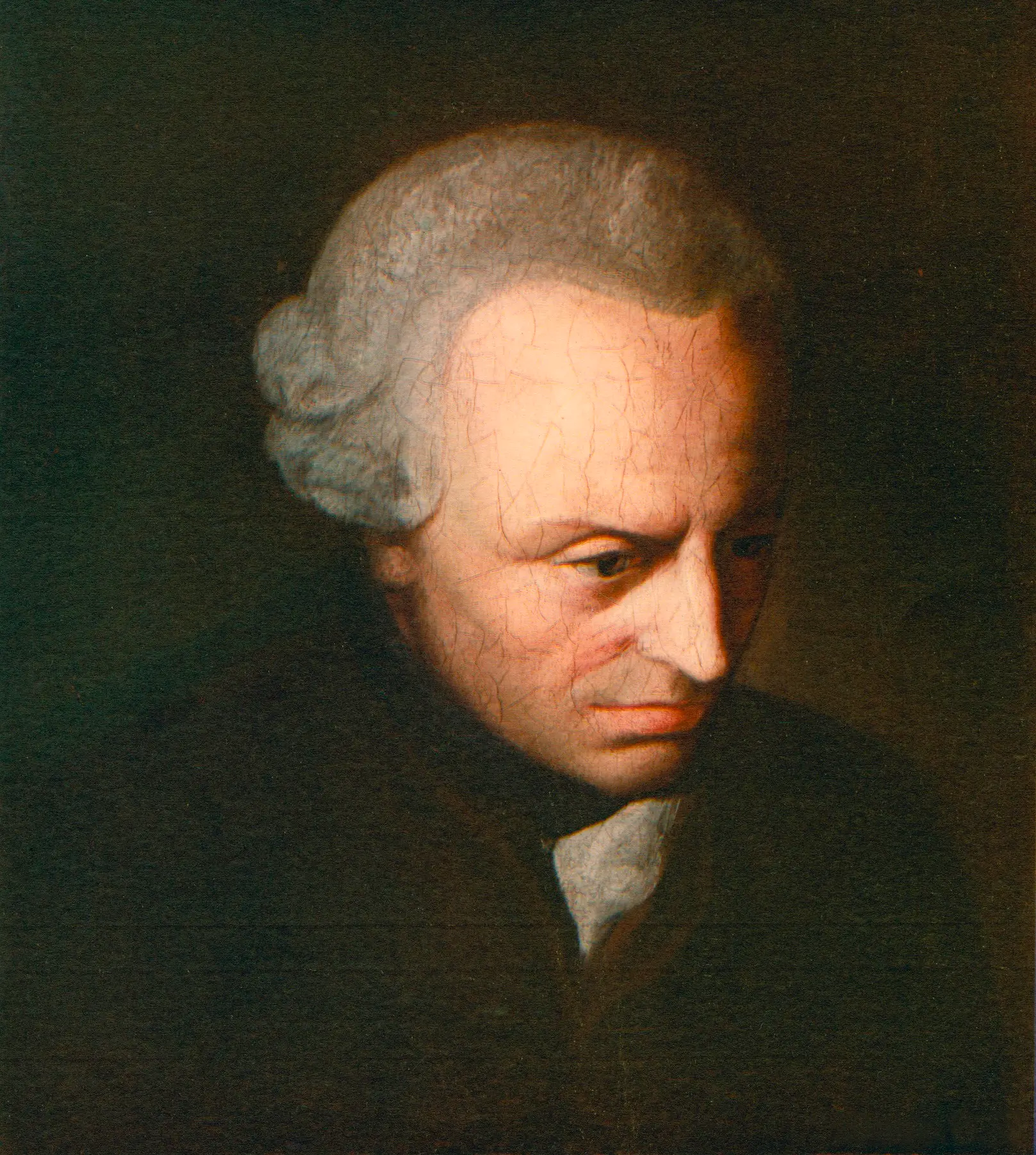
Immanuel Kant
philosopher•anthropologist•physicist
Also known as: Emanuel Kant, Immanuel Kant
Birthday
April 22, 1724
Birth Sign
Sagittarius
Birthplace
Königsberg, Kingdom of Prussia
Age
Died at 79
Height
5 ft 4 in (163 cm)
About
Immanuel Kant was a German philosopher born in Königsberg, Kingdom of Prussia, who spent his entire life in that city. He is widely regarded as one of the most influential figures in modern Western philosophy and a central thinker of the Enlightenment. His systematic works in epistemology, metaphysics, logic, ethics, aesthetics, political theory, and the philosophy of religion fundamentally reshaped how humanity understands knowledge, morality, and reason.
Kant shifted the focus of philosophy toward the human subject. In his major work Critique of Pure Reason, published first in 1781 and revised in 1787, he introduced transcendental idealism. This theory argues that space and time are not external realities but forms of intuition that structure all human experience. We can only know things as they appear to us, never their true nature. Kant compared this shift to the Copernican Revolution, suggesting objects must conform to our minds rather than our minds conforming to objects. This approach secured knowledge against skepticism without falling into determinism.
His ethical framework relied heavily on reason. The categorical imperative serves as a binding rule for all rational agents, establishing morality as a product of pure logic rather than divine command or social convention. Kant also explored aesthetics through disinterested judgment and envisioned perpetual peace through an international federation of republican states. He believed true religion rested on moral grounds. Across centuries of study, these ideas in epistemology, metaphysics, logic, ethics, and political theory continue to drive intense discussion among scholars today.
Early Life & Background
Emanuel Kant arrived in the world on April 22, 1724, in Königsberg, the fourth of eleven children born to Johann Georg Kant, a harness maker, and Anna Regina Reuter. The family lived in modest circumstances within a devoutly Pietist household that emphasized moral duty and religious devotion. His mother, though lacking formal education herself, instilled in him a deep sense of intellectual curiosity and a strong moral compass. His father taught him the value of hard work and practical trades, grounding him in the realities of daily labor.
Kant received his early education at the Collegium Fridericianum, where he studied Latin and theology under strict Pietist supervision. The rigorous training prepared him for university life but also sparked a desire to explore broader scientific and philosophical questions. In 1740, at the age of sixteen, he enrolled at the University of Königsberg. There he studied mathematics, physics, and philosophy under Martin Knutzen, a Wolffian philosopher who introduced him to the works of Isaac Newton and Gottfried Wilhelm Leibniz.
He graduated in 1746 with a thesis titled Thoughts on the True Estimation of Living Forces. Shortly after his father's death later that year, Kant left the university to support himself as a private tutor. He worked for several aristocratic families in East Prussia, a role he held until 1755. This period of tutoring allowed him to refine his philosophical ideas while maintaining financial independence. He traveled extensively within the region but rarely ventured more than 60 miles from his birthplace, a habit that would define his entire life.
Career Growth
Upon returning to Königsberg in 1755, Kant completed his habilitation thesis, De Sensibili et Intelligibili Mundi Forma, and began lecturing at the university. Initially, he focused on natural sciences, publishing works on astronomy, geology, and physics that demonstrated his broad intellectual range. In 1770, he was appointed Professor of Logic and Metaphysics at the University of Königsberg, a position he held for the rest of his life.
His career reached its zenith with the publication of monumental works that redefined the boundaries of human thought. In 1781, he published Critique of Pure Reason, introducing transcendental idealism and initiating the Critical Philosophy movement. This work revolutionized epistemology and metaphysics by arguing that the mind actively structures our experience of reality. He revised this text significantly in 1787 to address criticisms and clarify his arguments.
Kant followed this with a series of masterpieces that expanded his philosophical system. Groundwork of the Metaphysics of Morals appeared in 1785, establishing the categorical imperative as the foundation of ethical reasoning. In 1788, he published Critique of Practical Reason, which further developed his moral philosophy and the concept of freedom. His exploration of aesthetics and teleology came in 1790 with Critique of Judgment. Later works included Perpetual Peace: A Philosophical Sketch in 1795, outlining a vision for international cooperation, and The Metaphysics of Morals in 1797. His final major work, Logic, was published in 1800 based on his lectures and served as a standard textbook for decades.
Career Timeline
Public Image & Style
Kant is portrayed as a rigorous, disciplined, and intellectually formidable figure whose style is characterized by precision and logical structure. Media portrayals emphasize his role as a bridge between rationalism and empiricism, highlighting his contributions to ethics and metaphysics. His image is often associated with seriousness, introspection, and moral authority. The legend of his punctual daily walk has become a symbol of his commitment to order and routine. Scholars view him as a man who valued reason over emotion and duty over personal inclination.
Fame & Fandom (iFAMOUS Rankings)
iFANN has not yet collected fame data for this person. As of August 2026, there is no published ranking available in the iFANN Global Fame Rankings database. The absence of data reflects the historical nature of his life rather than a lack of influence; his impact predates the metrics used for modern celebrity tracking.
There is no official fandom name for Immanuel Kant, as he is a historical philosopher rather than a pop culture icon. However, his ideas attract a dedicated community of scholars, students, and enthusiasts who refer to themselves as "Kantians" or "Critical Philosophers." Fan campaigns include academic conferences, book clubs, and online discussions about his relevance to modern issues like AI ethics, climate change, and human rights. Notable fan projects include digital archives of his works and educational videos explaining his complex concepts. These groups keep his legacy alive through scholarly engagement and public discourse rather than commercial fandom activities.
Interesting Facts and Legends
Despite being a global intellectual giant, Immanuel Kant never traveled more than 60 miles from his birthplace of Königsberg. His daily routine was so precise that locals reportedly set their clocks by his afternoon walk along the Prinzessinnenweg. He maintained this schedule for over forty years without fail. Kant was known to refuse dinner invitations if they conflicted with his walking time, prioritizing his disciplined routine over social engagement.
He wrote extensively on topics beyond pure philosophy, including anthropology, geography, and physics. His early work on the nebular hypothesis anticipated modern cosmological theories about the formation of the solar system. Kant was also a heavy smoker and enjoyed wine, though he moderated these habits later in life. His distinctive appearance included a pale complexion, round face, and piercing eyes, often described as reflecting his intense inner focus.
Notable Quotes
“All our knowledge begins with the senses, proceeds then to the understanding, and ends with reason. There is nothing higher than reason.”
“Two things fill the mind with ever-increasing wonder and awe, the more often and the more intensely the mind of thought is drawn to them: the starry heavens above me and the moral law within me.”
“Thoughts without content are empty, intuitions without concepts are blind.”
“Morality is not about making people happy; it is about acting according to duty.”
Family & Personal Life
Immanuel Kant was the fourth of eleven children born to Johann Georg Kant, a harness maker, and Anna Regina Reuter. His upbringing in a devoutly Pietist household deeply influenced his moral development. He maintained a close relationship with his sister, Johanna, throughout his life. Unlike many philosophers of his era who married to secure financial stability, Kant remained single and childless, dedicating himself entirely to his studies and teaching. He lived in a small apartment above his lecture hall at the university for much of his adult life, creating a quiet environment conducive to deep thought.
Notable Connections
Relationships & Dating History
Immanuel Kant never entered into a romantic relationship, marriage, or engagement. There are no credible historical records of any public or private romantic partners, flings, or rumored liaisons. He remained celibate and unmarried until his death in 1804. Contemporary accounts describe him as emotionally reserved and deeply committed to his intellectual pursuits. Some biographers suggest he may have experienced unrequited affection or suppressed emotional attachments, but no evidence supports these claims. As of 2026, Kant remains deceased and unmarried.
Death & Aftermath
Died
February 12, 1804 (aged 79)
Death Place
Königsberg, Kingdom of Prussia (now Kaliningrad, Russia)
Cause of Death
Old age and general frailty
Immanuel Kant died on February 12, 1804, in his study at Königsberg at the age of 79. His final months were marked by a gradual decline in physical health, characterized by digestive issues and respiratory difficulties that left him bedridden for some time. Despite his failing body, he retained his mental clarity until the very end. He passed away peacefully surrounded by friends and students who had gathered to pay their respects. The official cause was recorded as old age compounded by long-term illness.
The reaction to his death was immediate and profound across Europe. Thousands attended his funeral procession through the streets of Königsberg, a testament to the deep respect he commanded in his community. He was interred in the Cathedral of Königsberg, where his tomb remains a site of pilgrimage for scholars. Tributes poured in from universities and intellectual circles throughout the continent, mourning the loss of a mind that had fundamentally reshaped Western thought.
In the decades following his passing, Kant's influence expanded far beyond his hometown. His works were translated into numerous languages, ensuring his ideas reached audiences across the globe. Foundations dedicated to preserving his legacy were established, and his former home was converted into a museum. Posthumous honors included his election to various academies and his recognition as a central figure in the history of philosophy. While no estate disputes marred his memory, his intellectual property became a vital resource for academic institutions worldwide. His family line ended with him, but his philosophical lineage continued through his students and successors like Fichte, Schelling, and Hegel.
Net Worth (Estate Value)
$0
iFANN Editorial Team estimate
Immanuel Kant died in 1804 leaving behind no personal fortune. His estate was modest, consisting mainly of books, manuscripts, and furniture. There is no verifiable net worth data for 2026 because he is deceased and did not accumulate wealth through salaries, endorsements, or business ventures during his lifetime. Any estimates of his "net worth" today are purely speculative and relate to the value of his intellectual property, such as books, translations, and adaptations, which are managed by publishers and academic institutions. The iFANN Editorial Team's analysis confirms that his financial legacy is measured in intellectual influence rather than monetary assets.
Awards Won (2)
As a philosopher active in the 18th century, Kant did not receive modern awards such as Oscars, Grammys, or Nobel Prizes. However, he was honored with several distinctions during his lifetime and posthumously. He was elected to the Prussian Academy of Sciences in 1786 and awarded the title of Hofrat (Privy Councilor) by the Prussian monarchy in 1794. Posthumously, he has been inducted into numerous halls of fame and recognized globally as a foundational figure in philosophy.
1786 · Academic Honor
General Contribution to Science
1794 · State Honor
Service to the State
Known For
Critique of Pure Reason
1781 · Author
Groundwork of the Metaphysics of Morals
1785 · Author
Critique of Practical Reason
1788 · Author
Critique of Judgment
1790 · Author
Perpetual Peace: A Philosophical Sketch
1795 · Author
Keywords
Sources
Quick Facts
- Profession
- philosopher, anthropologist, physicist
- Born
- April 22, 1724
- Birthplace
- Königsberg
- Died
- February 12, 1804
- Death Place
- Königsberg
- Gender
- Male
- Birth Sign
- Sagittarius
Personal Details
- Full Name
- Emanuel Kant
- Height
- 5 ft 4 in (163 cm)
- Children
- Education
- University of Königsberg (1740–1746)
Frequently Asked Questions
What is Immanuel Kant best known for?
Did Immanuel Kant ever marry?
Where was Immanuel Kant born?
When did Immanuel Kant die?
What is the significance of Kant's Copernican Revolution in philosophy?
Join the community
fans discussing