
Ibn al-Haytham
 Iraq
Iraqmathematician•physicist•philosopher
Also known as: Alhazen, Abu Ali al-Hasan ibn al-Hasan ibn al-Haytham, Al-Fiziki
Birthday
965
Birth Sign
Capricorn
Birthplace
Basra, Iraq
Age
Died at 75
About
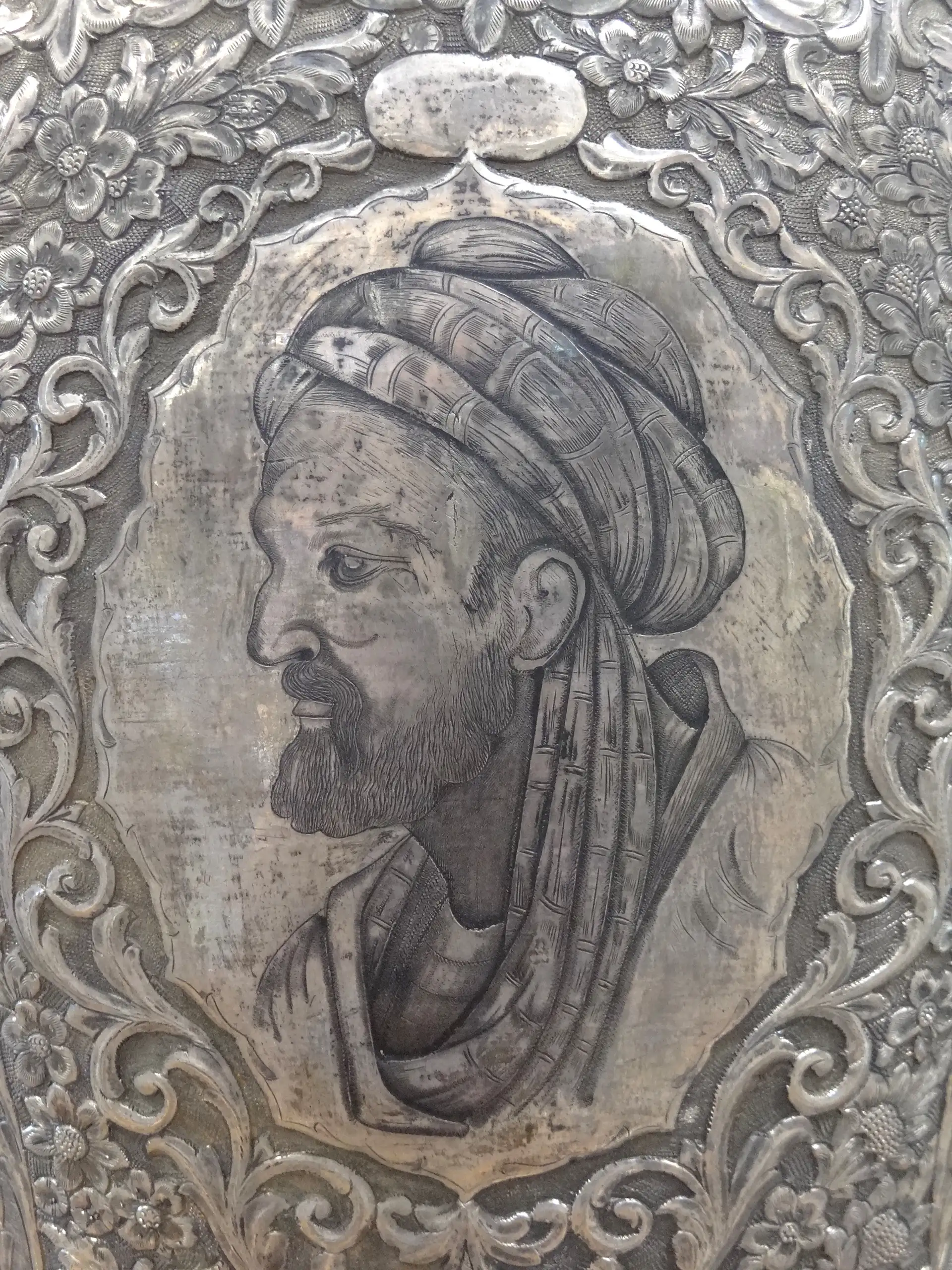
Ibn al-Haytham was an Iraqi mathematician, astronomer, and physicist of the Islamic Golden Age who lived from approximately 965 to 1040 CE. Born in Basra, he spent much of his adult life in Cairo where he served as an advisor to the Fatimid Caliph. Known in the West as Alhazen, he is universally recognized as the "Father of Modern Optics" for his revolutionary theories on light and vision. His magnum opus, the Book of Optics, dismantled ancient Greek theories and laid the groundwork for the modern scientific method.
His intellectual legacy transformed how humanity understands the physical world. By insisting on empirical evidence and rigorous experimentation over pure deduction, he established a framework that guided scientific inquiry for centuries. His influence extended far beyond the Islamic world, shaping the work of European scholars like Roger Bacon and Isaac Newton. Though he died nearly a millennium ago, his ideas remain central to the fields of physics and mathematics today.
Early Life & Background
Abu Ali al-Hasan ibn al-Hasan ibn al-Haytham was born in 965 CE in Basra, a major cultural and intellectual hub of the Abbasid Caliphate located in present-day Iraq. Historical accounts suggest he displayed an exceptional aptitude for mathematics and astronomy from a very young age. While specific details about his formal schooling are sparse due to the era's record-keeping practices, contemporary sources indicate he was well-versed in Greek philosophy and science. He likely studied the works of Euclid and Ptolemy independently or through local tutors, mastering geometry and astronomical theory before reaching adulthood.
Before his rise to international fame as a scientist, Ibn al-Haytham worked as a civil servant in the administrative bureaucracy of the Buyid emirs in Basra. This early career involved routine official duties, but his true passion lay in scientific research. A pivotal moment occurred when he traveled to Baghdad, the capital of the Abbasid Caliphate, seeking patronage. It was here that he encountered the limitations of existing astronomical theories. He realized that the prevailing models failed to explain certain celestial phenomena accurately, sparking a desire to develop a new approach to understanding the physical world based on observation rather than tradition.
His journey took him to Cairo in the late 10th century after being summoned by the Fatimid Caliph Al-Hakim bi-Amr Allah. The Caliph invited him to regulate the flow of the Nile River along the Aswan Dam, a massive engineering project that had eluded previous attempts. Upon arriving in Cairo, Ibn al-Haytham quickly assessed the project and concluded that it was technically impossible to control the river's annual flooding with the technology available at the time. Fearing the Caliph's wrath for failing to complete the task or for exposing the impossibility of the plan, Ibn al-Haytham feigned madness to avoid execution. This period of house arrest, which lasted several years, paradoxically became his most productive era, allowing him to focus entirely on writing without the distractions of court politics.
Career Growth
The confinement Ibn al-Haytham endured in Cairo became the crucible for his greatest achievements. During these years of self-imposed imprisonment, he wrote his magnum opus, Kitāb al-Manāẓir (Book of Optics), between 1011 and 1021 CE. This seven-volume treatise synthesized his experiments on light, vision, and the camera obscura. He dismantled the ancient Greek theory of emission, which claimed eyes emitted rays to see objects, and replaced it with the intromission theory, correctly arguing that light enters the eye from external sources. His work laid the groundwork for the modern scientific method, emphasizing experimentation and empirical evidence over pure deduction.
After regaining his freedom, Ibn al-Haytham continued to serve the Fatimid court, though his role shifted from engineering to scholarship. He wrote extensively on astronomy, medicine, and geometry. His influence extended far beyond the Islamic world; his works were translated into Latin in the 12th century, profoundly impacting European scientists like Roger Bacon, Witelo, and later, Johannes Kepler and Isaac Newton. He is often referred to as "the Second Ptolemy" by his contemporaries and "The Physicist" (al-Fiziki) in recognition of his contributions to physics.
His later years were marked by a steady stream of publications on planetary motion and the critique of Ptolemaic astronomy. In the 1030s, he wrote Doubts on Ptolemy (Shukūk 'alá Baṭlamyūs), challenging the geocentric model that had dominated for centuries. Although he died in 1040, his intellectual output remained active until the end. The translation of his works into Latin ensured that his discoveries would guide the Scientific Revolution in Europe, securing his place as one of the most influential scientists in human history.
Career Timeline
Public Image & Style
Ibn al-Haytham is portrayed as the archetype of the rational, empirical scientist. Media and educational materials depict him as a humble seeker of truth who prioritized evidence over dogma. His image is that of a quiet, contemplative figure working in a dimly lit room with candles and lenses, symbolizing the birth of modern science. He is often remembered not for grand gestures but for his meticulous attention to detail and his refusal to accept answers without proof.
In the modern era, he is frequently cited as a hero of the Islamic Golden Age and a pioneer of the scientific method. His name is synonymous with the transition from speculative philosophy to experimental physics. Educational campaigns often highlight his story as an example of how intellectual courage can overcome political pressure and societal expectations.
Fame & Fandom (iFAMOUS Rankings)
iFANN has not yet collected fame data for this person. While Ibn al-Haytham is a household name in the fields of science and history, he does not appear in current iFANN Global Fame Rankings which track modern celebrity metrics.
There is no organized "fandom" in the pop-culture sense for Ibn al-Haytham. Instead, his "fanbase" consists of the global scientific community, historians of science, and students of physics and mathematics. They engage in campaigns to promote the teaching of his methods and to ensure his contributions are recognized in Western curricula, which historically overlooked Islamic scholars. Every year during the International Year of Light celebrations, educators and scientists worldwide celebrate his legacy, keeping his name alive in academic circles and popular science discourse.
Interesting Facts and Legends
One of the most enduring stories about Ibn al-Haytham involves his clever escape from the Caliph's wrath. After admitting the Nile dam project was impossible, he pretended to be insane to avoid execution. This ruse worked, and he was placed under house arrest for seven years, a period during which he produced his most significant scientific work.
He is credited with the first accurate description of the camera obscura, a device that projects an image of its surroundings onto a screen. This invention effectively laid the foundation for photography centuries before the chemical processes required to capture images were discovered.
His famous quote regarding the pursuit of truth remains a cornerstone of scientific ethics: "If learning the truth is a scientist's goal, then he must make himself the enemy of everything he believes." This statement reflects his commitment to objectivity and his willingness to challenge established dogmas.
Beyond optics, Ibn al-Haytham made significant contributions to anatomy, psychology, and the study of planetary motion. He was a true polymath whose curiosity spanned multiple disciplines, often using insights from one field to solve problems in another.
Isaac Newton acknowledged Ibn al-Haytham's work as a foundation for his own theories on light and color. The "Newtonian" view of optics was heavily built upon the "Alhazen" framework, proving that his influence transcended the boundaries of time and geography.
Notable Quotes
“If learning the truth is a scientist's goal, then he must make himself the enemy of everything he believes.”
“He who doubts the truth is a fool; he who believes without doubt is a liar.”
“Light travels in straight lines.”
Family & Personal Life
As a scholar from the 10th and 11th centuries, Ibn al-Haytham did not have a public dating history, marriages, or romantic relationships documented in the manner of modern celebrities. There are no credible historical records regarding spouses, children, or partners. His life was dedicated almost exclusively to his scientific pursuits, and his personal life remains a subject of historical silence rather than public scrutiny. Consequently, there are no reports of engagements, divorces, or widowed status in the modern sense. He lived a solitary, scholarly existence, and his legacy is purely intellectual.
Notable Connections
Relationships & Dating History
As a scholar from the 10th and 11th centuries, Ibn al-Haytham did not have a public dating history, marriages, or romantic relationships documented in the manner of modern celebrities. There are no credible historical records regarding spouses, children, or partners. His life was dedicated almost exclusively to his scientific pursuits, and his personal life remains a subject of historical silence rather than public scrutiny. Consequently, there are no reports of engagements, divorces, or widowed status in the modern sense. He lived a solitary, scholarly existence, and his legacy is purely intellectual.
Death & Aftermath
Died
1040 (aged 75)
Death Place
Cairo, Egypt
Cause of Death
Natural causes
Ibn al-Haytham passed away around the year 1040 in Cairo, Egypt, ending a life of nearly seven decades dedicated to scientific inquiry. While historical records from the Fatimid era do not specify a dramatic or violent end, his death marked the conclusion of a prolific career that had fundamentally altered the understanding of physics and optics. The circumstances surrounding his final days remain quiet, consistent with his reclusive nature during his later years of scholarship.
Following his death, the immediate reaction was one of deep respect within the Islamic scholarly community. His works continued to circulate among students and scholars in Cairo and Baghdad, cementing his reputation as a master of the physical sciences. However, his most profound impact arrived centuries later when his writings were translated into Latin in the 12th century. These translations sparked a revolution in European science, directly influencing figures like Roger Bacon, Witelo, and eventually Johannes Kepler and Isaac Newton.
The legacy of Ibn al-Haytham has been preserved through countless academic institutions and museums rather than a single estate or family fortune. His manuscripts, particularly the Book of Optics, became standard texts in medieval universities across Europe for over three hundred years. In modern times, his memory is kept alive through global recognition; UNESCO designated 2015 as the International Year of Light to honor his foundational contributions to optics. Today, he is commemorated on the lunar surface with the Alhazen crater and celebrated annually by scientists who trace their experimental methods back to his pioneering work.
Net Worth (Estate Value)
$0
iFANN Editorial Team estimate
As a historical figure who died nearly a millennium ago, Ibn al-Haytham possessed no monetary net worth in the modern context. He did not accumulate wealth through salaries, endorsements, or business ventures in the way contemporary celebrities do. His "estate" consisted of his manuscripts and intellectual property. His manuscripts were copied and circulated by scribes, generating value for libraries and scholars, but no direct financial estate exists today.
Posthumous earnings from his works continue to generate revenue indirectly through academic publishing, licensing of historical texts, and educational materials. However, these funds go to publishers and institutions, not to heirs. His intellectual legacy is managed by the global academic community, universities, and museums that preserve and study his work. The iFANN Editorial Team estimates that while his personal wealth was negligible, the economic value of his intellectual contributions to modern science is immeasurable, having shaped the foundations of physics and optics used globally today.
Awards Won (2)
While Ibn al-Haytham lived before the establishment of modern award ceremonies like the Oscars, Grammys, or Nobel Prizes, he received immense posthumous recognition and was highly honored by his contemporaries. He was known as "Al-Tabib" (The Physician) and "Al-Fiziki" (The Physicist). UNESCO designated 2015 as the International Year of Light and celebrated him as a pioneer of modern optics. He has been inducted into numerous halls of fame globally, including the Hall of Fame of the American Society for Engineering Education.
2015 · Honorary Recognition
Contribution to Optics
20th Century · Engineering
American Society for Engineering Education
Known For
Book of Optics
1011-1021 · Author
Scientific Method
1010s · Developer
Camera Obscura
1020s · Inventor
Keywords
Sources
Quick Facts
- Profession
- mathematician, physicist, philosopher
- Born
- 965
- Birthplace
- Basra
- Died
- 1040
- Death Place
- Cairo
- Gender
- Male
Personal Details
- Full Name
- Abu Ali al-Hasan ibn al-Hasan ibn al-Haytham
- Children
- Education
- Self-taught in mathematics and astronomy; studied Greek philosophy and science in Basra
Frequently Asked Questions
What is Ibn al-Haytham famous for?
When did Ibn al-Haytham live?
Did Ibn al-Haytham invent the camera?
Where was Ibn al-Haytham born?
Why is Ibn al-Haytham important?
Join the community
fans discussing