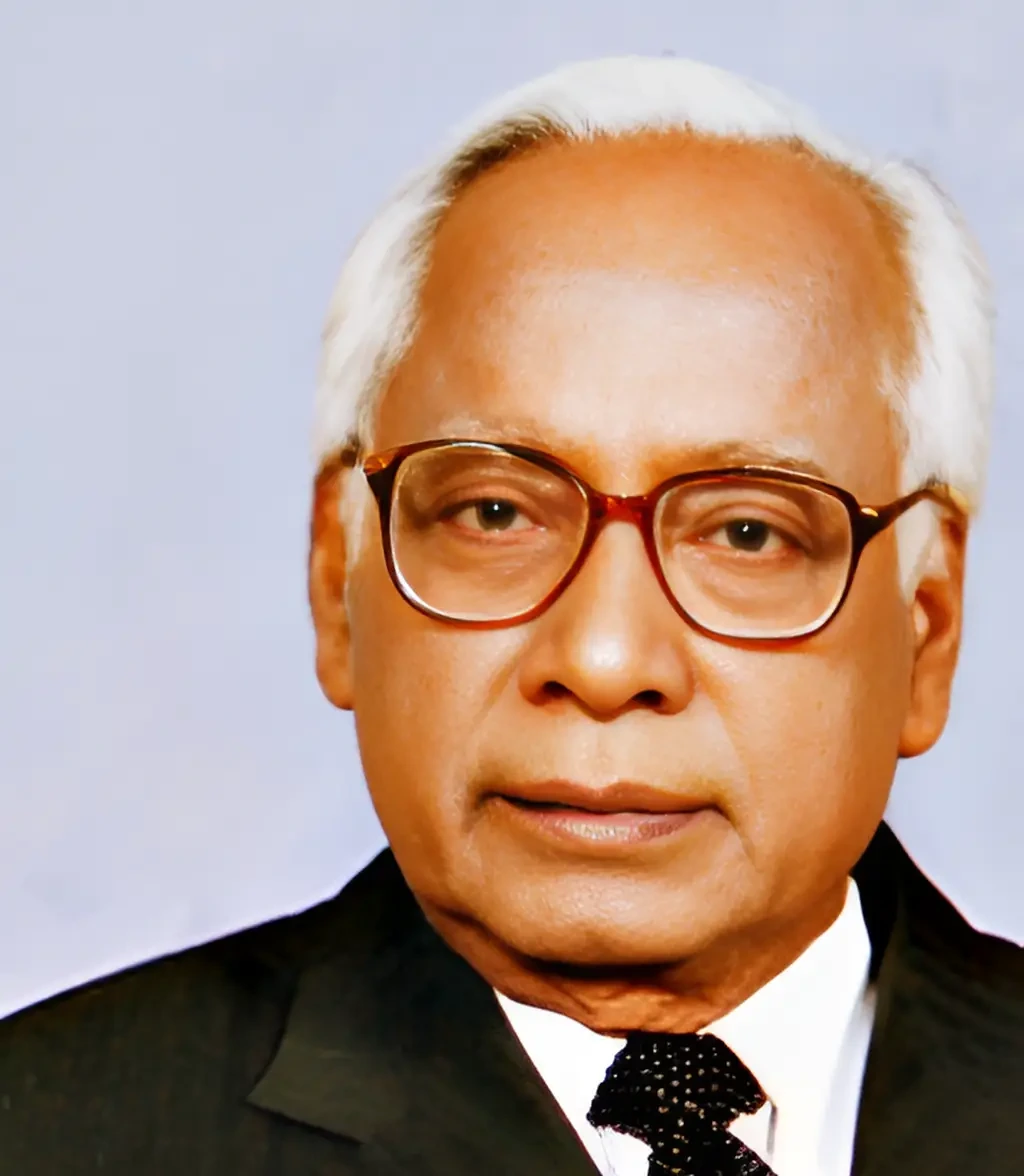
Iajuddin Ahmed
 Bangladesh
politician•diplomat•university teacher
Also known as: Iazuddin Ahmed
Birthday
February 1, 1931
Birth Sign
Aquarius
Birthplace
Bikrampur, Bengal Presidency, British India
Age
Died at 81
About
Iajuddin Ahmed was a Bangladeshi soil scientist, academic administrator, and statesman who served as the 17th President of Bangladesh from 2002 to 2009. His life bridged the worlds of university science and national governance, with a career that moved from the lecture halls of Dhaka University to the highest office in the land.
As a professor of soil science, Ahmed earned international recognition for his research on soil nutrient preservation, a process he developed that allowed nutrients to be stored and released as plants needed them. His academic leadership included chairing the Soil Science Department, serving as provost of Salimullah Muslim Hall, and acting as dean of the Faculty of Biological Science at the University of Dhaka.
His public service roles included chairing the Public Service Commission and the University Grants Commission, and in 2002 he was named President of Bangladesh. During his presidency, he helped found Atish Dipankar University of Science and Technology and briefly served as head of a caretaker government in 2006-07. He remained in office until 2009, passing away in 2012 at age 81. His legacy is one of a quiet academic who stepped into turbulent political waters with a dedication to stability.
Early Life & Background
Iajuddin Ahmed was born on February 1, 1931, in Bikrampur, a region in the Bengal Presidency of British India that later became part of Bangladesh. His father, Maulavi Muhammad Ibrahim, was a religious scholar, and the family valued education deeply. Ahmed attended Munshiganj High School, where he passed his matriculation in 1948, then moved on to Haraganga College for his Intermediate of Arts in 1950.
He continued his studies at the University of Dhaka, earning a B.Sc. in 1952 and an M.Sc. in 1954. His academic promise took him to the United States, where he completed an M.S. in 1958 and a Ph.D. in soil science in 1962, both from the University of Wisconsin–Madison. This international training would shape his scientific career.
Returning to Dhaka, Ahmed joined the faculty of the Department of Soil Science, becoming a full professor in 1973. He took on administrative duties as chairman of the department in 1968-69 and again from 1976 to 1979, and served as provost of Salimullah Muslim Hall from 1975 to 1983. His academic reputation grew through visiting professorships at Cornell University and German universities in 1984. These years of teaching and research built the credibility that later opened doors to public service.
Career Growth
Iajuddin Ahmed's shift from academia to public service began in 1991 when he was appointed an adviser to the caretaker government. That role led to a string of influential positions: chairman of the Public Service Commission from 1991 to 1993, then chairman of the University Grants Commission from 1995 to 1999. In 2002, he was named vice-chancellor of the State University of Bangladesh.
In September 2002, the Election Commission named Ahmed President of Bangladesh after the nomination papers of other candidates were invalidated. His presidency was marked by political instability, and from October 2006 to January 2007 he also served as acting Prime Minister and head of a military-backed caretaker government, navigating a period of intense turmoil. During his tenure, he helped establish Atish Dipankar University of Science and Technology in 2004, expanding private higher education in the country.
Ahmed remained president until February 2009, when Zillur Rahman succeeded him. After leaving office, he largely withdrew from public life, passing away in 2012. His time in office was defined less by legislative victories and more by his role as a stabilizing figure during a volatile chapter in Bangladeshi politics.
Career Timeline
Public Image & Style
Iajuddin Ahmed was widely seen as a respected academic who stepped into politics out of duty rather than ambition. His public persona was that of a soft-spoken, scholarly figure, often appearing uncomfortable in the rough-and-tumble of political life. Media coverage during his presidency focused on his attempts to mediate between feuding political parties, and he was generally portrayed as a neutral, non-partisan choice for the office. However, his handling of the 2006-07 caretaker government crisis drew criticism from some quarters, who saw him as indecisive. There was no organized fandom around him, but among academics and civil servants, he was remembered as a man of integrity who valued education and science above partisan gain.
Fame & Fandom
Iajuddin Ahmed commanded a steady, global attention rooted in his tenure as a head of state and his contributions to agricultural science, though his profile remains distinct from the volatile fame of entertainment figures. His standing in historical records places him at specific points within the iFANN Global Fame Rankings, reflecting a consistent presence in biographical databases and political archives. He is currently recognized as the 13th most famous person from Bangladesh, a position holding steady from the previous cycle. This placement underscores his enduring significance in the national narrative without the fluctuation typical of pop culture icons. Regarding his audience, there is no documented fandom name for Iajuddin Ahmed; the public engagement surrounding him has historically been that of citizens observing a statesman rather than fans supporting a celebrity. No organized fan clubs, specific rituals, or dedicated campaigns exist to celebrate his life, as his legacy is defined by constitutional duty and academic achievement rather than personal charisma or commercial appeal. The lack of a formalized fanbase aligns with his reputation as a private individual who rarely engaged in public spectacle beyond official duties.
Interesting Facts and Legends
Iajuddin Ahmed was credited with inventing a process for preserving soil nutrients and releasing them as needed by vegetation, a significant contribution to agricultural science. His election as president in 2002 was unusual: he was chosen after the nomination papers of all other candidates were invalidated, making him the only viable candidate. Ahmed was a visiting professor at Cornell University in 1984, one of several international academic appointments he held. He served as provost of Salimullah Muslim Hall at the University of Dhaka for eight years, from 1975 to 1983, a role that involved overseeing student welfare and discipline. Despite his high office, Ahmed remained a private person, rarely giving interviews or making public statements beyond official duties. A defining moment in his legacy occurred when he dissolved parliament and handed over authority to a military-backed interim government during a severe political crisis, an event widely cited as the end of a caretaker government era. This transition, often described as a 'coup that dare not speak its name,' marked his resignation and paved the way for a controversial crackdown on corruption and political violence. Unlike entertainers whose legends involve viral moments or crowd reactions, Ahmed's story is one of navigating a nation through constitutional turmoil.
Family & Personal Life
Iajuddin Ahmed married Anwara Begum, a zoologist, and the couple had three children: Sujan, Adam, and Imtiaz. Anwara was an academic in her own right, and the family lived in Dhaka throughout Ahmed's career. Not much is publicly known about his children's lives, as the family kept a low profile. His father, Maulavi Muhammad Ibrahim, was a religious scholar, which influenced Ahmed's early upbringing in Bikrampur. The family's emphasis on education was evident in Ahmed's own academic path, and he carried that value into his public service roles, particularly his work with the University Grants Commission.
Notable Connections
Iajuddin Ahmed's life intersected with several key figures in Bangladeshi politics. His wife, Anwara Begum, was a zoologist and constant companion. In government, he worked alongside Prime Minister Khaleda Zia, who preceded him in the role of head of government. Fakhruddin Ahmed succeeded him as acting Prime Minister during the caretaker government. His presidential predecessors and successors included Muhammad Jamiruddin Sircar and Zillur Rahman, respectively.
Relationships & Dating History
Iajuddin Ahmed married Anwara Begum, a zoologist, in the early 1960s, and they remained together until his death in 2012. Anwara was a constant presence in his life, supporting his academic and political careers. The couple had three children: Sujan, Adam, and Imtiaz. There is no public record of any other romantic relationships or scandals during their marriage. Their partnership was one of mutual respect, with Anwara often accompanying him to official events during his presidency. At the time of his death, he was still married to Anwara, who survived him.
- MarriedAnwara Begum1962 - 2012Married for about 50 years, had three children together.
Death & Aftermath
Died
December 10, 2012 (aged 81)
Death Place
Bangkok, Thailand
Cause of Death
Complications from illness
Iajuddin Ahmed, the 17th President of Bangladesh and former Chief Advisor to the Caretaker Government, died on December 10, 2012, at the age of 81. He passed away in Bangkok, Thailand, at a hospital where he had traveled for medical treatment. His final days were spent receiving care in this foreign facility, and his last public appearance occurred during his presidency, which ended in February 2009. No disputed accounts regarding the time or place of death have been reported.
As a natural death occurring abroad due to illness, the event did not trigger any legal inquiry or forensic examination by Bangladeshi authorities. Public reaction included tributes from political peers and institutions that reflected on his legacy as an outspoken educationist who navigated a nation mired in political turmoil. The Daily Star noted these reflections while other biographical entries acknowledged his controversial tenure involving a military-backed caretaker government and a state of emergency declared in January 2007.
Posthumously, Iajuddin Ahmed has been commemorated through continued historical analysis of his role in Bangladesh's political history, particularly regarding the 2006, 2007 crisis. Historical scrutiny continues to examine his tenure as a stabilizing figure rather than legislative victories. Funeral arrangements were not detailed in available records, but given his status as a former Head of State, standard protocol suggests state honors were observed.
Net Worth (Estate Value)
$1 Million
iFANN Editorial Team estimate
Per iFANN's editorial analysis, the estate of Iajuddin Ahmed is valued at $1 Million at the time of his death in 2012, a figure reflecting a life spent in academia and public service rather than private enterprise. As a professor and later president, his income came from government salaries and academic stipends. He did not have significant business interests or investments, and his estate was valued at approximately $1 Million, a figure consistent with his modest lifestyle. Since his passing, his estate has earned minimal income, primarily from any residual royalties from his academic publications and property holdings. His wife, Anwara Begum, and their children have managed his estate, which has seen little growth. There have been no major posthumous releases or licensing deals, as his legacy is primarily historical and academic rather than commercial. As of 2026, the estate's value remains largely unchanged, estimated at around $1 Million.
Awards & Accolades
View 2 records, honours and achievementsKnown For
President of Bangladesh
2002-2009 · President
Soil Science Research
1962 · Inventor of nutrient preservation process
Keywords
Sources
Quick Facts
- Profession
- politician, diplomat, university teacher
- Born
- February 1, 1931
- Birthplace
- Bikrampur, Bengal Presidency, British India
- Died
- December 10, 2012
- Death Place
- Bangkok, Thailand
- Gender
- Male
- Spouse
- Anwara Begum
- Children
- Sujan, Adam, Imtiaz
- Education
- Ph.D. in Soil Science, University of Wisconsin–Madison
- Political Party
- Independent
Personal Details
- Spouse
- Anwara Begum
- Children
- Sujan, Adam, Imtiaz
- Education
- B.Sc. (1952), M.Sc. (1954) from University of Dhaka; M.S. (1958), Ph.D. in Soil Science (1962) from University of Wisconsin–Madison
Frequently Asked Questions
Who was Iajuddin Ahmed?
When and where was Iajuddin Ahmed born?
What was Iajuddin Ahmed's role before becoming president?
What were Iajuddin Ahmed's major accomplishments?
How did Iajuddin Ahmed die?
Join the community
fans discussing