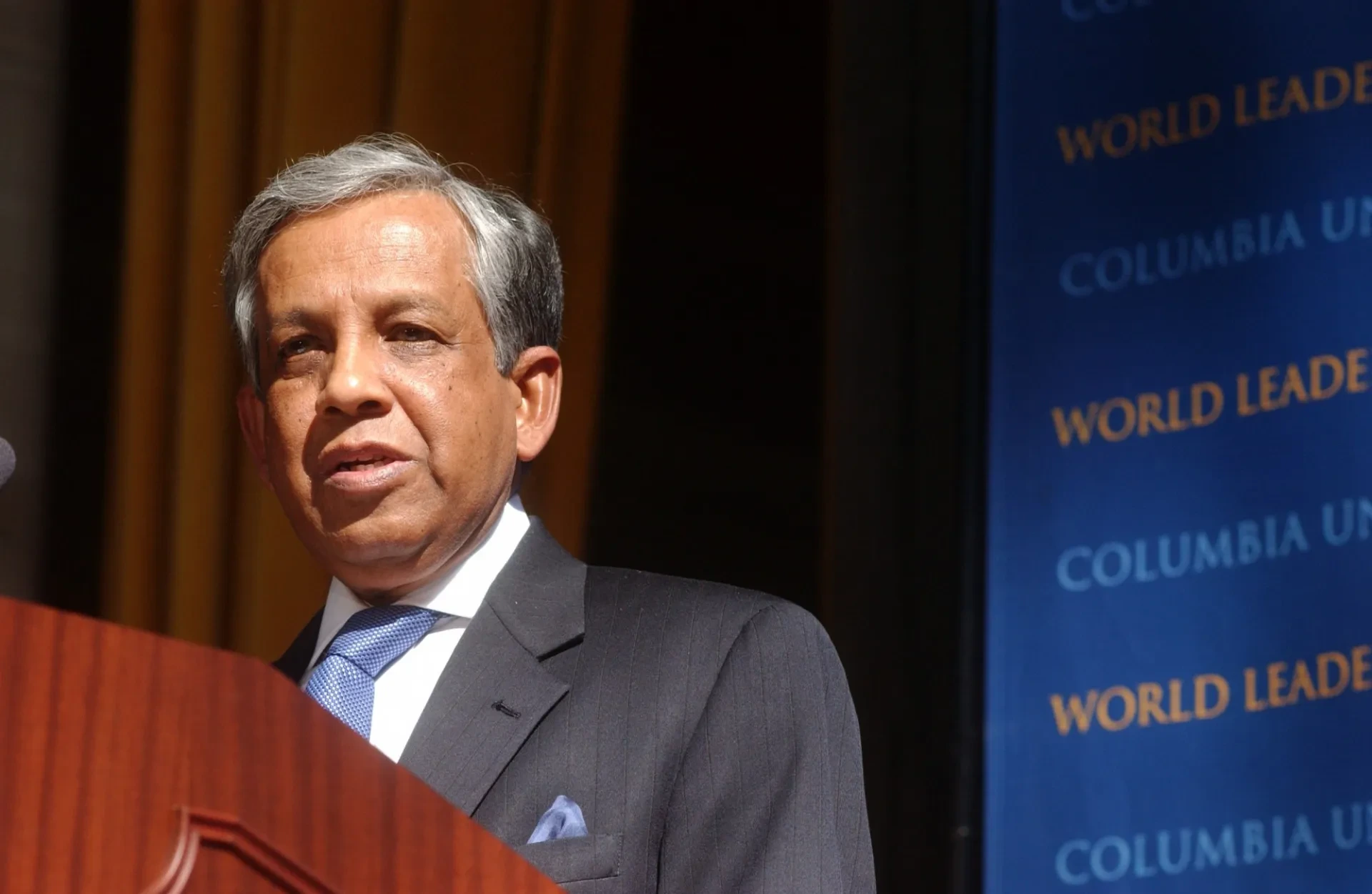
Fakhruddin Ahmed
 Bangladesh
economist•civil servant•banker
Also known as: Dr. Fakhruddin Ahmed, Fakhruddin Ali Ahmed
Birthday
May 1, 1940
Birth Sign
Taurus
Birthplace
Munshiganj District, Bangladesh
Age
86 years old
About
Fakhruddin Ahmed is a distinguished Bangladeshi economist and civil servant who served as the Chief Adviser of the nation's non-party interim government from 2007 to 2008. Born in Munshiganj District on May 1, 1940, he built a formidable reputation through academic excellence and high-level financial stewardship. His career trajectory took him from topping his classes at the University of Dhaka to earning a Master of Arts degree with distinction from Princeton University. Before entering the political spotlight, he spent decades shaping economic policy within the government.
Today, Ahmed remains a respected elder statesman whose legacy is defined by his decisive leadership during a period of intense national crisis. He is widely credited with stabilizing Bangladesh's economy and launching aggressive anti-corruption drives that recovered billions of dollars in stolen state funds. Unlike many public figures, his fame stems from professional competence rather than celebrity culture, marking him as a rare technocrat who successfully managed a country through turmoil.
Early Life & Background
Fakhruddin Ahmed was born into a family in Munshiganj District, where his early years were marked by an exceptional aptitude for academics. He attended the University of Dhaka, where his intellectual prowess became evident as he finished first in his class for both his bachelor's and master's degrees in economics. This rigorous academic foundation prepared him for advanced studies abroad, leading him to Princeton University in the United States. He graduated from Princeton in 1975 with a Master of Arts degree, distinguishing himself with a focus on developing economies.
Beyond the classroom, Ahmed cultivated a discipline that would later define his administrative style. Retrospectives often highlight his reputation as a legendary runner during his youth, a physical pursuit that instilled a sense of endurance and stamina. These formative experiences in sports and scholarship set the stage for a career dedicated to public service. Before holding any major government office, he worked within various capacities of the Bangladesh government, honing his expertise in economic policy and laying the groundwork for his future role as a central bank governor.
Career Growth
His professional ascent began in earnest after returning to Bangladesh, where he took on significant roles within the civil service. A pivotal moment arrived in November 2001 when he was appointed as the 8th Governor of Bangladesh Bank, serving until April 2005. During this tenure, he focused heavily on monetary stability and implementing reforms within the banking sector. His leadership at the central bank established him as a key figure in the nation's financial architecture.
The defining chapter of his career commenced on January 12, 2007, when he was appointed Chief Adviser to the caretaker government amidst the 2006–2008 political crisis. His term extended well beyond the typical duration for such a role, concluding only after the general elections on December 29, 2008. In this capacity, he led a non-partisan administration that launched high-profile anti-corruption investigations, including the famous "shell companies" scandal. Under his direction, dozens of high-profile politicians and bankers were arrested, and billions of dollars in stolen state funds were recovered. Following his tenure, he transitioned into retirement but remained an influential voice in economic discourse, occasionally appearing at international forums like the World Leaders Forum at Columbia University.
Career Timeline
Public Image & Style
Fakhruddin Ahmed projects an image of a stoic, highly competent scholar-statesman. He lacks the flamboyance typically associated with politicians, instead relying on a demeanor of seriousness and academic rigor. Media coverage focuses almost exclusively on his economic achievements and his unwavering stance against corruption. His presence is characterized by a lack of personal style in the traditional sense, with his authority derived entirely from his professional record. He is viewed as a man of integrity who prioritized the nation's stability over political maneuvering.
Fame & Fandom (iFAMOUS Rankings)
Within the iFANN Global Fame Rankings, Fakhruddin Ahmed holds the 78th most famous person in Bangladesh, a placement which has remained stable through the previous cycle. This standing places him firmly within the upper tier of national figures recognized for their contributions to statecraft and economic policy rather than entertainment. The authority behind this assessment tracks influence across media coverage and institutional impact worldwide, ensuring that his legacy as a central banker and caretaker leader is measured with precision. While his professional stature is immense, the concept of a celebrity fanbase does not apply to his career; unlike pop culture icons who cultivate organized followings, Fakhruddin Ahmed operates within the sphere of civil service where public engagement is defined by administrative duty rather than fandom rituals. Consequently, there is no formal or unofficial name for any fan community associated with him, nor are there documented campaigns, birthday tributes, or charitable drives funded by supporters. His reputation rests entirely on verified historical achievements and the gravity of his office, leaving no room for the viral moments or crowd-fainting events that characterize modern celebrity lore. He was featured at No. 78 in the September 2026 iFAMOUS Rankings.
Interesting Facts and Legends
Ahmed is frequently confused with Fakhruddin Ali Ahmed, the fifth President of India who served from 1974 to 1977. The two men are distinct individuals, with the Bangladeshi economist being alive while the Indian president passed away nearly 50 years ago. Another notable fact is his background as a legendary runner, a detail often cited to explain his remarkable discipline and ability to handle the grueling demands of the caretaker government. His appointment as Chief Adviser itself stands as a unique event in South Asian history, representing one of the few times a technocrat led an interim government during a constitutional crisis. Recent news in 2026 clarified his identity further when Assam, India, dropped the name of the Indian president from a medical college, highlighting the ongoing need to distinguish between the two prominent figures.
Notable Quotes
“We will not tolerate corruption.”
“The economy must be stabilized before politics can resume.”
Family & Personal Life
Public records regarding Fakhruddin Ahmed's personal life remain notably sparse compared to entertainment figures or active politicians. There is no publicly documented information confirming a specific wife, romantic partners, or children. Search queries often reflect curiosity about his family status, yet credible sources do not confirm any marriages or offspring. This privacy is consistent with his image as a serious, no-nonsense administrator who kept his private life out of the spotlight. He has dedicated his public existence entirely to statecraft, leaving little room for the domestic details that often accompany other public servants.
Notable Connections
Relationships & Dating History
Public records regarding Fakhruddin Ahmed's personal life are notably sparse compared to entertainment figures. There is no publicly documented information regarding a specific wife, romantic partners, or children. Search queries suggest some curiosity about his family status, but credible sources do not confirm any marriages or offspring. Unlike celebrity figures, his private life has been kept out of the spotlight, consistent with his image as a serious, no-nonsense administrator. As of 2026, there is no reported dating history or current partner; he is effectively a private figure in his personal life, having dedicated his public existence entirely to statecraft.
Salary, Net Worth In 2026
$5 Million
iFANN Editorial Team estimate
As a lifelong public servant, Fakhruddin Ahmed's financial profile differs significantly from commercial celebrities or business tycoons. His wealth is derived primarily from his government salary during his tenure as a civil servant and central bank governor, along with the pension he receives as a retired official. Unlike figures with diverse investment portfolios or endorsement deals, his income streams are tied directly to his public service roles. Estimates for his net worth are not typically tracked by standard celebrity finance databases because he does not engage in the business sectors usually monitored by those sites. Any figures found online are speculative and likely conflated with other individuals or based on assumptions about a former head of state's assets. Research by the iFANN Editorial Team puts his fortune at around $5 Million, reflecting the modest but secure financial standing of a senior civil servant who avoided the volatile markets and corporate ventures common among his peers.
Awards & Accolades
View 1 records, honours and achievementsKnown For
Chief Adviser of Bangladesh
2007 · Interim Government Leader
Governor of Bangladesh Bank
2001 · Central Bank Head
Keywords
Sources
Quick Facts
- Profession
- economist, politician, banker
- Born
- May 1, 1940
- Birthplace
- Munshiganj District
- Gender
- Male
- Birth Sign
- Taurus
Personal Details
- Full Name
- Fakhruddin Ahmed
- Children
- Education
- University of Dhaka; Princeton University (MA in Economics)
Frequently Asked Questions
Where is Fakhruddin Ahmed now?
How many children did Fakhruddin Ahmed have?
Who was Fakhruddin Ahmed?
What happened on 1/11 in Bangladesh?
Is Fakhruddin Ahmed the same as Fakhruddin Ali Ahmed?
Similar People
Join the community
fans discussing