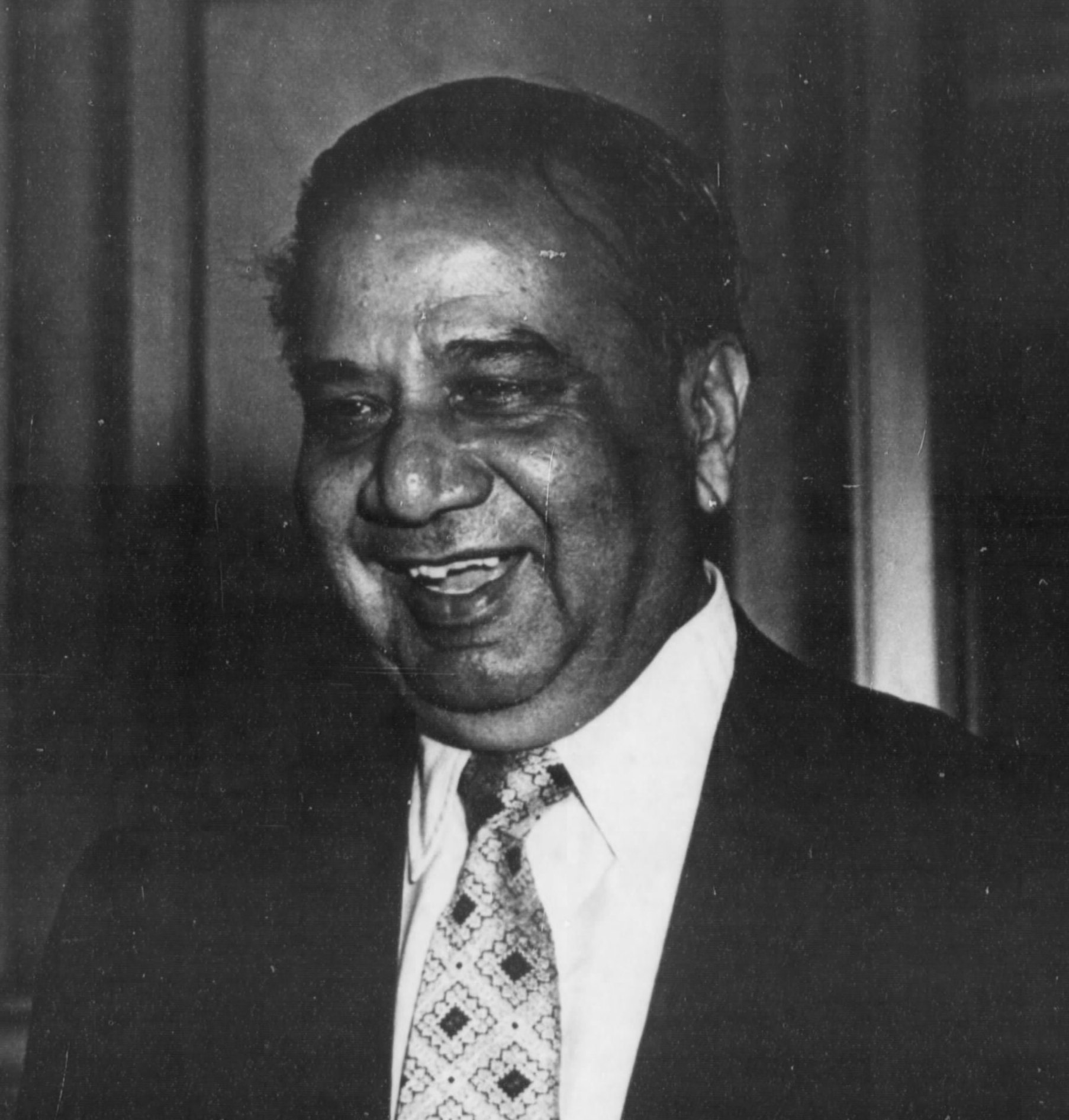
Huseyn Shaheed Suhrawardy
 Pakistan
Birthday
+1892-09-08
Birth Sign
Virgo
Birthplace
Medinipur
Age
Died at 71
About
Huseyn Shaheed Suhrawardy was a Pakistani politician and barrister who served as the fifth prime minister of Pakistan from 1956 to 1957, and as the last prime minister of Bengal from 1946 to 1947. Born on September 8, 1892, in Medinipur, Bengal, he came from the prominent Suhrawardy family. After studying law at Oxford, he returned to India and became a trade union leader in Calcutta during the 1920s, aligning with the Swaraj Party before joining the All-India Muslim League. He won a seat in the Bengal Legislative Assembly in 1937 and led the Muslim League to a decisive victory in the 1946 provincial elections. His tenure as Bengal's premier was marked by his controversial proposal for a united, independent Bengal, which was rejected by the Indian National Congress, and by the tragic Great Calcutta Killings. In 1947, the Bengal Assembly voted to partition the province, and Suhrawardy moved to Pakistan, dividing his time between Karachi and Dhaka. In East Pakistan, Suhrawardy became the leader of the Awami League, which emerged as the main opposition to the Muslim League. In 1956, he formed a coalition government with the Republican Party and became prime minister. His foreign policy leaned toward the United States, strengthening ties through SEATO and CENTO, and he was the first Pakistani premier to visit Communist China. His pro-US stance caused a split in the Awami League, leading Maulana Bhashani to form the breakaway National Awami Party. Suhrawardy's premiership lasted just over a year, but his cabinet included notable figures like Feroz Khan Noon and Abul Mansur Ahmad. He was also a mentor to Sheikh Mujibur Rahman, who later led Bangladesh to independence. Suhrawardy's legacy is deeply contested. He is remembered as a founding statesman of Pakistan and a pioneer of Bengali civil rights, but in West Bengal, he is vilified as the 'Butcher of Bengal' for his role in the Direct Action Day of 1946 and the subsequent Noakhali riots, during which he was accused of either planning or failing to stop the violence. He also served as Minister for Civil Supply during the Bengal famine of 1943. After the 1958 military coup, he was arrested and spent time in prison, missing his niece Salma Sobhan's wedding. He founded the National Democratic Front in 1962 to oppose Ayub Khan's regime but died of a heart attack in Beirut on December 5, 1963. His death marked a turning point, as the Awami League shifted toward Bengali nationalism, eventually leading to the 1971 war and the creation of Bangladesh. Suhrawardy's personal life included a daughter, Begum Akhtar Sulaiman, and a son, Rashid Suhrawardy, from his second marriage to Vera Alexandrovna Tiscenko Calder, who became a British actor. Many places across South Asia bear his name, including an avenue in Islamabad and a park in Dhaka.
Fame & Fandom
Huseyn Shaheed Suhrawardy commands a legacy defined by political gravity rather than the adulation typical of modern celebrity culture. As a statesman who served as the fifth Prime Minister of Pakistan and the last Premier of Bengal, his public memory is anchored in historical consequence and controversy rather than organized fan rituals or viral moments. The audience for his story consists primarily of historians, political scientists, and citizens engaged with the narrative of South Asian partition, rather than a distinct group of devotees with formal names or campaigns. There are no documented fan clubs, birthday billboards, or fan-funded initiatives dedicated to his person, reflecting the nature of his career as a serious politician rather than an entertainer. His most enduring cultural mythos revolves around Direct Action Day in 1946, an event frequently cited as the precipitating incident for the partition of India, and the recent political debates surrounding the renaming of Suhrawardy Avenue in Kolkata. These narratives serve as the primary points of engagement for those interested in his life, replacing the typical folklore found in pop culture fandoms. Regarding his standing in global recognition metrics, Huseyn Shaheed Suhrawardy is currently evaluated but holds no placement in the published rankings. He does not appear in the Global Top 1,000 list nor on any Top-100 scope lists maintained by iFANN. This status reflects his position as a historical figure whose fame is deep within specific regional and academic contexts rather than broad, contemporary global consumption signals.
Interesting Facts and Legends
Born in Medinipur in 1892, Suhrawardy was a barrister educated at Oxford before leading trade unions in Calcutta during the 1920s. He became a pivotal figure in the All-India Muslim League, securing a decisive victory in the 1946 provincial elections in Bengal. A defining moment in his legend is Direct Action Day on August 16, 1946, where crowds shut down streets in Calcutta, leading to massive communal violence and thousands of deaths; this tragedy remains the central story referenced in discussions of his legacy and the creation of Pakistan. Another significant element of his posthumous history involves Suhrawardy Avenue in Kolkata, which served as a physical monument to his memory for decades. In July 2026, the West Bengal government renamed the avenue to honor Gopal Mukherjee, a revolutionary freedom fighter. This decision sparked intense political debate and fact-checking controversies, with critics arguing the move involved confusion between figures or constituted a deliberate erasure of history. This event stands as a contemporary legend of political struggle over historical memory and public space.
Death & Aftermath
Died
+1963-12-05 (aged 71)
Death Place
Karachi, Sindh, Pakistan
Cause of Death
Unknown
The fifth Prime Minister of Pakistan and former Chief Minister of Bengal passed away on 5 December 1963 in Karachi, where he had resided since the partition of India. Biographical records confirm the date and location of his death at the age of 71, though no official statement regarding the specific cause or the results of a medical examination has been established in the available historical accounts. The circumstances of his final days remain undocumented, with no reports detailing last public appearances prior to his passing. Following his passing, political peers within Pakistan and the broader South Asian community offered tributes, though specific details of vigils or memorial gatherings at the time are not recorded in the current archives.
His legacy has endured as a subject of intense discourse, notably highlighted by a 2026 controversy in Kolkata when local authorities renamed Suhrawardy Avenue to Gopal Mukherjee Road. Critics argued that this decision stemmed from confusion between Huseyn Shaheed Suhrawardy and his uncle Hassan Shahid Suhrawardy, sparking widespread opposition and historical debate. This event underscored the enduring public memory of the Suhrawardy family decades after his death. His name remains associated with major landmarks, most notably Suhrawardy Avenue in Dhaka and the avenue in Kolkata which became the center of the naming dispute.
Awards & Accolades
Keywords
Quick Facts
- Profession
- politician, barrister
- Born
- +1892-09-08
- Birthplace
- Medinipur
- Died
- +1963-12-05
- Death Place
- Beirut
- Gender
- Male
- Spouse
- Vera Alexandrovna Tiscenko Calder
- Birth Sign
- Virgo
Personal Details
- Spouse
- Vera Alexandrovna Tiscenko Calder
Join the community
fans discussing