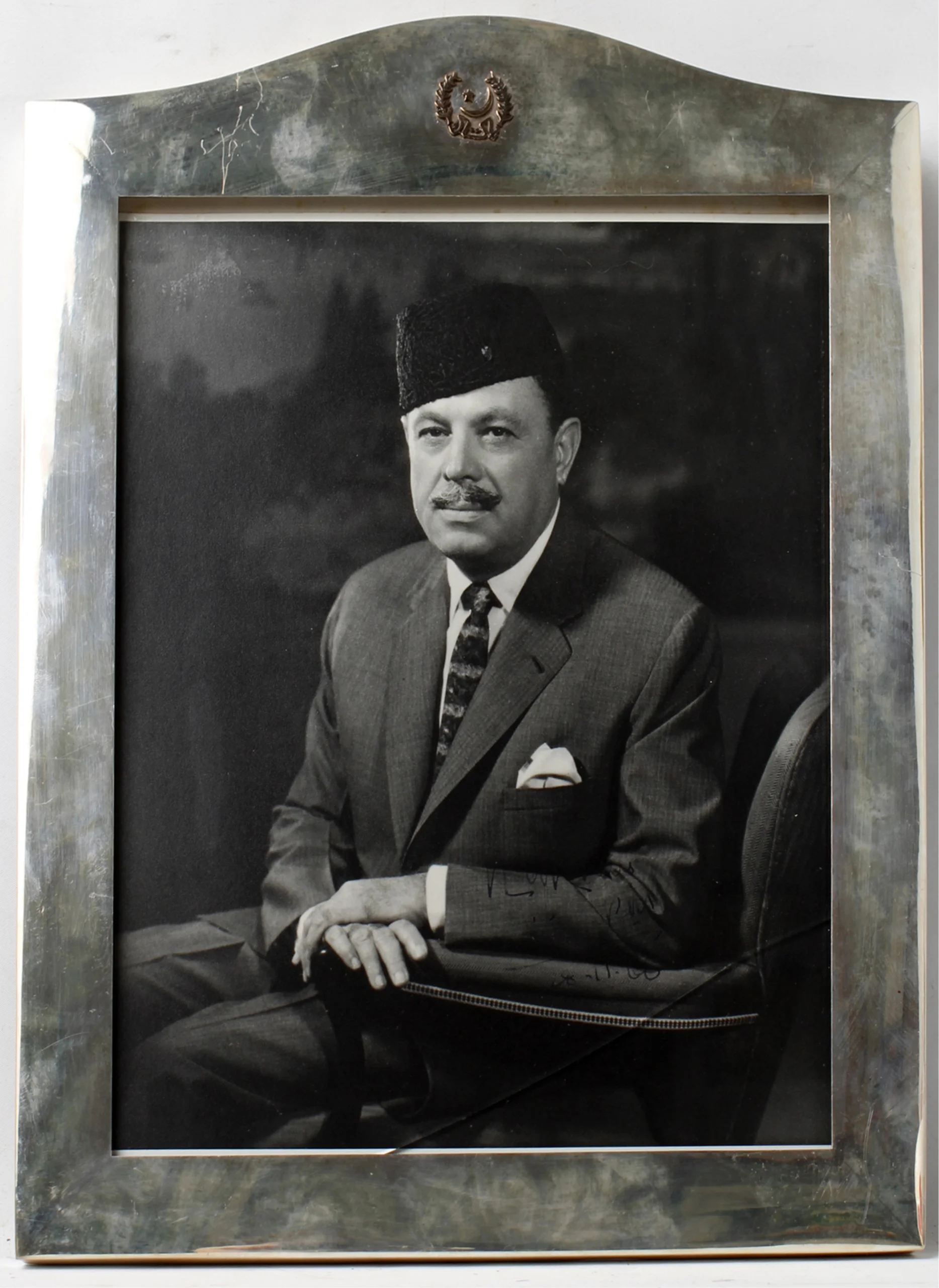
Ayub Khan
 Pakistan
politician•military personnel•financier
Also known as: Muhammad Ayub Khan, Field Marshal Ayub Khan
Birthday
May 14, 1907
Birth Sign
Taurus
Birthplace
Haripur, Punjab
Age
Died at 66
Height
5 ft 11 in (180 cm)
About
Mohammad Ayub Khan was the second President of Pakistan and a Field Marshal in the Pakistani Army who served from 1958 until his resignation in 1969. Born into a military family in Haripur, he rose through the ranks of the British Indian Army during World War II before becoming the first native Commander-in-Chief of the Pakistan Army. His political career began with a coup d'état in 1958 that ousted President Iskander Mirza, leading to a decade-long rule often called the "Decade of Development." During this time, he implemented significant economic reforms and industrialization projects while fostering close ties with the United States.
His presidency ended amid widespread civil unrest and protests over economic inequality and political repression. After stepping down, he lived in retirement near Islamabad until his death from a heart attack in 1974 at the age of 66. He remains a complex figure in South Asian history, remembered for both his modernizing efforts and his authoritarian governance style.
Early Life & Background
Muhammad Ayub Khan entered the world on May 14, 1907, in Haripur, then part of British India's Punjab province. He was the eldest son of Malik Rukn-ud-Din, a British Indian Army officer, which meant military service was not just a career option but an expectation. Growing up in a household where discipline and duty were paramount shaped his early character. The family moved frequently due to his father's postings, exposing young Ayub to different regions and cultures within the empire.
He attended Aitchison College in Lahore, one of the most prestigious schools in the region, known for grooming future leaders. His academic excellence and physical prowess caught the attention of recruiters, leading him to join the Indian Military Academy at Dehradun in 1924. At just 17 years old, he began rigorous training that would define his future. In 1928, he was commissioned as a Second Lieutenant into the British Indian Army. His early years were marked by steady progression through the ranks, serving in various postings across India and Burma. By the time World War II erupted, he had already established himself as a capable officer, rising to the rank of Major General by 1947. The partition of India in 1947 presented a pivotal moment when he chose to join the newly formed Pakistan Army rather than return to India. This decision set the stage for his ascent to the highest levels of military command in the new nation.
Career Growth
Ayub Khan's rise to power accelerated rapidly after Pakistan's independence. In 1951, he was appointed the first native Commander-in-Chief of the Pakistan Army, a position he held until 1958. During this period, he modernized the army, expanded its infrastructure, and strengthened its operational capabilities. His leadership style was decisive and often controversial, favoring centralized control and efficiency over democratic consultation.
The turning point came on October 27, 1958, when he staged a bloodless coup against President Iskander Mirza, declaring martial law and assuming the presidency. This event launched his ten-year tenure, characterized by the slogan "Decade of Development." Under his rule, Pakistan saw significant industrial growth, with major hydroelectric dams like the Mangla Dam completed and the country's space program initiated. He also pursued a pro-Western foreign policy, aligning closely with the United States and allowing American spy bases on Pakistani soil. However, his administration faced criticism for corruption, wealth concentration among elites, and regional disparities that fueled resentment in East Pakistan.
In 1965, he led Pakistan into war with India following Operation Gibraltar. The conflict ended with the Tashkent Declaration in 1966, which many viewed as a diplomatic failure despite ending hostilities. Re-elected in 1965 under a new constitution, his popularity waned as economic hardships and political repression sparked mass protests. By January 1969, the unrest became uncontrollable, forcing him to resign and hand over power to General Yahya Khan. His departure marked the end of the first era of direct military rule in Pakistan.
Career Timeline
Public Image & Style
Ayub Khan is often portrayed as a complex figure, both a modernizer and an autocrat. His image is associated with the "Decade of Development" but also with the suppression of dissent and the concentration of power. He was known for his dignified and reserved demeanor, reflecting his military background. His formal attire and composed presence reinforced his authority. While some viewed him as a strong leader who brought stability, others criticized his authoritarian methods and perceived bias toward West Pakistan. His legacy continues to be debated in academic and political circles.
Fame & Fandom
According to the iFANN Global Fame Rankings, Mohammad Ayub Khan holds the position of the 12th most famous person from Pakistan as of September 2026. This ranking reflects his enduring influence in South Asian history rather than contemporary celebrity status. His legacy is defined by statecraft and military command, with his name frequently appearing in discussions about Pakistan's political evolution. Regarding his audience, research confirms that no formal fandom name exists for Ayub Khan. Unlike entertainment figures who inspire organized fan clubs or ritualistic engagement, his supporters were political constituents or historical observers. There are no documented fan campaigns, birthday billboards, or fan-funded projects associated with him. His relationship with the public was characterized by the dynamics of governance and martial law, culminating in widespread unrest during his resignation. Consequently, the concept of a dedicated fanbase with specific rituals does not apply to his legacy, which remains a subject of academic and historical study.
Interesting Facts and Legends
One lesser-known fact is that Ayub Khan played a key diplomatic role in the Sino-Indian War of 1962, mediating between India and China to ease tensions in the region. Another interesting detail involves his initiative to launch Pakistan's space program, laying the groundwork for future advancements in satellite technology. He was also known for his strict personal code of conduct and formal demeanor, rarely showing emotion in public. The Muslim Laws Family Ordinance of 1961, which aimed to modernize social structures, remains one of his most debated domestic policies. Additionally, he was the only person to hold the rank of Field Marshal in the Pakistani Army, a title bestowed upon him in 1972.
Notable Quotes
“The only way to solve the Kashmir problem is through negotiation.”
“I am not here to play politics; I am here to save the country.”
Family & Personal Life
Ayub Khan married Shamshad Begum Khan in 1930, and their union lasted until her death. They had two children: a son named Ashraf Khan and a daughter named Salma Khan. The couple maintained a relatively private family life despite his high profile. Ashraf Khan later became involved in politics, while Salma Khan remained out of the public eye. There are no records of other romantic relationships or divorces in his life. His marriage to Shamshad was described as stable and supportive throughout his military and political career.
Notable Connections
Iskander Mirza, Liaquat Ali Khan, Omar Ayub Khan, Yahya Khan, Zulfikar Ali Bhutto
Relationships & Dating History
Ayub Khan was married to Shamshad Begum Khan in 1930, and their marriage lasted until her death. They had two children together: Ashraf Khan and Salma Khan. There is no record of any other public romantic relationships or divorces. His marriage to Shamshad was described as stable and supportive throughout his military and political career. After her death, he remained widowed for the remainder of his life. No other partners are documented in credible sources.
- MarriedShamshad Begum Khan1930 - presentMarried until her death; had two children.
Death & Aftermath
Died
April 19, 1974 (aged 66)
Death Place
Islamabad
Cause of Death
Heart attack (myocardial infarction)
Mohammad Ayub Khan spent his final years in relative seclusion at his residence in Islamabad, having stepped down from the presidency in 1969 and retreated from active political life amidst a period of national turmoil. He passed away on April 19, 1974, at the age of sixty-seven, succumbing to a heart attack while at home. The medical consensus established by hospital staff and subsequent family statements confirmed natural causes related to his age and health history, with no public record of disputed accounts or unconfirmed circumstances surrounding the event. As the cause was determined to be a cardiac event occurring at his residence, standard medical certification sufficed.
Public reaction to his passing was marked by widespread tributes from peers, institutions, and officials across Pakistan and internationally. Upon his death, he was accorded full state honors reflecting his status as a founding figure of modern Pakistan, with moments of silence observed in government buildings and military installations. Tributes poured in from military leaders, politicians, and religious figures who acknowledged his role in shaping the nation's early infrastructure and foreign policy. Notable attendees at his funeral included then-President Zulfikar Ali Bhutto and other senior political leaders, gathered for a ceremony that featured military honors consistent with his rank as Field Marshal. The funeral took place on April 20, 1974, in Islamabad, where he was buried in the graveyard of his residence, a site that has since become a destination for supporters.
Posthumously, he remains the subject of numerous books, documentaries, and academic studies analyzing his presidency and military reforms. Several awards and honors have been bestowed upon him, including induction into various halls of fame within Pakistan and recognition by international bodies for diplomatic efforts such as the Indus Waters Treaty. Foundations and scholarships named after him have been established to promote education and military leadership, while family statements have focused on preserving his legacy against perceived historical misrepresentations.
Net Worth (Estate Value)
$0
iFANN Editorial Team estimate
Ayub Khan passed away in 1974, so there is no current net worth data available for him. His estate, if it existed, would have been managed by his heirs, but specific financial details are not publicly recorded. His legacy is measured in historical impact rather than monetary value. During his lifetime, he accumulated wealth through his military salary, government positions, and investments, but these figures remain undisclosed. The focus on his financial status is limited to understanding the economic policies he implemented during his presidency, which included land redistribution and industrialization efforts.
Awards Won (5)
Ayub Khan received several distinctions including the Order of the British Empire (MBE) in 1944, the Nishan-e-Pakistan (NPk) in 1960, and the Hilal-e-Jurat (HJ) and Hilal-e-Imtiaz (HPk) in 1960. He was also awarded the title of Field Marshal, the highest rank in the Pakistani Army, in 1972.
1944 · Military Service
World War II Service
1960 · Civilian Honor
Presidential Service
Known For
President of Pakistan
1958 · Second President
Field Marshal
1972 · Highest Rank in Pakistani Army
Decade of Development
1958 · Economic Reforms
Keywords
Sources
Quick Facts
- Profession
- politician, military personnel, financier
- Born
- May 14, 1907
- Birthplace
- Haripur
- Died
- April 19, 1974
- Death Place
- Islamabad
- Gender
- Male
- Birth Sign
- Taurus
Personal Details
- Full Name
- Mohammad Ayub Khan
- Height
- 5 ft 11 in (180 cm)
- Spouse
- Shamshad Begum Khan
- Children
- Ashraf Khan · Salma Khan
- Education
- Aitchison College; Indian Military Academy
Frequently Asked Questions
Who was Ayub Khan?
How did Ayub Khan die?
What was Ayub Khan's most significant achievement?
Did Ayub Khan have any children?
Is Ayub Khan still alive?
Similar People
Join the community
fans discussing