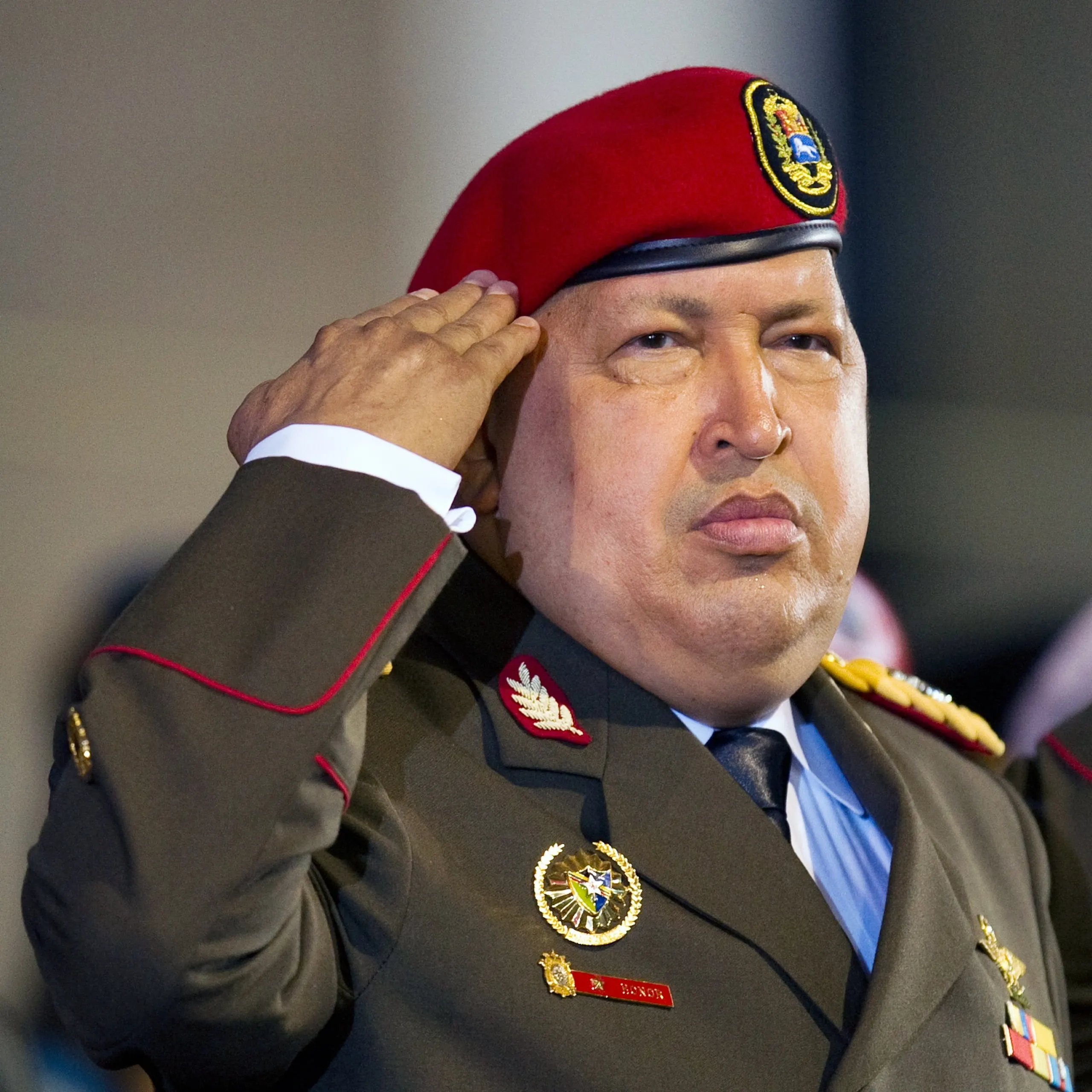
Hugo Chávez
 Venezuela
politician•military officer•revolutionary
Also known as: El Comandante, Presidente Chávez
Birthday
July 28, 1954
Birth Sign
Sagittarius
Birthplace
Sabaneta, Barinas State, Venezuela
Age
Died at 58
Height
5 ft 9 in (175 cm)
About
Hugo Rafael Chávez Frías was a Venezuelan politician, military officer, and revolutionary who served as the 58th president of Venezuela from 1999 until his death in 2013. He is one of the most influential and polarizing figures in modern Latin American history, known for founding the Bolivarian Revolution, nationalizing key industries, and positioning himself as a fierce opponent of United States foreign policy and neoliberalism. His tenure transformed Venezuela's political landscape by establishing the Bolivarian Republic of Venezuela through a new constitution drafted by a constituent assembly. He is remembered for implementing extensive social programs funded by oil revenues that aimed to reduce poverty and inequality across the nation. While he secured four consecutive election victories, his leadership style drew sharp criticism regarding authoritarianism, press restrictions, and economic management issues that contributed to later instability.
Early Life & Background
Hugo Rafael Chávez Frías was born on July 28, 1954, into a working-class family in the rural town of Sabaneta, Barinas State. His father, Hugo de los Reyes Chávez, worked as a schoolteacher and former soldier, while his mother, Elena Frías, taught primary school. The family struggled financially during his childhood; Chávez later recalled walking long distances to school and wearing clothes made by his mother because they could not afford new ones. Despite these hardships, he excelled academically and developed a strong interest in history, particularly the life of Simón Bolívar, the liberator of much of South America. He attended the Liceo Bolivariano de San Isidro in Barinas and later the Liceo Militar de San Carlos in Caracas. In 1971, at age 17, he entered the Venezuelan Military Academy, graduating in 1975 with a degree in military engineering and the rank of Second Lieutenant. During his early military career, he served in various posts across Venezuela, including border duty and teaching at the academy. His political awakening occurred in the late 1970s and early 1980s, influenced by Marxist-Leninist ideology and the Cuban Revolution. In 1982, he co-founded the Revolutionary Bolivarian Movement-200, a secret organization dedicated to overthrowing the Puntofijo Pact system, which had governed Venezuela since 1958. This group became the core of his future political movement.
Career Growth
Chávez rose through the ranks to become a Lieutenant Colonel. His dissatisfaction with corruption and inequality in the military and government led him to plan a coup against President Carlos Andrés Pérez. On February 4, 1992, Chávez led an unsuccessful uprising against Pérez. After the failed coup, he was imprisoned but gained national prominence for his televised surrender speech, where he declared, "For now, the battle is lost, but the battle will be won." Two years later, he was pardoned by President Rafael Caldera. After his release, Chávez founded the Fifth Republic Movement in 1997. He campaigned on a platform of social justice, anti-imperialism, and constitutional reform. In December 1998, he won the presidential election with 56.2% of the vote, defeating the established political parties. Upon taking office, Chávez convened a constituent assembly that drafted a new constitution, establishing the Bolivarian Republic of Venezuela. He launched the Bolivarian Missions, social programs funded by oil revenues that provided free healthcare, education, and food subsidies to millions. He also nationalized the oil industry, creating PDVSA's dominance under state control. Chávez was re-elected in 2000, 2006, and 2012, each time securing a majority mandate. However, his tenure was marked by increasing authoritarianism, restrictions on press freedom, and economic mismanagement that eventually led to hyperinflation and shortages.
Career Timeline
Public Image & Style
Chávez was portrayed as a populist hero by supporters and a dictator by critics. His media presence was characterized by direct communication, often using television and radio to bypass traditional media. His tone was passionate, confrontational, and deeply ideological. He frequently wore military fatigues and a red beret, projecting an image of a revolutionary leader. His speeches were known for their fiery rhetoric and ability to mobilize crowds. Critics accused him of undermining democratic institutions, while supporters viewed him as a defender of the poor against imperialist forces. He stood approximately 5'9" (175 cm) tall with an average to slightly stocky build. He often carried a microphone and a bottle of water during public appearances, becoming iconic symbols of his presidency.
Fame & Fandom (iFAMOUS Rankings)
iFANN has not yet collected fame data for this person. As of October 2026, there is no published ranking available. This person is not on the September 2026 iFAMOUS Rankings flagship list. Supporters of Hugo Chávez are commonly referred to as Chavistas or Bolivarians. The movement is highly organized, with grassroots networks called Colectivos that play a significant role in street politics and community organizing. Fans have created extensive memorials, street art, and cultural projects celebrating his legacy. The fanbase remains active in Venezuela and among leftist movements globally, often holding rallies and commemorations on significant dates related to his life and death. Chávez engaged directly with his followers through television programs and social media, fostering a strong personal connection with his base. His official Twitter account, @chavezcandanga, amassed over 10 million followers during his lifetime and continues to operate posthumously under government management.
Interesting Facts and Legends
Hugo Chávez was known affectionately as "Comandante" by supporters and derisively by critics. He spoke Spanish fluently and had some proficiency in English and Portuguese. Raised Catholic, he later identified as a Christian socialist. His favorite book was The Art of War by Sun Tzu. He set a Guinness World Record in 2007 for the largest gathering of people listening to a single speaker during a rally in Caracas. His first television appearance came after the 1992 coup attempt, where his televised surrender speech catapulted him to fame. He received the Order of the Liberator, the highest honor bestowed by the Venezuelan state, and the Che Guevara International Award from Cuba. He was featured on the cover of Time Magazine in March 2005 with the headline "The New Face of Socialism." He delivered a fiery speech at the UN in 2005 criticizing U.S. foreign policy. In 2012, he won re-election with 55% of the vote despite severe health issues, a moment celebrated as a triumph of will.
Notable Quotes
“For now, the battle is lost, but the battle will be won.”
“Socialism or death!”
“The revolution must be made from below.”
“I am a son of the people.”
Family & Personal Life
Chávez married Nancy Colmenares in 1981. They met while both were students and divorced in 1992. They had two children together: Rosinés, born in 1982, and Hugo Rafael Jr., known as "Gordito," born in 1983. Gordito died in 2006 due to a car accident. Chávez married Marisabel Rodríguez de Chávez in 1997, shortly before his presidency began. Marisabel was a teacher and activist who supported Chávez's political causes. She accompanied him throughout his illness and was present at his death. They had no biological children together, though Chávez adopted her daughter, Rosa Virginia, from a previous relationship. The family lived modestly compared to other world leaders, reflecting Chávez's public persona of simplicity despite holding high office.
Notable Connections
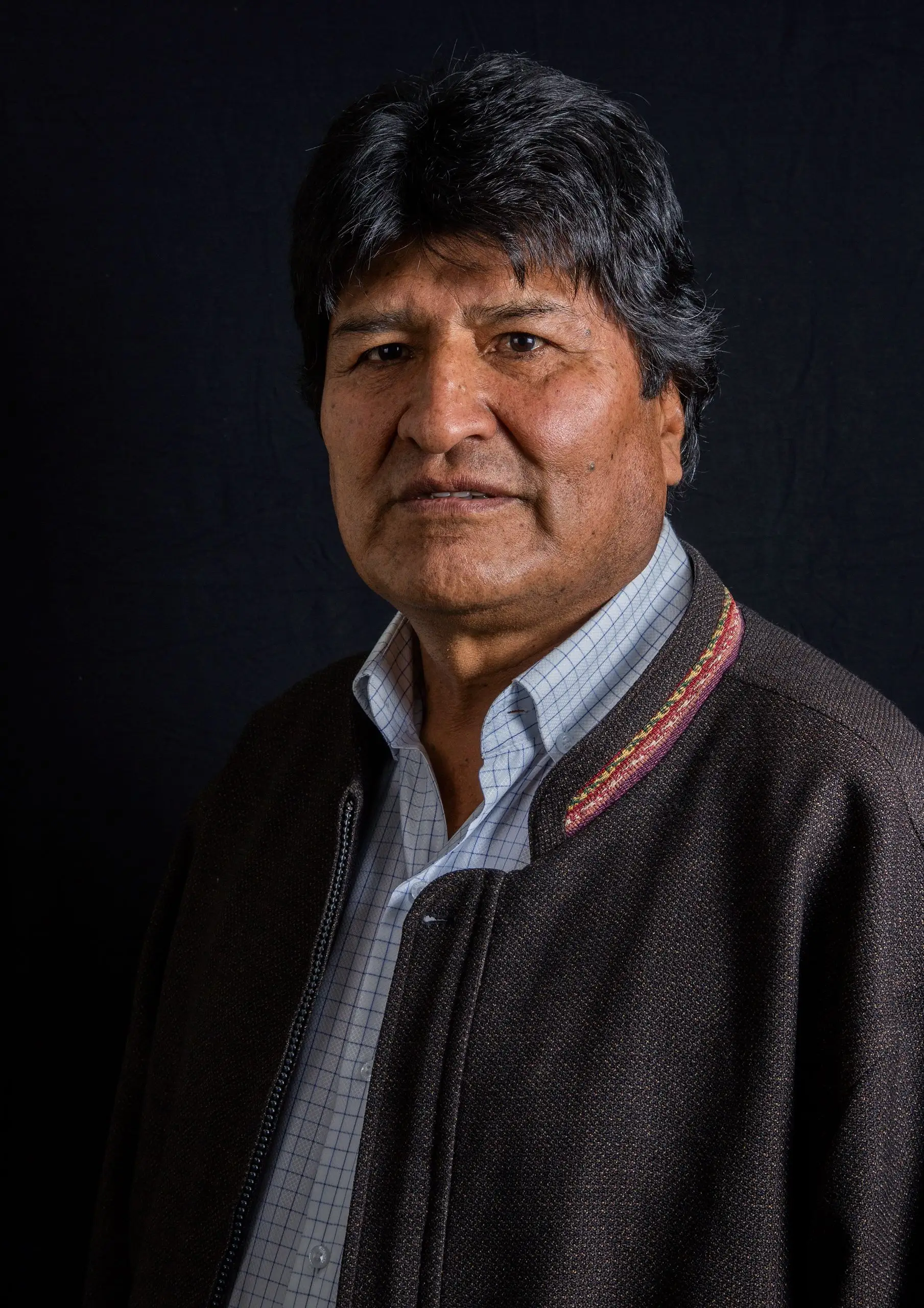
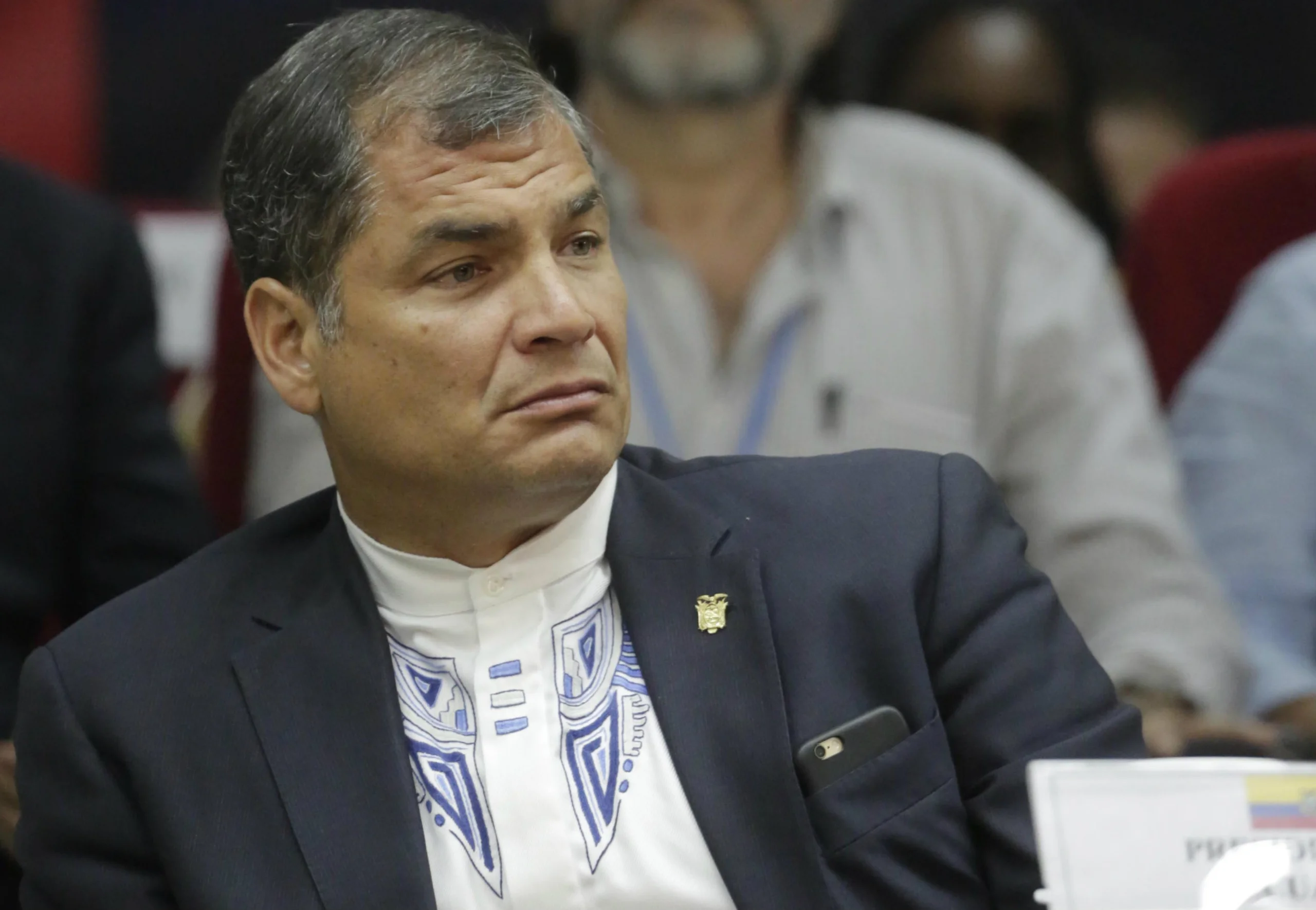
Nicolás Maduro, Fidel Castro, Raúl Castro, Evo Morales, Rafael Correa.
Relationships & Dating History
Hugo Chávez had two formal marriages. He married Nancy Colmenares in 1981. They met while both were students and divorced in 1992. They had two children together: Rosinés and Hugo Rafael Jr., known as "Gordito." The divorce was amicable, and Nancy remained out of the public eye after their separation. Chávez married Marisabel Rodríguez de Chávez in 1997, shortly before his presidency began. Marisabel was a teacher and activist who supported Chávez's political causes. She accompanied him throughout his illness and was present at his death. They had no biological children together, though Chávez adopted her daughter, Rosa Virginia, from a previous relationship. As of his death in 2013, he was married to Marisabel Rodríguez de Chávez. There are no widely documented or confirmed short-term romantic relationships outside these unions. Public records and biographies focus almost exclusively on his two wives.
- MarriedNancy Colmenares1981 - 1992Met as students; divorced amicably; had two children together.
- MarriedMarisabel Rodríguez de Chávez1997 - 2013Teacher and activist; accompanied him through illness; present at death.
Death & Aftermath
Died
March 5, 2013 (aged 58)
Death Place
Military Hospital of Caracas, Venezuela
Cause of Death
Complications from pelvic cancer
Hugo Rafael Chávez Frías died at 4:25 PM local time on March 5, 2013, inside the Military Hospital of Caracas. The attending medical team declared the cause as complications from pelvic cancer following a diagnosis made in late 2011 and subsequent treatments for pneumonia and sepsis. His health had deteriorated rapidly after a brief public appearance during his third inauguration on February 19, marking his final moment before slipping into critical respiratory failure. The reaction was immediate and overwhelming across Venezuela. Hundreds of thousands gathered outside the hospital and along the route to Miraflores, weeping and chanting slogans like "Patria, Socialismo o Muerte." Flags flew at half-mast while international leaders from Cuba to Iran offered tributes. Cultural consumption surged globally as sales of his books spiked, and memorial murals depicting his face appeared in major cities throughout Latin America within days. A state funeral took place on March 8, beginning with a mass at the National Pantheon of Heroes and Martyrs. His casket traveled through the capital on a military truck draped in the Venezuelan flag, accompanied by millions of mourners and heads of state including Evo Morales and Dilma Rousseff. Chávez was laid to rest in the Mausoleum of the Heroes alongside Simón Bolívar. Posthumously, the Hugo Chávez Foundation continued operating under state funding to promote social programs, while various scholarships bearing his name were established in allied nations. Nicolás Maduro succeeded him, continuing the Chavista agenda, ensuring his legacy remained a central pillar of Venezuelan politics.
Net Worth (Estate Value)
$1 Million
iFANN Editorial Team estimate
Hugo Chávez's personal net worth was not publicly disclosed in detail, but estimates suggest he lived modestly compared to other world leaders. His wealth came primarily from his military pension and political salary. Research by the iFANN Editorial Team puts his fortune at around $500,000 to $1 million USD at the time of his death in 2013. Assets were largely absorbed by the state, and no significant private estate remained. The Hugo Chávez Foundation continues to operate, funded by the Venezuelan state, managing scholarships and social programs posthumously. His wealth sources included his military salary, presidential stipend, and limited real estate holdings. Unlike many heads of state, he did not accumulate vast private fortunes, focusing instead on state-controlled resources for social initiatives.
Awards Won (4)
Hugo Chávez received numerous national and international honors, including the Order of the Liberator, the Che Guevara International Award, and the Order of Simón Bolívar. He was awarded honorary doctorates from universities in Cuba, Bolivia, and Ecuador. He also received keys to several Latin American cities, including Havana and La Paz. In 2007, he set a Guinness World Record for the largest gathering of people listening to a single speaker during a rally in Caracas.
1999 · National Honor
Venezuelan State
2005 · International Solidarity
Socialist Movements
Known For
Bolivarian Revolution
1999 · Leader
Venezuela Presidency
1999 · President
Keywords
Sources
Quick Facts
- Profession
- politician, military officer, revolutionary
- Born
- July 28, 1954
- Birthplace
- Sabaneta, Barinas State, Venezuela
- Died
- March 5, 2013
- Death Place
- Military Hospital of Caracas, Venezuela
- Gender
- Male
- Spouse
- Nancy Colmenares, Marisabel Rodríguez de Chávez
- Birth Sign
- Sagittarius
Personal Details
- Full Name
- Hugo Rafael Chávez Frías
- Height
- 5 ft 9 in (175 cm)
- Spouse
- Nancy Colmenares, Marisabel Rodríguez de Chávez
- Children
- Rosinés Chávez Colmenares, Hugo Rafael Chávez Colmenares, Rosa Virginia Rodríguez Chávez
- Education
- Venezuelan Military Academy
Frequently Asked Questions
What was Hugo Chávez known for?
Why did the US not like Hugo Chávez?
What happened with Hugo Chávez?
How was Hugo Chávez removed from power?
Who succeeded Hugo Chávez?
Social Media
Similar People
Join the community
fans discussing