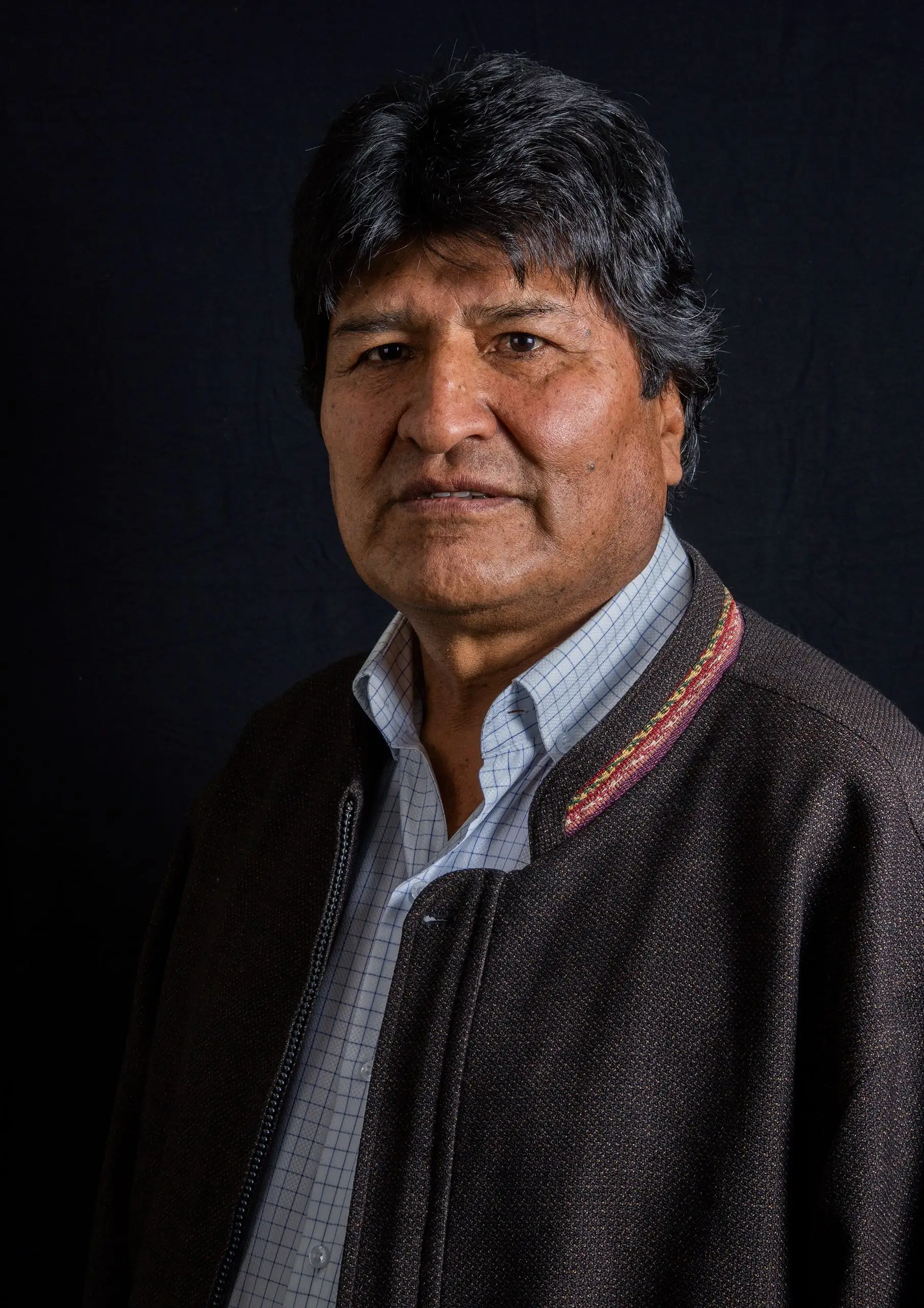
Evo Morales
 Bolivia
politician•trade unionist•functionary
Also known as: El Tata, Evo, Juan Evo Morales Ayma
Birthday
October 26, 1959
Birth Sign
Sagittarius
Birthplace
Isallawi, Oruro Department, Bolivia
Age
66 years old
Height
5 ft 6 in (168 cm)
About
Juan Evo Morales Ayma is a Bolivian politician and former cocalero activist who served as the 65th President of Bolivia from 2006 to 2019. He holds the distinction of being the country's first president of indigenous origin, representing the Aymara people. His presidency marked a significant shift toward leftist policies, nationalization of natural resources, and the recognition of indigenous rights through a new constitution.
Currently, Morales remains an active but controversial figure in Bolivian politics. As of 2026, he leads his own political movement called EVO Pueblo following his removal from the leadership of the Movement Toward Socialism (MAS) party in 2024. He faces ongoing legal challenges and arrest warrants issued by the current government, which he describes as political persecution. Despite these pressures, he continues to advocate for his return to power from his stronghold in the Chapare region.
Early Life & Background
Juan Evo Morales Ayma was born on October 26, 1959, in the small rural village of Isallawi near Oruro, Bolivia. He grew up in a family of subsistence farmers where poverty was a constant reality. Raised speaking Quechua and Aymara before learning Spanish, his early education ended when he left school at age 13 to work in the fields alongside his parents. This period of hardship shaped his worldview and later fueled his activism for labor rights.
In 1978, Morales moved to the Chapare Province, a tropical region known for coca cultivation. There he joined local cocalero unions, organizations formed to protect the interests of coca growers against government eradication campaigns. These unions became the foundation of his political career. During the 1990s, he rose through the ranks to become a prominent union leader. He organized protests against U.S.-backed coca eradication efforts, viewing them as cultural imperialism that threatened indigenous livelihoods. His activism during this decade led to multiple arrests and injuries while confronting police forces attempting to destroy coca crops.
Career Growth
Morales entered formal politics in the mid-1990s after years of organizing rural workers. He won a seat in the Bolivian Chamber of Deputies in 1997 and soon became the leader of the Movement Toward Socialism (MAS) party in 1998. Although he was expelled from Congress in 2002 for organizing mass protests, he ran for president that year and finished second in a polarized election. In December 2005, he secured the presidency with a landslide victory, winning 53.7% of the vote.
His administration implemented sweeping reforms, including the nationalization of hydrocarbon resources and increased taxes on foreign energy companies. These funds supported social programs targeting illiteracy, poverty, and healthcare. In 2009, a new constitution was ratified that recognized Bolivia as a plurinational state, granting greater rights to indigenous peoples. Morales served three consecutive terms until November 2019, when a disputed election triggered widespread protests and military pressure, leading to his resignation and flight into exile.
He returned to Bolivia in 2020 following the election of Luis Arce of the MAS party. However, his political influence waned as legal challenges mounted. In 2024, he was removed from leadership of the MAS party and launched a new political vehicle called EVO Pueblo. By 2026, he remained a powerful figure in the Chapare region, facing arrest warrants over alleged involvement in protest blockades that disrupted fuel supplies.
Career Timeline
Public Image & Style
Morales is portrayed as a charismatic, uncompromising leader who championed the rights of Bolivia's marginalized indigenous population. His media presence is characterized by passionate rhetoric, traditional attire including the red beret, and a focus on anti-imperialist themes. Supporters view him as a hero of social justice who lifted millions out of poverty, while critics accuse him of authoritarianism and democratic backsliding.
His distinctive appearance, often featuring traditional Aymara clothing, has become iconic in Bolivian politics. The media frequently highlights his ability to mobilize large crowds and his defiance in the face of legal challenges. This polarizing image reflects the deep divisions within Bolivian society regarding his legacy and methods.
Fame & Fandom (iFAMOUS Rankings)
iFANN has not yet collected fame data for this person. While there is no formal fandom name documented in iFANN data, his supporters are often referred to as "Evistas" or members of the Movement Toward Socialism (MAS). Fan campaigns have included street demonstrations, social media hashtags like #EvoSi, and charity drives in his name.
Morales has engaged directly with fans through public rallies and social media interactions. His Instagram account @evomoralesayma has garnered nearly 300,000 followers as of 2026. The fanbase remains highly organized, particularly in the Chapare region, where they continue to demonstrate strong support for his political goals despite ongoing legal pressures.
Interesting Facts and Legends
Evo Morales is fluent in Quechua, Aymara, and Spanish, often switching between languages during speeches to connect with diverse audiences. He is also a skilled musician and has played the charango, a traditional Andean string instrument, at political rallies to honor his heritage. His supporters refer to him affectionately as "El Tata," meaning "The Father," reflecting his revered status among indigenous communities.
A notable incident occurred in 2007 when he survived a plane crash while traveling to a summit in Venezuela. The aircraft crashed shortly after takeoff, but Morales escaped without serious injury. Additionally, he delivered a fiery speech at the UN General Assembly in 2006, calling for a global referendum on climate change and criticizing Western capitalism. This moment cemented his image as a global voice for indigenous rights and anti-imperialist movements.
Notable Quotes
“Our demands will only be met when we are in power.”
“I will not surrender.”
“The Plan Was to Sentence Me & Bar Me from Running, But I Won Every Case.”
Family & Personal Life
Evo Morales has been married to Elena Apaza since 1978, long before his rise to national prominence. The couple has five children together: María Elena, Juan Carlos, David, Mónica, and Javier. Elena has remained largely out of the public spotlight but occasionally appears alongside her husband at political events. Morales frequently emphasizes the role his family played in his life and political journey.
The family resides primarily in the Chapare region, where they maintain a home and manage land used for coca cultivation. Morales lives a modest lifestyle despite his time in office, often donating much of his income to social causes. His wife and children have faced scrutiny during his legal battles, yet they remain a central part of his support network.
Notable Connections
Hugo Chávez, Fidel Castro, Luis Arce, Elena Apaza
Relationships & Dating History
Evo Morales has maintained a single, long-term relationship throughout his public life. He married Elena Apaza in 1978, just a few years after moving to the Chapare Province. The couple has been together for nearly five decades, raising five children together. There is no public record of any prior romantic relationships or divorces.
Elena Apaza has remained largely out of the spotlight, rarely giving interviews or appearing in media coverage. She has occasionally accompanied Morales to political events, offering quiet support during his most turbulent times. As of 2026, Morales remains married to Elena Apaza, and there are no credible reports of separation, divorce, or new romantic partnerships. Their enduring marriage stands as a testament to their shared values and commitment to one another.
- MarriedElena Apaza1978 - presentCurrentMarried since 1978; five children together; no prior public relationships.
Salary, Net Worth In 2026
$3 Million
iFANN Editorial Team estimate
As of 2026, research by the iFANN Editorial Team puts Evo Morales' fortune at around $3 million. This estimate reflects his long tenure in public office, modest personal lifestyle, and limited private business ventures.
His primary assets include a home in Chapare and some land used for coca cultivation, which he continues to manage personally. Estimates vary by source, with some suggesting figures closer to $1.2 million based on salary accumulation, while others project higher values including real estate holdings in Cochabamba. The financial trajectory shows steady growth from his union days, though it remains far below that of many other world leaders due to his commitment to a simple life.
Awards & Accolades
View 7 records, honours and achievementsKnown For
President of Bolivia
2006 · Head of State
Movement Toward Socialism Leader
1998 · Political Party Leader
Cocalero Union Organizer
1990 · Activist
Keywords
Sources
Quick Facts
- Profession
- politician, trade unionist, functionary
- Born
- October 26, 1959
- Birthplace
- Isallawi, Oruro Department, Bolivia
- Gender
- Male
- Birth Sign
- Sagittarius
- Height
- 5 ft 6 in (168 cm)
Personal Details
- Full Name
- Juan Evo Morales Ayma
- Height
- 5 ft 6 in (168 cm)
- Spouse
- Elena Apaza
- Children
- María Elena · Juan Carlos · David · Mónica · Javier
- Education
- Primary school (dropped out at age 13)
Frequently Asked Questions
What is Evo Morales' net worth?
Is Evo Morales still married?
Why did Evo Morales resign?
What is Evo Morales' current political status?
How many times has Evo Morales been elected president?
Similar People
Join the community
fans discussing