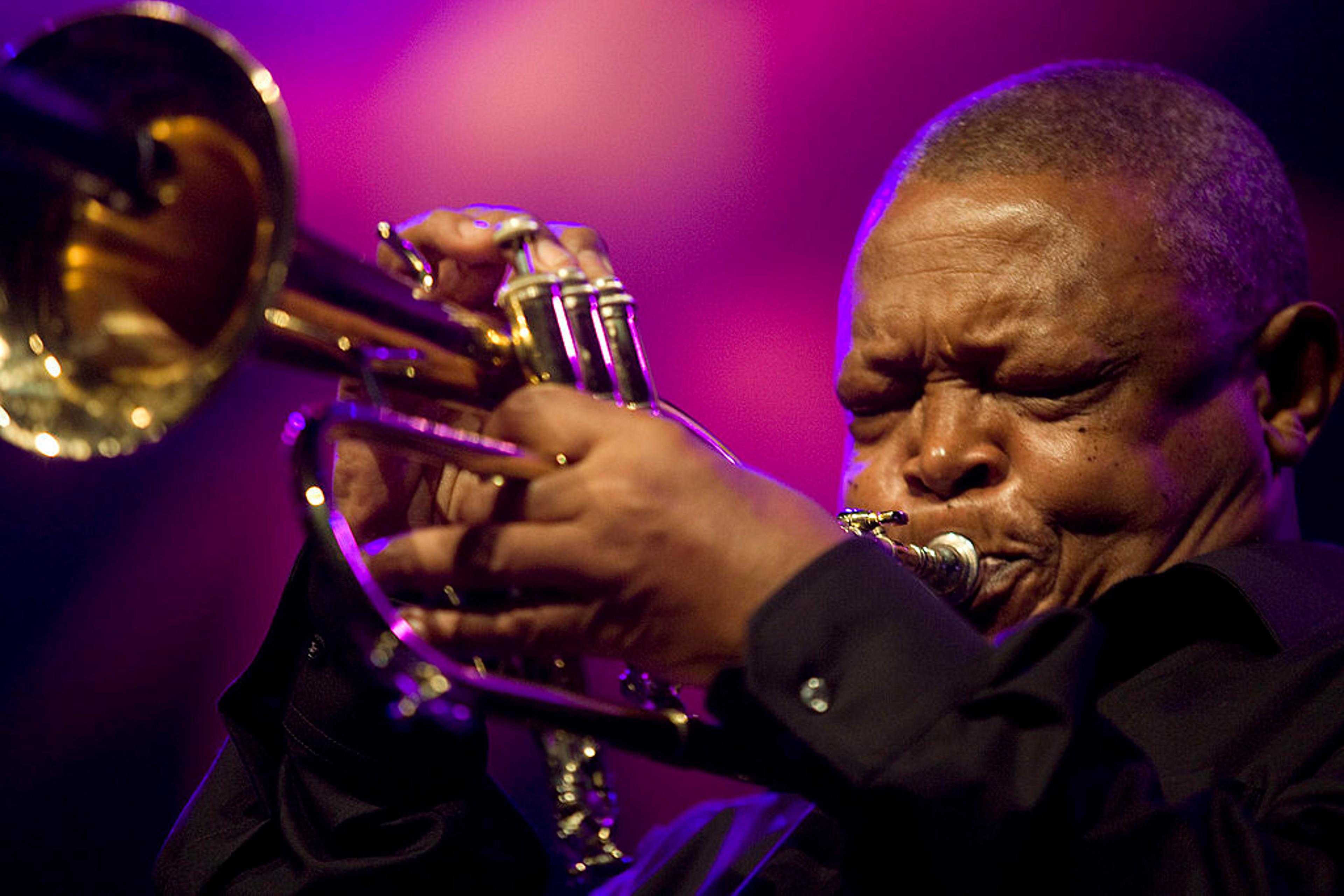
Hugh Masekela
 South Africa
trumpeter•composer•jazz musician
Also known as: Hugh Ramapolo Masekela, Bra Hugh
Birthday
April 4, 1939
Birth Sign
Aries
Birthplace
Witbank, South Africa
Age
Died at 78
Height
5 ft 9 in (175 cm)
About
Hugh Ramapolo Masekela was a South African trumpeter, flugelhornist, cornetist, singer, and composer widely revered as the "Father of South African Jazz." Born in Witbank (now eMalahleni), he became a global icon known for blending traditional African sounds with jazz, funk, and soul. His career spanned over six decades, marked by artistic innovation and fierce political activism against apartheid. He achieved international fame with hits like "Grazing in the Grass," which topped the US Billboard Hot 100 in 1968, making him the first black African artist to reach number one with an instrumental track. Masekela's music served as a powerful voice for justice, resonating with audiences worldwide. Despite facing censorship and bans in his homeland, he returned to perform after the end of apartheid in 1994. His legacy continues to inspire new generations through his extensive discography and the ongoing efforts of the Hugh Masekela Foundation.
Early Life & Background
Born on April 4, 1939, in Witbank, a mining town near Johannesburg, Hugh Masekela grew up in poverty but found solace in the vibrant township jazz scene. His father worked in the mines, and the harsh conditions of the era shaped his early worldview. Masekela attended St. Francis College in Pietersburg before moving to Johannesburg to study at the University of Fort Hare. It was in Johannesburg that he joined the Golden City Boys, a band led by Abdullah Ibrahim, then known as Dollar Brand. This early formation period was pivotal; it was here that he met Miriam Makeba, who would become his first wife and a catalyst for his international career. His trajectory shifted dramatically in 1960 following the Sharpeville Massacre. Fearing arrest for his political activism, Masekela fled South Africa. He traveled to London and then to New York City, where he studied at the Manhattan School of Music. In the US, he became a key figure in the civil rights movement and the anti-apartheid struggle. He performed alongside icons like Harry Belafonte, Stevie Wonder, and Paul Simon. Before achieving global fame, he navigated the challenges of exile while building a reputation as a talented musician committed to social justice.
Career Growth
Masekela's breakthrough arrived in 1968 with the release of "Grazing in the Grass," an instrumental track that reached No. 1 on the Billboard Hot 100. The song sold over four million copies and remains one of the most recognizable jazz instrumentals in history. Throughout the 1970s and 1980s, he continued to produce politically charged music, including the anthem "Bring Him Back Home" (a tribute to Nelson Mandela) and "Soweto Blues," which protested the 1976 Soweto Uprising. His commercial success was matched by his impact on the industry; he helped popularize Afro-jazz globally and was instrumental in bringing African sounds to mainstream Western audiences. He remained active until his health declined in his final years. Masekela released more than 40 studio albums and collaborated with artists ranging from Fela Kuti to Branford Marsalis. He won three Grammy Awards, including wins in 2011 for Best Traditional World Music Album for Rebirth of a Nation and in 2015 for Best Global Music Album for Hope. In 2005, he was awarded the Order of Ikhamanga in Silver by the South African government for his outstanding contribution to the fight against apartheid. He also served as a UNESCO Goodwill Ambassador for the promotion of peace and tolerance through culture.
Career Timeline
Public Image & Style
Hugh Masekela is portrayed as a visionary musician and a fearless activist. His public image is one of resilience, creativity, and unwavering commitment to justice. He is remembered for his warm personality, his ability to bridge cultural divides through music, and his role as a global ambassador for Africa. Known for his charismatic stage presence and distinctive style, he often wore colorful suits and hats. His music transcended borders, making him a beloved figure not just in South Africa but around the world. He was featured prominently on the covers of Time, Rolling Stone, Vogue, and Ebony magazines, highlighting his role in the anti-apartheid movement.
Fame & Fandom
Hugh Masekela stands as the 24th most famous person from South Africa and the 7th most famous person in Afrobeats, placements that reflect his enduring resonance across the globe. These rankings, anchored in the iFANN Global Fame Rankings, hold steady from the previous cycle, underscoring a legacy that transcends the decades since his passing. His influence permeates global attention through media coverage, search patterns, and consumption signals worldwide, cementing his status not merely as a musician but as a cultural touchstone. While there is no formal, registered name for his fanbase like a specific acronym, followers identify deeply with the affectionate moniker "Bra Hugh." This term of endearment, meaning "Brother Hugh," serves as the primary identifier for a dispersed community of jazz enthusiasts, activists, and historians who keep his spirit alive. The fandom operates less through organized campaigns or digital-first rituals and more through the sustained streaming of his catalog and attendance at commemorative events like the "Stimela" exhibition. Fans frequently rediscover his 1968 instrumental hit "Grazing in the Grass," celebrating its unique achievement as a No. 1 Billboard hit that sold over 4 million copies without a single lyric. Recent interest has surged around the upcoming biopic The Road Home, which promises to dramatize his complex relationship with Harry Belafonte and the anti-apartheid struggle, ensuring that the stories of his exile and political activism remain vivid for new generations.
Interesting Facts and Legends
Masekela was a childhood friend of Nelson Mandela and shared a cell with him in prison for a brief period, though this is often debated; he did know Mandela well and was a close ally. He was the first African musician to have a gold record in the United States. His nickname "Bra Hugh" means "Brother Hugh" in Afrikaans, a term of endearment used by fans and peers alike. A widely retold story involves his public condemnation of Paul Simon's Graceland album in the mid-1980s. Masekela argued that the project violated the UN cultural boycott against apartheid South Africa, creating a well-documented clash between artistic expression and political activism. He received honorary doctorates from several institutions, including the University of the Witwatersrand and the University of Fort Hare. Rolling Stone ranked him among the greatest trumpet players of all time.
Notable Quotes
“Music is the language of the soul.”
“I am a musician first and a politician second.”
“The struggle is not over until we have freedom for all.”
Family & Personal Life
Hugh Masekela was married twice. His first marriage was to the legendary South African singer Miriam Makeba. They were wed in 1958 while both were still teenagers, shortly after Makeba began her rise to fame. The couple had one son together, Sekani Masekela, born in 1959. Their relationship was deeply intertwined with their political activism and musical careers, but they eventually divorced in the late 1960s or early 1970s. The divorce was attributed to the pressures of exile, differing career paths, and personal struggles.
His second marriage was to Chris Calloway, a former dancer and model. They married in 1991. Together, they had two children: Selema Masekela, a well-known sports journalist and producer, and Hlengiwe Masekela. The marriage lasted until Hugh's death in 2018. Selema has been particularly vocal in recent years about his father's struggles. In 2026, news reports highlighted the deep estrangement caused by Hugh's addiction to alcohol and cocaine, which nearly destroyed their bond before they reconciled in his final days. Hugh Masekela stood approximately 5 feet 9 inches (175 cm) tall. He was a devout Christian and often incorporated gospel elements into his music.
Notable Connections
Relationships & Dating History
Hugh Masekela was married twice. His first marriage was to the legendary South African singer Miriam Makeba. They were wed in 1958 while both were still teenagers, shortly after Makeba began her rise to fame. The couple had one son together, Sekani Masekela, born in 1959. Their relationship was deeply intertwined with their political activism and musical careers, but they eventually divorced in the late 1960s or early 1970s. The divorce was attributed to the pressures of exile, differing career paths, and personal struggles.
His second marriage was to Chris Calloway, a former dancer and model. They married in 1991. Together, they had two children: Selema Masekela, a well-known sports journalist and producer, and Hlengiwe Masekela. The marriage lasted until Hugh's death in 2018. Selema has been particularly vocal in recent years about his father's struggles. In 2026, news reports highlighted the deep estrangement caused by Hugh's addiction to alcohol and cocaine, which nearly destroyed their bond before they reconciled in his final days. There is no public record of other long-term romantic relationships or engagements outside these two marriages. As of his death on January 23, 2018, Hugh Masekela was widowed. Following his passing, his estate continues to manage his legacy, and there are no current dating rumors or reported partners, as he is deceased.
- MarriedMiriam Makeba1958 - 1969First wife, mother of his son Sekani. Divorced due to pressures of exile and career differences.
- MarriedChris Calloway1991 - 2018Second wife, mother of Selema and Hlengiwe. Remained married until his death.
Death & Aftermath
Died
January 23, 2018 (aged 78)
Death Place
Sandton, Johannesburg, South Africa
Cause of Death
Complications from alcohol and cocaine addiction
Hugh Masekela passed away on January 23, 2018, at his home in Sandton, Johannesburg, at the age of 78. His death followed a long decline in health driven by struggles with alcohol and cocaine addiction, a reality confirmed by his family and medical reports. In the months leading up to his final days, he had largely retired from touring, focusing on rest rather than performance. The news triggered an immediate outpouring of grief globally, with tributes pouring in from world leaders like Barack Obama and Bono, alongside fellow musicians such as Stevie Wonder and Paul Simon.
A private funeral took place on February 1, 2018, at Westpark Cemetery in Johannesburg. Family members, including his son Selema, and close friends attended the service. His grave marker has since become a quiet site for fan tributes. Following his death, the Hugh Masekela Foundation was established to support youth arts education and address addiction issues. The estate has managed his legacy through posthumous releases, most notably the collaborative album The Promise of a Future released in March 2020. Streaming numbers for his catalog surged immediately after his passing, with tracks like "Grazing in the Grass" and "Stimela" seeing significant increases in plays.
In 2026, the cultural impact of his life story continued to grow with the announcement of the biopic The Road Home. This film dramatizes his life and relationship with Harry Belafonte, featuring Thabo Rametsi as Masekela and John Legend as Belafonte. Filming was set to begin in Cape Town, ensuring his role in the anti-apartheid struggle would be preserved for future audiences through cinema. The film is produced by StudioCanal and is set to premiere at the Cannes Film Festival.
Net Worth (Estate Value)
$5 Million
iFANN Editorial Team estimate
As of 2026, the iFANN Editorial Team estimates Hugh Masekela's estate value at approximately $5 Million. Since his passing in 2018, the estate has continued to generate revenue through posthumous releases, licensing deals, and merchandise. Estimates suggest the estate is valued between $1 million and $5 million, though precise figures vary by source. The estate is managed by his family, with a focus on preserving his legacy and supporting charitable causes. Revenue streams include royalties from his extensive discography, which includes over 60 recorded releases, and licensing fees for the use of his music in films and television. The upcoming biopic The Road Home is expected to boost the estate's value significantly. As of 2026, his official Instagram account (@hughmasekela) has approximately 11,000 followers, and his YouTube channel has over 30 million views across his videos.
Awards Won (4)
Hugh Masekela won numerous awards throughout his career, recognizing both his artistic contributions and his humanitarian efforts. Key wins include three Grammy Awards, multiple South African Music Awards (SAMAs), and the Order of Ikhamanga in Silver. He received honorary doctorates from several institutions and was appointed as a UNESCO Goodwill Ambassador. His work has been recognized globally for its impact on jazz and world music.
2015 · Best Global Music Album
Hope
2011 · Best Traditional World Music Album
Rebirth of a Nation
2005 · Lifetime Achievement
Career Achievement
Known For
Grazing in the Grass
1968 · Lead Artist
Stimela
1976 · Lead Artist
Bring Him Back Home
1987 · Lead Artist
Keywords
Sources
Quick Facts
- Profession
- trumpeter, composer, jazz musician
- Born
- April 4, 1939
- Birthplace
- Witbank
- Died
- January 23, 2018
- Death Place
- Johannesburg
- Gender
- Male
- Spouse
- Miriam Makeba, Chris Calloway
- Birth Sign
- Aries
Personal Details
- Full Name
- Hugh Ramapolo Masekela
- Height
- 5 ft 9 in (175 cm)
- Spouse
- Miriam Makeba, Chris Calloway
- Children
- Sekani Masekela, Selema Masekela, Hlengiwe Masekela
- Education
- St. Francis College, University of Fort Hare, Manhattan School of Music
Filmography
15
Total
10
Film
5
TV
Frequently Asked Questions
Who was Hugh Masekela?
How did Hugh Masekela die?
What was Hugh Masekela's most famous song?
Was Hugh Masekela married?
Is there a movie about Hugh Masekela?
Social Media
Similar People
Join the community
fans discussing