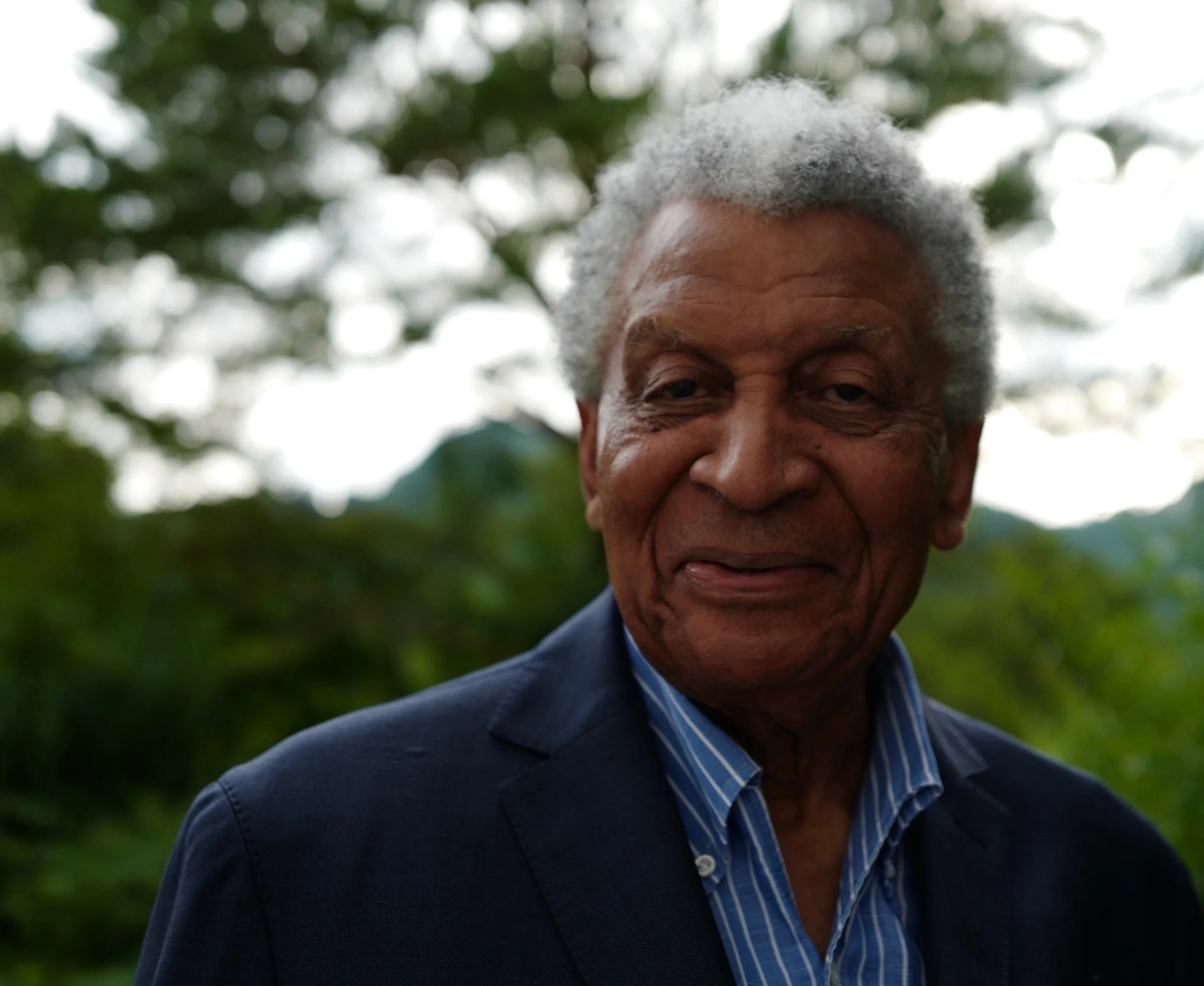
Abdullah Ibrahim
 South Africa
jazz musician•composer•pianist
Also known as: Dollar Brand, Adolph Johannes Brand
Birthday
October 9, 1934
Birth Sign
Libra
Birthplace
Cape Town, South Africa
Age
Died at 91
About
Abdullah Ibrahim was a South African pianist and composer who reshaped jazz through a synthesis of African melodies, AME Church gospel, Indian ragas, and Western classical music. Born Adolph Johannes Brand in Cape Town, he first gained international attention under the name Dollar Brand, performing with the Jazz Epistles, South Africa's first black jazz group, before moving to Zurich in 1962. There, Duke Ellington heard him and helped launch his global career.
Ibrahim's music, often described as the heart of Cape jazz, is marked by a lyrical, meditative quality that reflects both the pain of apartheid and the resilience of his people. He is best known for the 1974 composition "Mannenberg," which became an unofficial anthem for the anti-apartheid movement. Over his long life, he recorded dozens of albums, from solo piano works like African Dawn to orchestral collaborations, and performed at prestigious venues worldwide, sharing stages with Max Roach, Carlos Ward, and Randy Weston.
Ibrahim lived in exile in New York for much of the apartheid era, returning to South Africa in the early 1990s after Nelson Mandela's release. He passed away on 15 June 2026 at the age of 91, leaving behind a rich legacy as a composer, bandleader, and cultural bridge. He was married to singer Sathima Bea Benjamin, and their daughter, Jean Grae, became a respected rapper in New York's underground scene.
Early Life & Background
Adolph Johannes Brand was born on 9 October 1934 in Cape Town, South Africa, into the city's multicultural port districts. His mother was active in the African Methodist Episcopal Church, where he first encountered gospel music, and he absorbed the diverse sounds of the city from childhood, including traditional African melodies, Indian ragas, and Western classical music.
He began performing professionally as a teenager under the name Dollar Brand. In 1959, he co-founded the Jazz Epistles, South Africa's first black jazz group, alongside saxophonist Kippie Moeketsi and trumpeter Hugh Masekela. The group recorded the first jazz album by black South African musicians, but their time together was short-lived.
In 1962, Ibrahim moved to Zurich, Switzerland, seeking greater artistic freedom. There, in a club, he was heard by Duke Ellington, who recognized his talent and arranged for his first recordings, helping to launch his international career. This marked the turning point from a promising local musician to a global jazz figure.
Career Growth
After meeting Duke Ellington in 1962, Ibrahim's international career took off. He recorded several albums under Ellington's patronage and performed across Europe and the United States, collaborating with musicians like Max Roach and Randy Weston. In 1974, he recorded "Mannenberg" with his group The Sun, a jaunty piano-driven tune that became an anthem for the anti-apartheid movement, played at rallies and funerals.
Throughout the 1980s, he continued to release albums and tour, living in exile in New York. After Nelson Mandela's release in 1990, he returned to South Africa and performed at Mandela's inauguration celebrations in 1991. He received a Grammy nomination for his album African Magic in 2003, and in 2007 was awarded the Order of Ikhamanga in Gold by the South African government. He continued to record and perform into his eighties, releasing The Balance in 2019.
Career Timeline
Public Image & Style
Ibrahim was known for his calm, meditative stage presence and his distinctive musical blend of African and jazz traditions. He often performed solo piano, creating an intimate atmosphere that drew audiences in. Fans appreciated his deep connection to the anti-apartheid struggle, and his music was a source of hope and resilience. He was not active on social media, preferring to let his music speak for itself.
Fame & Fandom
The meditative piano of Abdullah Ibrahim resonated long after the final note faded, cementing his status as a cultural titan whose influence transcended borders. In August 2026, he stands as the 43rd most famous person from South Africa, a ranking that has held steady against shifting tides in global attention. His artistry also secured him the position of the 92nd most famous person in Classical within the same cycle, reflecting the enduring reach of his unique synthesis of African melodies and Western forms. These placements within the iFANN Global Fame Rankings capture a legacy built on dignity rather than viral chaos. Unlike modern pop phenomena driven by organized mobs, Ibrahim's audience formed a quiet community of jazz enthusiasts and scholars who revered his work through attendance and study rather than social media campaigns. There is no formal name for his fanbase, nor any record of birthday billboards or streaming chart pushes; instead, his followers engaged with his music as a form of historical preservation and spiritual connection. The absence of chaotic rituals aligns with his life's trajectory, where reverence was shown through the deep listening required to understand his compositions. While contemporary stars might rely on fan-funded projects to maintain visibility, Ibrahim's impact remained institutionalized through honors like the NEA Jazz Masters Fellowship and tributes from institutions such as Jazz at Lincoln Center. His fans did not need to organize to keep his memory alive because his music itself served as the primary vehicle for his message of resilience. This lack of frenetic fandom only amplified the solemnity of his passing, leaving a void filled by the silence of a room waiting for the next melody.
Interesting Facts and Legends
Ibrahim converted to Islam in 1968, swapping the name Dollar Brand for Abdullah Ibrahim, a decision that marked a profound reclamation of his identity. He viewed his music as a form of prayer and maintained a calm, meditative presence on stage, often performing solo to create an intimate atmosphere. A keen chess player and painter, he spent his spare time cultivating these creative outlets alongside his musical duties. Fans often recall his daughter Jean Grae joking that she learned to rhyme before walking, having absorbed her father's rhythms daily. Though the piano was his primary instrument, he also mastered the flute and cello, and he frequently wore a distinctive cap on stage as a nod to his heritage. His compositions have been sampled by hip-hop artists, leading him to famously declare that jazz is "the music of the people." Beyond these personal details, legends surround his life, including Nelson Mandela's designation of Ibrahim as South Africa's Mozart, a comparison that elevated him to national treasure status. Another defining moment occurred in 1968 when he changed his name in London, rejecting his colonial nickname to embrace his Islamic roots. Upon returning to South Africa in 1990 after years of exile, his homecoming became a symbolic victory for the nation, marking the end of the cultural boycott. His composition "Mannenberg" remains an unofficial anthem of the anti-apartheid struggle, evoking the spirit of the Cape Flats without ever causing physical reactions like fainting crowds, but rather inspiring deep meditation and respect.
Notable Quotes
“Music is the weapon of the future.”
“We are the children of the soil, and the soil is our mother.”
Family & Personal Life
Ibrahim's mother was active in the AME Church, where he first heard gospel music. His father was a shopkeeper, though little else is documented. He married singer Sathima Bea Benjamin in 1965, and they remained together until her death in 2013. Their daughter, Jean Grae, born in 1976, became a respected rapper in New York's underground scene. After Benjamin's death, Ibrahim lived quietly, and his estate is managed by family members.
Notable Connections
Abdullah Ibrahim collaborated with several prominent jazz musicians, including Duke Ellington, who mentored him, and Max Roach, with whom he recorded. His ensembles featured saxophonist Carlos Ward and pianist Randy Weston, and his wife, Sathima Bea Benjamin, was a frequent musical partner. His daughter, Jean Grae, also collaborated with him on a 2014 project.
Relationships & Dating History
Ibrahim was married to singer Sathima Bea Benjamin for nearly five decades. They met in Cape Town in the late 1950s and married in 1965. The couple lived in exile together, and Benjamin often performed alongside him. They had one daughter, Jean Grae, born in 1976. Benjamin passed away in 2013, and Ibrahim remained widowed until his own death in 2026. No other public romantic relationships have been documented.
- MarriedSathima Bea Benjamin1965 - 2013Met in Cape Town in the late 1950s; married for nearly five decades until her death.
Death & Aftermath
Died
June 15, 2026 (aged 91)
Death Place
Germany
Cause of Death
Brief illness (natural causes)
The Kennedy Center and major jazz institutions issued statements honoring an eight-decade career that had produced the unofficial anthem of South Africa's fight against apartheid, while streaming platforms saw a surge in activity for his catalog, particularly Mannenberg. Tributes from The New York Times, The Guardian, and NPR described Ibrahim as a quiet giant whose music reflected both the pain of apartheid and the resilience of his people. He passed away peacefully on June 15, 2026, at the age of 91, following a brief illness in Germany.
His partner Marina Umari released an official statement confirming he died surrounded by loved ones in a private setting, though it remained unclear whether his remains were transported to South Africa for interment or buried locally. Specific details regarding funeral arrangements or notable attendees were not disclosed, likely kept private by the family. Retrospective articles from The Conversation and Syncopated Times analyzed his legacy immediately after the announcement, yet no specific posthumous album releases or hall-of-fame inductions were confirmed for the immediate weeks following his death.
Net Worth (Estate Value)
Not publicly documented
iFANN Editorial Team estimate
iFANN currently estimates Abdullah Ibrahim's net worth at the time of his death in 2026 as Not publicly documented, as no credible financial outlet has published a specific figure. His wealth accumulated primarily through album sales, royalties from his extensive catalogue, including the enduring "Mannenberg," live performance fees, and composition licensing. He continued to tour and release music into his later years, with The Balance (2019) among his final works. His estate is managed by family members, though no public details on its value or revenue streams have been released. Given his long career and international acclaim, his estate likely holds significant value from royalties and licensing, but specific figures remain undisclosed.
Awards Won (4)
Ibrahim received the Order of Ikhamanga in Gold from the South African government in 2007, and an honorary doctorate from the University of Cape Town in 2009. He was inducted into the South African Hall of Fame for jazz and received a star on the Cape Town Walk of Fame. He received a Grammy nomination for African Magic in 2003 but did not win.
2007 · National Honour
Lifetime achievement in music
2009 · Honorary Degree
University of Cape Town
Known For
Mannenberg
1974 · Composer and pianist
African Magic
2002 · Album
The Balance
2019 · Album
Keywords
Sources
Quick Facts
- Profession
- jazz musician, composer, pianist
- Born
- October 9, 1934
- Birthplace
- Cape Town, South Africa
- Died
- June 15, 2026
- Death Place
- Prien am Chiemsee, Germany
- Gender
- Male
- Spouse
- Sathima Bea Benjamin
- Birth Sign
- Libra
Personal Details
- Full Name
- Adolph Johannes Brand
- Spouse
- Sathima Bea Benjamin
- Children
- Jean Grae
Frequently Asked Questions
What is Abdullah Ibrahim's real name?
What is Abdullah Ibrahim's most famous song?
How did Abdullah Ibrahim die?
Who was Abdullah Ibrahim's wife?
What is Abdullah Ibrahim's net worth?
Similar People
Join the community
fans discussing