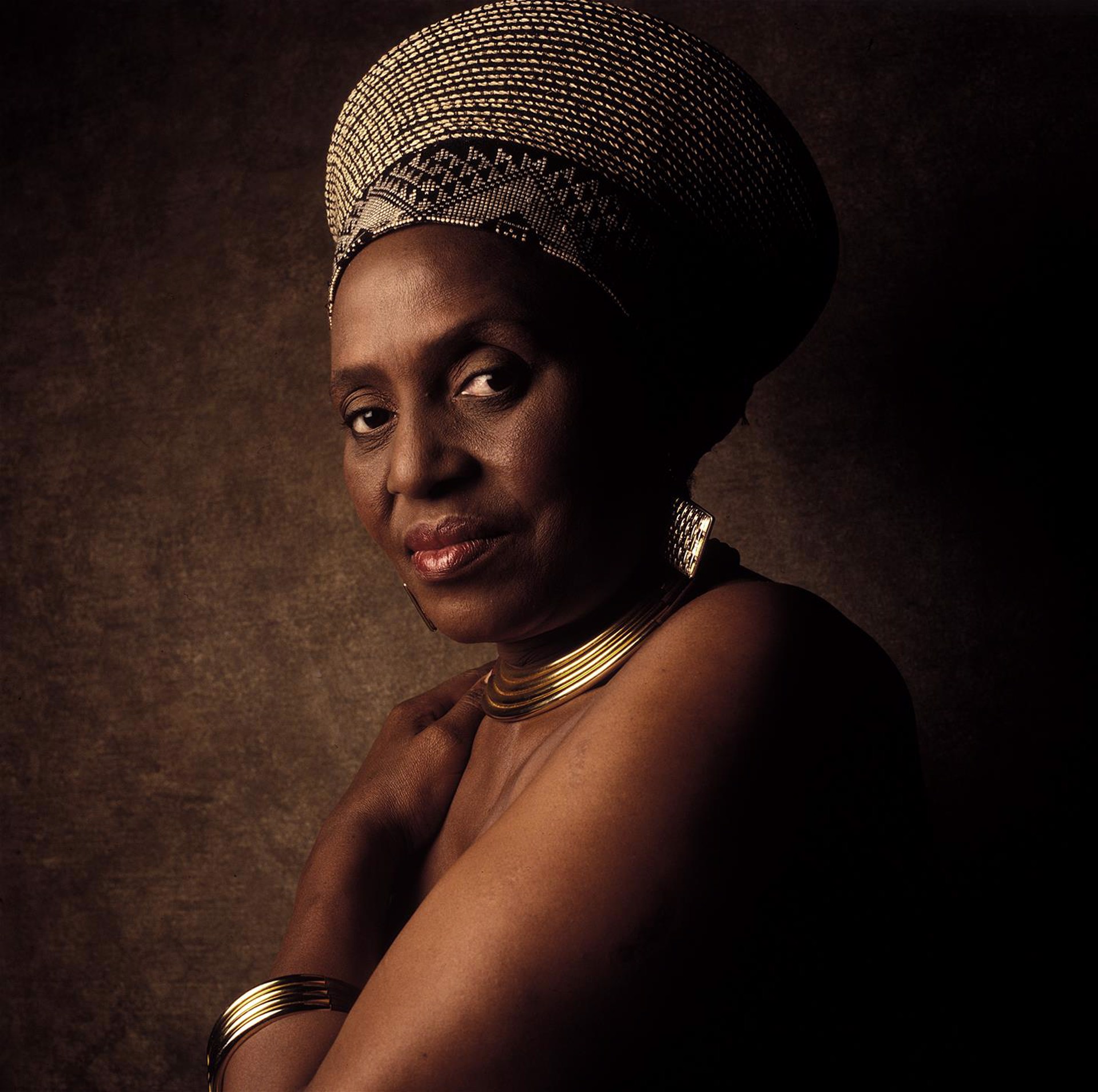
Miriam Makeba
 South Africa
singer•songwriter•actress•civil rights activist
Also known as: Mama Africa, Zenzile Miriam Makeba
Birthday
March 4, 1932
Birth Sign
Pisces
Birthplace
Johannesburg, South Africa
Age
Died at 76
About
Zenzile Miriam Makeba, known to the world as Mama Africa, was a South African singer, songwriter, actress, and civil rights activist. Born on March 4, 1932, in Johannesburg, she grew up in a country torn apart by apartheid, a system she would fight against through her music for the rest of her life. Her father, a Swazi, died when she was young, forcing her to work as a child. She married briefly at 17, gave birth to her only child in 1950, and survived breast cancer. Her voice, rich with the sounds of Afropop, jazz, and traditional African melodies, first gained notice in the 1950s when she sang with groups like the Cuban Brothers, the Manhattan Brothers, and the all-female Skylarks. In 1959, a small role in the anti-apartheid film "Come Back, Africa" brought her international attention, leading to performances in Venice, London, and New York City. In London, she met Harry Belafonte, who became a mentor and collaborator. She moved to New York, where her career took off, and she released her first solo album in 1960. That same year, the South African government revoked her citizenship, preventing her from attending her mother's funeral.
Early Life & Background
Miriam Makeba was born into a world of both music and hardship. Her mother, Christina, was a Swazi domestic worker and a sangoma, a traditional healer, while her father, Caswell, was a Xhosa teacher. When she was just 18 days old, she was imprisoned with her mother, who had been convicted of illegally brewing beer to support the family. Her father died when she was six, and she was sent to live with her grandmother in a compound in Riverside, Pretoria. She grew up in Sophiatown, a vibrant, racially mixed township, where she began singing in the school choir at Kilnerton College. At sixteen, apartheid-era restrictions and family finances forced her to leave school and work full-time as a domestic servant.
Music became her escape. In the late 1940s, she sang for her cousin's band, the Cuban Brothers, and in 1953 she made her professional debut with the Manhattan Brothers, one of South Africa's most influential vocal groups. She toured with them across South Africa, Zimbabwe, and the Congo until 1957. In 1958, she formed the all-woman group the Skylarks, blending jazz with traditional African melodies. Her performances in the anti-apartheid film Come Back, Africa (1959) and the musical King Kong (1959) brought her international attention, leading to her U.S. debut on The Steve Allen Show on November 1, 1959.
Career Growth
Makeba's American career was nothing short of prolific. After her U.S. debut, she signed with RCA Victor and released her first American album, Miriam Makeba, in 1960. That same year, the South African government revoked her citizenship, making her an exile. Her signature tune, "Pata Pata," written by Dorothy Masuka, had been recorded in 1956 but became a global hit in 1967. In 1965, her collaboration with Harry Belafonte, An Evening with Belafonte/Makeba, won the Grammy for Best Folk Recording, making her the first African woman to win a Grammy. She testified against apartheid at the United Nations in 1964 and 1975.
Her 1968 marriage to Stokely Carmichael, a leader of the Black Panther Party, upended her U.S. career, shows were cancelled, her record label distanced itself, and her visa was revoked while she was abroad. She relocated to Guinea, serving as Guinea's delegate to the UN and performing across Africa, often at independence celebrations. The 1977 song "Soweto Blues," written by her ex-husband Hugh Masekela, mourned the Soweto uprising. After apartheid fell, she returned to South Africa in 1990, recorded with Nina Simone and Dizzy Gillespie in 1991, and appeared in the film Sarafina! that same year. She served as a FAO Goodwill Ambassador from 1999 and remained active until her death from a heart attack on November 9, 2008, during a concert in Italy.
Career Timeline
Public Image & Style
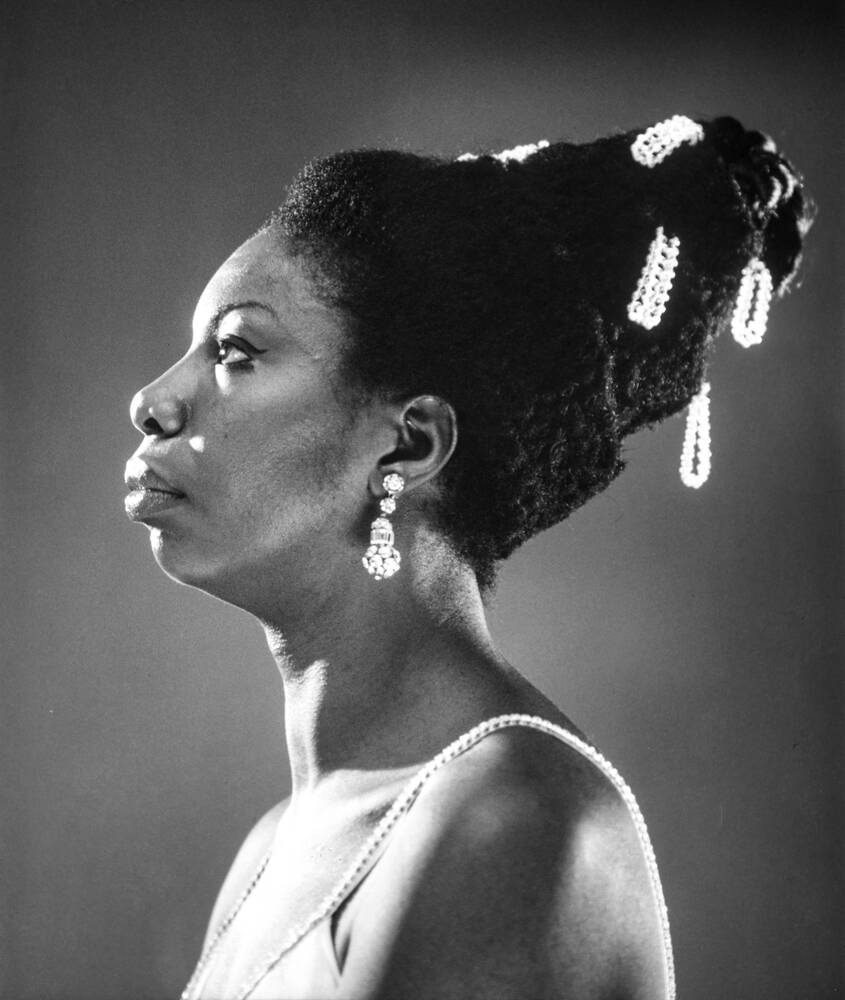
Makeba's public image was that of a dignified, powerful voice for Africa. She blended traditional African melodies, jazz, and Afropop, and was known for her distinctive stage presence and vocal power. The media portrayed her as a symbol of resistance and hope, and she was universally known as "Mama Africa." Her style, often featuring traditional African attire, became iconic. Fans connected with her authenticity and her unwavering activism, which she carried into her performances and public appearances.
Fame & Fandom
Miriam Makeba built a legacy that transcended music, evolving into a global symbol of resistance and cultural pride for the African diaspora. Unlike modern pop stars with organized fan clubs or viral hashtags, her supporters are best described as admirers and activists who revere her as a fearless warrior for justice. There is no formal name for her fandom; instead, a collective movement of scholars, filmmakers, and artists sustains her narrative through documentaries, academic study, and new biographical projects like the upcoming $16 million film co-written by Zakes Mda. This devotion focuses on education and historical preservation rather than commercial chart manipulation, ensuring her story remains central to conversations about apartheid and human rights. Recent initiatives include a 2025 dance drama titled *Mimi's Shebeen* and a 2026 musical production set to portray her life, proving that her influence is actively kept alive by those dedicated to her memory. While she passed away in 2008 before the era of social media-driven campaigns, her enduring impact is measured by the sheer volume of contemporary engagement with her work. Her status as the first African artist to win a Grammy and her pivotal UN testimony cemented a mythos that draws new generations to her catalog every day. Today, iFANN Global Fame Rankings confirms her standing among history's most influential figures. Miriam Makeba is currently ranked as the 74th most famous person in South Africa and stands as the 10th most famous person from South Africa, holding these positions steady within the latest cycle of the iFANN Global Fame Rankings.
Interesting Facts and Legends
Zenzile Miriam Makeba, known globally as Mama Africa, was born on March 4, 1932, in Johannesburg. Her name means "you brought this on yourself" in Xhosa, a phrase her grandmother muttered during her difficult birth. Her mother worked as a sangoma, a traditional healer, and Makeba herself survived breast cancer. She performed her first solo during the 1947 Royal Visit and became the first African artist to globally popularize African music. Her records were banned in South Africa during the apartheid era. A defining moment in her legend occurred in 1963 when she testified before the United Nations Special Committee on Apartheid. This political act led to her stripping of citizenship and exile for over three decades, transforming her from a singer into a global icon of resistance. Another verified milestone happened in 1967 when she performed "Pata Pata" on *The Ed Sullivan Show*, introducing African rhythms to millions of American households. Her victory at the 1966 Grammy Awards for Best Ethnic or Traditional Folk Recording marked her as the first African artist to receive this honor. The song "Soweto Blues," written in response to the June 16, 1976 Soweto Uprising, remains legendary for its raw political commentary and emotional weight.
Notable Quotes
“I look at an ant and I see myself: a native South African, endowed by nature with a strength much greater than my size so I can cope with the weight of a racism that crushes my spirit.”
“I kept my culture. I kept the music of my roots. Through my music I became this voice and image of Africa, without even realizing.”
“I'm not a political singer. I don't know what the word means. People think I consciously decided to tell the world what was happening in South Africa. It was no decision, it was natural.”
“The music is the message. The message is the music.”
Family & Personal Life
Makeba was the only child of her father, Caswell Makeba, a teacher, and the sixth child of her mother, Christina, a domestic worker and sangoma. Her father died when she was six, and she was raised partly by her grandmother in Pretoria. She had one daughter, Bongi Makeba, born in 1950 from her first marriage to James "Gool" Nkosi. Bongi later became a singer and collaborated with her mother. Makeba's household in exile included her daughter and grandchildren, who now manage her estate.
Notable Connections
Harry Belafonte was a mentor and collaborator who helped Makeba gain entry into the United States and recorded the Grammy-winning duet album with her. Hugh Masekela, her second husband, was a South African jazz musician and co-star in King Kong; he wrote "Soweto Blues" for her. Stokely Carmichael, her third husband, was a leader of the Black Panther Party. Dorothy Masuka wrote "Pata Pata." She also recorded with Nina Simone and Dizzy Gillespie in 1991.
Relationships & Dating History
Makeba's personal life included several significant relationships. She had a brief and allegedly abusive first marriage at the age of 17, around 1949, to a man named James "Gool" Nkosi. This marriage produced her only child, a daughter named Bongi Makeba, born in 1950. Her second marriage was to South African jazz musician Hugh Masekela, whom she married in 1964. Masekela was her co-star in the musical King Kong. The marriage ended in divorce in 1966. Her third and final marriage was to Stokely Carmichael, a prominent civil rights activist and leader in the Black Panther Party, whom she married in 1968. This marriage was highly controversial in the United States and led to her visa being revoked; the couple relocated to Guinea. They divorced in 1978. She also had a long-standing professional and personal friendship with Harry Belafonte, who was a mentor and collaborator, though they were not romantically involved. As of her death in 2008, she was not married, having been divorced from Carmichael since 1978.
- MarriedJames "Gool" Nkosi1949 - 1951First marriage, brief and allegedly abusive; mother of her daughter Bongi.
- MarriedHugh Masekela1964 - 1966South African jazz musician; co-star in 'King Kong'; divorced in 1966.
- MarriedStokely Carmichael1968 - 1978Civil rights activist and Black Panther Party leader; controversial marriage led to visa revocation; divorced in 1978.
Death & Aftermath
Died
November 9, 2008 (aged 76)
Death Place
San Lorenzo Nuovo, Viterbo, Italy
Cause of Death
Heart attack (myocardial infarction)
Global mourning greeted the news of Miriam Makeba's passing, with tributes pouring in from world leaders and peers who hailed her as a symbol of resistance. South African President Jacob Zuma described her as a voice of conscience, while Harry Belafonte honored the long-standing bond they shared. Her daughter Zindzi Mandela-Hlongwane expressed profound grief over the loss of a mother whose commitment to freedom never wavered. On November 9, 2008, Makeba collapsed during or immediately after a performance at the International Folk Music Festival in San Lorenzo Nuovo, near Viterbo, Italy. She was 76 years old. Medical teams responded instantly, but she could not be revived.
The official cause was ruled a heart attack based on the immediate medical response and confirmed by her family. Her funeral took place shortly thereafter in Soweto, where she was laid to rest in Orlando West Cemetery alongside other anti-apartheid heroes. Close family members and fellow musicians attended the private service, celebrating her life through song. Posthumously, her legacy expanded with the 2011 documentary Mama Africa and ongoing plans for a major film titled The Road Home. The Miriam Makeba Foundation continues its work in education and the arts, while her estate remains under the management of her family.
Net Worth (Estate Value)
$10 Million
iFANN Editorial Team estimate
As a deceased artist, Makeba's estate continues to generate revenue from royalties, licensing, and posthumous releases. Her catalog, including the enduring hit "Pata Pata," has over 36 million streams on Spotify alone. The estate is managed by her family, including her grandchildren. Per iFANN's editorial analysis, the total value of her estate is estimated to be around $10 million as of 2026, based on ongoing earnings from her music and legacy projects.
Awards Won (7)
Makeba won a Grammy Award for Best Folk Recording in 1965 for An Evening with Belafonte/Makeba, becoming the first African woman to win a Grammy. She also received the Dag Hammarskjöld Peace Prize, the Polar Music Prize, the Otto Hahn Peace Medal in Gold, and the South African Order of the Companions of O.R. Tambo, posthumously. She was honored with the Kora All Africa Music Awards Lifetime Achievement Award and a posthumous Grammy Lifetime Achievement Award in 2014.
1965 · Best Folk Recording
An Evening with Belafonte/Makeba
2014 · Lifetime Achievement
Posthumous
Known For
Pata Pata
1967 · Signature song
An Evening with Belafonte/Makeba
1965 · Album with Harry Belafonte
Come Back, Africa
1959 · Actress
King Kong
1959 · Actress
Sarafina!
1991 · Actress
Keywords
Sources
Quick Facts
- Profession
- singer, songwriter, actress, civil rights activist
- Born
- March 4, 1932
- Birthplace
- Johannesburg, South Africa
- Died
- November 9, 2008
- Death Place
- Castel Volturno, Italy
- Gender
- Female
- Spouse
- Stokely Carmichael, Hugh Masekela
- Birth Sign
- Pisces
- Children
- Bongi Makeba
Personal Details
- Full Name
- Zenzile Miriam Makeba
- Spouse
- Stokely Carmichael, Hugh Masekela
- Children
- Bongi Makeba
- Education
- Kilnerton College (Methodist elementary school)
Filmography
6
Total
4
Film
2
TV
Frequently Asked Questions
What was Miriam Makeba's net worth?
Who was Miriam Makeba married to?
How many children did Miriam Makeba have?
What was Miriam Makeba's most famous song?
Why was Miriam Makeba exiled from South Africa?
Social Media
Join the community
fans discussing