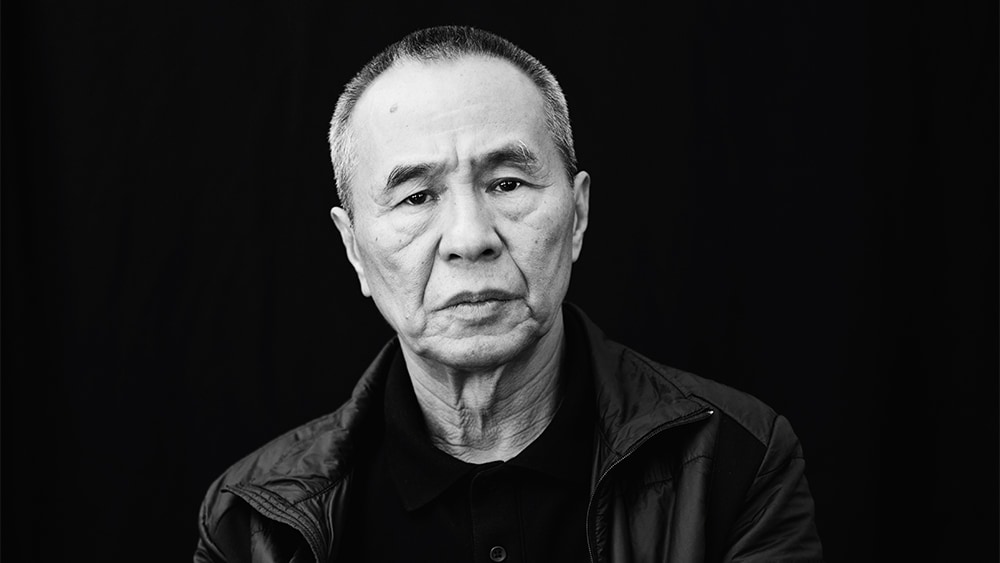
Hou Hsiao-Hsien
 China
ChinaFilm Director•Screenwriter•Producer•Actor
Birthday
April 8, 1947
Birth Sign
Aries
Birthplace
Meixian District, Guangdong, China
Age
79 years old
About
Hou Hsiao-Hsien, born on April 8, 1947, in Meixian District, is a retired Taiwanese film director, screenwriter, producer, and actor. A leading figure in Taiwan's New Wave cinema and world cinema, he gained international acclaim with his 1989 film A City of Sadness, which won the Golden Lion at the Venice Film Festival. His 2015 film The Assassin earned him the Best Director award at Cannes. Other celebrated works include The Puppetmaster (1993) and Flowers of Shanghai (1998). Across his career, Hou directed over 20 films and acted in several, shaping the landscape of Taiwanese cinema.
Early Life & Background
Hou grew up in rural Kaohsiung, Taiwan, after his family fled the Chinese Civil War. His childhood was spent catching shrimp, staging mock sword fights, and sneaking into movie theaters. He disliked school and preferred reading wuxia novels. After failing the college entrance exam, he served two years in the military, where he watched four films in a row on days off. The British film Crossroads inspired him to pursue cinema. He studied filmmaking at the National Taiwan Academy of the Arts from 1969 to 1972, then worked as an electronic calculator salesman for a year before entering the film industry as a script boy and assistant director in 1974.
Career Growth
Hou's breakthrough came with the Taiwan New Cinema movement in the early 1980s. His 1983 film The Boys from Fengkuei attracted international attention at the Festival des 3 Continents. In 1985, A Time to Live, a Time to Die won the International Critic's Prize at Berlin. His 1989 epic A City of Sadness, about the White Terror period, won the Golden Lion at Venice. The Puppetmaster (1993) earned the Cannes Jury Prize. He continued to direct acclaimed works like Flowers of Shanghai (1998) and Millennium Mambo (2001). In 2015, The Assassin won him the Best Director award at Cannes. He is now retired.
Career Timeline
Public Image & Style
Hou is regarded as a premier auteur of the Taiwanese New Wave, known for his minimalist, long-take style and deep focus on generational conflict and political transition. Critics describe his work as gentle, reflective, and beautifully composed. He often used non-professional actors and natural light. His films explore themes of memory, history, and identity with a quiet, observational approach that has influenced directors worldwide.
Fame & Fandom (iFAMOUS Rankings)
Hou Hsiao-Hsien has been evaluated by iFANN's Global Fame Engine as of August 2026, but he does not currently hold a placement in the published rankings (Global Top 1,000 or a Top-100 scope list). This evaluation reflects a steady presence in international cinema rather than a surge in transient popularity metrics. His audience consists primarily of cinephiles, film scholars, and art-house enthusiasts who engage with his work through academic discourse, film festival circuits, and curated streaming platforms rather than grassroots fan movements. There is no formal name for his fanbase, nor are there organized campaigns, birthday billboards, or interactive rituals typical of pop culture icons. Hou has historically been described as reclusive and private, rarely engaging in direct public interaction with fans, and he officially retired from filmmaking after the release of The Assassin (2015). Consequently, there are no documented instances of fans fainting at screenings or crowds shutting down streets caused by his presence. The mythology surrounding him is rooted entirely in his artistic achievements and personal history rather than viral incidents. The most widely retold story regarding his life is his transformation from a troubled youth known for gambling and fighting to a cinematic master, a narrative of redemption that informs the gritty realism of his early works. In terms of professional milestones, the production of The Assassin (2015) is frequently cited as a legendary moment due to its extreme technical demands and exclusive use of long takes, a defining aesthetic choice that remains a subject of intense discussion among filmmakers and critics.
Interesting Facts and Legends
Hou sold his house to finance Growing Up (1982), demonstrating an early commitment to his craft over financial security. He broke from the Mandarin-only norm by incorporating Taiwanese dialect, Hakka, and Japanese into his films, enriching their cultural texture. His regular cinematographer is Mark Lee Ping-bin, a partnership that defined the visual language of his career. He learned his craft from veteran director Li Hsing before establishing his own distinct voice. Flight of the Red Balloon (2007) was commissioned by the Musée d'Orsay and starred Juliette Binoche, marking a unique intersection of French patronage and Taiwanese storytelling. Hou also acted, playing the lead in Edward Yang's Taipei Story (1985). A foundational legend of his life describes his transformation from a teenager known for gambling, fighting, and wandering the streets to a revered auteur, a backstory that adds depth to the gritty realism of his early commercial romances like Cute Girl and The Green Grass of Home. Another iconic moment involves the production of The Assassin (2015), where the crew utilized long takes exclusively during filming, a demanding approach that became a subject of intense discussion and cemented the film's status as a masterpiece of slow-paced art cinema.
Notable Quotes
“Why can't I go hide and be a director?”
“I urge any reader to seek out his work, in whatever form it can be found., David Thomson”
“A hugely talented visionary, Hou is one of the greatest storytellers of this, or any, age., Jay McRoy”
Family & Personal Life
Notable Connections
Hou collaborated frequently with screenwriters Chu Tian-wen and Wu Nian-jen, and cinematographer Mark Lee Ping-bin. He wrote Taipei Story (1985) for director Edward Yang and produced Zhang Yimou's Raise the Red Lantern (1991). He learned from veteran director Li Hsing and worked as an assistant to Lai Cheng-Ying.
Relationships & Dating History
Hou Hsiao-Hsien is married to Tsao Pao-feng. The couple has one daughter. Details of how they met are not publicly documented. No other public relationships are known. As of 2026, Hou remains married to Tsao.
- MarriedTsao Pao-fengCurrentHou is married to Tsao Pao-feng, and they have one daughter.
Salary, Net Worth In 2026
$5 Million
iFANN Editorial Team estimate
Hou Hsiao-Hsien's net worth in 2026 is estimated at $5 Million per iFANN's editorial analysis. His wealth accumulates from directing over 20 films, screenwriting 21 films, and producing credits including Raise the Red Lantern, alongside occasional acting roles. Major earnings likely originated from internationally distributed works such as A City of Sadness, The Assassin, and Flowers of Shanghai. No specific business ventures or endorsements are documented.
Awards Won (7)
Hou won the Golden Lion at Venice for A City of Sadness (1989) and the Best Director award at Cannes for The Assassin (2015). He also received the Cannes Jury Prize for The Puppetmaster (1993) and the International Critic's Prize at Berlin for A Time to Live, a Time to Die (1985).
2015 · Cannes Film Festival
The Assassin
1989 · Golden Horse Awards
A City of Sadness
1985 · Asian-Pacific Film Festival
A Summer at Grandpa's
1989 · Venice Film Festival
A City of Sadness
Known For
A City of Sadness
1989 · Director
The Assassin
2015 · Director
The Puppetmaster
1993 · Director
Flowers of Shanghai
1998 · Director
A Time to Live, a Time to Die
1985 · Director
Keywords
Sources
Quick Facts
- Profession
- Film Director, Screenwriter, Producer, Actor
- Born
- April 8, 1947
- Birthplace
- Meixian District, Guangdong, China
- Gender
- Male
- Birth Sign
- Aries
Personal Details
- Full Name
- Hou Hsiao-hsien
- Spouse
- Tsao Pao-feng
- Children
- 1 daughter
- Education
- National Taiwan Academy of the Arts (1969-1972)
Filmography
46
Total
41
Film
5
TV
Frequently Asked Questions
Is Hou Hsiao-hsien retired?
Who is Hou Hsiao-hsien married to?
What is Hou Hsiao-hsien's most famous film?
How old is Hou Hsiao-hsien?
Did Hou Hsiao-hsien win an Oscar?
Join the community
fans discussing