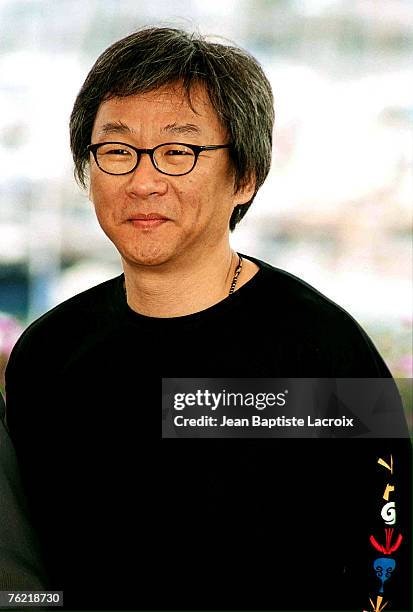
Edward Yang
 China
Chinafilm director•screenwriter•actor
Birthday
November 6, 1947
Birth Sign
Scorpio
Birthplace
Shanghai, China
Age
Died at 59
Height
5 ft 9 in (175 cm)
About
Edward Yang, born November 6, 1947 in Shanghai and raised in Taiwan, was a filmmaker who helped define the Taiwanese New Wave. After studying electrical engineering and working as a computer scientist in the United States, he returned to Taiwan in the early 1980s and turned to cinema. His first feature, That Day, on the Beach (1983), announced a fresh, critical voice. Over two decades, Yang directed just seven features, but each one deepened his reputation as a master of intimate, urban storytelling. His 1991 epic A Brighter Summer Day, a four-hour examination of teenage life in 1960s Taipei, is often ranked among the greatest films ever made. In 2000, Yi Yi won him the Best Director prize at Cannes, cementing his international standing. Yang died on June 29, 2007 in Los Angeles at age 59, leaving behind a small but towering body of work that continues to influence filmmakers worldwide.
Early Life & Background
Edward Yang was born in Shanghai in 1947, but his family moved to Taiwan when he was a child. He grew up in Taipei, a city that would later become the central landscape of his films. Yang's parents encouraged academic achievement, and he excelled in science. He enrolled at National Taiwan University, graduating with a Bachelor of Science in Electrical Engineering. In the late 1960s, he moved to the United States for graduate studies in electrical engineering, eventually earning a master's degree. For nearly a decade, Yang worked as a computer scientist in Seattle, a job that was stable but creatively unfulfilling. During his time in the U.S., he developed a deep passion for cinema, regularly attending film screenings and studying the works of European and American directors. A pivotal moment came when he decided to return to Taiwan in the early 1980s, drawn by the burgeoning film scene. Before directing his first feature, Yang wrote and directed a television film, Growing Up (1982), which caught the attention of critics and set the stage for his feature debut.
Career Growth
Yang's directorial debut, That Day, on the Beach (1983), was a critical success in Taiwan and signaled the arrival of a major talent. His follow-up, Taipei Story (1985), further explored urban alienation. In 1986, The Terrorizers gained international recognition for its complex narrative structure and won the Best Feature Film at the Golden Horse Awards. Yang's magnum opus, A Brighter Summer Day (1991), is a four-hour epic based on a real murder case in 1960s Taipei. It premiered at the Tokyo International Film Festival and was praised for its scope and emotional depth. After a documentary and Mahjong (1996), Yang reached his peak with Yi Yi (2000), a meditation on family and modern life that earned him the Best Director award at the Cannes Film Festival. The film also won the National Society of Film Critics Award for Best Film. Yang was working on an animated feature, Rhythm of the Rain, at the time of his death.
Career Timeline
Public Image & Style
Edward Yang was widely regarded as an intellectual and a cinematic artist. His films are characterized by an observational style, focus on everyday life, and exploration of existential themes within modern Taiwanese society. The tone of his work is introspective, nuanced, and often melancholic, yet imbued with a deep sense of humanity. Within film academic circles and among cinephiles globally, Yang is revered as a master of slow cinema and urban storytelling. Though he never cultivated a public persona outside his films, his admirers are often devoted fans of the Taiwanese New Wave, and retrospectives of his work continue to draw audiences worldwide.
Fame & Fandom (iFAMOUS Rankings)
Edward Yang does not command a mobilized fanbase with chants, rituals, or an official name; his audience consists of cinephiles, film scholars, and students of world cinema who approach his work through the lens of institutional preservation rather than grassroots fandom. The primary organization surrounding his legacy is driven by major film archives and distribution houses like The Criterion Collection, which have spearheaded high-profile restorations and academic re-evaluations to ensure his films remain accessible. Unlike modern celebrity cultures defined by viral moments or fan-funded campaigns, Yang's reputation rests on the solemn, verified narrative of a master filmmaker who dedicated his life to documenting the human condition before passing away shortly after delivering his final statement.
This enduring influence has secured him a prominent position in global cultural metrics. According to the iFANN Global Fame Rankings, Edward Yang is currently the 97th most famous person from China, a standing that has held steady through recent assessment cycles. These placements reflect a sustained trajectory of attention across media coverage, search patterns, and consumption signals worldwide, cementing his status as a definitive figure of the Taiwanese New Wave. While he never cultivated a public persona for mass adoration, the intellectual rigor of his films continues to generate significant scholarly interest, ensuring his work remains a touchstone for contemporary directors and critics alike.
Interesting Facts and Legends
Edward Yang worked as a computer scientist in Seattle for nearly a decade before transitioning to filmmaking. He was fluent in both English and Mandarin, and his meticulous approach involved extensive pre-production planning and long shooting schedules. Known for his intellectual rigor and deep understanding of urban psychology, he often stated he had no interest in making films about heroes, preferring to focus only on ordinary people. His movies frequently feature characters who are architects or engineers, mirroring his own professional background. A Brighter Summer Day was originally cut to 237 minutes for its theatrical release, and the restored version retains this exact runtime.
A central pillar of his legend involves his battle with esophageal cancer. It is a verified historical fact that Yang continued working tirelessly to complete his final film, Yi Yi, while undergoing treatment. He passed away on June 29, 2007, just seven years after the film's completion, leaving behind a body of work often cited as one of the greatest achievements in global cinema history. This narrative of dedication until the very end defines his mythos more than any anecdote of chaotic crowds or public antics ever could.
Notable Quotes
“I think the main thing is that people are looking for something to believe in. And if they don't find it in religion, they find it in movies.”
“It is difficult to make a film in Taiwan. The government does not support filmmakers, and the film industry is in decline.”
“I am not interested in making films about heroes. I am interested in making films about ordinary people.”
Family & Personal Life
Edward Yang was born to a middle-class family in Shanghai. His father worked as a civil servant, and his mother was a homemaker. He had two siblings, but their names are not widely publicized. Yang was married twice: first to actress and singer Tsai Chin, and later to Kaili Peng, a pianist. He had no known children. During his later years, he lived in Los Angeles with his second wife. Yang was private about his family life, rarely discussing it in interviews.
Notable Connections
Edward Yang is often grouped with fellow Taiwanese New Wave directors Hou Hsiao-hsien and Tsai Ming-liang. He collaborated with actor Chang Chen on A Brighter Summer Day and Mahjong. His wife Kaili Peng contributed as a pianist on some of his film scores.
Relationships & Dating History
Edward Yang was married twice. His first wife was Tsai Chin, a Taiwanese actress and singer. The marriage ended in divorce, though the exact years are not publicly documented. His second wife was Kaili Peng, a pianist who collaborated on some of his films. They married in the 1990s and remained together until Yang's death in 2007. No other public relationships are recorded.
- MarriedTsai ChinFirst marriage; ended in divorce.
- MarriedKaili Peng? - 2007Second wife; married until Yang's death.
Death & Aftermath
Died
June 29, 2007 (aged 59)
Death Place
Unknown
Cause of Death
reported complications from leukemia
Edward Yang, the pioneering director central to the Taiwanese New Wave, passed away on June 29, 2007, following a prolonged battle with leukemia that had been diagnosed in late 2005. He was 59 years old at the time of his death in Taipei, where he had undergone chemotherapy and radiation treatments while completing his final project, The Puppetmaster. His passing marked the end of a career defined by just seven feature films, each noted for its intimate urban storytelling and critical depth., the consensus among film historians and obituaries confirmed that complications from blood cancer were the cause of his demise. Tributes to his work emerged immediately within the global cinema community, with institutions like the Harvard Film Archive citing him as a leading figure of the movement.
His legacy has endured through sustained critical acclaim and commercial re-evaluation, including a retrospective opening in Brussels in August 2026 and the release of a 4K UHD edition of Yi Yi by The Criterion Collection in early 2026. No specific details regarding the location or nature of his funeral service have been documented in available records. Posthumously, his estate continues to generate income through film rights and re-releases, such as the March 2026 theatrical run of Yi Yi in Malaysia, ensuring his artistic contributions remain accessible to new audiences.
Net Worth (Estate Value)
$5 Million
iFANN Editorial Team estimate
iFANN currently estimates Edward Yang's net worth at the time of his death in 2007 to be around $5 Million. His primary income sources were his film directing and screenwriting fees, which for auteur filmmakers in Taiwan were modest compared to Hollywood. Yang's films earned limited box office revenue but garnered significant critical acclaim. Posthumously, his estate has generated income through DVD/Blu-ray releases, streaming rights, and occasional theatrical retrospectives. The Criterion Collection has released restored editions of Yi Yi and A Brighter Summer Day, contributing ongoing royalties. His estate, managed by his widow Kaili Peng, also receives licensing fees for clips and stills used in documentaries and academic publications. As of 2026, the estate's annual earnings are estimated at $100,000 to $200,000.
Awards Won (3)
Edward Yang won the Best Director award at the Cannes Film Festival in 2000 for Yi Yi. His film The Terrorizers won Best Feature Film at the Golden Horse Awards in 1986. Yang also received the National Society of Film Critics Award for Best Film for Yi Yi in 2001.
2000 · Best Director
Yi Yi
1986 · Best Feature Film
The Terrorizers
Known For
Yi Yi
2000 · Director, Screenwriter
A Brighter Summer Day
1991 · Director, Screenwriter
The Terrorizers
1986 · Director, Screenwriter
Mahjong
1996 · Director, Screenwriter
That Day, on the Beach
1983 · Director, Screenwriter
Keywords
Quick Facts
- Profession
- film director, screenwriter, actor
- Born
- 1947-11-06
- Birthplace
- Shanghai
- Died
- 2007-06-29
- Death Place
- Los Angeles
- Gender
- Male
- Spouse
- Tsai Chin, Kaili Peng
- Birth Sign
- Scorpio
Personal Details
- Height
- 5 ft 9 in (175 cm)
- Spouse
- Tsai Chin, Kaili Peng
- Education
- National Taiwan University (BS in Electrical Engineering); graduate studies in electrical engineering in the United States
Filmography
7
Total
7
Film
0
TV
Frequently Asked Questions
How old was Edward Yang when he died?
What is Edward Yang's net worth in 2026?
Is Edward Yang still active in 2026?
What is Edward Yang best known for?
How many films did Edward Yang direct?
Similar People
Join the community
fans discussing