
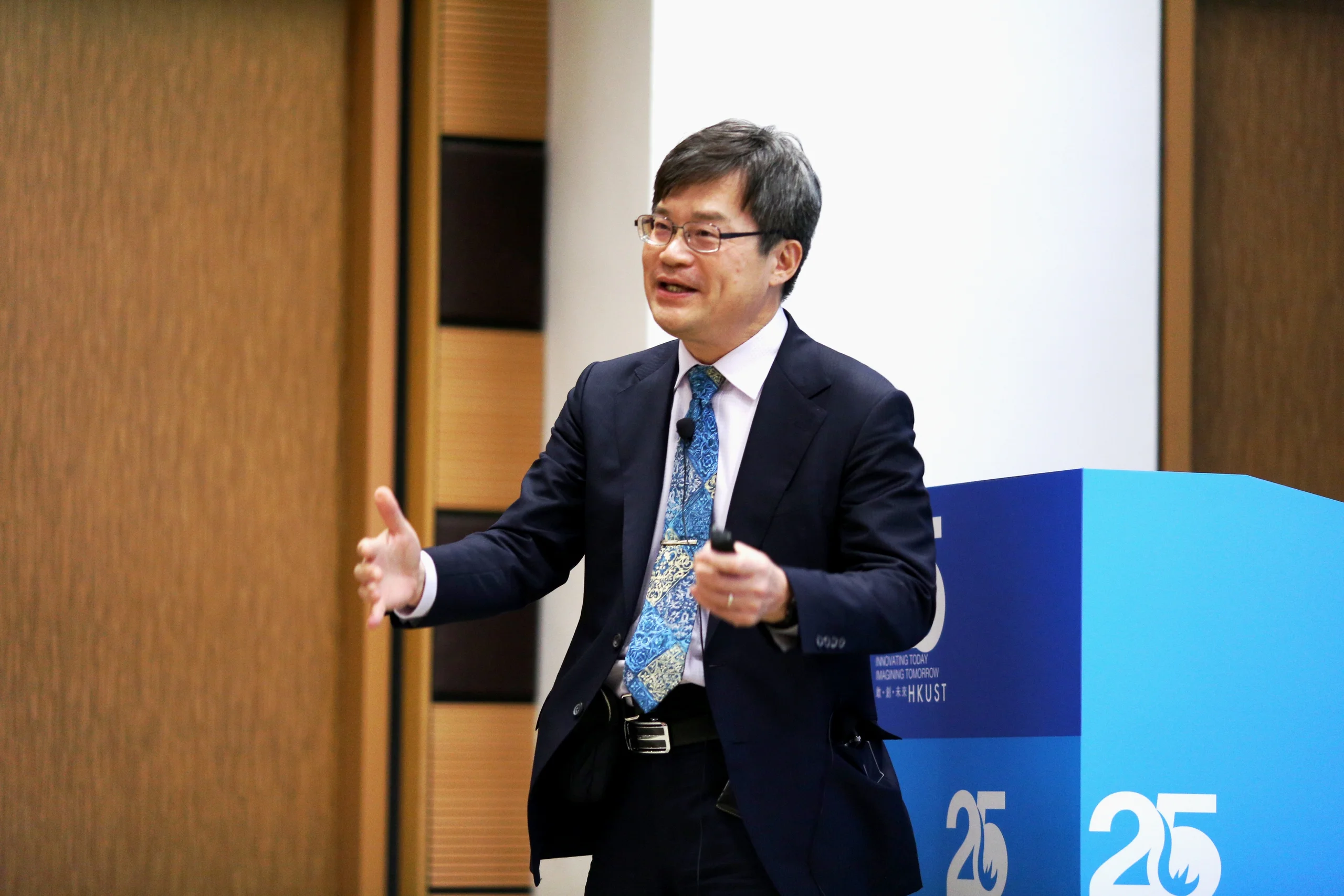
Hiroshi Amano
 Japan
Japanphysicist•university teacher•engineer
Also known as: Amano Hiroshi, 天野浩
Birthday
September 11, 1960
Birth Sign
Virgo
Birthplace
Hamamatsu, Shizuoka Prefecture, Japan
Age
66 years old
About
Hiroshi Amano is a Japanese physicist and materials scientist best known for his pioneering work in the development of efficient blue light-emitting diodes. Born in Hamamatsu, he currently serves as a Distinguished Professor at Nagoya University where he continues to lead research in optoelectronics. His career is defined by the successful creation of high-brightness blue LEDs using gallium nitride, a breakthrough that fundamentally transformed global lighting technology and enabled the modern era of energy-efficient white light sources.
As of 2026, Amano remains an active figure in the scientific community, mentoring students and exploring advanced applications for semiconductor materials. His work extends beyond standard illumination into areas like wireless power transmission and the study of two-dimensional superlattices. The impact of his research is visible in nearly every electronic device manufactured today, from smartphone screens to residential LED bulbs, marking him as one of the most influential engineers of his generation.
Early Life & Background
Hiroshi Amano was born on September 11, 1960, in Hamamatsu, a city in Shizuoka Prefecture with a long history of manufacturing optical and electronic devices. This industrial environment played a significant role in shaping his early interests. As a child, Amano displayed a natural curiosity about how things worked, often taking apart household electronics to understand their inner mechanisms. He spent hours experimenting with simple circuits and components, laying the groundwork for a future career in engineering.
He pursued his undergraduate studies at Gifu University, graduating in 1982 with a degree in electrical engineering. During this time, he focused heavily on semiconductor physics and the properties of various materials used in electronic devices. After completing his bachelor's degree, Amano remained at Gifu University to pursue his doctorate, earning his Ph.D. in Engineering in 1989. His doctoral research began to focus on the challenges of creating light-emitting diodes, specifically investigating the limitations of existing materials in producing blue light.
Following his graduation, Amano briefly worked as a researcher before joining Nagoya University in 1992 as an assistant professor. It was here that he found the ideal environment to tackle the "blue LED problem." Under the mentorship of Isamu Akasaki, Amano dedicated himself to solving the technical hurdles that had prevented scientists from creating efficient blue light sources. The decades-long struggle involved overcoming defects in gallium nitride crystals and finding a reliable method to create p-type layers, a process that many in the field believed was impossible.
Career Growth
Amano's career reached its zenith in the mid-1990s when he achieved a critical breakthrough alongside Isamu Akasaki. In 1993 and 1994, they successfully developed a method to grow high-quality p-type gallium nitride layers using low-energy electron beam irradiation. This innovation solved the final missing piece required to build a functional blue LED. By 1996, the team demonstrated the first high-brightness blue LED using a double-heterostructure method based on gallium nitride. This invention allowed for the combination of red, green, and blue light to produce pure white light, effectively ending the dominance of incandescent bulbs.
The significance of this achievement was recognized globally in 2014 when Amano shared the Nobel Prize in Physics with Isamu Akasaki and Shuji Nakamura. The committee cited their invention of efficient blue LEDs which enabled bright and energy-saving white light sources. Following this accolade, Amano was appointed as a full professor at Nagoya University, solidifying his leadership in the field of optoelectronics. He has since continued to expand the application of his research beyond lighting.
In January 2018, Amano led a team that successfully demonstrated wireless power transmission over several meters using gallium nitride technology. This marked a new chapter in his career, applying his expertise in semiconductors to power delivery systems. More recently, in June 2024, his team published groundbreaking research in Nature regarding the observation of 2D-magnesium-intercalated gallium nitride superlattices. These advancements continue to push the boundaries of what is possible with semiconductor materials, ensuring his legacy remains relevant in cutting-edge physics.
Career Timeline
Public Image & Style
In the media, Hiroshi Amano is portrayed as a humble, dedicated, and brilliant scientist. He is often described as soft-spoken and modest, contrasting sharply with the flamboyant image of some entertainers. His public persona is one of intellectual rigor and quiet determination. He is viewed as a national hero in Japan and a respected elder statesman in the global scientific community. Amano rarely seeks the spotlight, preferring to let his research speak for itself. His demeanor reflects the patience required for decades of laboratory work and the humility of a man who knows the vastness of what remains unknown.
Fame & Fandom (iFAMOUS Rankings)
Hiroshi Amano exists outside the conventional architecture of celebrity fandoms. As a distinguished materials scientist and Nobel laureate, his public presence is defined by academic rigor rather than the ritualistic adulation found in pop culture or sports. There is no formal name for any collective following, nor are there organized fan campaigns, birthday billboards, or social media movements dedicated to his person. His audience consists primarily of researchers, students, and engineers who engage with his work through publications and lectures rather than through the cultural practices typical of idol worship. The concept of a fandom does not apply here; his legacy is measured in lumens and scientific citations rather than merchandise sales or concert attendance. Regarding his standing in the global consciousness, iFANN has conducted a comprehensive evaluation of his profile using its proprietary Fame Engine. Hiroshi Amano is currently evaluated as having no placement within the published Global Top 1,000 rankings. He does not hold a position on any Top-100 scope list at this time. While his contributions to semiconductor technology have reshaped modern lighting and display industries, these achievements have not translated into a quantifiable rank within the current iFANN hierarchy. The data reflects a status where his fame remains specialized and deeply rooted in scientific communities rather than broad consumer recognition. This absence from the ranked lists indicates that while his impact is profound, it operates on a different axis of influence compared to figures who dominate global search trends and media consumption metrics.
Interesting Facts and Legends
Hiroshi Amano's interest in blue light was sparked by a specific moment in his childhood. He saw a prototype blue LED that was dim and inefficient, which motivated him to spend decades trying to make it bright enough for practical use. Despite the intense competition in the semiconductor industry, particularly between his group and Shuji Nakamura's team at Nichia Chemical, Amano has consistently emphasized the collective effort required for the discovery. He maintains a respectful relationship with his fellow laureates despite later legal disputes regarding patent rights.
His birthplace, Hamamatsu, is home to Hamamatsu Photonics, a major manufacturer of optical devices. This regional ecosystem likely provided early exposure to the technology that would define his career. Unlike many public figures, Amano rarely discusses his private life or appears in media outside of scientific contexts. His digital footprint is primarily academic, with over 67,000 citations on Google Scholar reflecting the widespread influence of his papers among researchers worldwide.
Notable Quotes
“We wanted to make a blue LED that could be used for general lighting. It was a very difficult task, but we never gave up.”
“The invention of the blue LED is just the beginning. There are still many things we can do with gallium nitride.”
Family & Personal Life
Hiroshi Amano keeps his personal life strictly out of the public eye. There are no publicly documented romantic relationships, marriages, engagements, or divorces associated with him in credible sources. No spouse or children have been officially confirmed by the Nobel Foundation, university records, or major biographical outlets. He appears to be single or simply chooses not to disclose any family status. His public identity is almost exclusively tied to his professional achievements and his role as a mentor within the scientific community at Nagoya University.
Notable Connections
Isamu Akasaki, Shuji Nakamura, Akira Yoshino.
Relationships & Dating History
Hiroshi Amano maintains a notably private personal life, consistent with his demeanor as a serious academic. Unlike many public figures, he rarely discusses his private affairs in interviews or media appearances. There are no publicly documented romantic relationships, marriages, engagements, or divorces associated with him in credible sources. No spouse or children have been officially confirmed by the Nobel Foundation, university records, or major biographical outlets. As of 2026, there is no information indicating that Amano is currently dating, engaged, or married. He appears to be single or strictly private regarding his relationship status. Consequently, there are no reported kids or family members mentioned in public records related to romantic partnerships.
Salary, Net Worth In 2026
$3 Million
iFANN Editorial Team estimate
Specific net worth figures for academic researchers like Hiroshi Amano are rarely disclosed in the same manner as celebrities. There is no public data from celebrity net worth sites or financial outlets providing a specific dollar amount for his 2026 net worth. His wealth is derived primarily from his academic salary as a distinguished professor at Nagoya University, the Nobel Prize money which he shares with Akasaki and Nakamura, and fees for speaking engagements and advisory roles. Estimates suggest a net worth in the range of $2 million to $5 million USD, primarily held in assets accumulated over a long career, real estate in Japan, and savings. iFANN currently estimates Amano's net worth at approximately $3 Million.
Awards Won (4)
Hiroshi Amano's accolades reflect his immense contribution to science. He won the Nobel Prize in Physics in 2014, shared with Isamu Akasaki and Shuji Nakamura. He also received the Kyoto Prize in Basic Sciences in 2014 and the IEEE Edison Medal in 2016. Other honors include the Japan Academy Prize in 2015 and the Order of Culture, one of Japan's highest honors.
2014 · Physics
Invention of efficient blue light-emitting diodes
2014 · Basic Sciences
Lifetime achievements in semiconductors
Known For
Blue Light-Emitting Diode
1996 · Co-Inventor
Nobel Prize in Physics
2014 · Laureate
Keywords
Sources
Quick Facts
- Profession
- physicist, university teacher, engineer
- Born
- September 11, 1960
- Birthplace
- Hamamatsu, Shizuoka Prefecture, Japan
- Gender
- Male
- Birth Sign
- Virgo
Personal Details
- Full Name
- Hiroshi Amano
- Children
- Education
- Gifu University (B.E. 1982, Ph.D. 1989)
Frequently Asked Questions
What did Hiroshi Amano invent?
How old is Hiroshi Amano in 2026?
Did Hiroshi Amano win a Nobel Prize?
Where does Hiroshi Amano work?
Is Hiroshi Amano married?

Join the community
fans discussing