 Japan
JapanAbout
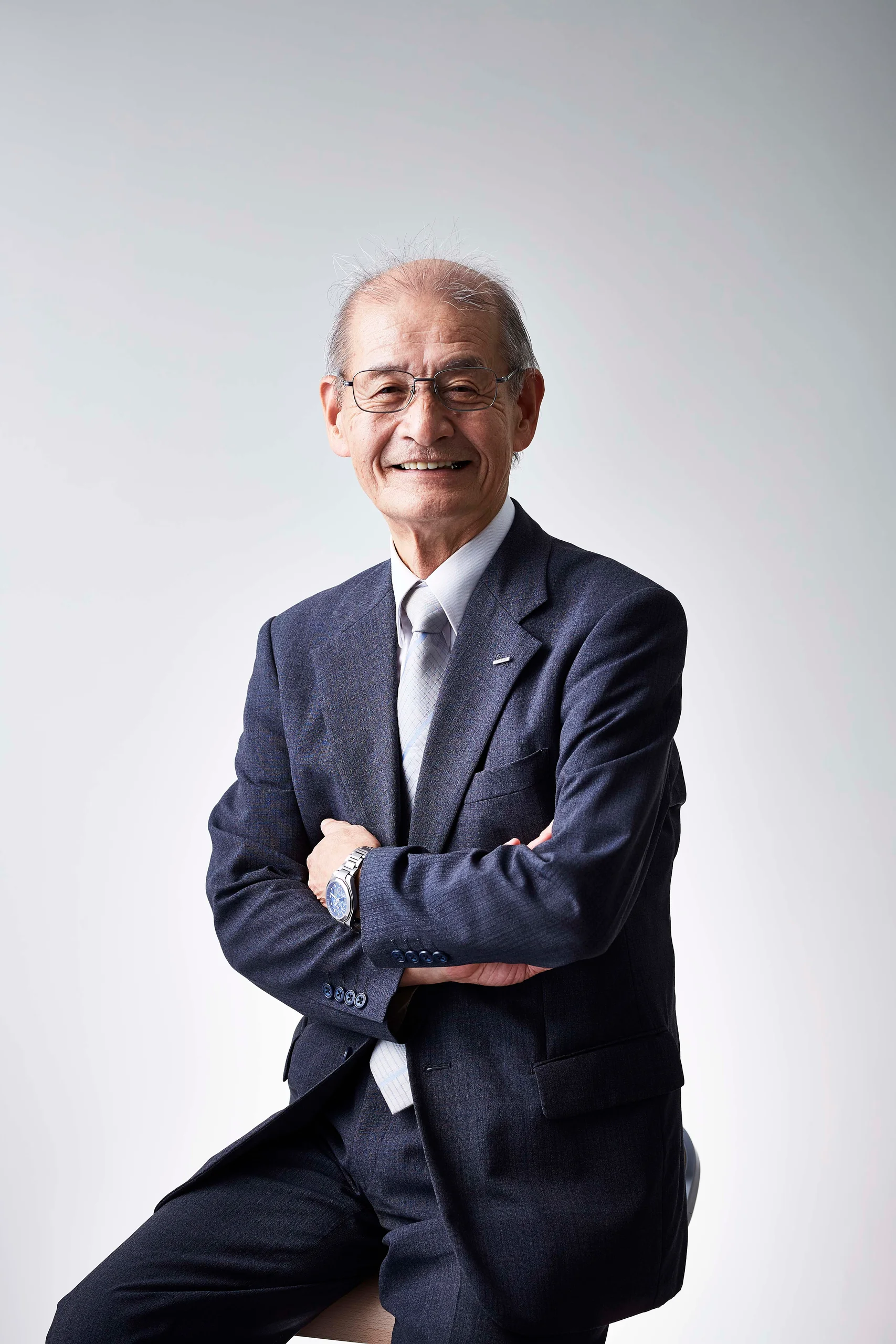
Akira Yoshino is a Japanese chemist and engineer whose pioneering research fundamentally transformed modern technology through the development of the lithium-ion battery. Born in Suita, Japan, he spent his career at Asahi Kasei Corporation where he created the first safe, commercially viable prototype that replaced unstable metallic lithium with carbonaceous materials. His work laid the foundation for the portable electronics revolution, enabling devices like smartphones, laptops, and electric vehicles to function reliably.
Today, Yoshino continues his contributions to science as a professor at Meijo University and an honorary fellow at Asahi Kasei. He remains active in scientific discourse, delivering lectures on sustainable energy and serving as president of the Lithium Ion Battery Technology and Evaluation Association. His legacy is defined by the quiet but pervasive impact of his invention, which powers nearly five billion devices worldwide.
Early Life & Background
Akira Yoshino was born on January 30, 1948, in Suita, Osaka Prefecture, Japan. His interest in chemistry began early during the fourth grade when a teacher recommended books about chemical reactions, sparking a lifelong passion for the subject. This early curiosity guided his academic journey toward Kyoto University, where he pursued studies in engineering and eventually earned his doctorate. After completing his education, he joined the Asahi Kasei Corporation in 1972, beginning a decades-long tenure within the company's research division.
For many years, Yoshino worked quietly behind the scenes focusing on rechargeable batteries. At the time, existing lithium batteries developed by M. Stanley Whittingham and John B. Goodenough were prone to instability and fire due to their use of metallic lithium. Yoshino recognized the need for a safer alternative that could be recharged repeatedly without risking explosion. Beginning in 1981, he dedicated his efforts to finding a solution that would make the technology practical for consumer electronics. By 1983, he had successfully fabricated a prototype using a carbon anode instead of metallic lithium, marking the critical turning point before his global recognition.
Career Growth
The breakthrough came in 1983 when Yoshino fabricated the first prototype of a lithium-ion battery using a carbonaceous material for the anode combined with a lithium cobalt oxide cathode. This innovation eliminated the risk of explosion during charging and allowed for repeated recharging, making the technology suitable for mass production. Sony commercialized the first portable lithium-ion battery based on his design in 1991, launching the era of mobile computing and communication.
Yoshino continued to refine this design throughout the late 1980s and 1990s, ensuring the battery could power everything from camcorders to mobile phones. His work paved the way for the mobile revolution, powering smartphones, laptops, and eventually electric vehicles and renewable energy storage systems. In 2018, he received the Japan Prize for his contributions to battery technology. The culmination of his life's work arrived in 2019 when he was awarded the Nobel Prize in Chemistry, sharing the honor equally with John B. Goodenough and M. Stanley Whittingham. Even today, he serves as a professor at Meijo University and president of the Lithium Ion Battery Technology and Evaluation Association, continuing to influence the field of energy storage.
Career Timeline
Public Image & Style
Yoshino is known for his modest demeanor and unwavering focus on science rather than public image. He rarely engages with media outside of formal interviews related to his research or awards. His public presence is characterized by humility; following his Nobel win, he emphasized that the achievement belonged to the entire scientific community rather than himself. He avoids the trappings of celebrity culture, preferring to let his work speak for itself. His reputation is one of a quiet genius whose contributions underpin the global digital economy without seeking personal glory.
Fame & Fandom
The iFANN Global Fame Engine has evaluated Akira Yoshino, yet he currently holds no placement within the published rankings of the Global Top 1,000 or any Top-100 scope list. This absence of a numeric rank reflects a unique category of fame where global reliance on infrastructure supersedes traditional celebrity metrics. While he does not appear in lists tracking pop culture dominance or entertainment consumption, the reach of his work is absolute; nearly five billion smartphones and electric vehicles operate using the lithium-ion battery he made commercially viable. His recognition comes through the highest honors in science rather than public adoration. Interactions between Yoshino and the public remain strictly professional and academic, with recent engagements including high-level lectures on the future of society at institutions like the University of Toronto. There is no organized fanbase, nor is there a collective moniker for those who revere his contributions. Unlike entertainers who inspire birthday billboards or charity drives, Yoshino's legacy is defined by the scientific community and the silent, continuous operation of the devices that power the modern world.
Interesting Facts and Legends
In November 2025, Akira Yoshino delivered a notable lecture titled "The Future Society Made Possible by Lithium-ion Batteries" at the University of Toronto, highlighting his continued influence on scientific discourse. He has often stated that he is just a small cog in the wheel of science, emphasizing that the achievement belonged to the entire team and the broader scientific community. Despite his monumental contribution, he maintains a notably private existence with no publicly documented romantic relationships or children. His most significant cultural impact is the silent operation of the devices that power modern life, with nearly five billion devices operating on his technology. Unlike entertainers, he has no organized fanbase or formal fandom name, as his fame is functional rather than celebrity-driven.
Notable Quotes
“I am just a small cog in the wheel of science.”
“The lithium-ion battery is not just a product; it is a tool for a sustainable society.”
Family & Personal Life
Akira Yoshino maintains a notably private existence regarding his personal life. There are no publicly documented accounts of spouses, partners, or offspring associated with him. Sources consistently describe his interactions as strictly professional and academic, with no evidence of a traditional family structure being part of his public narrative. He lives a solitary, dedicated life focused entirely on his research and teaching responsibilities at Meijo University and Asahi Kasei Corporation. His home life remains out of the spotlight, reflecting the modest demeanor of a man who prioritized science over public attention.
Notable Connections
Relationships & Dating History
Akira Yoshino maintains a notably private existence regarding his personal life. There are no publicly documented accounts of spouses, partners, or offspring associated with him. Sources consistently describe his interactions as strictly professional and academic, with no evidence of a traditional family structure being part of his public narrative. He lives a solitary, dedicated life focused entirely on his research and teaching responsibilities at Meijo University and Asahi Kasei Corporation. His home life remains out of the spotlight, reflecting the modest demeanor of a man who prioritized science over public attention. As of 2026, his relationship status remains unknown due to his deliberate privacy.
Salary, Net Worth In 2026
$5 Million
iFANN Editorial Team estimate
Akira Yoshino's financial status is not publicly disclosed in the same manner as entertainment celebrities, as his wealth stems primarily from his long-term employment at Asahi Kasei Corporation, academic stipends, and the non-monetary prestige of his awards. The Nobel Prize comes with a monetary award of approximately $1 million USD shared among laureates, but specific financial details regarding his total assets, real estate holdings, or investment portfolios have not been released to the public. Estimates suggest his wealth is substantial due to his senior executive roles and consulting positions, but exact figures are unavailable. Research by the iFANN Editorial Team puts his fortune at around $5 million, derived from his corporate salary, academic income, and prize money accumulated over his distinguished career.
Awards Won (2)
Akira Yoshino has received numerous prestigious accolades for his groundbreaking work in battery technology. Most notably, he was awarded the Nobel Prize in Chemistry in 2019, sharing the honor with John B. Goodenough and M. Stanley Whittingham. Prior to this, he received the Japan Prize in 2018 for his contributions to the field. These awards recognize his pivotal role in developing the lithium-ion battery, which has become essential to modern technology.
2019 · Chemistry
Development of the lithium-ion battery
2018 · Science and Technology
Contributions to battery technology
Known For
Lithium-ion Battery
1983 · Inventor
Nobel Prize in Chemistry
2019 · Laureate
Keywords
Sources
Quick Facts
- Profession
- chemist, engineer, inventor
- Born
- January 30, 1948
- Birthplace
- Suita, Osaka Prefecture, Japan
- Gender
- Male
- Birth Sign
- Sagittarius
Personal Details
- Full Name
- Akira Yoshino
- Children
- Education
- Kyoto University, PhD in Engineering
Frequently Asked Questions
What did Akira Yoshino invent?
When was Akira Yoshino born?
Did Akira Yoshino win a Nobel Prize?
Is Akira Yoshino married?
How much is Akira Yoshino's net worth?
Similar People
Join the community
fans discussing