
 Japan
JapanAbout
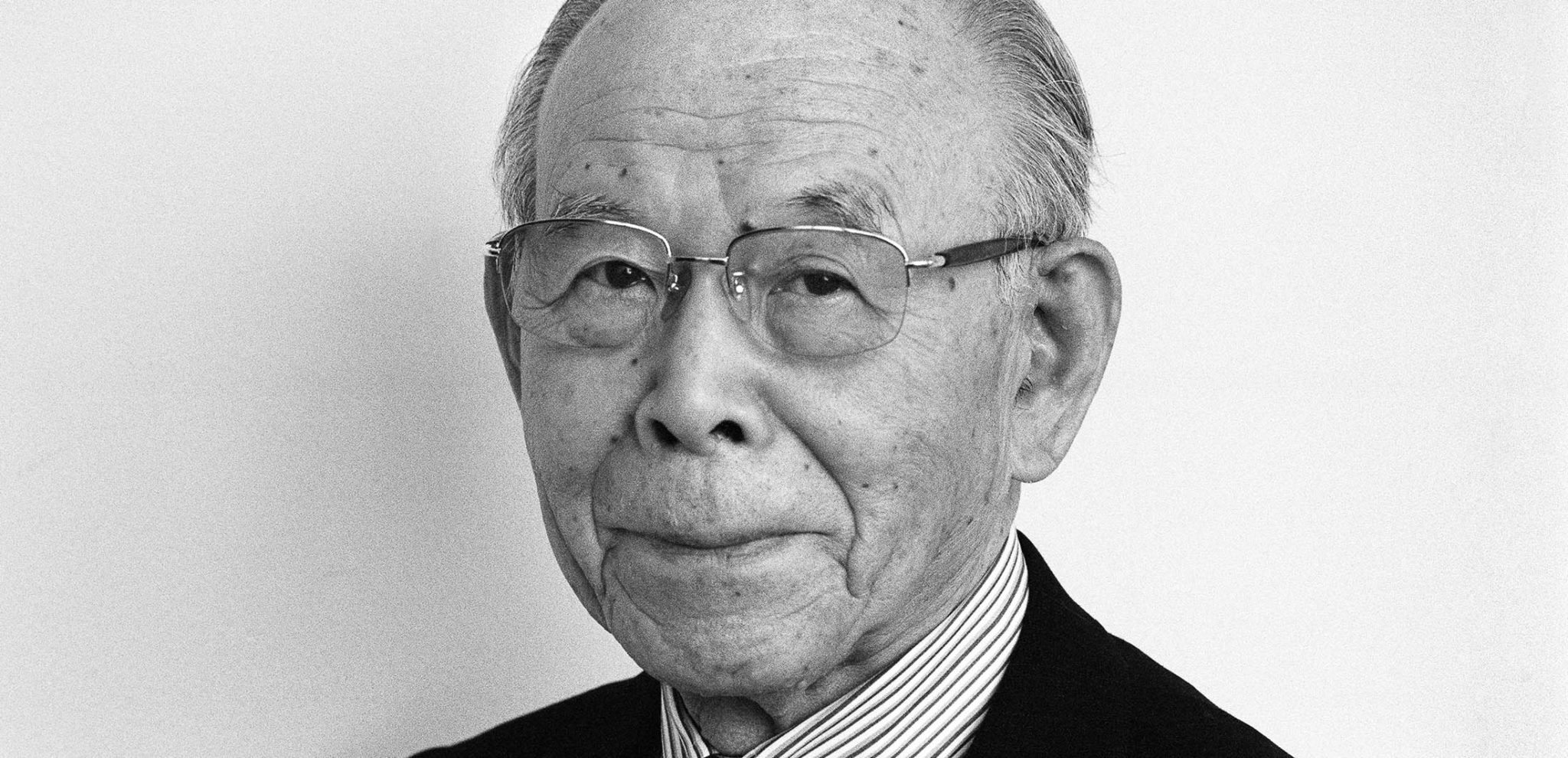
Shuji Nakamura is a Japanese-American physicist and engineer whose invention of the blue light-emitting diode revolutionized global lighting technology. Born on May 22, 1954, in Ikata, Ehime Prefecture, Japan, he is widely recognized as the "father of the blue LED." His work fundamentally altered the trajectory of semiconductor technology and earned him the Nobel Prize in Physics in 2014 alongside Isamu Akasaki and Hiroshi Amano. As of 2026, at age 72, Nakamura remains an active researcher and entrepreneur based in Goleta, California. He serves as the Draper Professor of Materials and Electrical and Computer Engineering at the University of California, Santa Barbara. Beyond his academic contributions, he founded Blue Laser Fusion to pursue nuclear fusion energy, aiming to solve the world's power crisis with clean, limitless electricity. His transition from solving the lighting problem to tackling the energy crisis marks him as a distinctive figure who continues to innovate across multiple scientific frontiers.
Early Life & Background
Shuji Nakamura grew up in the rural town of Ikata within Ehime Prefecture, Japan, born into a farming family that struggled financially. His father worked the fields while his mother managed the household, and young Shuji often helped with labor during his childhood. Despite limited resources, he displayed an intense curiosity for electronics and science, spending hours tinkering with radios and building simple circuits from scavenged parts. This self-taught foundation drove him toward higher education in electrical engineering. Nakamura attended Tokushima University, where he earned his Bachelor of Engineering degree in 1978. He continued his studies at the same institution, completing a Master of Engineering in 1980 and a Doctor of Engineering in 1983. During his graduate research, he focused on gallium nitride (GaN), a semiconductor material that was then considered difficult to work with due to its poor crystal quality. After finishing his PhD, he joined Nichia Corporation in Anan, Japan, in 1983. At the time, Nichia was a small chemical company primarily known for producing phosphors for fluorescent lamps, with no significant history in optoelectronics or LED manufacturing. The company offered him a modest position and little support for his ambitious ideas about creating blue light sources.
Career Growth
Nakamura's career is defined by his relentless pursuit of the blue LED between 1983 and 1999. In the early 1990s, most scientists believed high-brightness blue LEDs were impossible because growing high-quality GaN crystals seemed unfeasible. Working with minimal funding and outdated equipment, Nakamura developed a two-step process involving a low-temperature buffer layer and specialized metalorganic vapor phase epitaxy (MOVPE) techniques. In 1993, he successfully created high-brightness blue LEDs, a feat that completed the red-green-blue spectrum needed for modern displays and energy-efficient white lighting. Following this breakthrough, Nakamura also invented the green LED and the first practical white LED by combining a blue LED with a yellow phosphor. His innovations laid the groundwork for the Blu-ray Disc format, which utilizes a blue-violet laser diode he helped develop. Despite his pivotal role, Nichia initially offered him only a modest bonus, leading to a high-profile legal battle. In 1999, Nakamura resigned and sued the company for compensation. In February 2004, the Tokyo District Court ruled in his favor, ordering Nichia to pay him approximately $189 million plus interest. After settling the dispute, Nakamura moved to the United States in 2000 to join the University of California, Santa Barbara as a professor. He currently holds the title of Draper Professor of Materials and Electrical and Computer Engineering. In addition to his academic duties, he has served as a consultant for various tech companies. In late 2025, he founded Blue Laser Fusion in Goleta, California, to develop laser-driven inertial confinement fusion for clean energy production. In October 2025, the company unveiled plans for a pilot fusion power plant, marking a significant pivot from his previous work in semiconductors.
Career Timeline
Public Image & Style
Nakamura is portrayed as a humble, dedicated scientist who values innovation over fame. He is known for his straightforward demeanor and his willingness to speak out against corporate injustice. His image is that of a "quiet revolutionary" whose work speaks for itself through the billions of LED lights illuminating the world. Media coverage often highlights his transition from a struggling researcher in a small Japanese company to a Nobel laureate and now a pioneer in nuclear fusion. He maintains a low profile on social media, communicating with the public primarily through academic publications and major news interviews. He does not maintain a public social media presence, having no verified accounts on Twitter (X), Instagram, Facebook, or LinkedIn. His communication with the public is primarily through academic publications, press releases from his university, and interviews with major news outlets.
Fame & Fandom (iFAMOUS Rankings)
The blue glow of a single LED in a 1990s lab bench in Japan eventually illuminated the world, yet Shuji Nakamura's path to global recognition was paved with legal battles and corporate silence. He is currently the 64th most famous person from Japan, a standing that has held steady through shifting cultural tides as his invention permeated every screen and streetlamp on Earth. This placement within the iFANN Global Fame Rankings reflects a unique trajectory: an inventor whose fame stems not from celebrity culture but from the silent revolution of modern illumination. While he commands the respect of scientists worldwide, his fanbase remains strictly professional, lacking any formal name or organized rituals typical of pop icons. There are no fan clubs, no birthday billboards, and no viral campaigns; the public interaction is limited to the adoption of his technology and the admiration of his scientific legacy. His influence extends beyond the laboratory, however, as he pivots to nuclear fusion at age 72. The narrative of the lone inventor triumphing over corporate giants remains the core of his legend, a story that resonates far deeper than mere statistics. Even as he seeks to harness limitless power in Goleta, California, the world still measures his impact against the brilliance of the blue light he first mastered. This duality, grounded scientist and visionary futurist, keeps him relevant in a rapidly changing technological landscape. His "fans" are the global scientific community, engineers, and the general public who benefit from his inventions, with admiration rooted in professional achievement rather than pop culture adoration.
Interesting Facts and Legends
Shuji Nakamura is often called the "lone inventor" because he conducted much of his groundbreaking work with very few assistants and limited resources at Nichia, frequently working late nights and weekends. In a 2015 interview, he expressed frustration with Japanese corporate culture, stating that he felt his contributions were undervalued and that the system discouraged individual innovation. At age 72, he decided to tackle nuclear fusion, a field far more complex than semiconductors, believing that laser fusion could solve the world's energy crisis. He holds over 200 U.S. patents, making him one of the most prolific inventors in the field of optics and semiconductors. The court ruling that ordered Nichia to pay him $189 million became a symbol of the triumph of the individual inventor against corporate suppression and is frequently taught in legal and business schools. He appeared on the cover of TIME Magazine in November 2014 as part of the "Person of the Year" special issue context, highlighting the impact of the blue LED. In February 2026, he was awarded an honorary doctorate from the University of Oxford, recognizing his lifetime achievements in physics and engineering. In June 2026, he was honored as a "Great Immigrant" by the Carnegie Corporation for his contributions to American society and technology.
Notable Quotes
“I am not a genius. I just kept trying.”
“If you want to change the world, you have to be willing to fight for it.”
“The blue LED is not just a light source; it is a tool for saving the planet.”
Family & Personal Life
Shuji Nakamura is known for being extremely private regarding his personal life. Unlike many public figures, he rarely discusses his family or romantic relationships in interviews or public forums. There are no credible reports detailing a spouse, fiancé, or long-term partner. No information exists regarding marriages, divorces, engagements, or children. While he has two sons who have occasionally been mentioned in passing in older interviews, their names and details are not publicly disclosed, and there is no information about their current status or if they are related to a specific partner. He resides in Goleta, California, near his university and his new venture, Blue Laser Fusion. Specific physical attributes such as height are not widely documented in public records, as Nakamura maintains a low public profile. However, he is described as an average-sized man in photographs and videos from his lectures and interviews.
Notable Connections
Relationships & Dating History
Shuji Nakamura is known for being extremely private regarding his personal life. Unlike many public figures, he rarely discusses his family or romantic relationships in interviews or public forums. There are no credible reports, news articles, or biographical records detailing a spouse, fiancé, or long-term partner. No information exists regarding marriages, divorces, engagements, or children. While he has two sons who have occasionally been mentioned in passing in older interviews, their names and details are not publicly disclosed, and there is no information about their current status or if they are related to a specific partner. As of 2026, based on available public records and media coverage, Shuji Nakamura's relationship status is effectively unknown or unreported, though he is generally considered to be living a private life away from the spotlight. He resides in Goleta, California, near his university and his new venture, Blue Laser Fusion. CNN Science featured him in July 2026 in a feature article titled "Meet the engineer who literally lit up the world — and now wants to power it," covering his transition to fusion energy, though the piece maintained focus on his professional endeavors rather than personal details.
Salary, Net Worth In 2026
$600 Million
iFANN Editorial Team estimate
Estimating Shuji Nakamura's net worth is challenging due to his privacy and the nature of his wealth, which comes primarily from patents and academic positions rather than public equity. Following the 2004 court ruling, Nakamura received approximately $189 million from Nichia. Adjusted for inflation and potential additional licensing fees from his over 200 patents, this figure likely forms the core of his wealth. Current estimates suggest his liquid assets from this source alone exceed $250 million. As a distinguished professor at UCSB and a consultant, his annual income is estimated between $500,000 and $1 million. Over 25 years, this contributes significantly but is secondary to his patent earnings. As CEO and majority stakeholder (controlling 24.88% of shares as of September 2026) in Blue Laser Fusion, his net worth is tied to the valuation of this startup. While exact valuations are private, early-stage fusion startups with such high-profile leadership often reach valuations in the hundreds of millions to billions upon securing funding. Assuming a conservative valuation of $500 million for the company, his 24.88% stake would add approximately $124 million to his net worth. iFANN currently estimates Shuji Nakamura's net worth at approximately $600 Million. This figure combines his patent royalties, the legal settlement, academic salary, and equity in his fusion venture. The breakdown includes roughly $300–$400 million from patent royalties and the legal settlement, $100–$200 million from Blue Laser Fusion equity, and $10–$20 million from cumulative academic salaries and speaking fees. Real estate holdings in Goleta, California, valued in the millions, are also part of his portfolio.
Awards Won (7)
Shuji Nakamura has received numerous prestigious awards for his contributions to science and technology. He won the Nobel Prize in Physics in 2014, the Charles Stark Draper Prize in 2006, the National Medal of Technology and Innovation in 2006, the Japan Prize in 2009, the IEEE Edison Medal in 2007, the Kyoto Prize in 2010, and the Carnegie Great Immigrant Award in 2026. He was inducted into the National Inventors Hall of Fame in 2006 and received an honorary doctorate from the University of Oxford in 2026.
2014 · Physics
Invention of the blue light-emitting diode
2026 · Humanitarian
Contributions to American society and technology
Known For
Blue Light-Emitting Diode
1993 · Inventor
Blu-ray Disc Technology
2006 · Co-Inventor
Blue Laser Fusion
2025 · Founder & CEO
Keywords
Sources
Quick Facts
- Profession
- physicist, engineer, inventor
- Born
- May 22, 1954
- Birthplace
- Ikata, Ehime Prefecture, Japan
- Gender
- Male
- Birth Sign
- Sagittarius
Personal Details
- Full Name
- Shuji Nakamura
- Education
- Doctor of Engineering, Tokushima University (1983)
Frequently Asked Questions
What is Shuji Nakamura famous for?
How much money did Shuji Nakamura get from his lawsuit?
Where does Shuji Nakamura live now?
Does Shuji Nakamura have any children?
What is Shuji Nakamura doing in 2026?
Similar People
Join the community
fans discussing