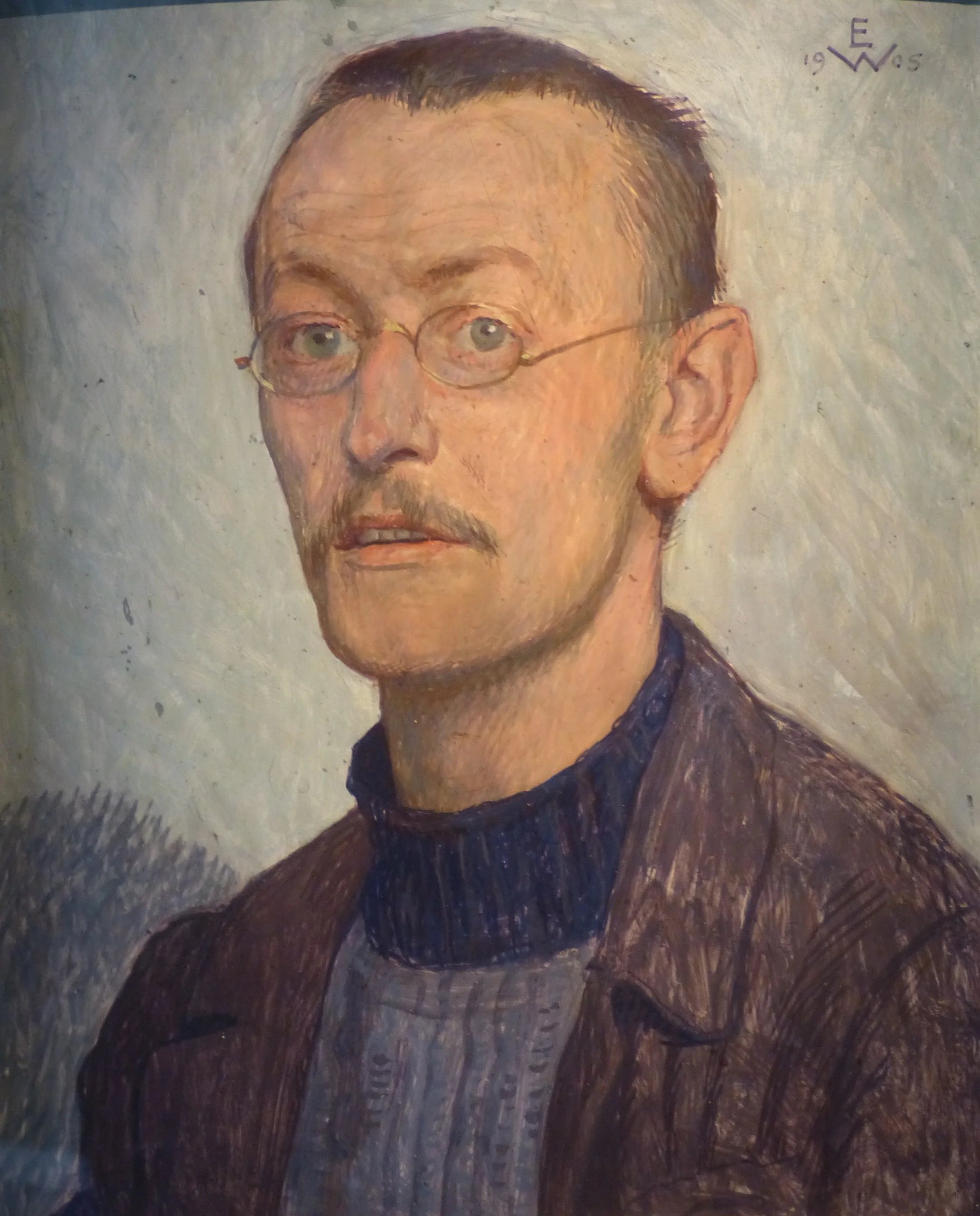
Hermann Hesse
 Germany
Also known as: Hermann Karl Hesse, Emil Sinclair
Birthday
July 2, 1877
Birth Sign
Cancer
Birthplace
Calw, Württemberg, Germany
Age
Died at 85
About
Hermann Hesse was a German-Swiss novelist and poet whose introspective works probe the tension between individual desire and social expectation. He won the Nobel Prize in Literature in 1946 and is best known for Siddhartha, Steppenwolf, and The Glass Bead Game. His writing blends Western psychological insight with Eastern philosophical traditions, and his books have sold tens of millions of copies worldwide.
Though respected in German-speaking Europe in his lifetime, Hesse's international fame exploded after his death, when counterculture readers in the 1960s and 1970s embraced him as a spiritual guide. Today his novels remain in print in dozens of languages, and the Hesse Museum in Montagnola, Switzerland, draws literary pilgrims from around the world.
Early Life & Background
Hesse was born into a Pietist missionary family in Calw, a small town in the Black Forest. His father Johannes, a Baltic German missionary, and his mother Marie, daughter of the Indologist Hermann Gundert, steeped the household in religious devotion. The family library held Eastern texts, and young Hermann absorbed stories of India long before he ever traveled there.
Schooling proved disastrous. At fourteen he entered the Protestant seminary at Maulbronn Abbey, but fled after seven months, unable to stomach the rigid theology. A period of emotional crisis followed, including a stay in a mental institution and several failed school placements. In 1895 he apprenticed as a bookseller in Tübingen, a job that gave him access to vast libraries and fueled his self-education in literature and philosophy. He published his first poetry collections in 1899, and his first novel, Peter Camenzind, appeared in 1904, bringing him enough money to marry and settle as a freelance writer.
Career Growth
After Peter Camenzind put him on the map, Hesse produced a steady stream of novels through the early 1900s, including Beneath the Wheel (1906) and Gertrude (1914). A 1911 trip to India left a deep imprint, though he later admitted his spiritual novels were more about his inner journey than actual Indian philosophy.
World War I triggered a personal crisis. Hesse underwent psychoanalysis with Dr. J.B. Lang, a student of Carl Jung, and the experience shaped Demian (1919), which he published under the pseudonym Emil Sinclair. The novel captured the disillusionment of a generation and won the Fontane Prize, which Hesse had to return when his identity was revealed. Siddhartha followed in 1922, Steppenwolf in 1927, and Narcissus and Goldmund in 1930.
His final major work, The Glass Bead Game, appeared in 1943, after years of work during the Nazi era. In 1946 he received the Nobel Prize in Literature and the Goethe Prize of Frankfurt. He died in 1962, just as his books were about to become counterculture bibles.
Career Timeline
Public Image & Style
Hesse's public image is that of a spiritual seeker, a pacifist, and a critic of modernity. His prose is introspective and philosophical, exploring the duality of human nature and the search for meaning. After his death, he became the patron saint of the counterculture, with Siddhartha and Steppenwolf passed around like sacred texts.
His readers tend to be spiritually curious and introspective. There is no formal fandom name, but the Hesse Museum in Montagnola is a pilgrimage site, and his quotes are endlessly shared on social media. He is often framed as the author who spoke to generations seeking meaning beyond materialism.
Fame & Fandom (iFAMOUS Rankings)
Hermann Hesse remains a towering figure in global literature, his influence stretching far beyond the German-speaking world where he was once merely respected. As of August 2026, the iFANN Global Fame Rankings place him the 27th most famous person in Germany, a standing he has held steady through multiple cycles. This ranking reflects a legacy that transcends his lifetime, anchoring him as a spiritual guide for generations who found solace in his introspective prose. While he died decades ago, his works continue to resonate with a readership that spans continents and cultures, proving that true literary impact endures long after an author's final breath.
Despite this enduring fame, Hesse does not possess a formalized fandom with an official collective name or organized structure comparable to modern pop culture phenomena. His admirers are generally described as readers, scholars, and seekers rather than members of a cohesive subculture. The absence of a specific fan club name is consistent with the reality that he passed away in 1962, long before the era of social media-driven campaigns or digital fan rituals. Yet, his connection to his audience manifests in powerful ways. A viral phenomenon in June 2026 saw the K-pop group BTS drive sales of his novel Demian to the bestseller list in South Korea, demonstrating how modern fan mechanics can resurrect interest in classic literature without the author ever interacting with them. Similarly, the reopening of the "Hermann Hesse Line" railway in February 2026 has become a point of pilgrimage, symbolizing the enduring relevance of his connection to the Black Forest region. These events highlight a unique form of devotion: one driven by the quiet, persistent power of his words to guide individuals through existential crises rather than any dramatic personal exploits or organized worship.
Interesting Facts and Legends
Hermann Hesse was also a prolific watercolor painter, producing hundreds of works, especially during his later years in Montagnola. His paintings remain actively traded on the art market; a 1927 watercolor titled Torello (23. Juli 27) was listed on artnet in 2026. He published Demian under the pseudonym Emil Sinclair, leading critics to initially believe it was the work of a young war veteran. The rock band Steppenwolf took its name from his novel, cementing his link to 1960s counterculture. He became a Swiss citizen in 1923, a decision that angered German nationalists. His maternal grandfather, Hermann Gundert, compiled the first Malayalam dictionary and translated the Bible into Malayalam.
The mythology surrounding Hesse is rooted almost entirely in the profound impact of his literary works rather than personal anecdotes of celebrity behavior. A widely retold story among fans concerns his deep personal struggle with mental health and his time in psychiatric institutions as a teenager, which fueled his exploration of individual identity in works like Demian. Fans often cite this biographical fact as a foundational legend: that the author himself walked the path of spiritual fragmentation he wrote about. Another significant moment in his legacy is the February 2026 reopening of the "Hermann Hesse Line," a regional railway route named after the author after being closed for 43 years. This event has become a modern point of pilgrimage for his admirers, symbolizing the enduring relevance of his connection to the Black Forest region where he was born.
Notable Quotes
“For me, trees have always been the most penetrating preachers.”
“We must become so alone, so utterly alone, that we withdraw into our innermost self. But then our solitude is timeless.”
“Happiness is love, nothing else. He who knows how to love is happy.”
“Wisdom cannot be imparted. Wisdom that a wise man attempts to impart always sounds like foolishness to someone else.”
“If you hate a person, you hate something in him that is part of yourself. What isn't part of ourselves doesn't disturb us.”
Family & Personal Life
Hesse was the second of six children. His father Johannes was born in Estonia to a German-Baltic missionary family, and his mother Marie was the daughter of the renowned Indologist Hermann Gundert. The family's missionary heritage shaped his early exposure to Eastern spirituality.
He had three sons with his first wife, Maria Bernoulli: Bruno (1905–1999), Heiner (1909–2003), and Martin (1911–1968). Martin suffered from mental illness and died in a psychiatric institution. Hesse's third wife, Ninon, an Austrian art historian, managed his household and correspondence until his death in 1962. She died in 1966.
Notable Connections
Hesse's work was deeply influenced by Carl Jung, with whom he corresponded and whose student, Dr. J.B. Lang, analyzed him during the crisis of World War I. He also corresponded with fellow German literary giant Thomas Mann. His third wife, Ninon, an art historian, shaped his later years.
Relationships & Dating History
Hesse married Maria Bernoulli, a photographer from Basel, in 1904. They had three sons, but the marriage deteriorated during World War I, and Maria suffered from mental illness. They separated in 1919 and divorced in 1923. His second marriage, to Swiss singer Ruth Wenger in 1924, was short-lived and unhappy, ending in divorce in 1927.
In 1931 he married Ninon Ausländer, an Austrian art historian who had been an admirer and correspondent for years. She remained with him until his death in 1962, managing his household and correspondence. At the time of his death, Hesse was married to Ninon, who died in 1966.
- MarriedMaria Bernoulli1904 - 1923Had three sons; divorced after her mental illness and separation in 1919.
- MarriedRuth Wenger1924 - 1927Short, unhappy marriage; no children.
- MarriedNinon Hesse1931 - 1962CurrentThird wife; remained together until Hesse's death.
Death & Aftermath
Died
August 9, 1962 (aged 85)
Death Place
Montagnola, Switzerland
Cause of Death
Heart attack (myocardial infarction)
Hermann Hesse, the German-Swiss poet and novelist who won the 1946 Nobel Prize in Literature, died on August 9, 1962, at the age of 85. According to a report from The New York Times published on August 10, 1962, he passed away that day of a heart attack at his home in Montagnola, Switzerland, where he had resided since 1919. The cause of death is consistently reported as a myocardial infarction, and sources note that he had been in poor health for some time before passing.
Standard biographical accounts indicate Hesse was buried in the cemetery of the village of Montagnola near Locarno, Switzerland. Public reaction included tributes from literary institutions and peers, while his legacy has endured through continuous recognition. He received posthumous honors such as the Goethe Prize of Frankfurt in 1946 and the Peace Prize of the German Booksellers in 1955, awards received shortly before his death. His works continue to be published globally with new editions and translations regularly released, and he has been inducted into various literary halls of fame.
The Hermann Hesse Foundation continues to administer his estate to preserve his literary rights and fund cultural initiatives promoting his humanistic values. Recent commemorations include the reopening of the Hermann Hesse Line, a regional rail line between Calw and Weil der Stadt in Germany, which reopened in February 2026 after 43 years of closure to serve as a tribute to his birthplace. His influence remains visible in contemporary media, including quotes featured in international news outlets and artistic adaptations like the 2025 Yale performance of the oratorio Siddhartha, She.
Net Worth (Estate Value)
$50 Million
iFANN Editorial Team estimate
Hesse's estate continues to earn substantial revenue from book royalties. His works remain in print worldwide, and Siddhartha alone sells hundreds of thousands of copies annually. The estate also profits from film adaptations, such as the 1972 movie Siddhartha, and from the sale of his watercolor paintings, which are listed on art platforms like artnet. The Hermann Hesse Foundation and the Hesse Museum in Montagnola manage his legacy, including his former home. Per iFANN's editorial analysis, as of 2026, the estate's value is estimated at around $50 Million, built on decades of steady royalties and licensing deals.
Awards Won (3)
Hesse won the Nobel Prize in Literature in 1946, the Goethe Prize of Frankfurt in the same year, and the Peace Prize of the German Booksellers in 1955. These three honors recognize his literary achievement and his humanitarian, pacifist vision.
1946 · Literature
Lifetime body of work
1946 · Literature
Lifetime body of work
Known For
Siddhartha
1922 · Author
Steppenwolf
1927 · Author
The Glass Bead Game
1943 · Author
Demian
1919 · Author
Narcissus and Goldmund
1930 · Author
Keywords
Sources
Quick Facts
- Profession
- novelist, poet
- Born
- July 2, 1877
- Birthplace
- Calw, Württemberg, Germany
- Died
- August 9, 1962
- Death Place
- Montagnola, Switzerland
- Gender
- Male
- Spouse
- Ninon Hesse
- Birth Sign
- Cancer
- Nationality
- German-Swiss
- Nobel Prize
- 1946, Literature
Personal Details
- Full Name
- Hermann Karl Hesse
- Spouse
- Ninon Hesse
- Children
- Bruno Hesse, Heiner Hesse, Martin Hesse
- Education
- Maulbronn Abbey seminary (left after seven months); self-educated through bookseller apprenticeships
Frequently Asked Questions
How old was Hermann Hesse when he died?
What is Hermann Hesse's net worth in 2026?
Why is Hermann Hesse famous?
Is Hermann Hesse still popular in 2026?
What are Hermann Hesse's most famous books?
Join the community
fans discussing