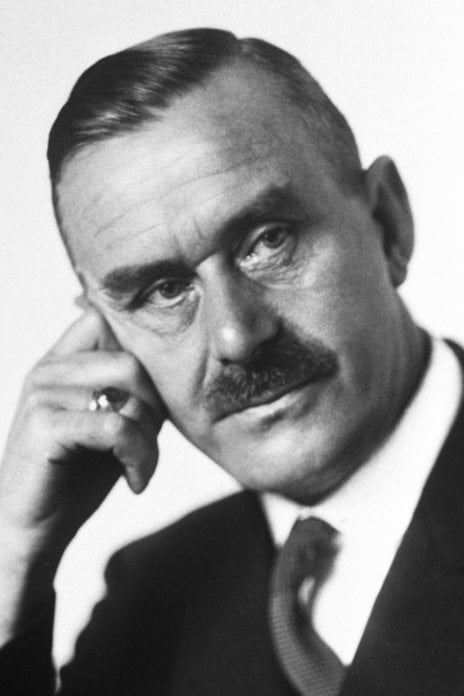
Thomas Mann
 Germany
novelist•essayist•autobiographer
Birthday
+1875-06-06
Birth Sign
Gemini
Birthplace
Lübeck
Age
Died at 80
About
Born in the Hanseatic city of Lübeck in 1875, Thomas Mann became one of the 20th century's most significant German novelists and essayists. His career, spanning over five decades, offered profound insights into the psychology of artists and intellectuals, often through the lens of German culture and history. Mann's work is characterized by its deep symbolism, irony, and intellectual rigor. He received the Nobel Prize in Literature in 1929 for his powerful narratives that examined the human condition with remarkable depth. Mann first gained recognition with his debut novel, Buddenbrooks, published in 1901. This epic portrayal of a wealthy merchant family, inspired in part by his own family background, set the stage for his literary achievements. He continued to explore grand themes in subsequent works, including the acclaimed The Magic Mountain (1924), a philosophical novel set in a Swiss sanatorium. His later major works, such as the tetralogy Joseph and His Brothers (1933–1943) and the complex Doctor Faustus (1947), further solidified his reputation as a master storyteller and thinker. Shorter works like the novella Death in Venice (1912) also showcased his distinctive style and thematic concerns. The rise of Nazism profoundly impacted Mann's life and work. Fleeing Germany in 1933, he spent years in exile, first in Switzerland and then in the United States during World War II, before returning to Switzerland in 1952. His experiences as an expatriate writer, part of the Exilliteratur movement, informed his critical perspective on political and social upheaval. Mann passed away in 1955, leaving behind a rich literary legacy that continues to be studied and admired for its exploration of art, society, and the human spirit.
Fame & Fandom
Thomas Mann never courted a modern fanbase. No crowds lined the streets for his book signings, and no social media campaigns erupted to celebrate his birthday. The man who died in 1955 left behind a legacy of intense academic study rather than organized adoration. His readers are scholars, students, and literary enthusiasts who engage with his work through university syllabi and the Thomas Mann International Association. This group preserves his archives and debates his complex political stances, but they do not form a named tribe or perform shared rituals. There is no equivalent to 'Swifties' or 'Trekkies' for the author of Buddenbrooks. Instead, his fame rests on the enduring weight of his novels and his role as a moral voice during the rise of fascism. While he lacks a living fandom, his global standing remains formidable. He holds a specific place in the iFANN Global Fame Rankings, a system that tracks cultural attention across media coverage and consumption signals worldwide. Thomas Mann is currently the 72nd most famous person in Germany the 72nd most famous person in Germany and ranks as the 62nd most famous person from Germany the 62nd most famous person from Germany. These positions reflect his steady presence in the German cultural consciousness.
Interesting Facts and Legends
Born in the Hanseatic city of Lübeck in 1875, Thomas Mann crafted narratives that dissected the psychology of artists with surgical precision. His debut novel Buddenbrooks launched his career by portraying the decline of a wealthy merchant family with biting irony. A defining moment in his life occurred when he renounced his German citizenship in 1933, refusing to return while Hitler remained in power. He became the conscience of a nation through radio addresses broadcast directly to Germany, warning against the dangers of fascism. His novella Death in Venice remains a cultural touchstone for its unflinching exploration of obsession and mortality. The story of his daughter Erika Mann, an anti-Nazi satirist, adds another layer to his personal history, often dramatized in modern adaptations like the film Fatherland. Scholars frequently cite his ability to hold contradictory ideas as a hallmark of his genius. He was a conservative bourgeois who criticized the bourgeoisie, and a democrat who feared the mob. This art of contradiction defined his public persona and cemented his status as one of the greatest German novelists of the twentieth century.
Death & Aftermath
Died
+1955-08-12 (aged 80)
Death Place
Zurich, Switzerland
Cause of Death
Unknown
Early evening on August 12, 1955, Paul Thomas Mann died at the Cantonal Hospital in Zurich, Switzerland. He had suffered a severe stroke earlier in the year which left him partially paralyzed and required care. His death was attributed to complications arising from these vascular events, specifically a cerebral hemorrhage or thrombosis associated with his prior strokes, though specific medical details regarding an autopsy report were not widely publicized in standard biographical summaries. There are no records of disputed accounts regarding the cause or time of death; it was reported as a natural death due to illness by hospital officials and confirmed by family statements immediately following his passing.
Thomas Mann's death elicited immediate international tributes from peers, institutions, and government officials. Upon his passing, major newspapers worldwide, including The New York Times, published extensive obituaries recognizing him as a modern literary giant and a defender of humanistic values against fascism. While specific details of fan vigils are less documented than for contemporary pop figures, his death marked a significant moment for the German exile community and the broader intellectual world. Institutions such as the Nobel Foundation and various universities acknowledged his contribution to literature. Memorial murals were not erected immediately, but his legacy was cemented through academic dedications and the continued publication of his essays.
Thomas Mann was buried in the Kilchberg cemetery near Zurich, Switzerland, where he had lived in exile since 1933. The funeral was a private affair attended by close family members, including his wife Katia Mann and their children (including Erika Mann and Klaus Mann), as well as a small circle of friends and fellow exiles. Due to the ongoing political climate and the sensitivity surrounding his status as a German exile, the ceremony was low-key and devoid of large public gatherings. No notable public performances were held during the service itself, though his literary estate ensured his works remained central to German cultural discourse.
Awards & Accolades
Keywords
Quick Facts
- Profession
- novelist, essayist, autobiographer
- Born
- +1875-06-06
- Birthplace
- Lübeck
- Died
- +1955-08-12
- Death Place
- Zurich
- Gender
- Male
- Spouse
- Katia Mann
- Birth Sign
- Gemini
Personal Details
- Spouse
- Katia Mann
Join the community
fans discussing