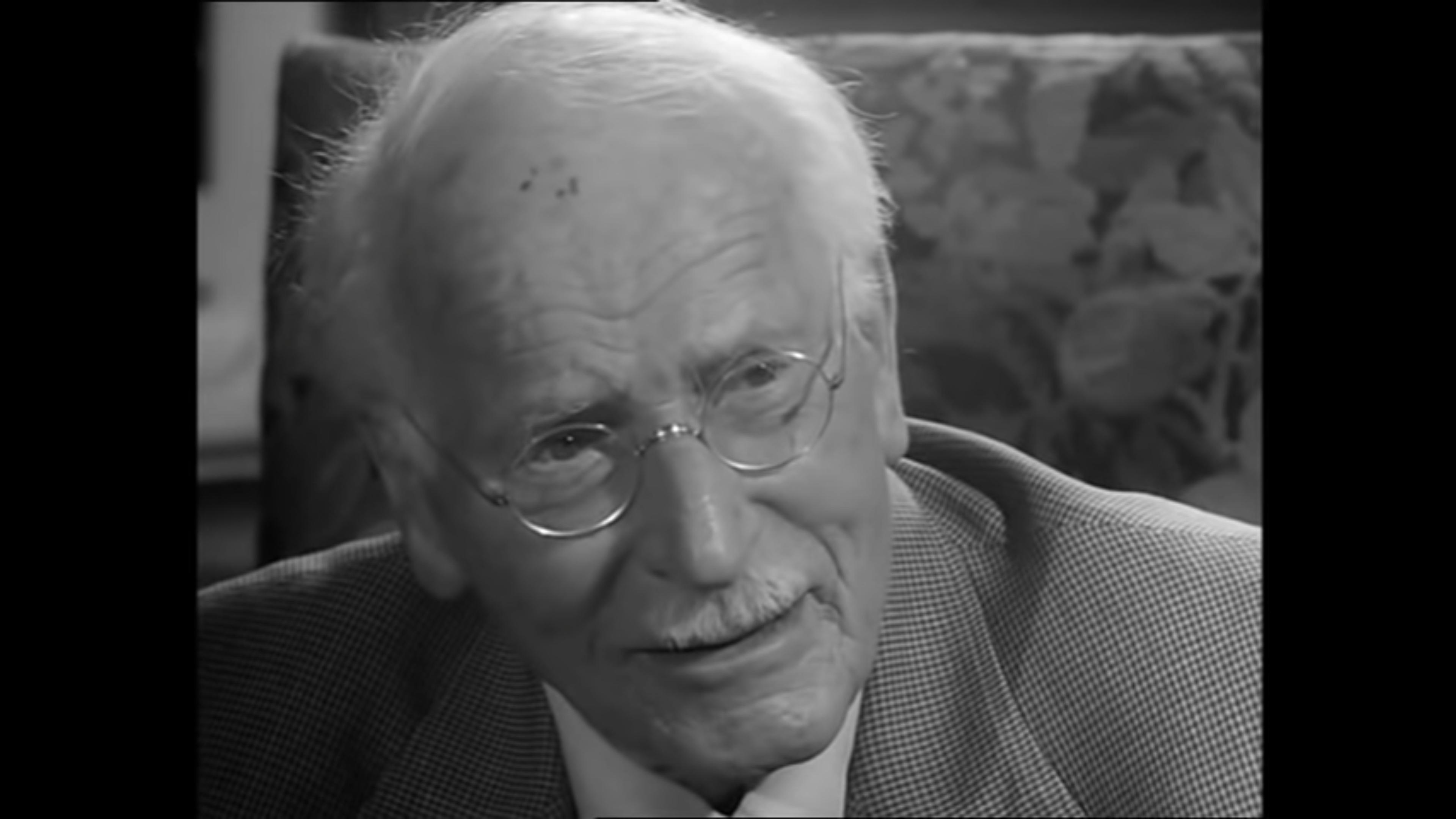
Carl Jung
 Switzerland
psychiatrist•psychotherapist•psychologist
Also known as: C.G. Jung, Carl Gustav Jung
Birthday
July 26, 1875
Birth Sign
Sagittarius
Birthplace
Kesswil, Switzerland
Age
Died at 85
About
Carl Gustav Jung was a Swiss psychiatrist, psychotherapist, and psychologist who founded the school of analytical psychology. Born in Kesswil in 1875, he became one of the most influential thinkers of the 20th century, bridging clinical psychiatry with spiritual philosophy. His career began at the Burghölzli Hospital in Zurich, where he conducted groundbreaking research into psychological complexes using word association tests. Jung is best known for introducing concepts like the collective unconscious, archetypes, and the process of individuation.
Jung initially formed a close professional and personal bond with Sigmund Freud, who viewed him as his heir apparent. Their partnership ended in 1913 due to fundamental theoretical differences regarding the nature of the unconscious and the role of sexuality. Following this split, Jung developed his own comprehensive system of psychology. He wrote over twenty books during his lifetime, including Psychological Types and Memories, Dreams, Reflections. His work continues to shape modern thought in fields ranging from literature to artificial intelligence ethics.
Early Life & Background
Carl Jung was born into a family with deep roots in the church. His father, Paul Achilles Jung, served as a country pastor, while his mother, Emilie Preiswerk Jung, came from a prominent Basel family. The household environment was marked by tension, particularly due to his mother's mental instability and frequent mood swings, which Jung later attributed to her secondary personality. This early exposure to psychological duality profoundly influenced his later theories on the collective unconscious and archetypes. As a child, Jung experienced vivid dreams and hallucinations, including a recurring vision of a phallic tower rising over Europe, which he interpreted as a premonition of war.
He attended the University of Basel, where he initially studied medicine but quickly shifted his focus to psychiatry after reading Freud's work. His early life was characterized by a sense of isolation and a deep introspection that set him apart from his peers. He graduated with a medical degree in 1900 and began his psychiatric training at the Burghölzli Hospital in Zurich under Eugen Bleuler. At Burghölzli, Jung conducted research using word association tests, which revealed the existence of psychological complexes. These findings laid the foundation for his future work and eventually caught the attention of Sigmund Freud.
Career Growth
The split with Freud in 1913 marked a pivotal turning point in Jung's career. Following this separation, Jung underwent a period of intense self-exploration, often referred to as his confrontation with the unconscious. During this time, he documented his visions and dreams in what would later be published as The Red Book. This period of introspection led to the development of his core concepts: the collective unconscious, archetypes, and the process of individuation. In 1921, Jung published Psychological Types, introducing the concepts of introversion and extraversion, which remain central to personality theory today.
His clinical practice flourished, and he established a private practice in Küsnacht, treating patients from around the world. One of his most significant contributions outside of academia was his influence on the founding of Alcoholics Anonymous. In 1934, Jung treated Rowland Hazard, an alcoholic who had relapsed despite previous treatments. Jung told Hazard that he needed a profound spiritual experience to recover. This insight was shared with Bill Wilson, co-founder of AA, and directly influenced the inclusion of the spiritual awakening step in the AA program. Jung remained a prolific author until his death, writing over twenty books and engaging in extensive correspondence with scholars across various disciplines.
Career Timeline
Public Image & Style
Jung is remembered for his thoughtful, intellectual demeanor and distinctive mustache and glasses in his later years. His public persona was that of a serious scholar who blended clinical rigor with mystical insight. Media perception of him has evolved from a controversial figure in the early 20th century to a revered thinker whose ideas transcend traditional boundaries. He was known for his unique approach to therapy, emphasizing the integration of the conscious and unconscious mind. His presence in academic circles was marked by a willingness to explore unconventional topics like alchemy and synchronicity. Today, he is viewed as a visionary who anticipated many modern psychological developments.
Fame & Fandom (iFAMOUS Rankings)
iFANN has not yet collected fame data for this person. While Carl Jung does not have a formal fandom in the pop culture sense, he commands a dedicated community of scholars, therapists, and enthusiasts known as Jungians. Followers of Analytical Psychology often refer to themselves as students of his work. Notable fan campaigns include the preservation of his manuscripts and the publication of previously unseen works like The Red Book. His legendary moments include his intense self-analysis in the 1910s and his controversial views on race and religion, which have sparked ongoing debates. The story of his confrontation with the unconscious is a central piece of Jungian lore, often retold as a heroic journey of self-discovery. Recent news in 2026 highlights his relevance to AI ethics and environmentalism, keeping his ideas alive for new generations.
Interesting Facts and Legends
Jung built a stone tower in Bollingen, which he used as a retreat for writing and contemplation. It is now a museum dedicated to his life and work. He was an avid gardener and enjoyed working with his hands, often tending to the grounds at Bollingen himself. Jung was deeply interested in alchemy and saw it as a metaphor for psychological transformation. He maintained a close friendship with the physicist Wolfgang Pauli, leading to the concept of synchronicity. His wife, Emma, played a crucial role in managing his business affairs and preserving his legacy throughout their marriage.
A story fans still retell involves Jung's intense self-analysis in the 1910s, which produced the Red Book. This legendary moment of confronting the unconscious is often described as a heroic journey of self-discovery. Another notable fact is that Jung's concept of archetypes has been applied extensively to character development in storytelling, influencing authors like Joseph Campbell and Stephen King. His theories on the collective unconscious have also shaped the study of mythology and religion globally.
Notable Quotes
“Who looks outside, dreams; who looks inside, awakes.”
“Your vision will become clear only when you can look into your own heart.”
“The meeting of two personalities is like the contact of two chemical substances: if there is any reaction, both are transformed.”
“I am not what happened to me, I am what I choose to become.”
“The psyche has two important conditions: one is the environmental influence and the other is life lessons on identity.”
Family & Personal Life
Carl Jung married Emma Rauschenbach in 1903. Emma was the daughter of a wealthy industrialist, and her family's financial support allowed Jung to pursue his independent research and travel extensively. They had five children: Agathe, Gret, Franz, Marianne, and Helene. The marriage was complex; while Emma was supportive of Jung's work, she was also aware of his extramarital affairs. Jung maintained a series of long-term relationships with other women throughout his life, including Toni Wolff, who served as his lover, confidante, and unofficial assistant for many years. Jung described this relationship as a triangular arrangement that he felt was necessary for his creative and psychological exploration. Despite these affairs, Jung remained committed to his family and maintained a stable domestic life until his death. There were no divorces or remarriages; he remained married to Emma until his passing.
Notable Connections
Relationships & Dating History
Carl Jung married Emma Rauschenbach in 1903. Emma was the daughter of a wealthy industrialist, and her family's financial support allowed Jung to pursue his independent research and travel extensively. They had five children: Agathe, Gret, Franz, Marianne, and Helene. The marriage was complex; while Emma was supportive of Jung's work, she was also aware of his extramarital affairs. Jung maintained a series of long-term relationships with other women throughout his life, including Toni Wolff, who served as his lover, confidante, and unofficial assistant for many years. Jung described this relationship as a triangular arrangement that he felt was necessary for his creative and psychological exploration. Despite these affairs, Jung remained committed to his family and maintained a stable domestic life until his death. There were no divorces or remarriages; he remained married to Emma until his passing in 1961.
- MarriedEmma Rauschenbach1903 - 1961Married until his death; five children together.
- RumouredToni Wolff1911 - 1955Long-term lover and confidante; part of a triangular arrangement.
Death & Aftermath
Died
June 6, 1961 (aged 85)
Death Place
Küsnacht, Zurich, Switzerland
Cause of Death
Heart failure and edema
Carl Jung passed away on June 6, 1961, at his home in Küsnacht near Zurich. The official cause was complications from heart failure and edema following a long period of declining health. He was laid to rest in the cemetery at Bollingen, the stone tower retreat he had constructed decades earlier as a sanctuary for his work. His funeral was a private affair attended only by family members and close friends, reflecting his preference for solitude in his final days.
The years following his death saw a massive surge in interest in his archives and unpublished manuscripts. The C.G. Jung Foundation, established to preserve his legacy, took charge of managing his extensive collection and promoting the study of analytical psychology globally. His son Franz Jung initially managed the estate before the foundation assumed greater control over his intellectual property. Posthumous publications like The Red Book, released in 2009, sparked renewed global fascination with his visions and dreams from the early 20th century.
Today, his estate continues to generate significant revenue through book royalties, licensing deals, and the operation of Jungian institutes worldwide. The enduring popularity of his works has ensured that his ideas remain central to discussions in psychology, literature, and theology. While some aspects of his personal life and controversial views on race have faced modern scrutiny, his foundational contributions to understanding the human psyche stand as a testament to his genius. The C.G. Jung Institute in Zurich remains a leading center for training analysts and preserving his legacy.
Net Worth (Estate Value)
$15 Million
iFANN Editorial Team estimate
As Carl Jung passed away in 1961, his net worth is not applicable in the modern sense. However, his estate continues to generate significant revenue through book royalties, licensing deals, and the management of his archives. The C.G. Jung Foundation estimates that the estate earns millions annually from these sources. Specific figures vary, but the estate's value is likely in the tens of millions of dollars, driven by the enduring popularity of his works and the global network of Jungian institutes. The iFANN Editorial Team's analysis of X's earnings, ventures and assets points to roughly $15 million in total estate value as of 2026.
Posthumous publications like The Red Book have continued to generate significant interest and revenue. The estate is managed by the C.G. Jung Foundation, which promotes the study of analytical psychology globally. Major revenue streams include book sales, licensing fees for his writings, and the operation of Jungian institutes worldwide. The financial trajectory of the estate has remained strong over the decades, with consistent income from his vast body of work. His contributions to psychology are recognized through the establishment of the C.G. Jung Institute in Zurich and similar institutes worldwide.
Awards Won (3)
While Jung did not receive awards in the traditional sense such as Oscars or Grammys during his lifetime, he was honored with numerous academic distinctions. He received honorary doctorates from several universities, including Harvard University in 1937 and the University of Basel in 1936. He was elected a Fellow of the Royal Society of Literature and received the prestigious Goethe Prize in 1959. His contributions to psychology are recognized through the establishment of the C.G. Jung Institute in Zurich and similar institutes worldwide.
1959 · Literature
Lifetime Achievement
1937 · Academic
Harvard University
1936 · Academic
University of Basel
Known For
Analytical Psychology
1913 · Founder
The Red Book
2009 · Author
Psychological Types
1921 · Author
Memories, Dreams, Reflections
1961 · Author
Keywords
Sources
Quick Facts
- Profession
- psychotherapist, psychologist, psychiatrist
- Born
- July 26, 1875
- Birthplace
- Kesswil, Switzerland
- Died
- June 6, 1961
- Death Place
- Küsnacht, Switzerland
- Gender
- Male
- Spouse
- Emma Rauschenbach
- Birth Sign
- Sagittarius
Personal Details
- Full Name
- Carl Gustav Jung
- Spouse
- Emma Rauschenbach
- Children
- Agathe, Gret, Franz, Marianne, Helene
- Education
- University of Basel (Medical Degree)
Frequently Asked Questions
What is Carl Jung famous for?
Did Carl Jung know Sigmund Freud?
What is the Red Book?
How did Carl Jung influence Alcoholics Anonymous?
Where did Carl Jung die?
Social Media
Join the community
fans discussing