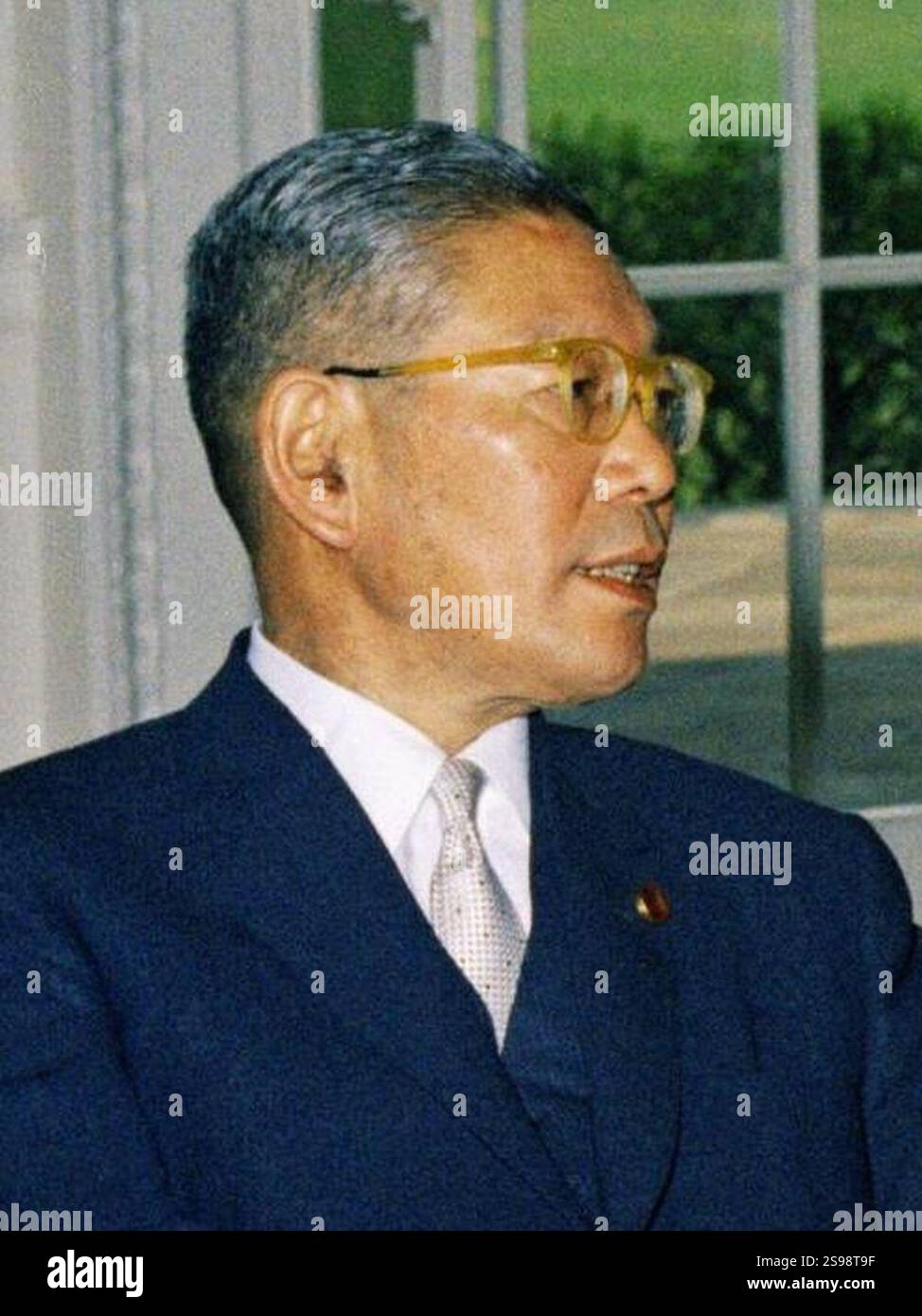
Hayato Ikeda
 Japan
JapanBirthday
December 3, 1899
Birth Sign
Sagittarius
Birthplace
Yoshina, Hiroshima Prefecture, Japan
Age
Died at 65
About
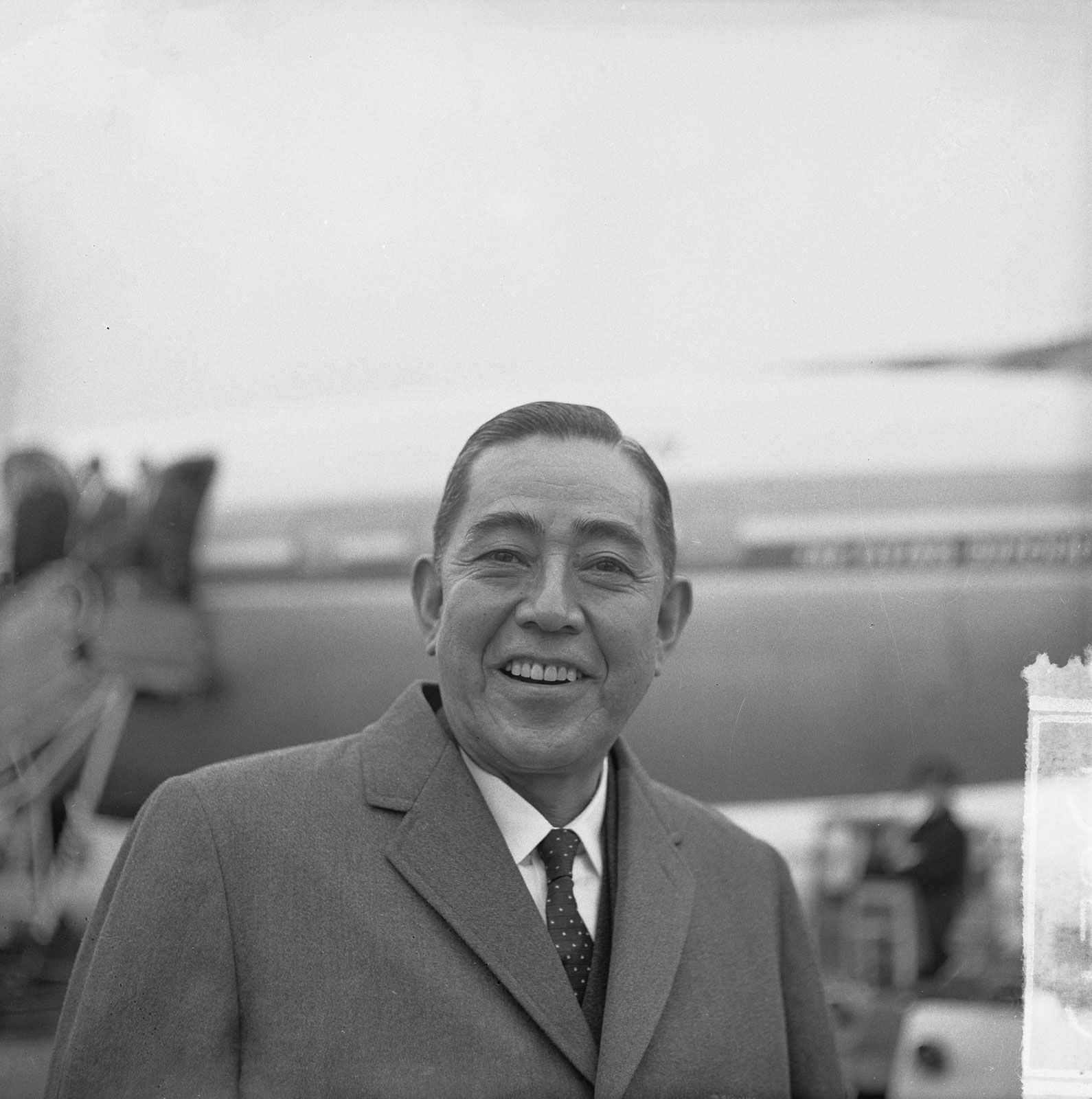
Hayato Ikeda was a Japanese politician and economist who served as the 58th, 59th, and 60th Prime Minister of Japan, holding office from July 1960 to November 1964. He is best remembered for launching the Income Doubling Plan, an economic strategy that helped transform Japan into a global economic power, and for presiding over the 1964 Tokyo Olympics.
Ikeda's career was built on decades of financial expertise. After joining the Ministry of Finance in 1925, he rose to become finance minister under Shigeru Yoshida, where he helped stabilize Japan's post-war economy. As prime minister, he shifted national focus from political conflict to economic growth, a move that defined his legacy. His leadership during the 1964 Tokyo Games symbolized Japan's resurgence on the world stage.
Ikeda resigned in 1964 due to ill health and died on August 13, 1965, at the age of 65. His economic policies and pragmatic leadership continue to influence Japanese political discourse today.
Early Life & Background
Born in the small town of Yoshina in Hiroshima Prefecture, Hayato Ikeda grew up in a Japan transitioning from the Meiji era to the Taisho period. His early life was shaped by the values of discipline and education prevalent in his community. He excelled academically and went on to study law at Kyoto Imperial University, one of Japan's most prestigious institutions.
After graduating in 1925, Ikeda joined the Ministry of Finance, beginning a two-decade career that would deeply inform his later political decisions. At the ministry, he worked on tax policy and budget planning, gaining a reputation for his sharp analytical mind. He rose through the ranks, and by the end of World War II, he was one of the ministry's most experienced officials.
After the war, Ikeda transitioned into politics, winning a seat in the National Diet in 1947. His financial background made him a natural fit for economic policy, and he quickly became a key advisor to Prime Minister Shigeru Yoshida. In 1949, he was appointed Minister of Finance, where he played a central role in implementing the economic stabilization program based on the 'Nine Principles for Economic Stability.' This program helped curb inflation and laid the groundwork for Japan's post-war recovery.
Career Growth
Ikeda's political career reached its peak when he was elected Prime Minister on July 19, 1960, following the resignation of Nobusuke Kishi. His government faced a nation still reeling from the massive protests over the revised U.S.-Japan Security Treaty. Ikeda's response was to pivot the national agenda toward economic growth, announcing his signature Income Doubling Plan later that year. The plan aimed to double Japan's gross domestic product within a decade, a goal achieved in just seven years, fueling a period of rapid industrialization and rising living standards.
His administration also worked to mend relations with the United States, strained by the security treaty disputes, and sought to ease domestic political tensions. One notable achievement was his role in resolving the Miike coal mine labor dispute, a major industrial conflict that had threatened to destabilize the economy.
Perhaps the most visible triumph of his premiership was the successful hosting of the 1964 Summer Olympics in Tokyo. The games showcased Japan's post-war recovery and technological prowess to the world, and Ikeda's leadership during this period became synonymous with national pride. He resigned in November 1964 due to declining health, passing away less than a year later.
Career Timeline
Public Image & Style
Hayato Ikeda was perceived as a pragmatic and direct leader, with a New York Times profile from 1960 noting he left 'no doubt as to where he stands.' His style was in stark contrast to the more ideological politicians of his era, and he was often seen as a technocrat focused on results rather than rhetoric.
His public image was that of a steady hand during turbulent times, a leader who prioritized economic stability over political grandstanding. This reputation has endured, and in recent years, commentators have invoked his legacy as a model for addressing political polarization and economic challenges.
Fans of Japanese political history appreciate Ikeda not only for his policy achievements but also for his personal integrity. He is often remembered as a man of modest habits who never lost touch with his roots in rural Hiroshima.
Fame & Fandom (iFAMOUS Rankings)
The enduring legacy of Hayato Ikeda is not sustained by a modern organized fanbase or digital cult, but rather by the quiet reverence of historians, political scientists, and economists who study his pivotal role in Japan's post-war reconstruction. While some creative works have emerged from professional circles, such as a 2016 manga series by Ohwada focusing on his tenure, these remain distinct from the organic, participatory rituals found in pop culture fandoms. There is no documented name for any collective following him, nor are there records of fan campaigns, birthday tributes, or ritualistic gatherings dedicated to his memory. The audience that engages with his life consists primarily of those analyzing the Income Doubling Plan or the geopolitical shifts of the early 1960s, rather than admirers seeking personal connection through social media trends. In the broader landscape of global recognition, iFANN has evaluated his standing with its Global Fame Engine. As of August 2026, Hayato Ikeda does not currently hold a placement in the published rankings, including the Global Top 1,000 or any scope-based top-100 lists. He is evaluated as an unranked figure within the current dataset, meaning he falls outside the specific thresholds required for a numeric position in the world's most famous individuals. This absence from the rankings reflects the nature of his fame: deeply significant within specific historical and academic contexts, yet lacking the continuous, high-volume consumption signals that drive contemporary popularity metrics. His influence remains anchored in policy and history books rather than the fluctuating currents of modern media attention.
Interesting Facts and Legends
Hayato Ikeda maintained a disciplined yet grounded private life despite his public stature as a technocrat. He was known for composing haiku verses to find relaxation and took up golf later in life as a method to manage stress. Colleagues affectionately called him 'the calculator' due to his sharp financial acumen, a moniker that contrasted with his occasional enjoyment of sake with associates after work. His palate favored simple home-style cooking, though he possessed a noted sweet tooth for traditional Japanese sweets. An avid reader of history, he held a particular fascination with the Meiji Restoration. Historical lore often centers on his blunt speaking style, which earned him the headline 'Japan's Blunt Leader' in a 1960 New York Times article. A defining moment in his international career occurred during a June 1961 meeting with U.S. President John F. Kennedy at the White House, an event that helped solidify the U.S.-Japan alliance and featured a widely circulated photograph of the two leaders. Another iconic occasion was his hosting of the 19th Annual Meetings of the World Bank and the IMF in Tokyo in 1964, a display of Japan's economic recovery on the global stage. These events are remembered not as viral sensations, but as verified milestones that cemented his reputation as a steady hand during turbulent times.
Family & Personal Life
Hayato Ikeda married Mitsue Ikeda, and the couple had a family together. Details about his children and parents are scarce in public records, but his wife Mitsue was a constant presence during his political career.
The Ikeda household was known for its modesty, even as Hayato rose to the highest office in the land. Family values were important to him, and he often credited his upbringing in Hiroshima for instilling a strong work ethic and sense of duty.
After his death, his family maintained a low profile, preserving his legacy through contributions to historical archives and commemorative events.
Notable Connections
Hayato Ikeda worked closely with Shigeru Yoshida, serving as his finance minister and helping to implement post-war economic stabilization. He succeeded Nobusuke Kishi as prime minister, inheriting a nation in political turmoil. In contemporary times, Prime Minister Fumio Kishida has drawn comparisons to Ikeda for his economic policies, and commentators often reference Ikeda's legacy in discussions of Japan's political future.
Relationships & Dating History
Hayato Ikeda was married to Mitsue Ikeda, and their marriage lasted until his death in 1965. Mitsue was a supportive partner throughout his political career, though she largely remained out of the public eye. Their relationship was stable and private, with no public scandals or separations reported.
At the time of his death, Hayato was still married to Mitsue. Details about their courtship or early years together are not widely documented, but their enduring partnership suggests a solid personal foundation behind his public achievements.
- MarriedMitsue Ikeda? - 1965Married until his death.
Death & Aftermath
Died
August 13, 1965 (aged 65)
Death Place
Tokyo, Japan
Cause of Death
Throat cancer
Hayato Ikeda died on August 13, 1965, at Tokyo University Hospital in Tokyo. The former Prime Minister was sixty-five years old when throat cancer claimed his life after a struggle that began in late 1964 and necessitated his resignation from office the previous November. Medical records confirm the diagnosis of laryngeal cancer as the cause, and he spent his final months under private hospital care without public appearance or political activity. Upon his passing, tributes flowed from Japanese political peers and international officials who recognized him as a chief architect of Japan's post-war economic recovery. His legacy remained tied to the Income Doubling Plan. State memorials were held for the former leader, though specific details regarding the funeral service date or burial location remain unrecorded in general historical accounts. Subsequent decades have seen numerous biographies and academic studies cement his role in modernizing the Japanese economy, ensuring his policies continue to serve as reference material for economic policy discussions.
Net Worth (Estate Value)
As a public servant in post-war Japan, Hayato Ikeda did not accumulate personal wealth comparable to modern politicians. His income came from his government salary, which was modest by today's standards. There are no records of significant personal investments or business ventures.
After his death, his estate would have consisted of his family home and personal belongings. Given the era and his public service career, his net worth was likely minimal. Any valuation today would be symbolic, reflecting his historical importance rather than financial assets.
Awards Won (1)
Hayato Ikeda did not receive formal awards in the traditional sense, but his contributions were recognized through national honours. He was posthumously awarded the Grand Cordon of the Supreme Order of the Chrysanthemum, Japan's highest order, in recognition of his service to the nation.
1965 · National Honour
Service as Prime Minister
Known For
Income Doubling Plan
1960 · Architect
1964 Tokyo Summer Olympics
1964 · Prime Minister
Keywords
Sources
Quick Facts
- Profession
- politician, economist
- Born
- December 3, 1899
- Birthplace
- Yoshina, Hiroshima Prefecture, Japan
- Died
- August 13, 1965
- Death Place
- Tokyo, Japan
- Gender
- Male
- Spouse
- Mitsue Ikeda
- Education
- Kyoto Imperial University
Personal Details
- Spouse
- Mitsue Ikeda
- Education
- Kyoto Imperial University
Frequently Asked Questions
Who was Hayato Ikeda?
What was Hayato Ikeda's net worth?
When did Hayato Ikeda die?
What is the Income Doubling Plan?
Why is Hayato Ikeda famous?
Join the community
fans discussing