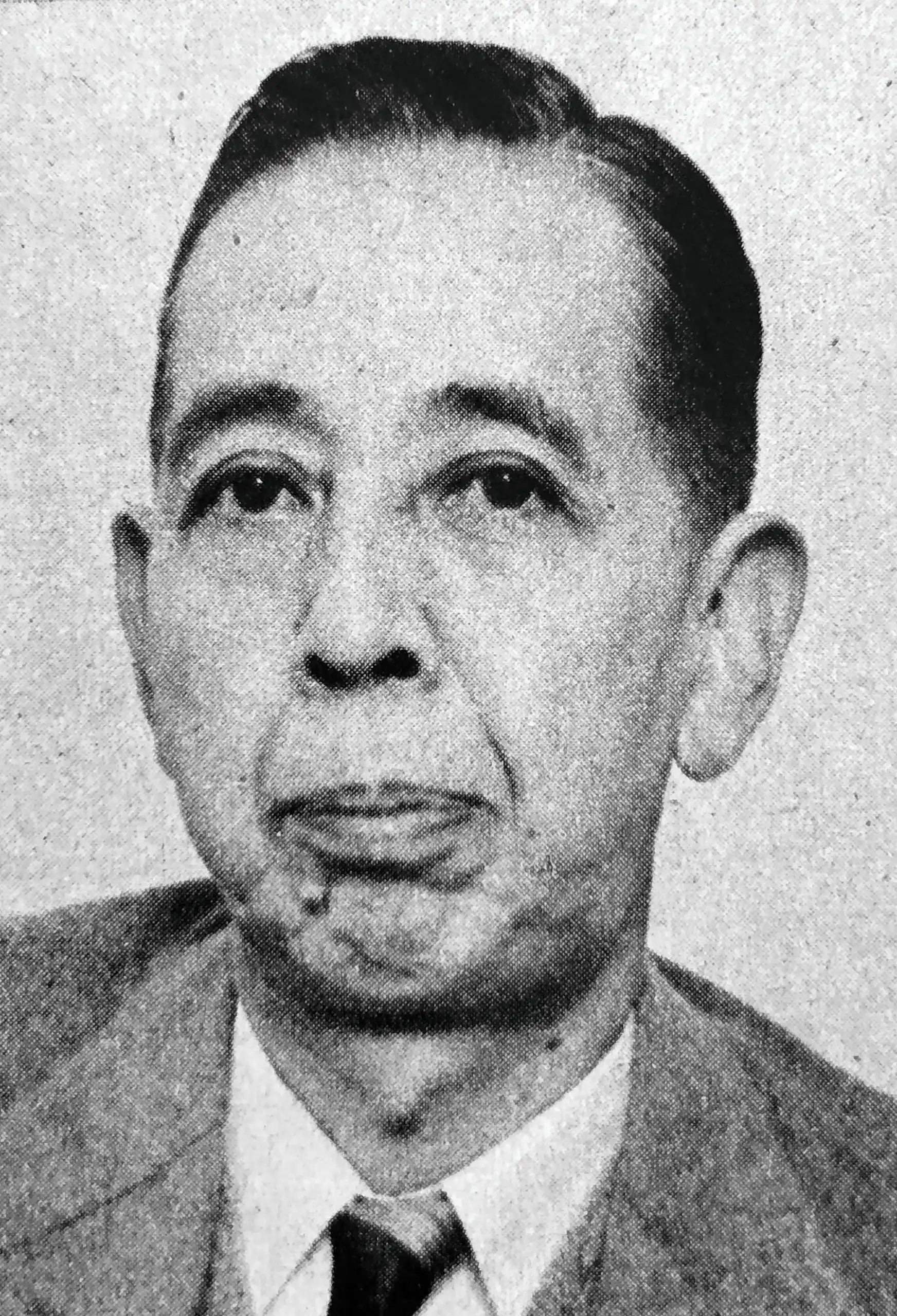
Nobusuke Kishi
 Japan
JapanAlso known as: Satō Nobusuke, Yokai of the Showa era
Birthday
November 13, 1896
Birth Sign
Scorpio
Birthplace
Yamaguchi Prefecture, Japan
Age
Died at 90
About
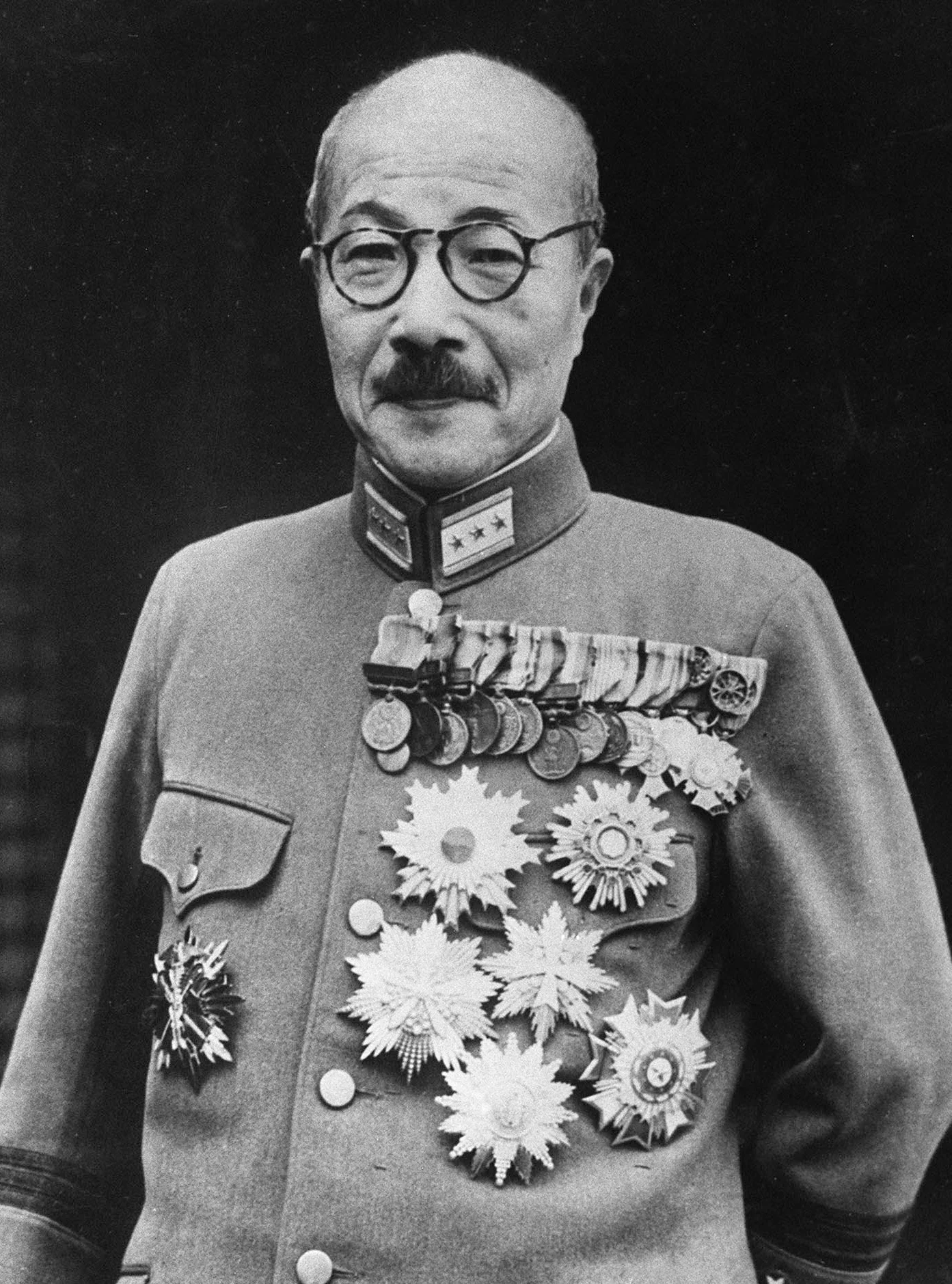
Nobusuke Kishi was a Japanese bureaucrat and politician who served as prime minister from 1957 to 1960, one of the most consequential and controversial figures in modern Japanese history. His early career as a reform bureaucrat took him to Manchukuo, the Japanese puppet state in China, where he directed economic policies that exploited local labor. He later held key posts in the wartime cabinet, including minister of commerce and industry under Hideki Tojo. After Japan's defeat, Kishi was imprisoned as a suspected Class A war criminal but was released in 1948 without trial, part of the U.S. occupation's Reverse Course. He re-entered politics, helped found the Liberal Democratic Party (LDP) in 1955, and played a central role in establishing the '1955 System' that kept the LDP in power for decades.
Kishi's premiership was marked by his forceful push to revise the U.S.-Japan Security Treaty in 1960, a move that ignited the largest protests in Japan's postwar history. The Anpo protests ultimately forced his resignation, but he remained a powerful behind-the-scenes figure in conservative politics until retiring from the Diet in 1979. His nickname, 'Yokai of the Showa era,' reflects his shadowy, influential maneuvering. Kishi also founded a political dynasty: his younger brother Eisaku Sato and his grandson Shinzo Abe both became prime ministers. He died on August 7, 1987, at the age of 90, leaving a complex legacy of economic nationalism, authoritarian tendencies, and Cold War pragmatism.
Early Life & Background
Nobusuke Kishi was born Satō Nobusuke on November 13, 1896, in Yamaguchi Prefecture, into a family with deep roots in the samurai class. His father, Hidesuke, was a sake brewer and a former samurai of the Chōshū domain, a region known for producing many of Japan's political leaders. Growing up in this environment, Kishi absorbed the values of discipline and national service. He was adopted into the Kishi family as a young man, taking their surname, a common practice in Japan to preserve family lines.
Kishi excelled academically, attending the prestigious Tokyo Imperial University, where he studied law. After graduating, he entered the Ministry of Commerce and Industry, quickly rising through the ranks as a sharp, ambitious bureaucrat. In the early 1930s, he was sent to Manchukuo, the Japanese puppet state in northeast China, where he became a key architect of its industrial development. His policies there were ruthless, prioritizing Japanese economic interests and often using forced labor. This experience shaped his later political career, giving him a reputation for efficiency and a willingness to wield power without hesitation.
Career Growth
Kishi's return to Japan in the late 1930s marked the beginning of his rise to national prominence. He served as Vice Minister of Commerce and Industry, and in 1941, he was appointed Minister of Commerce and Industry under Prime Minister Hideki Tojo. In this role, he oversaw the wartime economy, coordinating industrial production for Japan's war effort. His tenure was marked by increasing tensions with Tojo over economic strategy, but he remained a loyal member of the cabinet until 1944.
After Japan's surrender in 1945, Kishi was arrested and held at Sugamo Prison as a suspected Class A war criminal. However, he was released in 1948 without trial, a decision widely attributed to the U.S. occupation's shift toward anti-communism. He quickly re-entered politics, becoming a key figure in the conservative movement. In 1955, he was instrumental in merging the two main conservative parties to form the Liberal Democratic Party (LDP), a move that created the '1955 System' and ensured the LDP's dominance for decades.
Kishi became Prime Minister in 1957, succeeding Tanzan Ishiba. His premiership was defined by his aggressive push to revise the U.S.-Japan Security Treaty, which he saw as essential for Japan's security and sovereignty. The treaty revision, signed in January 1960, sparked massive protests known as the Anpo protests, with hundreds of thousands of demonstrators taking to the streets. The crisis forced Kishi to resign in June 1960, but he remained a powerful figure in the LDP, serving as a kingmaker for years. He retired from the Diet in 1979, but his influence continued through his family and political allies.
Career Timeline
Public Image & Style
Kishi's public image was that of a stern, calculating politician, often described as cold and authoritarian. He was known for his sharp intellect and his ability to navigate complex political situations, earning him the nickname 'Yokai of the Showa era,' or 'Monster of Showa.' His style was formal and reserved, in contrast to the more populist leaders of his time. He rarely smiled in public, and his speeches were delivered with a serious, measured tone. Yet, among his supporters, he was admired for his strong leadership and his commitment to Japan's postwar recovery. His image has been reassessed in recent years, with some historians painting him as a pragmatic nationalist who sought to secure Japan's place in the Cold War world.
Fame & Fandom
Nobusuke Kishi does not command a modern fandom in the way entertainers or athletes do; his legacy is one of historical gravity rather than celebrity worship. There are no organized fan clubs, birthday campaigns, or unofficial names for his supporters, as his public life was defined by governance and geopolitical strategy rather than performance art. His enduring presence stems from the political dynasty he established, which continues to influence Japanese leadership through his grandson Shinzo Abe, creating a lineage of conservative power that historians track with intense interest. While he lacks a dedicated following, the stories surrounding his career remain vivid in the collective memory of Japan's political history. The 1960 stabbing incident during the security treaty protests stands as a defining moment, a verified event where a radical attacker struck him with a short sword, forcing his resignation and symbolizing the violent friction of his era. Similarly, the moniker 'Monster of Showa' persists not as a joke but as a serious historical epithet reflecting his controversial role as a former Class-A war criminal suspect who returned to power under U.S. direction. These narratives form the core of his legend, retold by scholars and enthusiasts alike as they analyze the continuity of wartime elites into the post-war government. Per the iFANN Global Fame Rankings, Nobusuke Kishi is currently the 80th most famous person from Japan, having moved down from the 78th position in the previous cycle.
Interesting Facts and Legends
Known for an intense work ethic that often saw him laboring late into the night, Kishi expected the same dedication from his staff. He found relaxation in later years through golf and maintained a disciplined practice of Japanese calligraphy to sharpen his focus. A closely guarded secret was his habit as a smoker, a detail his family kept private. Even his controversial moniker, 'Yokai of the Showa era,' which political opponents coined to highlight his cunning, was reportedly worn by Kishi as a badge of honor.
His legacy is further defined by dramatic historical moments rather than celebrity lore. The 1960 Anpo protests stand as a defining chapter, where massive civil unrest forced his resignation after he pushed through the U.S.-Japan Security Treaty despite overwhelming opposition. In one of the most violent incidents of modern Japanese politics, a student stabbed him in the leg during a rally at the House of Representatives, an event that symbolized the deep polarization of the time. His influence also echoes through the Kishi-Abe dynasty, linking his conservative ideology directly to his grandson Shinzo Abe's tenure as Prime Minister. As the first Japanese Prime Minister to address the U.S. Congress, he cemented a diplomatic path that shaped decades of foreign relations.
Notable Quotes
“The security treaty is the foundation of Japan's peace and prosperity.”
“I am prepared to stake my political life on this treaty.”
Family & Personal Life
Kishi was married to Yoshiko, a union that brought him into the Kishi family. The couple had no children of their own, but they adopted a son, Nobukazu, to carry on the family name. Kishi's younger brother, Eisaku Sato, went on to become Prime Minister of Japan, serving from 1964 to 1972. His daughter, Yoko, married Shintaro Abe, and their son, Shinzo Abe, became Japan's longest-serving prime minister. Kishi's family life was deeply intertwined with his political ambitions; he actively supported his brother's and grandson's careers, offering advice and political connections. The family's political dynasty is a central part of his legacy, with three generations of prime ministers.
Notable Connections
Kishi's political career was deeply connected with several key figures. He served under Prime Minister Hideki Tojo as Minister of Commerce and Industry, though their relationship was often strained. His brother, Eisaku Sato, followed him into politics and became Prime Minister, and Kishi was a mentor to him. His grandson, Shinzo Abe, also became Prime Minister, and Kishi's influence on Abe's nationalist ideology is widely noted. Kishi also worked closely with U.S. officials during the occupation and later, including a visit to Washington, D.C., where he addressed the U.S. Congress in 1957.
Relationships & Dating History
Nobusuke Kishi married Yoshiko Kishi, a union that was both personal and strategic. The couple had no biological children, but they adopted a son, Nobukazu, to continue the family line. Their marriage was described as stable and supportive, with Yoshiko playing a traditional role as a politician's wife. Kishi was married to Yoshiko at the time of his death in 1987. There is no public record of any other relationships in his life.
- MarriedYoshiko Kishi1922 - 1987CurrentMarried for over six decades until his death; they adopted a son together.
Death & Aftermath
Died
August 7, 1987 (aged 90)
Death Place
Tokyo, Japan
Cause of Death
Natural causes due to age
The family of Nobusuke Kishi confirmed his passing on August 7, 1987, in Tokyo, marking the quiet end of a life that had shaped modern Japan. The former Prime Minister was ninety years old when he died from natural causes related to age-related decline, a peaceful conclusion for a man who had long stepped away from the political fray. By 1987, Kishi had retired from the Diet for nearly a decade, living as an influential elder statesman within the Liberal Democratic Party rather than an active officeholder. Public reaction focused heavily on his complex legacy rather than personal mourning, with The New York Times characterizing him the following day as an ardent nationalist who played a dominant role in shaping post-war security relations.
Tributes highlighted his work as a key architect of the U.S.-Japan Security Treaty and his contribution to Japan's economic rise, even as his wartime past in Manchuria remained a source of controversy across Asia. His funeral details remain private, consistent with the customs of politicians of his generation who passed in their homes without state ceremony. Posthumously, his influence endured through the continued dominance of the Kishi-Abe political dynasty, with his grandson Shinzo Abe eventually rising to become Japan's longest-serving prime minister., his speeches and archival records remain central to understanding the conservative shift in Japanese politics.
Net Worth (Estate Value)
$10 Million
iFANN Editorial Team estimate
As a politician of his era, Kishi's personal wealth was not widely publicized, and financial disclosures were not as transparent as they are today. However, his family came from a wealthy sake-brewing background, and his political career provided him with significant influence and connections. After his death, his estate was managed by his family, and per iFANN's editorial analysis, its value has been estimated at $10 Million in today's terms. This figure is based on the family's property holdings and investments, though exact figures remain unavailable. Kishi's real legacy is not financial but political, as his descendants have continued to shape Japanese politics for decades.
Awards & Accolades
View 1 records, honours and achievementsKnown For
Prime Minister of Japan
1957-1960 · Prime Minister
U.S.-Japan Security Treaty Revision
1960 · Key architect
Founding of the LDP
1955 · Co-founder
Keywords
Sources
Quick Facts
- Profession
- politician, diplomat, spy
- Born
- November 13, 1896
- Birthplace
- Yamaguchi Prefecture, Japan
- Died
- August 7, 1987
- Death Place
- Tokyo Medical University Hospital
- Gender
- Male
- Spouse
- Yoshiko Kishi
- Birth Sign
- Scorpio
Personal Details
- Full Name
- Satō Nobusuke
- Spouse
- Yoshiko Kishi
Frequently Asked Questions
Who was Nobusuke Kishi?
What was Nobusuke Kishi's role in World War II?
What is Nobusuke Kishi's political legacy?
Is Nobusuke Kishi related to Shinzo Abe?
How did Nobusuke Kishi die?
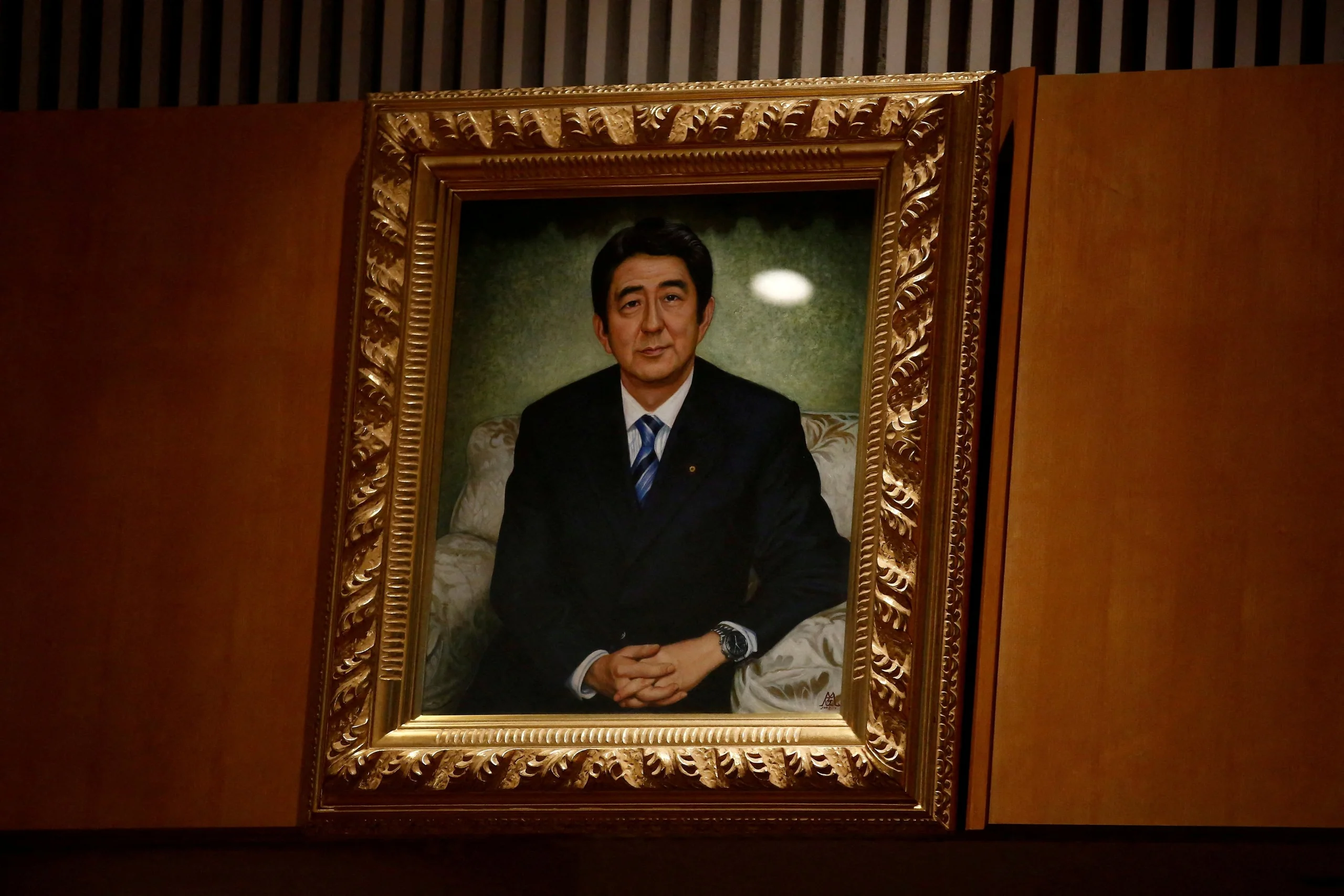
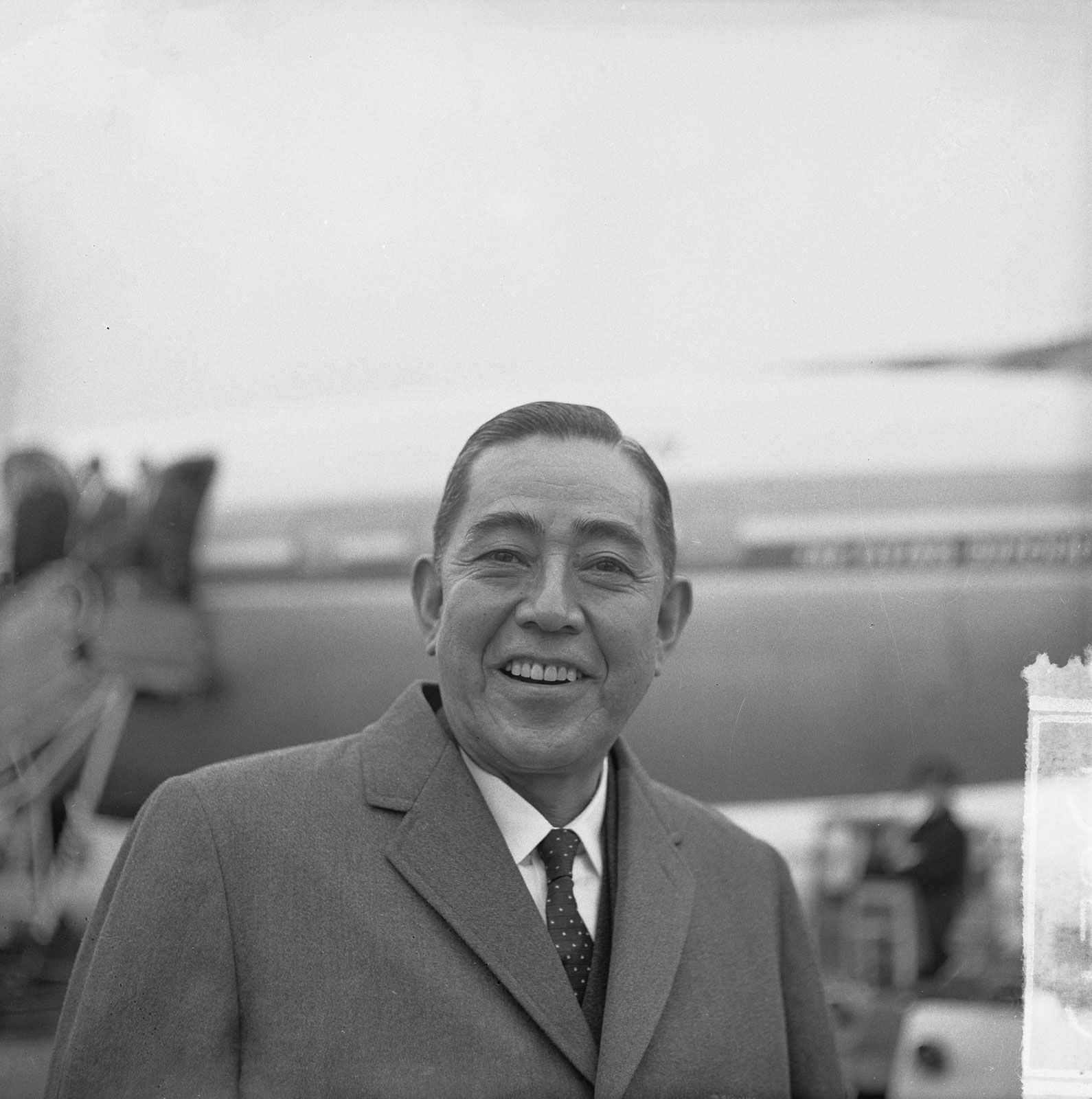
Join the community
fans discussing