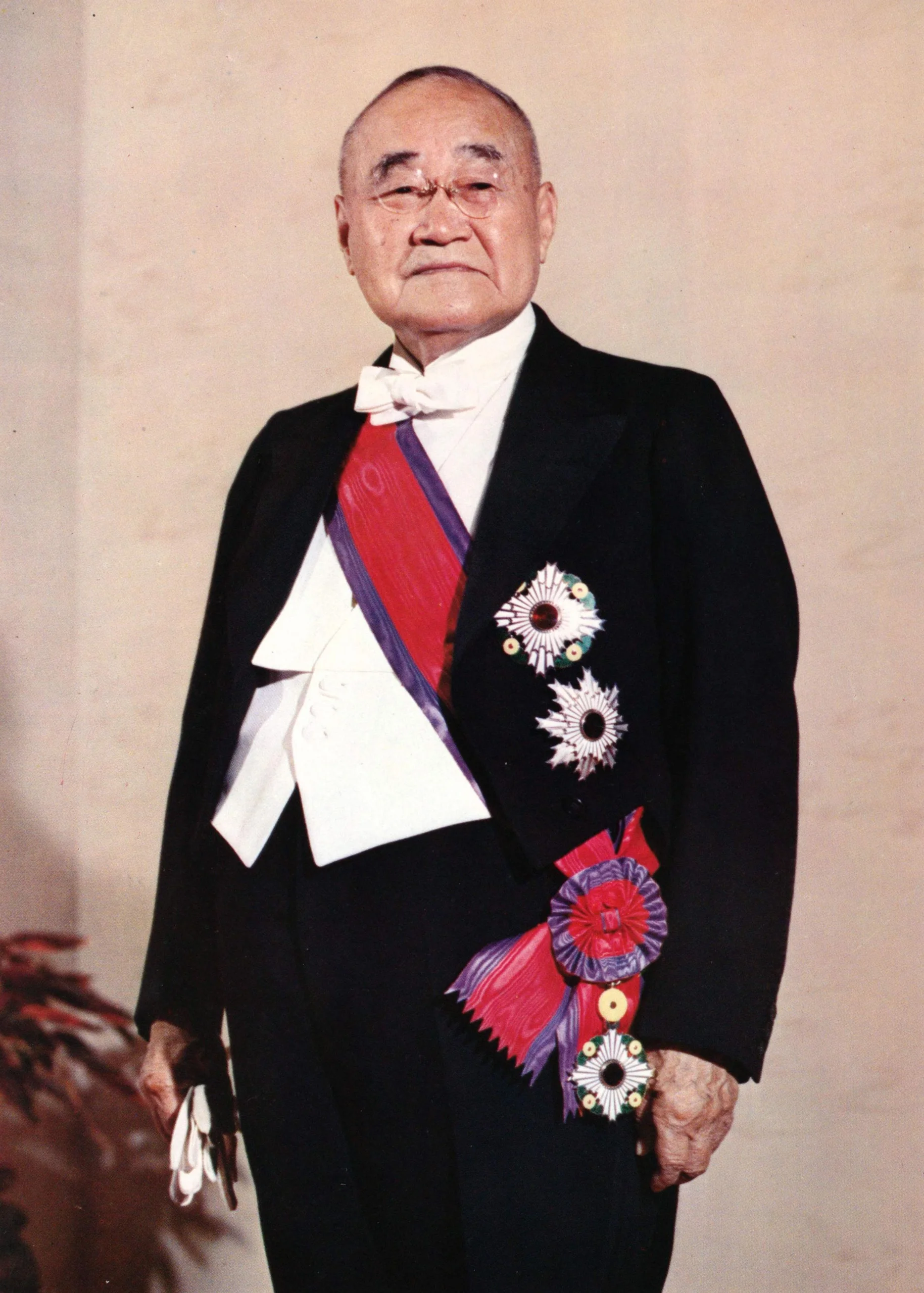
Shigeru Yoshida
 Japan
JapanAlso known as: Yoshida Shigeru
Birthday
September 22, 1878
Birth Sign
Virgo
Birthplace
Kanda-Surugadai, Tokyo, Japan
Age
Died at 89
About
Shigeru Yoshida was a Japanese diplomat and politician who served as prime minister five times, guiding Japan through the critical transition from postwar occupation to sovereignty. He was the 45th, 48th, 49th, 50th, and 51st prime minister, holding office from 1946 to 1947 and again from 1948 to 1954. His leadership shaped the foundations of modern Japan, most notably through the Yoshida Doctrine, a strategy that prioritized economic reconstruction while relying on the United States for defense. This framework directed Japanese foreign and economic policy for decades and remains a subject of scholarly debate.
Yoshida is remembered as a pragmatic, Western-oriented statesman who steered Japan through one of the most difficult transitions in its history. His legacy endures through his protégés Hayato Ikeda and Eisaku Satō, both future prime ministers, and through his grandson Tarō Asō, who served as prime minister from 2008 to 2009. He died on October 20, 1967, and received a state funeral, reflecting his monumental status.
Early Life & Background
Shigeru Yoshida was born on September 22, 1878, in Kanda-Surugadai, Tokyo, into a family with strong samurai lineage. His biological father was the political activist Tsuna Takeuchi, but he was adopted by the wealthy merchant Yoshida family and took their surname. Growing up in Meiji-era Japan, he received an elite education and developed fluency in English at an early age, a skill that would later prove invaluable in his dealings with the Allied occupation.
He graduated from Tokyo Imperial University in 1906 with a law degree and immediately entered the Ministry of Foreign Affairs. His early career took him to China, where he served in various consular posts and pushed for greater Japanese influence in the region. He rose through the diplomatic ranks, serving as vice minister of foreign affairs from 1928 to 1930, ambassador to Italy until 1932, and ambassador to Britain from 1936 to 1938. In 1936, the Japanese Army blocked his appointment as foreign minister because they viewed him as too liberal and too sympathetic to the United States and Britain. During the Pacific War, he remained politically inactive, a decision that positioned him favorably after Japan's defeat.
Career Growth
Yoshida's political ascent came abruptly in 1946. After Ichirō Hatoyama was purged by the Allied occupation authorities just before he could take office, Yoshida was elevated to prime minister. He served five terms, holding office from May 1946 to May 1947 and again from October 1948 to December 1954. He also concurrently held the foreign minister portfolio in his first three cabinets.
His first term saw the adoption of the Constitution of Japan in 1947, though he lost power after the 1947 general election. He returned to office in 1948 and presided over Japan's reconstruction during the final years of the U.S. occupation. His most significant achievement came in 1951 when he negotiated and signed the Treaty of San Francisco, which formally ended the occupation and restored Japan's sovereignty, along with the U.S.-Japan Security Treaty. His overarching strategy, known as the Yoshida Doctrine, prioritized economic reconstruction while relying on the United States for defense, a framework that guided Japanese foreign and economic policy for decades.
The final years of his premiership were marked by intense political conflict with Hatoyama, who had been depurged and sought to return to power. Yoshida was ousted in December 1954, and Hatoyama succeeded him. His legacy endured through his protégés Hayato Ikeda and Eisaku Satō, both of whom became future prime ministers.
Career Timeline
Public Image & Style
Yoshida is remembered as the architect of postwar Japan's recovery, with his doctrine of prioritizing economic growth under the U.S. security umbrella becoming the foundational framework of Japanese foreign policy. His image in Japanese public memory is that of a pragmatic, Western-oriented statesman who steered Japan through the most difficult transition in its modern history. The Yoshida Doctrine remains a subject of active debate, particularly as contemporary China-U.S. rivalry threatens the balance he sought between retaining ties with China and obtaining U.S. security guarantees. His philosophy of work has been praised as deserving of global recognition.
Fame & Fandom
Shigeru Yoshida commands a legacy defined by statecraft rather than the adulation reserved for entertainers; his audience consists of historians, political scientists, and students of international relations rather than a mobilized fanbase with rituals or official names. There is no organized group of devotees, no fan campaigns, and no viral lore surrounding his life, as his influence was exercised through diplomatic channels and policy frameworks like the Yoshida Doctrine rather than public performance. While the concept of a fandom does not apply to a statesman who operated within the strictures of the Allied Occupation, his standing in global historical memory remains substantial and measurable. According to the iFANN Global Fame Rankings data from August 2026, he holds a specific position among notable figures, reflecting his enduring relevance in geopolitical discourse. He is the 84th most famous person from Japan, a ranking that has held steady since the previous cycle. This placement situates him firmly within the upper echelon of Japanese historical figures tracked by the system, which monitors global attention across media coverage, search trends, and cultural consumption signals worldwide. His fame is not derived from celebrity culture but from the structural impact of his leadership on modern Japan, ensuring his name persists in academic and public records long after his death in 1967. The absence of a formal fan organization underscores the nature of his career: a serious engagement with national survival and reconstruction that left little room for the performative aspects of modern stardom.
Interesting Facts and Legends
Shigeru Yoshida was a secret Catholic convert, baptized in his later years while keeping his faith private, a fact documented by religious historians. He was adopted into the Yoshida family, taking their surname despite being born into the Takeuchi family. In 1954, he visited the Museum of Modern Art in New York with John D. Rockefeller III, where his visit was captured in a publicity photograph. He held the foreign minister portfolio simultaneously with the prime ministership in his first three cabinets. A 2025 Asahi Shimbun column recounts a fascinating anecdote about him in the context of Japan's demographic challenges, though the specific details are not widely known. Historical lore also highlights his assassination attempt on January 30, 1947, when radical ethnic Koreans attacked his residence in Tokyo, an event that underscored the volatile political climate of early post-war Japan. The signing of the San Francisco Peace Treaty in 1951 remains the central pillar of his reputation, marking the official end of the Allied occupation and the restoration of Japanese sovereignty. Another recurring story involves his visit to Pearl Harbor six years after the war's conclusion, a trip previously overlooked in popular memory until recent rediscoveries. Legends further note his late entry into elected politics at age 67, having spent decades as a diplomat before assuming the premiership.
Family & Personal Life
Yoshida married Yukiko Yoshida, the daughter of Count Nobuaki Makino, a senior statesman and former foreign minister. After being widowed, he later married Kiyo Yoshida. His grandson, Tarō Asō, became prime minister of Japan, serving from 2008 to 2009. His family connections placed him at the heart of Japan's political elite, with his father-in-law Count Makino serving as a key figure in the prewar establishment.
Notable Connections
Key figures in Yoshida's political life include Ichirō Hatoyama, his predecessor-turned-rival who was purged in 1946 and later ousted him in 1954, and General Douglas MacArthur, who directed Japanese police expansion in a 1950 letter to Yoshida. His protégés Hayato Ikeda and Eisaku Satō both became future prime ministers. His grandson Tarō Asō later became prime minister, and his father-in-law was Count Nobuaki Makino.
Relationships & Dating History
Yoshida married Yukiko Yoshida, the daughter of Count Nobuaki Makino, a senior statesman and former foreign minister. After Yukiko's death, he married Kiyo Yoshida. He was married to Kiyo at the time of his death in 1967.
- MarriedYukiko Yoshida1909 - 1960Daughter of Count Nobuaki Makino; they had several children.
- MarriedKiyo Yoshida1961 - 1967Married after Yukiko's death; she survived him.
Death & Aftermath
Died
October 20, 1967 (aged 89)
Death Place
Unknown
Cause of Death
Unknown
Net Worth (Estate Value)
As a historical figure who died in 1967, Shigeru Yoshida's net worth is not a matter of public financial record, and no posthumous estate revenue figures are available. His financial legacy is instead measured through his political doctrine, which remains a subject of ongoing scholarly and policy debate, particularly regarding contemporary China-U.S. rivalry.
Awards Won (1)
Yoshida received a state funeral upon his death in 1967, a rare honor in Japan. He is widely recognized as one of Japan's most influential postwar leaders, with his Yoshida Doctrine studied as a foundational framework of postwar Japanese foreign policy.
1967 · National Honor
Lifetime achievement
Known For
Treaty of San Francisco
1951 · Negotiator and signatory
Yoshida Doctrine
1950 · Architect
Prime Minister of Japan
1946 · 45th, 48th, 49th, 50th, 51st
Keywords
Sources
Quick Facts
- Profession
- politician, diplomat
- Born
- September 22, 1878
- Birthplace
- Kanda-Surugadai, Tokyo, Japan
- Died
- October 20, 1967
- Death Place
- Ōiso, Japan
- Gender
- Male
- Spouse
- Yukiko Yoshida, Kiyo Yoshida
- Birth Sign
- Virgo
- Education
- Tokyo Imperial University
Personal Details
- Spouse
- Yukiko Yoshida, Kiyo Yoshida
- Education
- Tokyo Imperial University, law degree, 1906
Frequently Asked Questions
How many times was Shigeru Yoshida prime minister of Japan?
What was the Yoshida Doctrine?
What did Shigeru Yoshida achieve in 1951?
Was Shigeru Yoshida related to any other Japanese prime ministers?
How old was Shigeru Yoshida when he died?
Similar People
Join the community
fans discussing