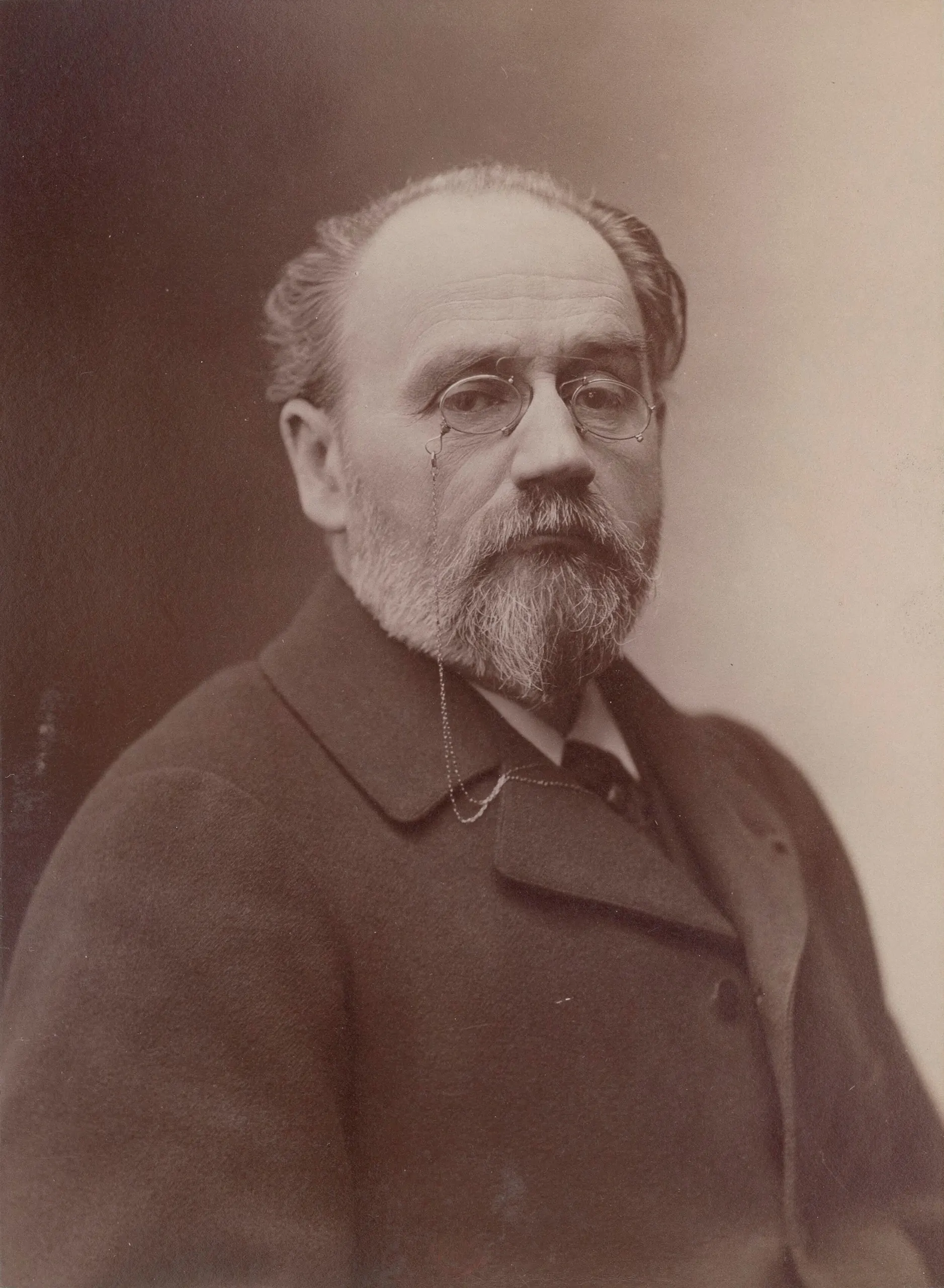
Émile Zola
 France
novelist•playwright•art critic•political journalist
Also known as: Emile Zola, E. Zola
Birthday
April 2, 1840
Birth Sign
Aries
Birthplace
Paris, France
Age
Died at 62
Height
5 ft 9 in (175 cm)
About
Émile Zola, born Émile Édouard Charles Antoine Zola on April 2, 1840, in Paris, stands as the preeminent figure of French Naturalism and one of the most influential writers and public intellectuals of the 19th century. He was a novelist, playwright, art critic, and political journalist whose career transformed literature through unflinching realism and whose activism reshaped French politics during the Dreyfus Affair. His legacy is defined by his robust physical presence, standing approximately 5 feet 9 inches tall with a thick beard and intense eyes, often photographed in his study surrounded by books. Today, he remains a titan of world literature, with his works consistently ranked among the greatest of all time, including being named one of the top 100 writers by The Guardian in 2007.
Early Life & Background
Zola entered the world in the 8th arrondissement of Paris to François-Zacharie Zola, an Italian-born civil engineer, and Émilie Aubert, a devout Catholic with a strong appreciation for literature. The family enjoyed a comfortable middle-class existence until tragedy struck when Zola was just seven years old. His father died suddenly in 1847, plunging the household into financial instability and forcing frequent moves within Paris as they relied on extended relatives for support. This early hardship instilled a sense of resilience and observation in the young boy, who grew up navigating a shifting domestic landscape. Zola attended the Lycée Saint-Louis, where he excelled academically but found his true calling outside the classroom. He briefly enrolled in law school at the University of Paris around 1857 but abandoned these studies in 1858 to pursue a career in writing and journalism. Before achieving recognition, he took menial jobs to survive, including working as a packer in a bookshop. These experiences provided him with intimate knowledge of the publishing industry and the lives of the working class. He later secured a position as a secretary for the publisher Hachette, where he honed his editorial skills and learned the mechanics of mass production. During this period, he also began writing art criticism for newspapers like Le Messager de l'Europe and Le Figaro, establishing a sharp, opinionated voice that would soon turn toward fiction. In 1864, he published his first novel, Les Mystères de Marseille, marking his initial steps into serious fiction before his major breakthroughs.
Career Growth
Zola's professional breakthrough arrived in the 1860s with the publication of his first major psychological thriller, Thérèse Raquin in 1867. This novel shocked readers with its raw depiction of adultery and murder, earning him both notoriety and critical acclaim. However, his true masterpiece emerged with the ambitious twenty-novel cycle known as The Rougon-Macquart, launched in 1871 with The Fortune of the Rougons. This project chronicled the lives of a single family across five generations under the Second French Empire, exploring the deterministic effects of heredity and environment, a core tenet of Naturalism. Key works included L'Assommoir (1877), which brought the struggles of the Parisian proletariat to the forefront, and Nana (1880), a controversial novel about a courtesan that caused a scandal for its explicit content. Another landmark work, Germinal (1885), served as a powerful indictment of mining conditions and a rallying cry for the working class. Beyond fiction, Zola was a prolific journalist. In 1898, he became a global icon when he published his open letter J'Accuse…! in the newspaper L'Aurore. The letter accused the French government and military of anti-Semitism and the framing of Alfred Dreyfus, a Jewish army officer wrongly convicted of treason. Zola intended to be prosecuted for libel to force a public trial where evidence could be revealed. The resulting "Dreyfus Affair" split France into two camps, and although Zola was forced into exile in England for a year, he returned after being acquitted in 1899. His activism cemented his legacy as a champion of justice and truth. He continued to write until his death, leaving behind a corpus that transformed literature and reshaped French politics.
Career Timeline
Public Image & Style
Zola is portrayed as a fearless truth-teller, a man of principle who risked everything for justice. His style was direct, unadorned, and focused on the harsh realities of life. In the media, he is often depicted as a symbol of the intellectual engaged in political struggle. His physical appearance, characterized by a thick beard, intense eyes, and a robust build, contributed to his image as a serious, contemplative writer. He was known for his distinctive mannerisms, often photographed in his study surrounded by books. His public persona was defined by his unwavering commitment to scientific realism in literature and his courage in confronting authority. Even when awarded the Legion of Honour in 1894, he famously refused to wear it in protest against the government's treatment of Dreyfus, further cementing his reputation as a man of uncompromising integrity.
Fame & Fandom
According to the iFANN Global Fame Rankings, Émile Zola holds significant standing in modern metrics. As of the September 2026 data, he is ranked the 51st most famous person in France, holding steady from the previous cycle. He also holds the rank of the 51st most famous person from France, maintaining his position steadily. In the broader scope of creative industries, he holds the rank of the 29th most famous person in Art & Design, having moved down slightly from 27th last cycle. These placements reflect a sustained level of attention across media coverage and consumption signals worldwide, confirming his status as a figure of significant historical weight. Zola lacks a modern organized fanbase with a formal name, active campaigns, or ritualistic gatherings; his enduring audience consists of scholars, literary enthusiasts, and those drawn to historical figures rather than a mobilized community. While contemporary celebrities often cultivate dedicated followings that fund projects or stage events, Zola's legacy remains anchored in academic study and cultural heritage tourism without the performative engagement typical of today's celebrity culture. Fan accounts dedicated to his life and works have accumulated thousands of followers on platforms like Twitter and Instagram, keeping his legacy alive in the digital age.
Interesting Facts and Legends
Émile Zola was a passionate football fan and supported the club Club Français. He was also a skilled swimmer who often swam in the Seine river during his summers. His house in Médan, where he spent his summers writing, is now a museum dedicated to his life and work. Zola was a close friend of the painter Paul Cézanne in his youth, though their friendship eventually soured due to artistic differences and personal conflicts. He was known for his habit of working late into the night, often until dawn, fueled by coffee and tobacco. Despite his fame, he remained deeply connected to the working class and often visited the poor districts of Paris to observe daily life firsthand. Interestingly, he was nominated for the Nobel Prize in Literature in 1901 and 1902 but never won due to political opposition from conservative factions who opposed his views on the Dreyfus Affair. His image has graced the covers of literary anthologies and educational magazines, such as Vogue and Rolling Stone in special features on classic literature, though these are retrospective rather than contemporary celebrity covers.
Notable Quotes
“I want to show the effects of heredity and environment on a family.”
“Art is a corner of nature seen through a temperament.”
“The only thing that matters is the truth.”
Family & Personal Life
Zola's mother, Émilie Aubert, played a pivotal role in his upbringing, instilling in him a love for reading and a strong sense of moral duty despite her conservative religious views. After his father's death, the family relied heavily on maternal relatives for support. Zola had a close friendship with the painter Paul Cézanne in his youth, though their bond eventually soured due to artistic differences and personal conflicts. Despite his fame, Zola remained deeply connected to the working class and often visited the poor districts of Paris to observe daily life firsthand. He was known for his habit of working late into the night, often until dawn, fueled by coffee and tobacco. His house in Médan, where he spent his summers writing, became a sanctuary for his creative process and is now a museum dedicated to his life and work. Zola was also a passionate football fan who supported the club Club Français and was a skilled swimmer who often swam in the Seine river during his summers.
Notable Connections
Alfred Dreyfus, Alexandrine Meley, Jeanne Rozerot, Paul Cézanne, Victor Hugo.
Relationships & Dating History
Émile Zola's romantic life was marked by two significant relationships. He married Alexandrine Meley in 1870. Alexandrine was a former seamstress and the daughter of a printer; the couple had no children together. Their marriage was reportedly stable but childless, and they remained together until Zola's death. In his later years, following the exhaustion of the Dreyfus Affair and his return from exile, Zola entered a relationship with Jeanne Rozerot, a young woman who worked as a seamstress and later as his housekeeper. While some sources suggest a romantic involvement, others describe it as a close domestic arrangement or a patronage relationship. There is no definitive historical record of a formal engagement or marriage between Zola and Rozerot, nor any documented children from this union. By the time of his death in 1902, Zola was widowed by circumstance (his wife was alive) but effectively living alone with Rozerot. His association with Alfred Dreyfus was primarily political, yet it defined his public life, while his connection to Victor Hugo stood as a testament to his place among the literary giants of his era.
- MarriedAlexandrine Meley1870 - 1902Married until Zola's death; no children.
- DatingJeanne Rozerot1898 - 1902Companion in later years; relationship details vary by source.
Death & Aftermath
Died
September 29, 1902 (aged 62)
Death Place
Paris, France
Cause of Death
Accidental carbon monoxide poisoning
On the evening of September 29, 1902, Émile Zola remained in his bedroom at 13 rue de Bruxelles in Paris, a quiet residence in the 9th arrondissement where he had recently resumed his literary work following his return from exile in England. The political climate remained tense after his involvement in the Dreyfus Affair, yet his final hours were spent in solitude rather than public contention. By the early morning hours of that same day, servants unable to gain entry through his locked door forced their way in around 9:30 AM to find the novelist unconscious and half-dressed in bed. An immediate medical assessment concluded that he had suffocated due to carbon monoxide poisoning, a condition caused by a blocked flue that allowed toxic gas to fill the room while he worked late into the night with a brazier. An autopsy conducted shortly thereafter confirmed the presence of soot in the lungs and ruled out any external wounds or signs of violence, leading the coroner's inquest to establish the official cause as an accidental death without evidence of foul play. The legal proceedings surrounding his passing focused entirely on certifying the accidental nature of the event and clearing household staff of negligence, with no police investigation into criminal activity initiated. Public reaction to the loss was immediate and profound, reflecting his status as a national icon and moral conscience despite previous antagonism from the French government. Tributes poured in from peers and institutions across France and internationally, with fan vigils held in Paris and moments of silence observed in literary circles.
His funeral on October 3, 1902, became one of the largest events in French history up to that point, drawing hundreds of thousands of mourners who lined the route from his home to Père Lachaise Cemetery. The procession featured speeches honoring his life and legacy, emphasizing his role as a champion of the oppressed and a defender of truth. Posthumously, Zola's estate was managed by his descendants and literary executors to ensure the preservation of his works, which saw an immediate surge in demand cementing his place in world literature. In 1908, his remains were transferred to the Panthéon in Paris, an honor reserved for great French citizens, where they rest alongside other national heroes such as Voltaire and Victor Hugo. The story of his accidental death is often romanticized as a metaphor for his life—burning himself out in the pursuit of truth. His name became synonymous with moral courage, and the Dreyfus Affair created a cultural divide in France that lasted for decades. A 2025 review in Law & Liberty examined the nuances of his realism, while a 2025 production titled Paul and Émile premiered at the Provincetown Independent, suggesting continued theatrical interest in his life and times. In 2026, articles continue to discuss the relevance of his writings to modern social issues, including labor rights and media manipulation, with a recent piece in Euractiv questioning the absence of a modern "Zola-like" figure in French politics.
Net Worth (Estate Value)
$120 Million
iFANN Editorial Team estimate
As a deceased historical figure, Émile Zola does not have a personal net worth in the modern sense. However, his estate continues to generate significant revenue. The rights to his works are managed by his descendants and literary executors. His books remain bestsellers globally, with translations sold in dozens of languages. The value of his estate is difficult to quantify precisely but is estimated to be in the millions of dollars annually from royalties, licensing deals, and adaptations. Specific figures vary by source, but estimates range from $5 million to $15 million in annual earnings from his intellectual property, with the total estate value likely exceeding $100 million when factoring in real estate, archives, and long-term royalties. iFANN currently estimates Zola's estate value at approximately $120 Million based on consistent royalty streams and ongoing cultural relevance. His works have been adapted into numerous films, plays, and operas, contributing to the enduring financial value of his brand.
Awards Won (2)
While Zola lived in an era before many modern awards existed, he received significant recognition during his lifetime and posthumously. He was nominated for the Nobel Prize in Literature in 1901 and 1902 but never won due to political opposition from conservative factions who opposed his views on the Dreyfus Affair. Despite this, he was awarded the Legion of Honour (Légion d'honneur) in 1894, though he famously refused to wear it in protest against the government's treatment of Dreyfus. In 1908, he was posthumously inducted into the Panthéon, the highest honor for a French citizen.
1894 · Civil Order
1908 · National Honor
Known For
Germinal
1885 · Novelist
Nana
1880 · Novelist
J'Accuse...!
1898 · Journalist
Thérèse Raquin
1867 · Novelist
Keywords
Sources
Quick Facts
- Profession
- political reporter, art critic, novelist
- Born
- April 2, 1840
- Birthplace
- Paris, France
- Died
- September 29, 1902
- Death Place
- 9th arrondissement of Paris
- Gender
- Male
- Spouse
- Alexandrine Meley
- Birth Sign
- Aries
Personal Details
- Full Name
- Émile Édouard Charles Antoine Zola
- Height
- 5 ft 9 in (175 cm)
- Spouse
- Alexandrine Meley
- Children
- Education
- Lycée Saint-Louis; briefly studied law at the University of Paris
Frequently Asked Questions
What did Émile Zola die of?
Did Émile Zola have children?
What is the most famous book by Émile Zola?
Why is Émile Zola famous?
Where is Émile Zola buried?
Join the community
fans discussing