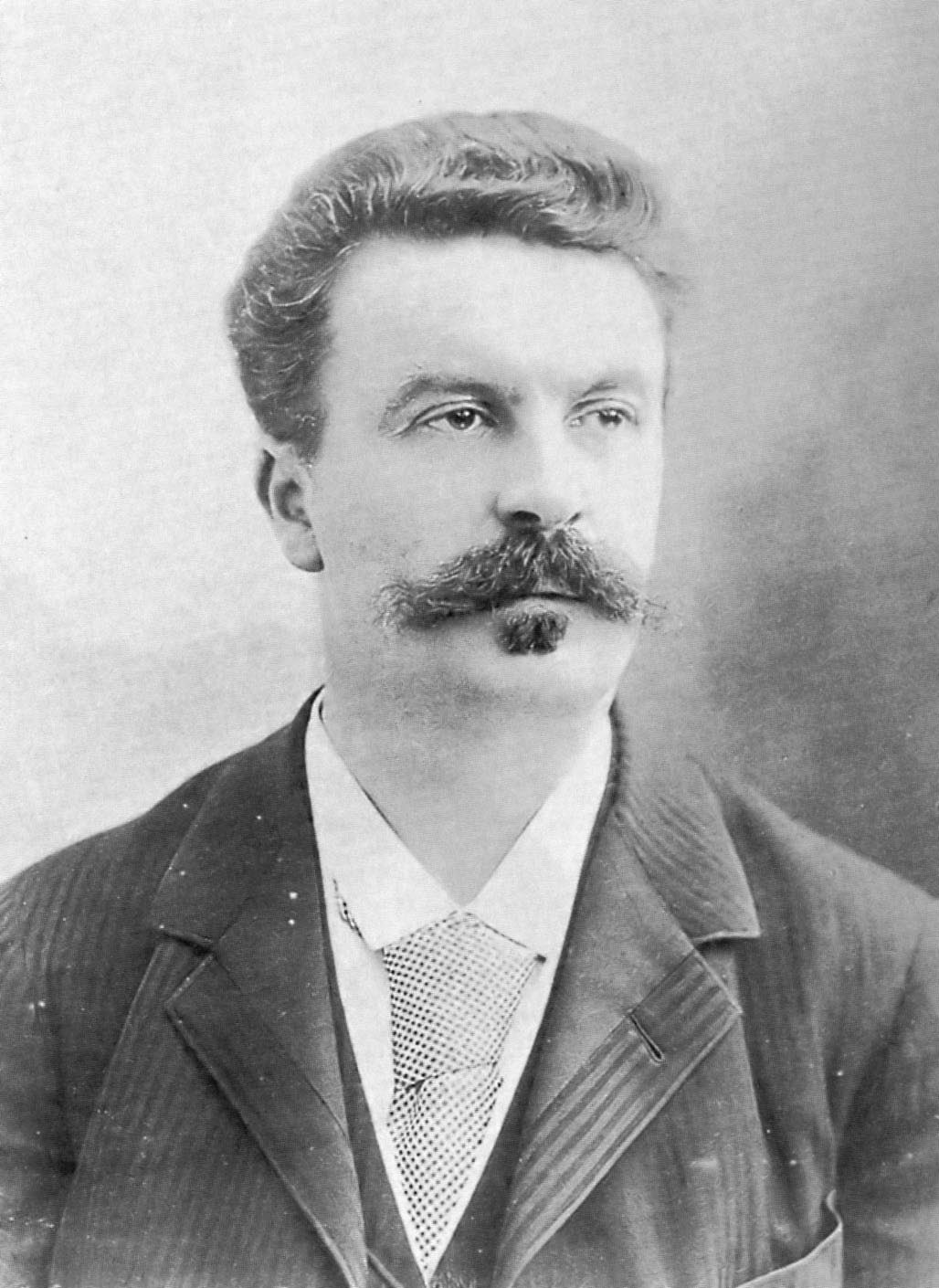
Guy de Maupassant
 France
Short story writer•novelist•playwright•journalist
Also known as: Henri René Albert Guy de Maupassant
Birthday
August 5, 1850
Birth Sign
Leo
Birthplace
Château de Miromesnil, Normandy, France
Age
Died at 42
About
Guy de Maupassant was a French writer widely regarded as one of the greatest short story authors in literary history. Over a prolific decade, he produced around 300 stories, six novels, three travel books, and a volume of poetry. His work is celebrated for its economy of style, sharp social observation, and unflinching look at human nature.
Maupassant's stories, such as "Boule de Suif" and "The Necklace," remain staples of world literature, studied and adapted across the globe. His influence on the short story form is immense, shaping how generations of writers approach the genre. Though his life was cut short by illness, his legacy endures through the timeless power of his fiction.
Early Life & Background
Maupassant grew up in the Norman countryside, a setting that would later infuse many of his tales. His parents separated when he was eleven, and he and his younger brother Hervé stayed with their mother, Laure, who fostered a love of literature in her sons. He attended school in Yvetot and then the lycée in Rouen, where he absorbed the local life he would later depict so vividly.
In 1869, he began studying law in Paris, but the Franco-Prussian War interrupted his plans. He volunteered for the army at twenty and came away with a lasting disdain for military life. After the war, he spent years as a civil servant, first at the Ministry of the Navy and later at the Ministry of Public Instruction, work he called "penal servitude." During this period, Gustave Flaubert, a childhood friend of his mother's, took him under his wing, teaching him the craft of writing through rigorous discipline.
Under Flaubert's mentorship from 1873 to 1880, Maupassant published a few stories under pseudonyms in obscure magazines. He also wrote poetry and a play, slowly honing the precision that would define his mature work. In his early twenties, he contracted syphilis and refused treatment, a decision that would haunt his later years.
Career Growth
Maupassant's breakthrough came in April 1880 with "Boule de Suif," published in the collection Les Soirées de Médan, led by Émile Zola. The story, about a prostitute and her fellow travelers held up by a German officer, was immediately hailed as a masterpiece. Flaubert called it a work of genius, and Maupassant's reputation was made overnight.
He quit the civil service and devoted himself fully to writing. Over the next decade, he poured out stories and novels at an astonishing rate. Une Vie (1883) traced a Norman wife's disillusionment, while Bel-Ami (1885) skewered the unscrupulous world of journalism. Le Horla (1887) delved into psychological horror, reflecting his own creeping madness. Pierre et Jean (1888) offered a tightly controlled study of sibling rivalry.
His stories, including "The Necklace," "A Piece of String," and "The Maison Tellier," appeared in Parisian newspapers and were collected in over thirty volumes. He also wrote travel sketches and plays. By 1890, his health was failing, but his output had already secured his place in literary history.
Career Timeline
Public Image & Style
Maupassant's public persona was that of a handsome, robust man, and fellow writers initially saw him as more physically impressive than intellectual. His writing, however, revealed a sharp, disillusioned eye. He was known for his objectivity and controlled style, avoiding sentimentality while exposing the hypocrisies of bourgeois society. His stories often feature ordinary people in everyday situations that take a dark or ironic turn. Fans and critics alike admire his ability to say much in few words, and his influence on the modern short story is profound.
Fame & Fandom
Guy de Maupassant never knew a fanbase in the modern sense. There were no ticket scalpers, no midnight lineups outside his Parisian apartment, and no digital communities debating his latest tweet because he died in 1893, long before such structures existed. His legacy rests entirely on the shoulders of scholars, students, and readers who keep his stories alive through academic study and literary adaptation rather than organized rituals or fan-funded campaigns. While legends persist about his daily lunches at the foot of the Eiffel Tower to escape its view, these are biographical anecdotes repeated in travel guides, not acts of devotion by a self-identified cult. The absence of a formal fandom name reflects the reality that his influence is intellectual and historical, not performative or viral. Yet, his cultural footprint remains massive, spanning over a century of global recognition. According to the iFANN Global Fame Rankings, his enduring presence places him among the most recognized figures of his era today. Guy de Maupassant is currently the 33rd most famous person in France, holding steady from the previous cycle.
Interesting Facts and Legends
Maupassant used pen names like "Guy de Valmont" and "Joseph Prunier" early in his career. His poetry collection Des Vers (1880) drew little notice and even landed him in a lawsuit. He sometimes went weeks without writing a single line, and the frustration could reduce him to tears over a blank page. His maternal grandfather was Gustave Flaubert's godfather, which partly explains the writer's early access to the master. The exact birthplace of Maupassant is disputed between the Château de Miromesnil and Tourville-sur-Arques, with his mother insisting on the former. A verified anecdote from his life describes how he dined every day at the restaurant at the base of the Eiffel Tower because it was the only spot in Paris where the structure remained invisible to him, reflecting his public disdain for the iron monument. In 1892, his life ended in tragedy when a syphilis-induced mental breakdown led him to attempt suicide by cutting his throat with a razor; he survived but was institutionalized until his death the following year. This collapse marked the abrupt end of a career that had already reshaped the short story form.
Family & Personal Life
Maupassant was the elder of two sons born to Laure Le Poittevin and Gustave de Maupassant. His mother, an independent and cultured woman, left his father when Guy was eleven, taking custody of both boys. His father, a Paris stockbroker, had a reputation as a womanizer, and his infidelity ended the marriage. His younger brother, Hervé, died young from the same disease that would kill Maupassant, suggesting a congenital strain. Maupassant never married and had no known children.
Notable Connections
Gustave Flaubert was Maupassant's mentor, guiding his literary development. Émile Zola led the group that produced Les Soirées de Médan, which launched Maupassant's career. His mother, Laure Le Poittevin, was a formative influence, while his father, Gustave, and brother, Hervé, shaped his family life. Fellow contributor Joris-Karl Huysmans was part of the Médan group.
Relationships & Dating History
Maupassant never married. He was known as a handsome, athletic man with a reputation for romantic pursuits, but the historical record is silent on specific named partners. His father's infidelity marked his childhood, and his own relationships remain largely undocumented. As of his death in 1893, he was single.
Death & Aftermath
Died
July 6, 1893 (aged 42)
Death Place
Paris, France
Cause of Death
General paresis of the insane (neurosyphilis)
Guy de Maupassant died on July 6, 1893, in a private sanatorium in Paris. The writer had been admitted just weeks earlier to an institution for mental health patients after suffering from severe physical and mental deterioration marked by acute delirium and hallucinations. Physicians diagnosed his condition as general paresis of the insane, a late stage of neurosyphilis that left him bedridden and unable to speak coherently before he passed. Tributes arrived swiftly from fellow literary figures like Émile Zola and Alphonse Daudet, who acknowledged his mastery despite past tensions. The public reaction remained confined to the press and the literary community.
A small funeral service followed the next day at Saint-Roch church, attended by family members and close friends including Léon Hennique. His body then rested in Montmartre Cemetery. His mother and sister managed the estate immediately after his death, working to preserve his legacy despite his documented mental illness. Publishers released numerous collections of his short stories and novels in the years that followed, cementing his reputation as the father of the modern short story. Statues and street names eventually appeared throughout France, while his works found new life through film adaptations and television productions over the last century.
Net Worth (Estate Value)
$10 Million
iFANN Editorial Team estimate
As a 19th-century author whose works are in the public domain, Maupassant's estate no longer earns royalties from his original texts. However, his literary legacy generates ongoing revenue through the continued publication of his works by various publishers worldwide, including NYRB and American Literature, which offer his stories free online. His stories are frequently anthologized, adapted for film and television, and studied in academic settings, ensuring a steady stream of licensing and adaptation fees. The estate is managed through standard public domain arrangements, with no central authority. Per iFANN's editorial analysis, his net worth is estimated at $10 million in 2026, reflecting the enduring commercial value of his name and works.
Awards & Accolades
View 1 records, honours and achievementsKnown For
Boule de Suif
1880 · Author
The Necklace
1884 · Author
Bel-Ami
1885 · Author
Le Horla
1887 · Author
Pierre et Jean
1888 · Author
Keywords
Sources
Quick Facts
- Profession
- Short story writer, novelist, playwright, journalist
- Born
- August 5, 1850
- Birthplace
- Château de Miromesnil, Normandy, France
- Died
- July 6, 1893
- Death Place
- Passy, Paris, France
- Gender
- Male
- Birth Sign
- Leo
- Number of Short Stories
- 300
- Number of Novels
- 6
Personal Details
- Full Name
- Henri René Albert Guy de Maupassant
- Education
- Studied law in Paris (interrupted by war)
Frequently Asked Questions
How did Guy de Maupassant die?
What is Guy de Maupassant famous for?
How many stories did Guy de Maupassant write?
Was Guy de Maupassant married?
What happened to Guy de Maupassant at the end of his life?
Similar People
Join the community
fans discussing