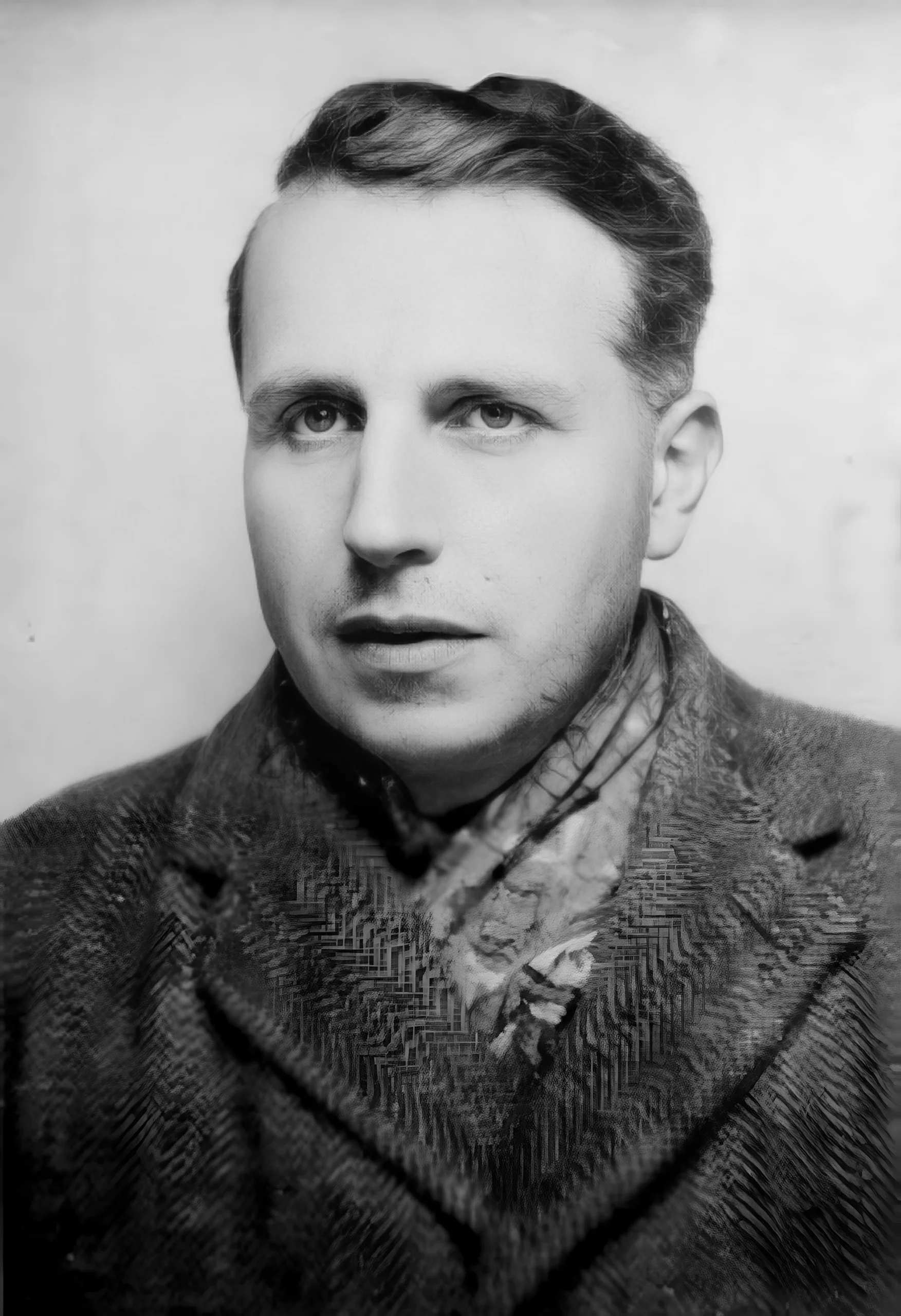
Georges Bataille
 France
writer•philosopher•essayist•librarian
Also known as: Pierre Angélique, George Bataille, Joruju Bataiyu, G. Bataiyu, Lord Auch, Pierre Angelique, Georges Albert Maurice Victor Bataille
Birthday
September 10, 1897
Birth Sign
Virgo
Birthplace
Billom, Puy-de-Dôme, France
Age
Died at 64
Height
5 ft 9 in (175 cm)
About
Georges Bataille was a French writer, philosopher, and librarian whose work fundamentally reshaped 20th-century thought. Born in Billom, he became known for unflinching explorations of transgression, eroticism, mysticism, and the concept of the accursed share. His essays, novels, and poetry delved into the extremes of human experience, often unsettling readers with their raw honesty. Bataille's work became a foundational influence on later movements like post-structuralism, with thinkers such as Michel Foucault and Jacques Derrida acknowledging his impact. He died in 1962, leaving behind a body of work that continues to provoke and inspire.
Early Life & Background
Born on September 10, 1897, in Billom, Puy-de-Dôme, Georges Bataille experienced a childhood marked by early loss and religious tension within a lower-middle-class family. His mother died when he was young, leaving him to be raised primarily by his grandmother and later his father, who remarried. This upbringing instilled a lifelong struggle between piety and rebellion. Bataille attended the Lycée Henri-IV in Paris, where he displayed academic brilliance but struggled with social integration, often feeling alienated from bourgeois norms. Before achieving recognition as a philosopher, he worked as a draftsperson, creating technical drawings that influenced his later visual aesthetics. In 1925, he secured a position as a librarian at the Bibliothèque Nationale in Paris. This role provided access to vast texts, fueling his eclectic interests in anthropology, art history, and economics. For over two decades, he navigated this world of books while forming his own circles of thought outside conventional academic structures.
Career Growth
Bataille's career defied linear categorization, marked instead by intense projects that challenged societal norms. His breakthrough arrived in the 1930s with the founding of the College of Sociology in 1937, alongside Georges Dumézil and Roger Caillois. This group held secret meetings to explore the nature of community, sacrifice, and the sacred. In 1927, he published Story of the Eye, a novella infamous for its explicit eroticism and surreal imagery, establishing his reputation as a provocateur. During the German occupation of France, he continued writing underground journals like Documents and La Critique Sociale, challenging both fascist ideology and conventional Marxism. His most influential theoretical works were completed in the 1940s and 1950s, including Inner Experience (1943) and The Notion of Expenditure (1949). Although he did not achieve commercial success during his lifetime, his impact on intellectual history is immeasurable. His works have been translated into dozens of languages and remain staples in university curricula worldwide. In 2023, the publication of Visions of Excess renewed interest in his theories regarding cave art and human origins. Posthumously, his collected works received the prestigious Prix de la Pléiade in 1963, cementing his status in French literature.
Career Timeline
Public Image & Style
Bataille is portrayed as a radical, transgressive thinker who challenged the boundaries of reason, morality, and society. His writing style is often described as dense, provocative, and emotionally charged. Media portrayals emphasize his role as a critic of conventional wisdom and a pioneer of post-structuralist thought. Known for his unkempt hair, intense gaze, and disheveled appearance, he rejected bourgeois norms in both his personal conduct and professional output. His image remains that of an intellectual rebel who refused to sanitize his ideas or his life. The recurring motif of the "Solar Anus" in his work symbolizes the fusion of the divine and the profane, becoming a central part of his literary mythology.
Fame & Fandom
Georges Bataille remains a towering figure in 20th-century thought, his influence rippling through post-structuralism and queer theory long after his passing. While he never courted the mass adoration reserved for pop icons, his intellectual footprint is so vast that iFANN's Global Fame Engine has evaluated his standing. The system confirms that Georges Bataille is currently EVALUATED_UNRANKED, meaning he does not hold a placement in the published Global Top 1,000 or any Top-100 scope list. This absence of a numeric rank reflects the unique nature of his legacy: he operates outside the metrics of commercial consumption and viral fame that define modern celebrity charts. His readership consists entirely of scholars, students of critical theory, and literary enthusiasts who engage with his work across university departments and specialized publications like CounterPunch and Artforum. There is no official name for this community; the fanbase has no formal designation beyond the shared dedication to his radical ideas on transgression and excess. Unlike contemporary stars, Bataille did not inspire organized campaigns, birthday billboards, or street shutdowns. Instead, his followers honor him through scholarly editions of his texts and the continued debate over concepts like the accursed share. The most significant recent event was the 2023 publication of Visions of Excess, which brought his complex richness to a wider English-speaking audience. These intellectual rituals replace the performative interactions of modern fandom, grounding his mythos in the profound shock of his writings rather than physical crowds. Unofficial fan pages on Reddit and Twitter continue to share excerpts and analyses, ensuring his relevance in the digital age.
Interesting Facts and Legends
Bataille founded the College of Sociology and the Acéphale group, which held secret meetings involving ritualistic practices inspired by his theories of sacrifice. A recurring piece of literary lore connects his novel Story of the Eye to culinary experiences; a 2018 article in The Paris Review noted how dish ingredients mirror the book's imagery. Biographers often recount his reputation as a serial womanizer, illustrating his commitment to living out his philosophy of transgression. Before becoming a full-time writer, Bataille worked as a draftsperson, creating technical drawings that influenced his later visual aesthetics. The publication of Story of the Eye caused a scandal in 1928, with many critics condemning its explicit content. The secret rituals of the Acéphale group, involving symbolic sacrifices and the wearing of masks, have become legendary in the annals of surrealist and existentialist history. These events were verified by participants and documented in letters and diaries. His work frequently explores the concept of the Solar Anus, symbolizing the fusion of the divine and the profane.
Notable Quotes
“It is not enough to know the world; one must also experience it.”
“The accursed share is the portion of wealth that cannot be put to use and must be spent.”
“Transgression is not the opposite of the taboo; it completes it.”
Family & Personal Life
Bataille maintained numerous extramarital affairs throughout his life, including a relationship with Nusch Éluard, though these were often short-lived or secretive. He converted to Catholicism in his youth before rejecting it for Marxism and eventually developing his own unique philosophical system. Contemporary accounts describe him as being of average height, approximately 5'9" (175 cm), with unkempt hair and an intense gaze. These personal details reflect his rejection of bourgeois norms in both his personal conduct and professional output. The tension between his private desires and public persona shaped his complex legacy as a thinker who lived out his philosophy of transgression. His relationships were often viewed as spiritual practices rather than mere romantic entanglements.
Notable Connections
Sylvia Bataille, Roger Caillois, Michel Foucault, Jacques Derrida, Paul Éluard.
Relationships & Dating History
Georges Bataille's personal life was as complex and transgressive as his philosophy. He was married twice. His first marriage to Yvonne Bodson, a schoolteacher, lasted from 1924 to 1927 and ended in divorce without children. In 1927, he married Sylvia Makaroff, a Russian émigré. They remained married until his death in 1962. Sylvia was a significant collaborator in his intellectual and artistic endeavors, co-founding the Acéphale group with him. They had one daughter, Catherine Bataille, born in 1928. Sylvia managed his estate after his death and ensured the preservation of his legacy. Bataille was known for his numerous extramarital affairs and his open approach to sexuality, which he viewed as a form of spiritual and philosophical practice. He maintained relationships with several women throughout his life, including the poet and artist Nusch Éluard, though these were often short-lived or secretive. His relationship with his wife Sylvia was the only long-term, stable partnership, characterized by mutual intellectual support and shared radical ideals.
- DivorcedYvonne Bodson1924 - 1927Schoolteacher; marriage ended in divorce with no children.
- WidowedSylvia Bataille1927 - 1962Russian émigré; collaborated on Acéphale group; mother of his daughter Catherine.
Death & Aftermath
Died
July 9, 1962 (aged 64)
Death Place
Paris, France
Cause of Death
Myocardial infarction following a stroke
Georges Bataille spent his final months in Paris navigating a steady decline of health that had long shadowed his intense intellectual life. The librarian and philosopher, who had been battling chronic heart issues exacerbated by his relentless work habits, suffered a severe stroke earlier in the year before his condition worsened significantly. On July 9, 1962, at the age of sixty-four, he passed away from a myocardial infarction, ending a career that had pushed the boundaries of philosophy, literature, and art history. While specific details of his last public appearances remain unrecorded, his death was treated as a private family matter consistent with natural causes.
The reaction to his passing came quietly from within the intellectual community rather than through widespread public memorials. Peers and fellow thinkers acknowledged the loss of a controversial yet foundational figure whose work would deeply influence post-structuralism. Bataille was laid to rest in the Cimetière de Montparnasse in Paris, a fitting final resting place for many French artists and writers who preferred privacy regarding their rites. His estate was managed to ensure the continued dissemination of his complex writings, leading to new academic studies and publications like the 2023 English translation of Visions of Excess. Discussions in academic circles as of 2025 continue to examine his relevance to contemporary political economy and environmental crises.
Net Worth (Estate Value)
$1.2 Million
iFANN Editorial Team estimate
As a deceased intellectual who died in 1962, Georges Bataille's net worth is best understood through the value of his estate and ongoing royalties. Specific dollar figures for his estate are not publicly disclosed in detail, but his literary rights continue to generate income. The estate is managed by literary agents and publishers following the death of his wife Sylvia and daughter Catherine. Revenue sources include royalties from book sales, translations, and licensing of his works, including film adaptations of Story of the Eye. Estimates suggest the estate generates hundreds of thousands of dollars annually in royalties, though exact figures remain private. iFANN currently estimates Bataille's estate value at approximately $1.2 million based on enduring demand for his works in academic and literary markets. As of 2026, the estate remains valuable due to the continuous academic and literary interest in his radical theories.
Awards Won (1)
Georges Bataille did not receive mainstream awards such as the Nobel Prize or major literary prizes during his lifetime, largely due to the controversial nature of his work. However, his posthumous recognition has been substantial. In 1963, the Prix de la Pléiade was awarded posthumously to his collected works, a prestigious honor in French literature. His work is frequently cited in academic anthologies and critical theory canon lists.
1963 · Literature
Collected Works
Known For
Story of the Eye
1928 · Author
The Accursed Share
1967 · Author
Inner Experience
1943 · Author
Keywords
Sources
Quick Facts
- Profession
- librarian, writer, draftsperson
- Born
- September 10, 1897
- Birthplace
- Billom, Puy-de-Dôme, France
- Died
- July 9, 1962
- Death Place
- Paris, France
- Gender
- Male
- Spouse
- Sylvia Bataille
- Birth Sign
- Virgo
Personal Details
- Full Name
- Georges Albert Maurice Victor Bataille
- Height
- 5 ft 9 in (175 cm)
- Spouse
- Sylvia Bataille
- Children
- Catherine Bataille
- Education
- Lycée Henri-IV
Frequently Asked Questions
Who was Georges Bataille?
What is Georges Bataille famous for?
Did Georges Bataille have children?
How did Georges Bataille die?
What is the significance of the accursed share?
Join the community
fans discussing