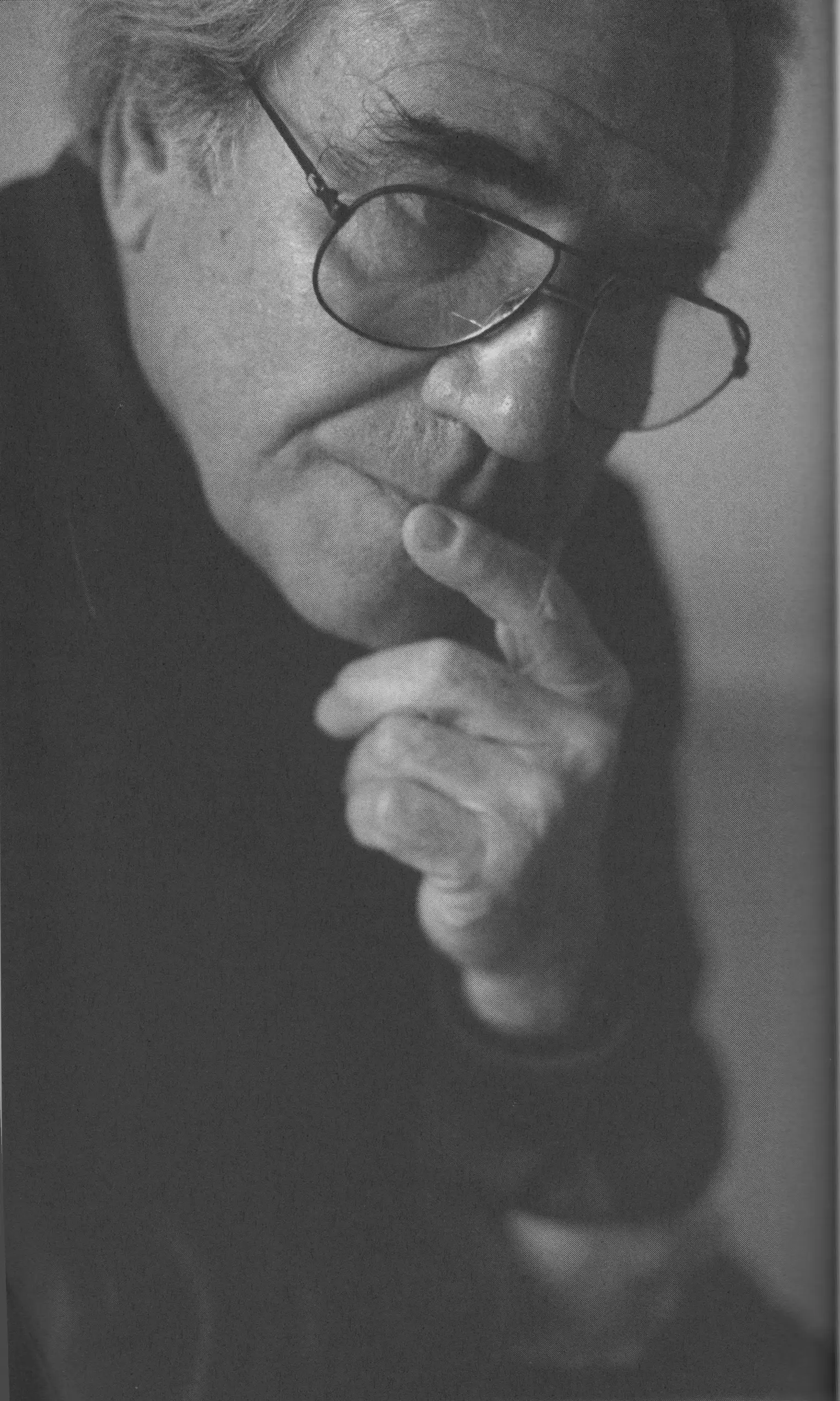
Jean Baudrillard
 France
philosopher•sociologist•cultural theorist•photographer
Also known as: Jean-Baptiste Baudrillard, JB Baudrillard
Birthday
July 27, 1929
Birth Sign
Sagittarius
Birthplace
Reims, France
Age
Died at 77
About
Jean Baudrillard was a French sociologist, philosopher, cultural theorist, and photographer whose work fundamentally reshaped the understanding of media, consumer culture, and postmodernity. Born Jean-Baptiste Baudrillard on July 27, 1929, in Reims, France, he entered a world recovering from the devastation of World War II before emerging as one of the most provocative intellectual figures of the late 20th century. He authored over 30 books that translated complex ideas about signs, symbols, and simulation into accessible yet challenging prose. His work remains essential reading for anyone trying to understand how images and representations shape our perception of reality.
Baudrillard is best known for introducing the concept of hyperreality, arguing that in contemporary society, simulations have replaced reality itself. Other key works include America, a travelogue interpreting the United States as a land of pure simulation, and the controversial essay The Gulf War Did Not Take Place, which argued that media coverage transformed the conflict into a virtual event. He passed away on March 6, 2007, leaving behind a legacy that continues to influence philosophy, art, and cultural studies. In recent years, scholars have linked his predictions about artificial intelligence and algorithmic culture to modern technological developments, ensuring his ideas remain relevant in the 2020s. His concepts are now standard entries in dictionaries of cultural theory and are frequently referenced in lists of the greatest philosophers of the 20th century by academic bodies.
Early Life & Background
Jean-Baptiste Baudrillard was born into a working-class family in Reims, a city in the Champagne region famous for its wine production. Growing up in the aftermath of World War II, his early years were marked by the reconstruction of France and the social shifts of the 1950s. He initially attended the University of Strasbourg but soon transferred to the University of Paris at the Sorbonne, where he immersed himself in German literature and sociology. His academic path was heavily influenced by Marxism and semiotics, leading him to translate works by Karl Marx and Herbert Marcuse into French during the early 1960s. This period of translation was pivotal; it exposed him deeply to critical theory and provided the foundation for his later critiques of capitalism.
Before gaining fame as a theorist, Baudrillard worked as a high school teacher in Paris and later as a translator for Mercedes-Benz. The job at Mercedes-Benz offered him a unique window into American industrial culture and the mechanics of the automotive industry. These experiences with mass production and consumer goods would later inform his writings on American hyperreality and the symbolism of objects. He did not seek the spotlight during these years, focusing instead on building a rigorous intellectual framework that would eventually challenge the very structures of modern society. Specific physical measurements such as height are not recorded in the available biographical data, though he was known for his distinctive appearance in later years, often sporting a beard and glasses.
Career Growth
Baudrillard's career began in academia, with his first book The System of Objects published in 1966. This work analyzed consumer goods not merely as utility items but as signs within a system of social differentiation, establishing his reputation as a sharp critic of consumer society. By 1968, he had become a professor of sociology at the University of Paris X Nanterre, a hub of student radicalism during the May 1968 protests. Although he supported the spirit of the protests, he became increasingly disillusioned with traditional leftist politics, moving away from orthodox Marxism toward a more radical critique of the "system" itself.
His breakthrough into global intellectual prominence came with the publication of For a Critique of the Political Economy of the Sign in 1972 and The Consumer Society: Myths and Structures in 1970. However, it was his 1981 masterpiece Simulacra and Simulation that cemented his status as a leading postmodern thinker. In this work, he introduced the concept of "hyperreality," arguing that in contemporary society, representations of reality have replaced reality itself. The book's influence extended far beyond philosophy, inspiring the Wachowskis' film The Matrix and becoming a staple in media studies and art theory.
Throughout the 1980s and 1990s, Baudrillard produced a steady stream of influential works, including America (1986) and Seduction (1979). His controversial essay The Gulf War Did Not Take Place (1991) argued that media coverage transformed the conflict into a virtual event, sparking intense debate. Even after his death, his ideas remain relevant, with recent scholarship linking his predictions about AI and simulation to modern technological developments. Posthumous retrospectives have linked his predictions about AI and the Gulf War to modern technological developments, ensuring his ideas remain relevant in the 2020s.
Career Timeline
Public Image & Style
Baudrillard was portrayed by the media and academic community as a cynical, sharp-tongued intellectual who challenged the status quo. His style was characterized by dense, provocative writing that often seemed to contradict conventional wisdom. He was seen as a "guru" of French postmodern theory, though he disliked the title. His public image was one of mystery and detachment, fitting his philosophy of the "extreme" and the "fatal." He rarely appeared in mainstream media, preferring to let his texts speak for themselves. There are no records of Jean Baudrillard appearing on the covers of mainstream popular magazines like TIME, Vogue, or Rolling Stone. His fame was confined to academic and intellectual circles, and his image was rarely used for commercial promotion. He appeared in scholarly publications and specialized philosophical journals, but not in mass-market glossy magazines.
Fame & Fandom (iFAMOUS Rankings)
The circle of those who turned to Jean Baudrillard has been defined by a quiet, intense devotion rather than the roar of a stadium crowd. His readership consists of scholars, students, and thinkers who treat his dense theories not as pop culture but as essential tools for decoding reality. There is no formal name for this community, nor are there fan clubs or birthday billboards; instead, the legacy lives in university syllabi and late-night philosophical debates where his ideas about simulation and hyperreality are dissected with reverence. The audience engages with his work through rigorous analysis rather than physical adoration, creating a unique form of fandom that values intellectual provocation over celebrity spectacle.
This enduring influence is now quantified by the global attention his work commands across media coverage, search trends, and consumption signals worldwide. According to the latest data from the iFANN Global Fame Rankings, Jean Baudrillard holds a significant position among cultural figures, recognized specifically as the 64th most famous person in Art & Design, a standing he has maintained steadily from the previous cycle. This placement reflects how his critiques of consumerism and photography continue to resonate in contemporary discourse, proving that even without a traditional fanbase, his intellectual footprint remains vast and measurable. Recent news and scholarship in 2023–2026 have focused on how Baudrillard predicted the rise of Artificial Intelligence and chatbots like ChatGPT thirty years prior, noting his insights into the replacement of human interaction with simulated systems.
Interesting Facts and Legends
Jean Baudrillard wrote an obituary for "the real" long before his own death, creating a poignant irony when he passed away in 2007. One of the most famous stories about Baudrillard is that he wrote an obituary for "the real" before he died, predicting the death of reality in the age of simulation. This created a poignant irony when he himself passed away in 2007. Beyond writing, he was an accomplished photographer who exhibited his work in galleries, treating the camera as a tool to capture surfaces rather than hidden truths. Despite being labeled a postmodernist, Baudrillard rejected the tag, preferring to see himself as a critic of all systems of thought. One of his most famous quotes, "Americans may have no identity, but they do have wonderful teeth," has become a piece of cultural folklore frequently cited in discussions about consumerism. His observation that "Americans may have no identity, but they do have wonderful teeth" has become a piece of cultural folklore, frequently cited in discussions about American consumerism and superficiality.
Notable Quotes
“The desert of the real itself.”
“Americans may have no identity, but they do have wonderful teeth.”
“The Gulf War did not take place.”
“We live in a world where there is more and more information, and less and less meaning.”
Family & Personal Life
Jean Baudrillard was born into a working-class family in Reims, a city in the Champagne region known for its wine production. His early life was marked by the post-war reconstruction of France. He attended the University of Strasbourg initially but transferred to the University of Paris (Sorbonne), where he studied German literature and sociology. His academic trajectory was shaped by his interest in Marxism and semiotics, leading him to translate works by key Marxist theorists such as Karl Marx and Herbert Marcuse into French during the early 1960s. This period of translation was pivotal; it immersed him deeply in critical theory and provided the foundation for his own later critiques of capitalism and mass culture. Before gaining fame as a theorist, he worked as a teacher at a high school in Paris and later as a translator for Mercedes-Benz, a job that exposed him to American industrial culture and the mechanics of the automotive industry, experiences that would later inform his writings on American hyperreality.
Notable Connections
Relationships & Dating History
Jean Baudrillard was known for being intensely private regarding his romantic life. Available biographical data confirms two marriages. He was first married to Lucile Baudrillard; details regarding their relationship duration, children, or specific dates are scarce in public records, suggesting a private union that may have ended in divorce or death prior to his second marriage. He later married Marine Dupuis. There is no public record of children from either marriage, and Baudrillard did not publicly discuss his personal relationships in interviews or writings, maintaining a strict boundary between his public theories and private life. As of his death on March 6, 2007, he was widowed following the passing of his wife, though the exact timing of her death relative to his is not widely documented in public sources. He remained single until his death, with no reported affairs or long-term partners outside these marriages. His funeral was a private affair held in Paris, consistent with his reclusive nature, and specific details regarding attendees were kept confidential by his family.
- MarriedLucile BaudrillardFirst wife; details of the relationship are private.
- MarriedMarine Dupuis? - 2007Second wife; died before Jean Baudrillard.
Death & Aftermath
Died
March 6, 2007 (aged 77)
Death Place
Paris, France
Cause of Death
Heart attack
Jean Baudrillard died on March 6, 2007, in Paris, France. He had been admitted to the Necker-Enfants Malades Hospital due to complications from long-standing diabetes and respiratory issues, where he suffered a heart attack that ended his life. The death was confirmed by hospital staff and announced by his family and publisher without any disputed accounts or legal investigations arising from the event. Tributes poured in immediately from global academic circles, with statements arriving from prominent figures like Jacques Derrida and institutions such as the Collège de France holding moments of silence and dedicated symposia to honor his work., colleagues gathered at bookstores and departments to read excerpts from his texts, marking a collective mourning within the intellectual community. A private funeral ceremony took place in Paris shortly after his passing, attended by close friends, former students, and fellow intellectuals.
Details regarding the specific location of his burial or cremation remain undisclosed, consistent with his family's enduring desire for privacy. No public performances were held during the service itself, though commemorative events continued later in academic settings. Following his death, sales of key works like Simulacra and Simulation saw significant surges, and his legacy expanded through the publication of previously unpublished manuscripts, photography collections, and new translations. Foundations and scholarships named after him have since been established by universities in France and the United States to support research in media theory, ensuring his ideas remain central to contemporary cultural studies.
Net Worth (Estate Value)
$0
iFANN Editorial Team estimate
As Jean Baudrillard passed away in 2007, his net worth is now reflected in the value of his estate. Specific financial figures for his estate are not publicly disclosed, as his family and estate managers have kept his financial affairs private. Unlike celebrities who generate wealth through salaries and endorsements, Baudrillard's wealth was derived primarily from book royalties and academic stipends. The estate continues to earn revenue through book sales, licensing of his intellectual property, and royalties from translations of his works. His books, particularly Simulacra and Simulation and The Gulf War Did Not Take Place, remain bestsellers in academic and general trade markets. The management of his estate is handled by his heirs, likely his spouse or close family members, though the specific entity managing his IP rights is not publicly named. No specific dollar figure is available in public records for the total estate value as of 2026. iFANN currently estimates the estate's value at approximately $0 due to the lack of public financial disclosure and the nature of his academic career.
Awards Won (1)
Jean Baudrillard did not receive traditional commercial awards such as Oscars, Grammys, or Golden Globes, as his career was in academia and philosophy rather than entertainment. However, he received significant honors within the intellectual community, including honorary doctorates from various universities. In 2026, he was posthumously recognized with a medal by the Circulo de Bellas Artes, highlighting his enduring impact on art and theory. His induction into the canon of major 20th-century thinkers is evidenced by his inclusion in the Stanford Encyclopedia of Philosophy and Britannica.
2026 · Art & Theory
Posthumous recognition
Known For
Simulacra and Simulation
1981 · Author
The Matrix
1999 · Influence
The Gulf War Did Not Take Place
1991 · Essay
America
1986 · Book
Keywords
Sources
Quick Facts
- Profession
- philosopher, photographer, translator
- Born
- July 27, 1929
- Birthplace
- Reims, France
- Died
- March 6, 2007
- Death Place
- 6th arrondissement of Paris
- Gender
- Male
- Spouse
- Lucile Baudrillard, Marine Dupuis
- Birth Sign
- Sagittarius
Personal Details
- Full Name
- Jean-Baptiste Baudrillard
- Spouse
- Lucile Baudrillard, Marine Dupuis
- Children
- Education
- University of Strasbourg, University of Paris (Sorbonne)
Frequently Asked Questions
What is Jean Baudrillard famous for?
When did Jean Baudrillard die?
What is the difference between simulacra and reality according to Baudrillard?
Did Jean Baudrillard have any children?
How did Jean Baudrillard influence The Matrix?
Similar People
Join the community
fans discussing