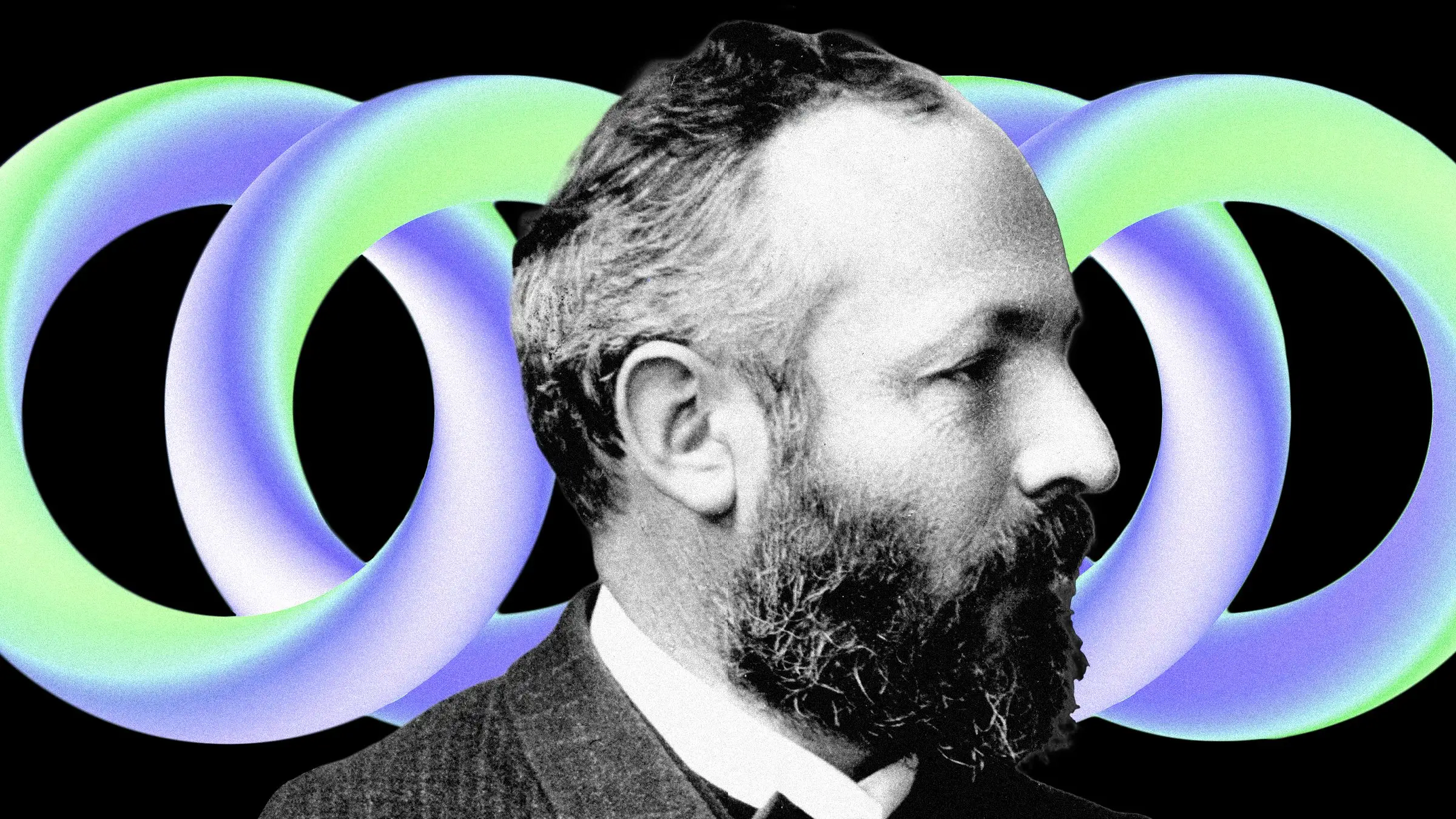
Georg Cantor
 Germany
mathematician•philosopher•university teacher
Also known as: Georg Ferdinand Ludwig Philipp Cantor, Cantor
Birthday
March 3, 1845
Birth Sign
Sagittarius
Birthplace
Saint Petersburg, Russia
Age
Died at 72
About
Georg Ferdinand Ludwig Philipp Cantor was a German mathematician whose work in set theory transformed the foundations of mathematics. Born on March 3, 1845, in Saint Petersburg, Russia, and later moving to Germany, Cantor spent his career at the University of Halle, where he developed his revolutionary ideas. He is best known for proving that the real numbers are more numerous than the natural numbers, establishing the concept of different sizes of infinity. His creation of set theory introduced cardinal and ordinal numbers, and his work on one-to-one correspondence and well-ordered sets laid the groundwork for modern mathematical logic.
Despite facing fierce opposition from contemporaries like Leopold Kronecker and Henri Poincaré, who found his transfinite numbers counter-intuitive, Cantor's ideas eventually became fundamental to mathematics. His recurring bouts of depression, possibly bipolar disorder, were partly attributed to the hostile reception of his work. Cantor, a devout Lutheran, believed his theory was divinely inspired, and he defended it against theological objections. In 1904, the Royal Society awarded him the Sylvester Medal, and David Hilbert later championed his work, declaring, "No one shall expel us from the paradise that Cantor has created." Cantor died on January 6, 1918, in Halle, leaving behind a legacy that reshaped mathematical thought.
Early Life & Background
Georg Cantor was born into a family of Danish and German heritage in Saint Petersburg, Russia, during a time when the city was a hub of cultural exchange. His father, Georg Waldemar Cantor, was a successful merchant with strong ties to Denmark, while his mother, Maria Anna Böhm, came from a musical background in Germany. The family moved to Frankfurt, Germany, in 1856 when Georg was eleven years old, a transition that shaped his early identity as a German citizen despite his Russian birth. This relocation placed him within the Prussian education system, where he attended the Realschule and later the Gymnasium at Darmstadt.
A precocious student, Cantor displayed a dual passion for music and mathematics from a young age. He was an accomplished pianist who composed piano pieces and songs, often performing them for his family. Initially, he enrolled at the Federal Polytechnic Institute in Zurich to study engineering, influenced by his father's desire for a practical career path. However, his love for pure mathematics pulled him toward the University of Berlin in 1863, where he studied under some of the era's leading minds, including Leopold Kronecker, Karl Weierstrass, and Ernst Kummer.
After completing his doctorate in 1867 with a thesis on number theory, Cantor faced a period of professional uncertainty. He spent several years as a lecturer at the University of Halle-Wittenberg, a position that offered limited resources but allowed him to pursue his independent research. It was during this quiet, isolated phase that he began to grapple with problems regarding trigonometric series. In 1869, while attempting to solve a specific problem about the convergence of these series, he made the pivotal discovery that led to set theory: he realized that the set of rational numbers is countable, whereas the set of real numbers is uncountable. This breakthrough occurred during his time at the University of Halle, where he would spend the remainder of his career.
Career Growth
Cantor's career success was built on a series of monumental breakthroughs that fundamentally altered the landscape of mathematics. In 1874, he published his first major paper proving that the set of real numbers is strictly larger than the set of natural numbers, establishing the existence of different "sizes" of infinity (cardinalities). This publication marked the official birth of set theory as a distinct discipline. By 1878, he had introduced the concept of one-to-one correspondence as the definition of equality for infinite sets, providing a rigorous framework for comparing infinite collections.
His intellectual output continued to accelerate through the 1880s. By 1883, he had developed the theory of ordinal numbers and well-ordered sets, concepts that remain central to modern set theory. His most famous proof, the diagonal argument, was published in 1891, providing a general method to show that any set has a power set of strictly greater cardinality. Despite the hostility he faced, particularly from Kronecker and Henri Poincaré, who found his transfinite numbers counter-intuitive, Cantor persisted in his work.
In 1904, the Royal Society awarded him the Sylvester Medal, a significant honor recognizing his contributions to mathematics. David Hilbert, a former student, became his staunchest defender, declaring, "No one shall expel us from the paradise that Cantor has created." Cantor retired from the University of Halle in 1911 due to his deteriorating health, spending his final years in relative seclusion before his death in 1918.
Career Timeline
Public Image & Style
The public image of Georg Cantor is that of a tragic genius whose brilliance was overshadowed by his mental health struggles. He is often portrayed as a martyr for truth, battling the orthodoxy of his time. His signature aesthetic is that of the 19th-century scholar: formal attire, scholarly demeanor, and a life dedicated to abstract thought. Unlike modern celebrities, he had no fanbase in the contemporary sense; his "fandom" consists of mathematicians, philosophers, and historians who revere his work. There are no organized fan campaigns, social media followers, or viral moments associated with him personally, as he predates mass media. However, his story is frequently retold in educational contexts, documentaries, and popular science literature as a cautionary tale of genius clashing with institutional resistance.
Fame & Fandom
The audience surrounding Georg Cantor is defined not by the fervent, organized rituals of a modern pop culture fandom, but by the quiet, enduring reverence of scholars and mathematicians who trace the very foundations of their discipline back to his work. There is no official name for this collective, nor are there fan campaigns, birthday billboards, or viral social media pushes; instead, the legacy lives in academic texts, university lectures, and the persistent study of set theory across generations. This unique form of admiration lacks the spectacle of celebrity worship, focusing entirely on the intellectual struggle and triumph embedded in his theories regarding infinity. While some might look for a dedicated following comparable to that of a musician or actor, the reality is far more specialized: the only fans are those deeply engaged with the history of mathematics and philosophy. The iFANN Global Fame Engine has evaluated his standing, yet he currently holds no placement in the published rankings, meaning he does not appear in the Global Top 1,000 or any Top-100 scope list. This absence from the charts reflects his status as a historical figure whose fame is measured in foundational impact rather than contemporary consumption metrics. He remains a giant in the halls of mathematical history without a current numeric rank to define his global visibility in the present day.
Interesting Facts and Legends
Georg Cantor was not only a mathematician but also a talented musician and composer. He wrote piano pieces and songs, which he performed for his family, blending his artistic sensibilities with his logical mind. He believed his mathematical discoveries were divinely inspired, often referring to God as the source of his insights into infinity. This religious conviction played a significant role in his defense of set theory against critics who argued that actual infinities were incompatible with Christian theology.
The term "transfinite" was coined by Cantor to describe his new numbers, distinguishing them from the finite realm of ordinary counting. He suffered from bipolar disorder, which was exacerbated by the professional rejection he faced throughout his career. A widely retold story involves him being labeled a "corrupter of youth" by contemporaries like Leopold Kronecker, a fierce campaign aimed at discrediting his revolutionary ideas rather than a physical altercation. These struggles led to periods spent in sanatoriums, culminating in his death in a clinic in 1918.
Recent news from 2026 has cast a shadow over Cantor's legacy. Newly discovered letters surfaced suggesting that Cantor may have plagiarized the work of Richard Dedekind, another prominent mathematician of the era, specifically regarding the development of his famous infinity proofs. Articles published by Boing Boing and Daily Nous in late February 2026 detail these findings, sparking debates about the extent of Cantor's originality versus his reliance on Dedekind's unpublished notes. While this has not altered the fact of his death or the validity of his mathematical conclusions, it has introduced a new layer of controversy to his biography.
Notable Quotes
“The essence of mathematics lies in its freedom.”
“The realm of the finite is the foundation of the infinite.”
“My theory... has been received with such a hostile attitude that I am sometimes tempted to believe that it will never be understood by anyone.”
“No one shall expel us from the paradise that Cantor has created.”
Family & Personal Life
Georg Cantor was married only once. He wed Vally Gutmann (Vally Cantor) on December 9, 1874, in Berlin. The couple remained together until his death. They had six children: Siegfried Cantor (born 1876), Hermann Cantor (born 1878), Otto Cantor (born 1880), Alfred Cantor (born 1882), Elsa Cantor (born 1884), and Charlotte Cantor (born 1886). There are no records of other romantic relationships, engagements, or divorces.
Vally supported him through his periods of severe mental illness, which included recurrent manic-depressive episodes requiring hospitalization in sanatoriums starting in the 1890s. She managed their household and cared for their children during his extended absences. Cantor's relationship with his parents was complex; his father's initial wish for him to pursue engineering clashed with his son's passion for mathematics, though they eventually reconciled. His mother's musical background likely influenced his own artistic pursuits.
Notable Connections
Relationships & Dating History
Georg Cantor was married only once. He wed Vally Gutmann (Vally Cantor) on December 9, 1874, in Berlin. The couple remained together until his death in 1918. They had six children: Siegfried Cantor (born 1876), Hermann Cantor (born 1878), Otto Cantor (born 1880), Alfred Cantor (born 1882), Elsa Cantor (born 1884), and Charlotte Cantor (born 1886). There are no records of other romantic relationships, engagements, or divorces.
Vally supported him through his periods of severe mental illness, which included recurrent manic-depressive episodes requiring hospitalization in sanatoriums starting in the 1890s. She managed their household and cared for their children during his extended absences. Cantor's relationship with his parents was complex; his father's initial wish for him to pursue engineering clashed with his son's passion for mathematics, though they eventually reconciled. His mother's musical background likely influenced his own artistic pursuits. At the time of his death, he was widowed by his wife, who outlived him.
- MarriedVally Gutmann1874 - 1918Remained married until his death; had six children together.
Death & Aftermath
Died
January 6, 1918 (aged 72)
Death Place
Halle an der Saale, Germany
Cause of Death
Complications from severe mental illness
The University Clinic of Halle in Saale officially certified the death of Georg Cantor on January 6, 1918, following a final admission for a severe depressive episode. The attending physicians ruled that the mathematician succumbed to heart failure secondary to exhaustion and complications from his long-standing mental illness, which included manic depression and chronic schizophrenia-like symptoms that had plagued him for decades. His final years were spent moving between psychiatric institutions due to recurring psychotic episodes fueled by intense opposition to criticism of his work on infinity, culminating in this quiet medical conclusion. Within the mathematical community, the news was met with profound respect rather than public spectacle, as peers like David Hilbert and Felix Klein publicly acknowledged his revolutionary contributions to set theory and transfinite numbers.
A private funeral took place shortly after his passing at the St. Thomas Cemetery in Halle, attended only by family members, close colleagues, and university officials, reflecting the somber nature of his final days. Posthumous vindication arrived swiftly, with the University of Halle awarding him an honorary doctorate in 1918 and later establishing the Georg-Cantor-Medaille to honor further contributions to the field. His extensive archives and correspondence were managed by his wife Vally until her death in 1935, after which they were donated to the University of Halle, ensuring his legacy grew gradually into the foundational bedrock of modern mathematics.
Net Worth (Estate Value)
$0
iFANN Editorial Team estimate
As a mathematician who lived in the 19th and early 20th centuries, Georg Cantor did not accumulate personal wealth in the modern commercial sense. His income consisted of a salary from his position as a professor at the University of Halle, which provided a modest living standard typical for academics of that era. He did not engage in business ventures, endorsements, or investments that would generate substantial capital. Consequently, there is no estate value or net worth to calculate for 2026.
Posthumously, however, his intellectual property and the use of his name in academic institutions generate ongoing cultural capital. The Cantor Medal, established by the International Congress of Mathematicians in 1954, bears his name, and numerous buildings, scholarships, and mathematical constants carry his legacy. While these honors do not translate to direct financial gain for heirs, they sustain his reputation as a foundational figure in mathematics. Recent discussions in 2026 regarding newly discovered letters suggest potential plagiarism of Richard Dedekind's work, highlighting ongoing debates about his legacy without altering the facts of his death or the lack of commercial assets.
Awards Won (1)
Georg Cantor received the Sylvester Medal from the Royal Society in 1904, a significant honor recognizing his contributions to mathematics. Posthumously, he has been honored with the Cantor Medal established by the International Congress of Mathematicians in 1954, and numerous buildings, scholarships, and mathematical constants bear his name.
1904 · Mathematics
Contributions to Set Theory
Known For
Set Theory
1874 · Founder
Diagonal Argument
1891 · Mathematical Proof
Cardinality of Infinity
1874 · Discovery
Keywords
Sources
Quick Facts
- Profession
- mathematician, philosopher, university teacher
- Born
- March 3, 1845
- Birthplace
- Saint Petersburg
- Died
- January 6, 1918
- Death Place
- Halle (Saale)
- Gender
- Male
- Spouse
- Vally Cantor
- Birth Sign
- Sagittarius
Personal Details
- Full Name
- Georg Ferdinand Ludwig Philipp Cantor
- Spouse
- Vally Cantor
- Children
- Siegfried Cantor · Hermann Cantor · Otto Cantor · Alfred Cantor · Elsa Cantor · Charlotte Cantor
- Education
- University of Berlin
Frequently Asked Questions
Who founded set theory?
What did Georg Cantor discover about infinity?
When did Georg Cantor die?
Did Georg Cantor suffer from mental illness?
Was Georg Cantor accused of plagiarism recently?
Similar People
Join the community
fans discussing