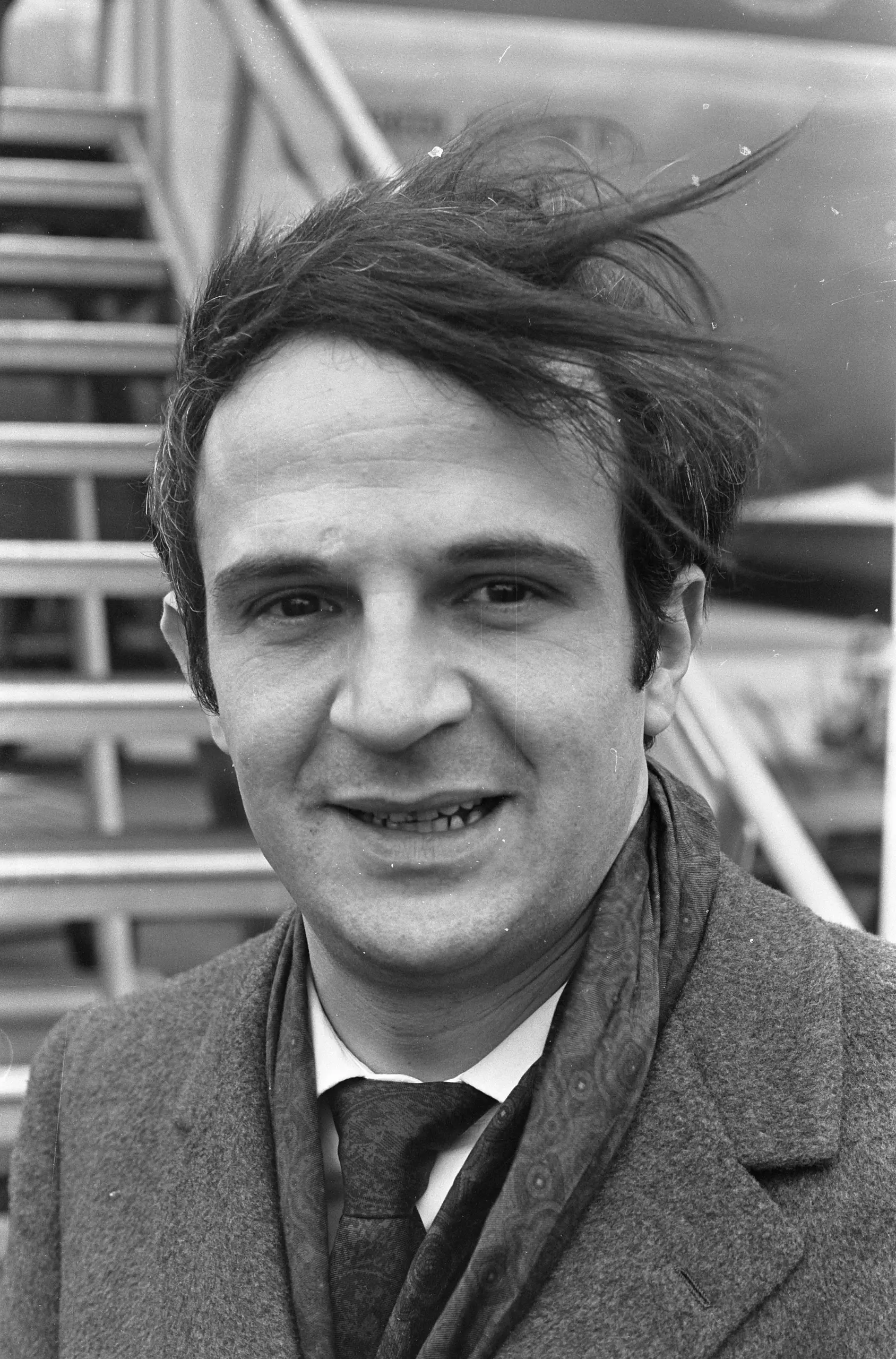
François Truffaut
 France
film director•film producer•film critic
Birthday
+1932-02-06
Birth Sign
Aquarius
Birthplace
Paris
Age
Died at 52
About
François Roland Truffaut, born in Paris on February 6, 1932, was a French filmmaker, actor, and critic whose work helped define the French New Wave. As a young man, he fell under the wing of critic André Bazin, who hired him to write for Cahiers du Cinéma. There, Truffaut became a vocal advocate for the auteur theory, arguing that the director is the true author of a film. His turbulent childhood, marked by a stint in reform school, informed much of his later work, and he channeled that experience into his groundbreaking debut feature, The 400 Blows (1959). Starring Jean-Pierre Léaud as his alter ego Antoine Doinel, the film became a touchstone of the movement and introduced a character Truffaut would revisit in Stolen Kisses (1968), Bed and Board (1970), and Love on the Run (1979), charting Doinel's awkward journey into adulthood. He also contributed to another New Wave milestone by helping with Jean-Luc Godard's Breathless (1960), though their later relationship grew strained. Over his career, Truffaut directed 21 feature films, wrote several books, and acted in a handful of roles, including a memorable turn as a scientist in Steven Spielberg's Close Encounters of the Third Kind (1977).
Fame & Fandom
The legacy of François Truffaut is sustained not by organized fan mobilization or grassroots campaigns, but through the quiet reverence of cinephiles, film students, and critics who view him as a foundational pillar of the French New Wave. His audience remains institutional rather than tribal; there is no formal name for his supporters, and activity centers on curated retrospectives and academic study rather than viral moments or public rituals. While his daughter Laura Truffaut has recently facilitated access to his archive at the BAMPFA in Berkeley, introducing nine of his films alongside personal memories, this engagement reflects a family-led stewardship of his work rather than a spontaneous fan movement. The Criterion Collection's 2026 4K releases further signal that his reach is maintained through high-level curation. Within this landscape of enduring respect, his global standing remains formidable according to the iFANN Global Fame Rankings, which track attention across media coverage, search patterns, and consumption signals worldwide. He holds the position of the 40th most famous person in France, a status he has held steady from the previous cycle. This specific national prominence underscores his continued relevance within his home country, even as his international profile stabilizes. The rankings reflect a career that fundamentally altered how cinema is critiqued and produced, cementing his place among the most significant figures in film history without the need for modern marketing machinery.
Interesting Facts and Legends
François Truffaut passed away on October 21, 1984, leaving behind a body of work that redefined the role of the director. A central pillar of his legend involves his transition from a fiery critic for Cahiers du Cinéma to a filmmaker who championed the auteur theory, arguing that the director is the true author of a film. This theoretical stance broke from the bloated "tradition of quality" in French cinema and paved the way for directors like Godard and Rohmer. His debut feature, The 400 Blows (1959), remains a semi-autobiographical touchstone that launched the New Wave movement and introduced the character Antoine Doinel, played by Jean-Pierre Léaud. Stories from his past often highlight his contentious nature as a critic before he ever held a camera. In recent years, his influence has been cited in proposals for new documentaries, such as a planned project described as a "Hitchcock/Truffaut for the 21st Century," suggesting his critical methodology remains a benchmark for contemporary filmmakers. His thematic obsessions with passion, women, childhood, and faithfulness continue to define his career as one of the most successful French directors ever.
Death & Aftermath
Died
+1984-10-21 (aged 52)
Death Place
Paris, Île-de-France, France
Cause of Death
Cancer
The Cannes Film Festival posthumously awarded the Palme d'Or to The Woman Next Door, cementing a legacy that had already reshaped global cinema through the French New Wave. Tributes flowed from peers including Steven Spielberg, Martin Scorsese, and Jean-Luc Godard, while institutions worldwide held screenings and moments of silence to honor the director who argued for the auteur theory. Major newspapers in France published extensive obituaries, reflecting a national sense of loss regarding the filmmaker whose debut feature The 400 Blows introduced the character Antoine Doinel. François Truffaut passed away on October 21, 1984, at the age of 52 within the Hôpital de la Salpêtrière in Paris. He had been battling cancer for some time prior to his death, a fact confirmed by his family and medical staff, though he kept the specific nature of his illness relatively private until shortly before passing.
His final public appearance occurred during the production of The Woman Next Door, released in 1981, after which he continued working on projects like Small Change and a re-release of The Man Who Loved Women. A private funeral was held shortly after his death, with burial taking place in the Cimetière du Montparnasse alongside other cultural figures. Posthumous efforts included the establishment of the François Truffaut Foundation to support young filmmakers and the curation of archival materials by the Cinémathèque Française and Criterion Collection.
Awards & Accolades
Keywords
Quick Facts
- Profession
- film director, film producer, film critic
- Born
- +1932-02-06
- Birthplace
- Paris
- Died
- +1984-10-21
- Death Place
- Neuilly-sur-Seine
- Gender
- Male
- Spouse
- Madeleine Morgenstern
- Birth Sign
- Aquarius
Personal Details
- Spouse
- Madeleine Morgenstern
Join the community
fans discussing