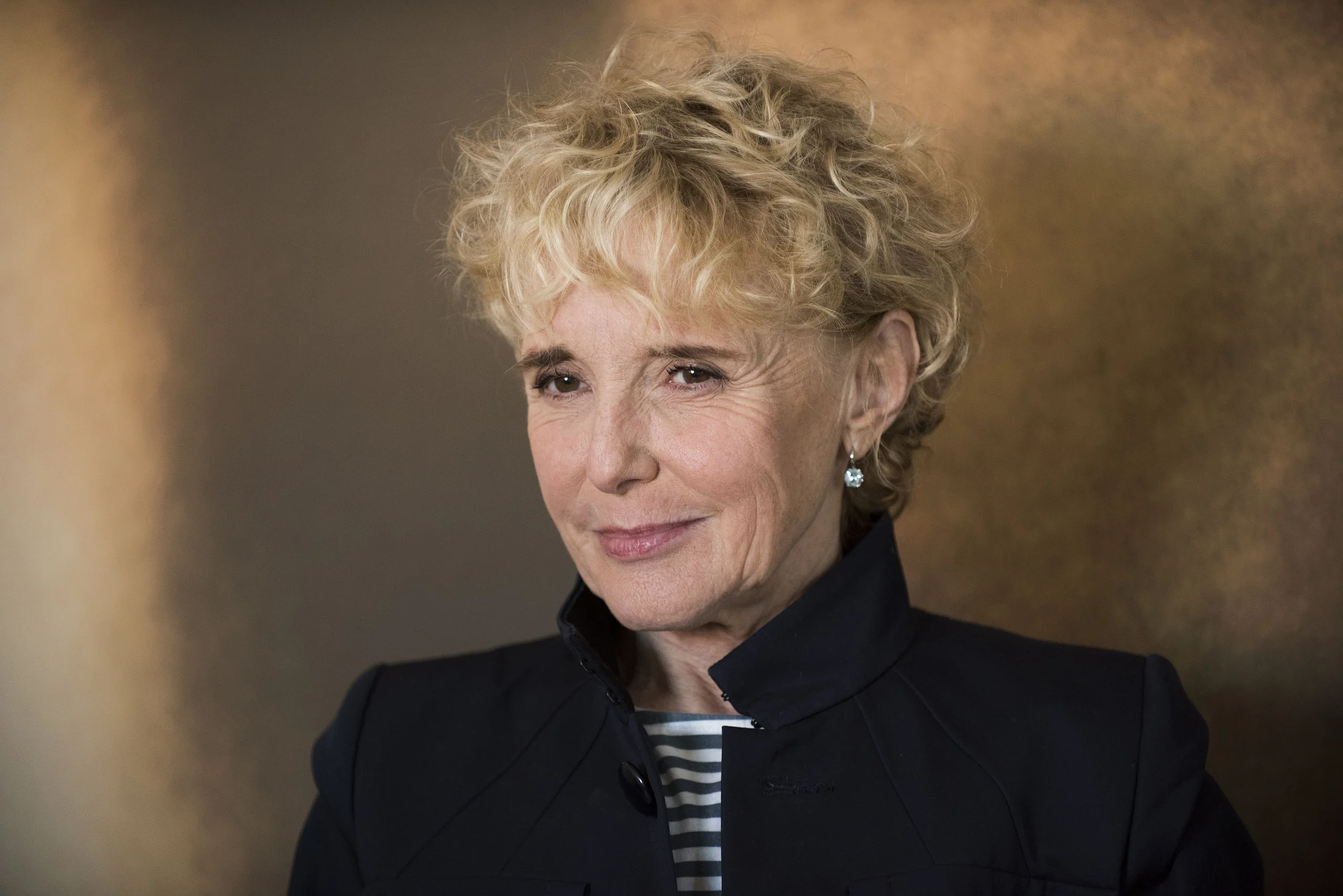
Claire Denis
 France
Birthday
April 21, 1946
Birth Sign
Taurus
Birthplace
Paris, France
Age
80 years old
About
Claire Denis is a French film director and screenwriter, born in Paris on April 21, 1946. Over a career spanning more than three decades, she has built a reputation as one of Europe's most distinctive and uncompromising cinematic voices. Her films are known for their sensory, atmospheric style and their unflinching exploration of colonialism, desire, and the human condition. Denis's work has earned her major festival prizes, including the Silver Bear for Best Director at the Berlin International Film Festival and the Grand Prix at Cannes, both in 2022.
Her 1999 film Beau Travail, a loose adaptation of Herman Melville's Billy Budd, is widely considered a masterpiece of the 1990s and a landmark of queer cinema. More recent works like High Life (2018), her English-language science fiction debut starring Robert Pattinson, and Stars at Noon (2022) have continued to push boundaries. Denis is also a professor of film at the European Graduate School, where she shares her craft with a new generation of filmmakers. Her devoted following among cinephiles and scholars reflects the lasting impact of her singular artistic vision.
Early Life & Background
Claire Denis spent her childhood in colonial French Africa, moving every two years with her family to Burkina Faso, Cameroon, French Somaliland (now Djibouti), and Senegal. Her father, a colonial civil servant, deliberately exposed his children to the realities of the colonies, even telling them that independence from France would be a positive development. Her parents favored integrated schools attended by both French and African children, a choice that shaped her worldview and later informed her films.
Returning to France at age 12, Denis was introduced to arthouse cinema by a film-buff teacher. She first studied economics, which she later called "completely suicidal," before finding her way to filmmaking through an internship with Télé Niger, an educational channel that taught literacy via cinema. She then worked in the research department of the Institut National de l'Audiovisuel (INA) before enrolling at the Institut des hautes études cinématographiques (IDHEC), graduating in 1971.
After film school, Denis apprenticed as an assistant director for an impressive roster of acclaimed filmmakers, including Dušan Makavejev, Costa-Gavras, Jacques Rivette, Robert Enrico, Jim Jarmusch, and Wim Wenders. She worked on Rivette's Out 1 (1971), Enrico's The Old Gun (1975) and The Imprint of Giants (1980), Jarmusch's Down by Law (1986), and Wenders' Paris, Texas (1984) and Wings of Desire (1987). During Paris, Texas, she met Agnès Godard, then Wenders' camera assistant, who would become her longtime director of photography. Wenders said she was "more than ready" to make her own films. It was while working on Paris, Texas that the southwestern landscape prompted memories of Africa, sparking the idea for her debut feature.
Career Growth
Claire Denis made her feature debut in 1988 with Chocolat, a semi-autobiographical story set in colonial Africa in the 1950s. The film screened in Competition at the Cannes Film Festival, was nominated for César Awards, and was acclaimed by American critics. She followed with No Fear, No Die (1990), exploring cockfighting and the immigrant experience in France, and I Can't Sleep (1994), inspired by a real serial killer in Paris, which was selected for the Un Certain Regard section at Cannes.
In 1996, Nénette and Boni won the Golden Leopard Prize at the Locarno Film Festival. Three years later, Beau Travail was released, a loose adaptation of Herman Melville's Billy Budd that has been called one of the greatest films of the 1990s and of all time. Denis continued to challenge audiences with the provocative vampire film Trouble Every Day (2001), the intimate Friday Night (2002), and the poignant family drama 35 Shots of Rum (2008).
Her engagement with African themes remained strong in White Material (2009), starring Isabelle Huppert. In 2017, Let the Sunshine In opened the Directors' Fortnight at Cannes. She ventured into science fiction with High Life (2018), her English-language debut starring Robert Pattinson. In 2022, she won the Silver Bear for Best Director at the Berlin International Film Festival for Both Sides of the Blade, and later that year, Stars at Noon won the Grand Prix at the Cannes Film Festival, shared with Lukas Dhont's Close. Denis has co-written most of her films with Jean-Pol Fargeau, and has also collaborated with writers Emmanuèle Bernheim, Marie NDiaye, and Christine Angot.
Career Timeline
Public Image & Style
Claire Denis is regarded as one of Europe's most vital and uncompromising cinematic artists. Her directorial style is characterized by a sensory, visceral approach focusing on mood and atmosphere, often exploring themes of colonialism, post-colonialism, desire, and alienation. She is known for her distinctive use of pop songs and musical themes, and her films frequently feature long-time collaborators, including cinematographer Agnès Godard and actors such as Alex Descas and Grégoire Colin. Denis has a devoted following among cinephiles and film scholars, though there is no documented official fandom name or organized fan culture. Her reputation is built on the intellectual and emotional depth of her work, rather than on a public persona.
Fame & Fandom (iFAMOUS Rankings)
Claire Denis's fanbase is a passionate but loosely organized community of cinephiles, film scholars, and art-house enthusiasts. There is no formal fandom name, fans simply identify as admirers of her work, congregating on platforms like Letterboxd and MUBI, where her films are logged, reviewed, and debated with fervor. The community is small but highly influential, propelled by critical consensus and festival recognition rather than grassroots campaigns. The near-mythic status of the final dance sequence in Beau Travail serves as a recurring touchstone, a shared moment of transcendence that fans cite as the entry point to her oeuvre. Her Instagram account (@clairedenis6) offers a rare personal glimpse, but she engages with fans indirectly, through festival appearances and masterclasses. What she has given her followers is a body of work that rewards deep engagement, films that explore colonialism, desire, and alienation with unflinching honesty. The announcement of her Carrosse d'Or at Cannes Directors' Fortnight in 2026 galvanized this community, framed as long-overdue recognition of her career. As of August 2026, iFANN's Global Fame Engine has evaluated Claire Denis but she does not currently hold a placement in the published rankings, which include the Global Top 1,000 and Top-100 scope lists. Her status is thus evaluated but unranked.
Interesting Facts and Legends
Claire Denis has frequently collaborated with pianist and composer Abdullah Ibrahim and with the British band Tindersticks, whose music features prominently in her films. She was deeply influenced by William Faulkner's novels, describing his work as "a plunge into the senses, into terror and the pain of his characters." For I Can't Sleep, she visited many transvestite clubs to create a realistic dance scene, wanting the character Camille to appear masculine without stereotypical effeminate markers. She has also worked as a bandleader. Her filmography includes documentaries such as Man No Run (1989) and Keep It for Yourself (1991), as well as television films including Jacques Rivette, le veilleur (1989) and La robe à cerceaux. A legendary moment in her career is the final dance sequence of Beau Travail (1999), where Denis Lavant performs a solitary, explosive dance to Corona's "The Rhythm of the Night", a scene so iconic it has become shorthand for her ability to fuse emotional catharsis with formal rigor. Another notable event was the polarized reception of Trouble Every Day (2001) at Cannes, where boos mingled with passionate defense, cementing its cult reputation. In 2026, she was announced as the recipient of the Carrosse d'Or at Cannes Directors' Fortnight, a prestigious honor that fans and critics alike have long felt was overdue.
Notable Quotes
“Life doesn't flow so naturally. In the real world we desire without knowing if those desires will be fulfilled. I never tried to become a director of the 'real' – I just sought to depict characters like myself, characters who expect things out of life but aren't sure they'll actually get them.”
“Having not been exposed to many films throughout my childhood and early adolescence, I didn't at all feel legitimate.”
“He said that legitimacy was something I could claim for myself, that I didn't need to have it conferred upon me. But that took time.”
“He was a plunge into the senses, into terror and the pain of his characters.”
Family & Personal Life
Claire Denis was born to a French colonial civil servant father and grew up with a younger sister. Her father, who continued to work for Mali even into his old age during the post-colonial period, deeply shaped her political worldview. He told his children that independence from France would be a positive development for the colonies. Her parents favored integrated schools attended by both French and African children, rather than exclusively white French institutions. Denis has never publicly discussed her own family life, and no information is available about a spouse or children. She remains intensely private about her personal household.
Notable Connections
Claire Denis has built a close-knit circle of collaborators over her career. Cinematographer Agnès Godard has shot many of her films since they met on Paris, Texas. Screenwriter Jean-Pol Fargeau has co-written most of her features. She has also worked repeatedly with composers Abdullah Ibrahim and the band Tindersticks. Mentored by Jacques Rivette and employed by Wim Wenders and Jim Jarmusch early on, she has maintained lasting professional relationships with actors like Alex Descas and Grégoire Colin.
Relationships & Dating History
Claire Denis is intensely private about her personal life, and no credible sources document any marriage, long-term partnership, or dating history. She has never publicly discussed being married or having children. As of 2026, there is no publicly reported information about a current partner, and she is presumed to be single based on available public records. Her personal life remains largely outside the public domain, consistent with her reputation as a fiercely private artist.
Salary, Net Worth In 2026
$10 Million
iFANN Editorial Team estimate
iFANN currently estimates Claire Denis's net worth at $10 million as of 2026. Her income derives primarily from directing and screenwriting fees for her films, which have consistently received international distribution and festival screenings. While her films are often art-house productions rather than commercial blockbusters, her consistent output over more than three decades has provided a steady stream of earnings. She also earns a salary as a professor of film at the European Graduate School, a position she has held for years. Unlike many mainstream directors, Denis does not engage in commercial endorsements or business ventures, and her wealth reflects her focus on her craft. Her films have been released in multiple territories, and her reputation ensures ongoing demand for her work in the festival circuit and on streaming platforms.
Awards Won (15)
Claire Denis has won major international awards for her work, including the Golden Leopard at the Locarno Film Festival for Nénette and Boni, the Silver Bear for Best Director at the Berlin International Film Festival for Both Sides of the Blade, and the Grand Prix at the Cannes Film Festival for Stars at Noon.
2022 · Cannes Film Festival
Stars at Noon
2022
Stars at Noon
2022 · Berlin International Film Festival
Both Sides of the Blade
2022
Both Sides of the Blade
Known For
Beau Travail
1999 · Director
Chocolat
1988 · Director
High Life
2018 · Director
35 Shots of Rum
2008 · Director
White Material
2009 · Director
Keywords
Sources
Quick Facts
- Profession
- Film director, screenwriter
- Born
- April 21, 1946
- Birthplace
- Paris, France
- Gender
- Female
- Birth Sign
- Taurus
Personal Details
- Education
- Institut des hautes études cinématographiques (IDHEC), now La Fémis
Filmography
30
Total
25
Film
5
TV
Frequently Asked Questions
Is Claire Denis married?
What is Claire Denis's most famous film?
How old is Claire Denis?
Does Claire Denis have children?
What awards has Claire Denis won?
Similar People
Join the community
fans discussing